
The Great Enrichment
28 Aug 2026 Leave a comment
in economic history, entrepreneurship Tags: The Great Enrichment
Fanta and the Third reich
26 Aug 2026 Leave a comment
in economic history, war and peace Tags: Nazi Germany

Prior to the outbreak of the second world war, Coca-Cola’s only unqualified success on the international scene was its bottling operations in Nazi Germany. Sales records were being set year after year in that venue, and by 1939 Coca-Cola had 43 bottling plants and more than 600 local distributors in that country. Fanta originated as a result of difficulties importing Coca-Cola syrup into Nazi […]
Fanta and the Third reich
Fidel Castro: Human Garbage
22 Aug 2026 1 Comment
in development economics, economic history, growth disasters, liberalism, Marxist economics, politics - USA, Public Choice, rentseeking Tags: Cuba, regressive left
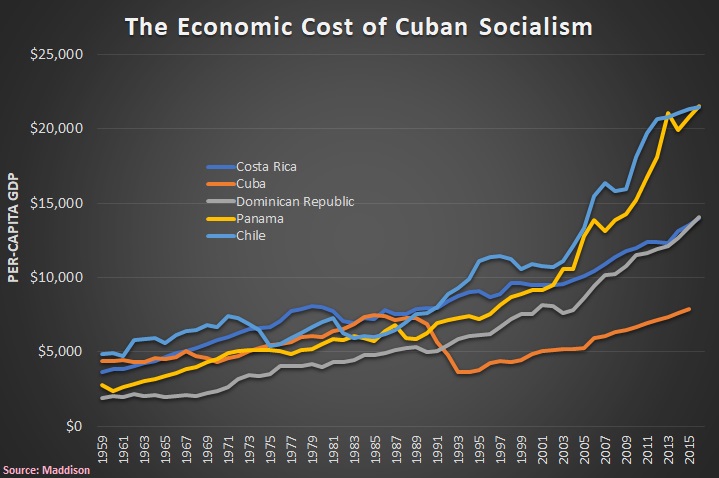
I’ve written many columns documenting Cuba’s economic misery. Probably the most-persuasive evidence that socialism has failed in that country is the chart showing how Cuba has fallen behind other (very similar) countries ever since Fidel Castro took over more than six decades ago. Though I’ve always thought the most-damning visual came from the Economist, which […]
Fidel Castro: Human Garbage
The History and Importance of the Austrian Theory of the Market Process …
21 Aug 2026 Leave a comment
in applied price theory, Austrian economics, economic history, history of economic thought
The Confucian fertility paradox
21 Aug 2026 Leave a comment
in development economics, econometerics, economic history, economics of love and marriage, growth miracles, labour economics, labour supply, law and economics, population economics
Total fertility rates in East Asia have fallen to levels without historical precedent, even though the region’s Confucian heritage long placed extraordinary emphasis on family continuity and large families. We argue that this “Confucian Fertility Paradox” dissolves once we separate two strands of the tradition and recognize that modernization affected them very differently. The pro-natal…
The Confucian fertility paradox
Dr. Israel M. Kirzner — “Economics and Entrepreneurship”
21 Aug 2026 Leave a comment
in applied price theory, Austrian economics, economic history, entrepreneurship, F.A. Hayek, history of economic thought, Israel Kirzner, market efficiency
The 1934 German Head of State Referendum: A Pivotal Moment in Nazi Consolidation of Power
19 Aug 2026 Leave a comment
in constitutional political economy, economic history, politics, Public Choice Tags: Nazi Germany

The 1934 German head-of-state referendum, held on August 19, stands as a crucial moment in the Nazi regime’s consolidation of power. Following the death of President Paul von Hindenburg on August 2, 1934, Adolf Hitler sought to solidify his grip on Germany by merging the offices of President and Chancellor, thus assuming the title of […]
The 1934 German Head of State Referendum: A Pivotal Moment in Nazi Consolidation of Power
Dr. Israel M. Kirzner — “Economics and Entrepreneurship”
19 Aug 2026 Leave a comment
in applied price theory, Austrian economics, economic history, economics of regulation, entrepreneurship, history of economic thought, industrial organisation, law and economics, Public Choice, regulation, rentseeking Tags: competition law
The Cost of Going to Space
18 Aug 2026 Leave a comment
in applied price theory, econometerics, economic history, entrepreneurship, industrial organisation Tags: space
Terzi & Nicoli have a fascinating new paper analyzing over 4,400 orbital launches since 1960 to estimate “Wright’s Law.” This law states that a new technology’s unit costs fall in proportion to cumulative experience. Essentially, it is an expression of learning-by-doing. They show:… that the average cost of sending a kilogram to orbit has dropped…
The Cost of Going to Space
Incentive Misalignment in Communism: the case of Vietnam
15 Aug 2026 1 Comment
in applied price theory, development economics, economic history, growth disasters, history of economic thought, industrial organisation, labour economics, labour supply, Marxist economics Tags: economics of central planning, Vietnam
Rainer Zitelmann writes in How Capitalism Beat Communism in Vietnam in Reason Magazine, The state collectives did not reward members for the amount of rice they produced, but instead counted how many days they had worked. 183 more words
Incentive Misalignment in Communism: the case of Vietnam
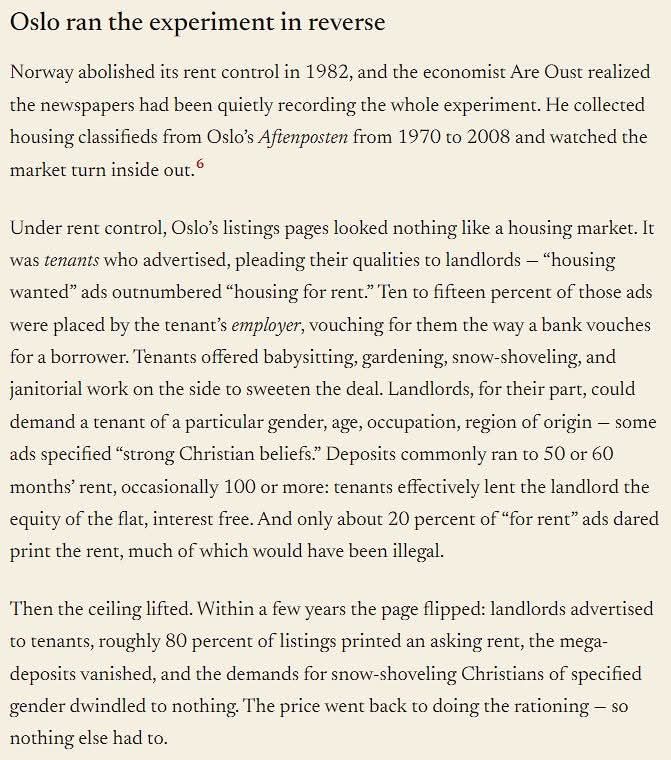
A rent control experiment
13 Aug 2026 1 Comment
in applied price theory, econometerics, economic history, economics of information, economics of regulation, law and economics, property rights Tags: offsetting behavior, rent control, unintended consequences
Immigration and Macroeconomic Outcomes in OECD Countries
10 Aug 2026 Leave a comment
in applied price theory, econometerics, economic history, human capital, labour economics, labour supply Tags: economics of immigration
OECD countries experienced declining native population growth and rising net immigration over 1990-2024. We compile a new dataset of net immigration rates to OECD countries from all origins and show that most of the increase came from non-OECD countries and was predominantly high-skilled. Push factors, network effects, and policy indices explain little of the large…
Immigration and Macroeconomic Outcomes in OECD Countries
How Socialist Were the Nazis Really?
10 Aug 2026 1 Comment
in economic history, liberalism, libertarianism, Marxist economics Tags: Nazi Germany
A conversation with Kristian Niemietz
How Socialist Were the Nazis Really?


Recent Comments