Anything opposed by the teachers unions must be a good idea
09 Aug 2016 Leave a comment
in economics, economics of education, politics - New Zealand Tags: teachers unions
#YesPrimeMinister on abolishing government departments
01 Aug 2016 Leave a comment
in economics, economics of education, television Tags: Yes Prime Minister
College and post-graduate wage premium in the English speaking countries, France, S. Korea, Finland, Denmark, Norway and Sweden
31 Jul 2016 Leave a comment
in economics of education, human capital, labour economics, occupational choice Tags: Australia, British economy, Canada, College premium, Denmark, education premium, Finland, France, graduate premium, Ireland, Korea, Norway, post-graduate premium, Sweden
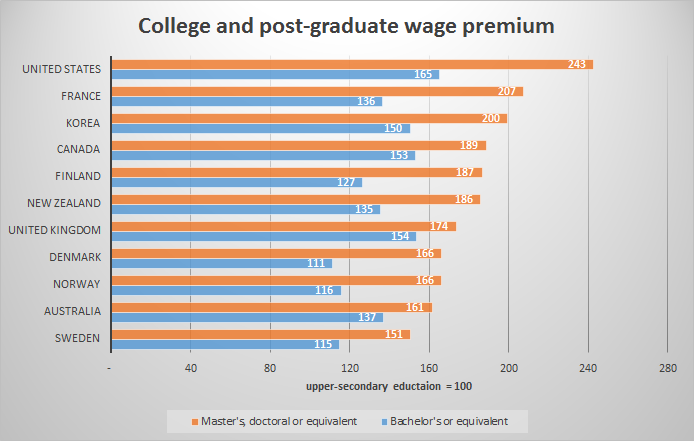
Source: Education at a Glance 2015, section 6.
Political leanings of American professors @robhosking
29 Jul 2016 2 Comments
in economics of education, labour economics, occupational choice, politics - New Zealand, politics - USA Tags: academic bias
Sociologists are rather level-headed compared to that hotbed of political bias, which is American history professors. Hardly any of them see themselves as a Republican. I must take back a few nasty things I said about political bias and sociologists.

Source: THE SOCIAL AND POLITICAL VIEWS OF AMERICAN PROFESSORS Neil Gross and Solon Simmons, Working Paper, September 24, 2007
Tertiary educational attainment, 2000 and 2014, USA, UK, France, Germany, Canada, Australia
24 Jul 2016 Leave a comment
in economic history, economics of education, human capital, labour economics Tags: Australia, Canada, France, Germany, Italy, tertiary educational attainment.
The British, Australians, and Italians experienced strong growth in tertiary attainment since the year 2000. In the case of the Italians, it was from a low base. There is still a big difference in tertiary attainment between English-speaking and other countries.
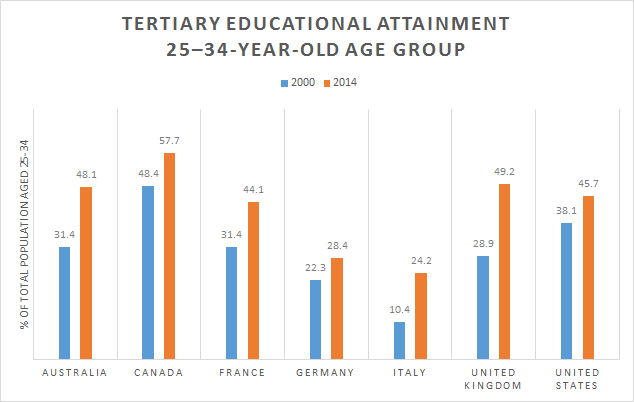
Source: OECD Factbook 2015-2016.
Is academic philosophy a “safe space” for women?
23 Jul 2016 Leave a comment
in discrimination, economics of education, gender, labour economics, occupational choice Tags: gender wage gap
Compulsory Te Reo Māori betrays those @nzlabour represents @jacindaardern @AndrewLittleMP
09 Jul 2016 Leave a comment
in economics of education, politics - New Zealand Tags: economics of languages, expressive voting, network goods, New Zealand Labour Party
This policy of Labour of making Te Reo Māori compulsory in primary school and perhaps high school is reckless and betrays those for whom Labour claims to speak.
I must first declare a bias. I struggled to pass high school English. I never scored a single mark in a phonetics test – zero every time. I was hopeless at learning Japanese. I was wise enough to resist encouragement for my dear departed mother to enrol in French classes. I had no wish to be the class dunce in French.
The only reason I went to university was Mr. Carney in the first week of grade 7 noticed that I was in the level II classes for English and social science. As all my brothers and sisters topped the school or near enough, he assumed I was hiding my light under a bushel. He promoted me to the level III classes, which put me in the stream to matriculation colleges and therefore university.
Imagine how much I would have hated study if I was required to learn a language other than English when I was struggling terribly to learn English. I am still a bad speller. I leave it to the reader to judge my grammar. Who wants to be the class dunce in both English and French?
Requiring students of modest academic ability to acquire a 2nd language when they may not be doing well in mastering the basics is playing with their lives as though they were little toys.
Learning another language is not a priority for the Pākehā children nor Māori mokupuna when you consider the poor literacy rates among Māori, Pasifika and some Pākehā.
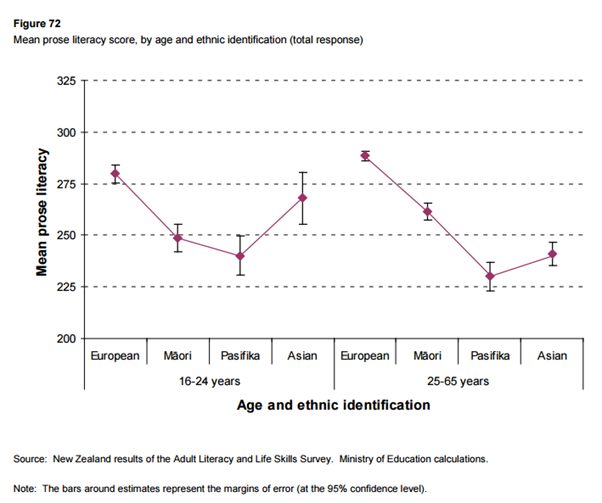
Source: Literacy skills of young adult New Zealanders | Education Counts.
60%of Pākehā are above the minimum level of competence to meet the prose literacy requirements of a knowledge society. This contrasts with the majority of Māori and Pasifika who are below the minimum level of competence.
Requiring children who do not have an aptitude for language or school in general to learn a language will reinforce in those who are not doing well that they are not very smart. This will give them more reasons to hate school and leave as soon as possible and never go back.

Source: Literacy skills of young adult New Zealanders | Education Counts.
Taking student learning time away from basic literacy skills will do little for a Māori economic development. This is because this taking of student learning time away from literacy and basic education will slow the closing of income gaps between Māori and others.
The key to helping children who do not have an aptitude to succeed at school is to find subjects where they do do well so they can get a good start to life. If students are not good at academic subjects, requiring them to do more academic studies such as study a language is fool-hardy.
Learning Te Reo Māori will not help children in their other subjects. The psychology of the transfer of learning was founded 100 years ago to explore the hypothesis that learning Latin gave the student muscle to learn other subjects, both other languages and generally learn faster.
Educational psychologists found that Latin does not help much in studying other languages and other subjects. No significant differences were found in deductive and inductive reasoning or text comprehension among students with 4 years of Latin, 2 years of Latin or no Latin at all.
Age distributions of authors in top US economics journals, 1963-2011
07 Jul 2016 Leave a comment
in economics of education Tags: endogenous growth theory
Economics used to be a young man’s game but no more. Considerable investment is needed in learning your craft before people start publishing, much less get into the top journals.
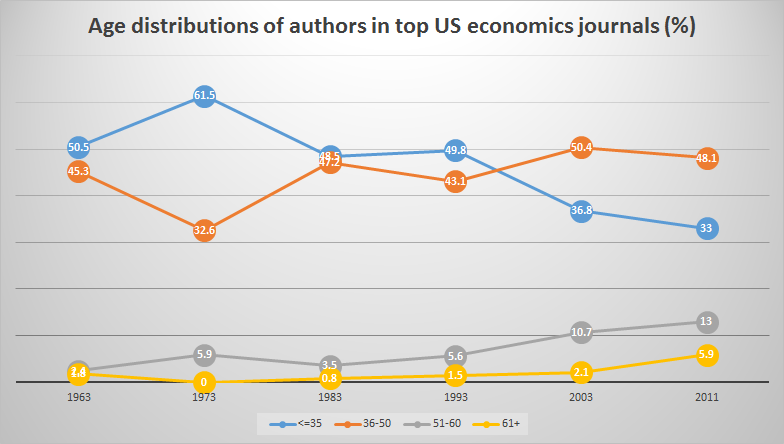
Source: Ageing and productivity: Economists and others | VOX, CEPR’s Policy Portal.
Tertiary attainment of 25-34 and 55-64 year-olds across the OECD
06 Jul 2016 Leave a comment
in economic growth, economics of education, human capital, labour economics, macroeconomics Tags: endogenous growth theory, graduate premium
Some countries have experienced large increases in the number of young people graduating from University when compared to their parents. Germany and the USA aside, all countries have experienced a noticeable increase in young adults with tertiary degrees.
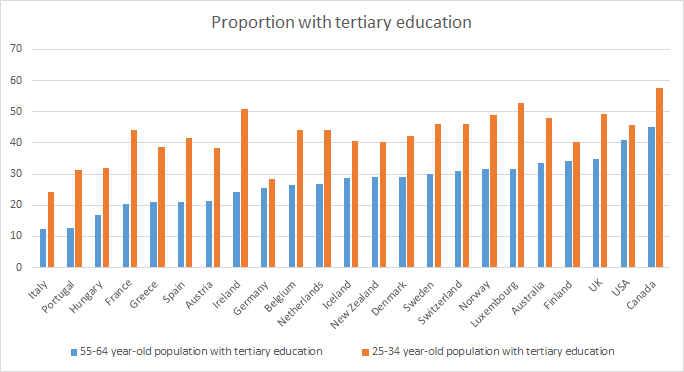
Source: Education at a Glance 2015 – © OECD 01-01-2015.
If human capital is such a major driver of economic growth, should not these countries with large increases in tertiary educated workers be anticipating a growth spurt? The gaps in tertiary attainment across the OECD are much less than they used to be for young adults. Ireland’s burst in tertiary educated workers was after the Celtic Tiger years, not before or during.
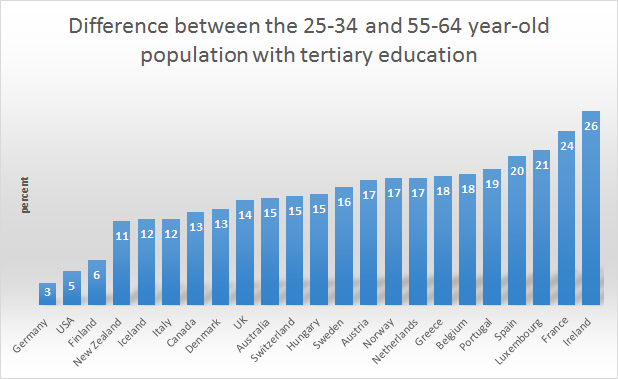
Source: Education at a Glance 2015 – © OECD 01-01-2015.
Wage gaps by gender, race and ethnicity persist in the USA
03 Jul 2016 Leave a comment
in discrimination, economics of education, gender, human capital, labour economics, labour supply, occupational choice, politics - USA Tags: employer discrimination, ethnic wage gap, gender wage gap, racial discrimination, racial wage gap

.@nzteu is right, student loans entrench inequality
29 Jun 2016 Leave a comment
in economics of education, economics of love and marriage, human capital, labour economics, occupational choice, poverty and inequality Tags: power couples, student loans
Those of European ethnicity had a median net worth of $114,000, compared with $23,000 for Māori , $12,000 for Pasifika and $33,000 for Asians according to the latest Statistics New Zealand data just released.
The Tertiary Education Union made great play about how much of the low net worth of young people and others is due to student loans
Young people (aged 15–24) had the lowest individual median net worth of any age group – just $1,000. The most common debt for young people is education loans.
The union then goes on to say that
Median education loan liabilities are only one-tenth of Pākehā people’s median assets, but they are a quarter of Māori people’s assets and over a third of Pacific people’s assets (table 7.01).
The data shows that the households with the smallest median net worth have the largest median education loans (table 2.02). These loans make up nearly a quarter of their total debt (table 2.03).
Over a third of households within the poorest quintile of net worth have education loans, whereas less than a tenth of households in the wealthiest quintile have education debt (table 2.04).
In a nutshell, not enough people are going to university because of the prospect of repaying student loans and more would go if it were cheaper and that would reducing inequality. The explosion in tertiary educational attendance over the last generation, an increase of about 150% for the adult population aged 25 to 64 was not good enough to reduce inequality.
Free tuition at University is a hand-out to those already had a good start in life. It will be paid for by those who will never go because they do not have an above average IQ.
How much more will you earn by going to university? It depends hugely on which country you're from http://t.co/7RMnUTM8nj—
paulkirby (@paul1kirby) September 11, 2015
Low-cost student loans were supposed to be away to reduce inequality. Instead, they give a flying start to those of already above-average talents. If social justice is to mean anything, it does not involve giving freebies to those who already have a head start in life.
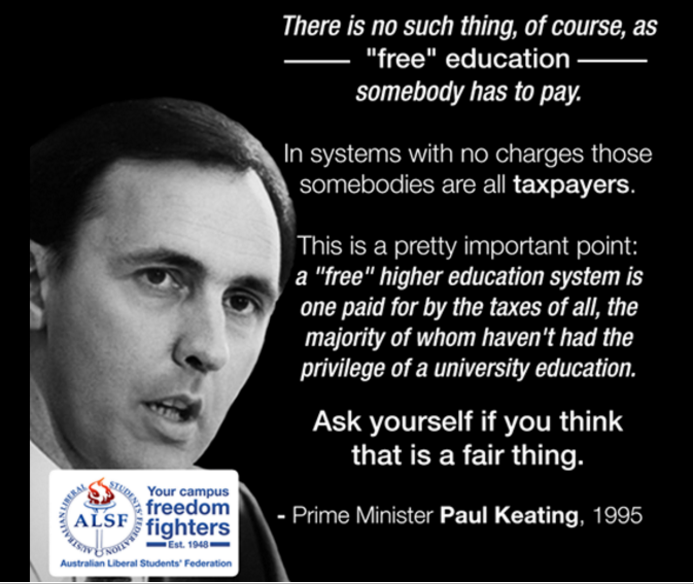
The average student loan debt is about $14,000 while the lifetime earnings premium from university education is about $1/2 million in New Zealand.
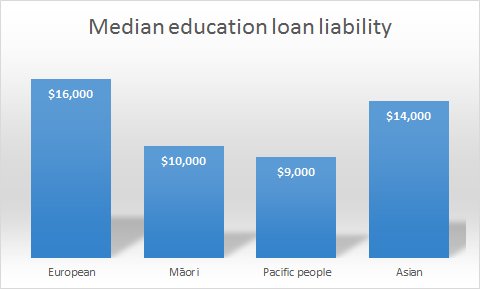
Source: Statistics New Zealand, Household net worth statistics: Year ended 30 June 2015.
Lowering university tuition fees and easing the terms of student loans simply means that those who do well at university will not have to pay back as much to the government. People who succeed at university already have above average IQs so they already had a good head start in life.
Charles Murray points out that succeeded at college requires an IQ of at least 115 but 84% of the population don’t have this:
Historically, an IQ of 115 or higher was deemed to make someone “prime college material.” That range comprises about 16 per cent of the population. Since 28 per cent of all adults have BAs, the IQ required to get a degree these days is obviously a lot lower than 115.
Cheaper higher education does not help the not so smart secure a qualification they lack the innate talent to earn with decent marks and increases the chance of smart men and women marrying. This increases the inequality between power couples and the rest.
James Heckman on the Economics of Human Development
14 Jun 2016 Leave a comment
in applied price theory, applied welfare economics, discrimination, economics, economics of education, human capital, labour economics, labour supply, poverty and inequality Tags: James Heckman
Bill Maher: Sanders Supporters Are “Used To Getting Shit For Free”; That’s Not Socialism, It’s “Santa-ism”
13 Jun 2016 Leave a comment
in applied price theory, applied welfare economics, defence economics, economic history, economics of education, economics of media and culture, economics of regulation, environmental economics, industrial organisation, politics - USA, survivor principle Tags: 2016 presidential election, Twitter left
#FeeltheBern? There’s a Cure.
09 Jun 2016 Leave a comment
in applied price theory, applied welfare economics, comparative institutional analysis, economic history, economics of education, economics of regulation, health economics, income redistribution, industrial organisation, international economics, politics - USA, Public Choice, public economics, rentseeking Tags: 2016 presidential election, antimarket bias, crony capitalism, living wage, pessimism bias, top 1%


Recent Comments