Every 20 years we worry about losing jobs to tech. books.google.com/ngrams/graph?c… http://t.co/KW47Iwzsp9—
James Bessen (@JamesBessen) August 10, 2014
Every 20 years we worry about losing jobs to technology
17 Jun 2015 Leave a comment
in economics of education, entrepreneurship, human capital, industrial organisation, labour economics, labour supply, occupational choice, Public Choice, rentseeking, survivor principle Tags: antimarket bias, creative distraction, expressive voting, make-work bias, rational ignorance, rational irrationality, technological unemployment
The education premium has immediate effects
17 Jun 2015 Leave a comment
in economics of education, human capital, labour economics, labour supply, occupational choice, poverty and inequality Tags: College premium, education premium, graduate premium, high school dropouts
http://t.co/t1Pym23Wgv—
EPI Chart Bot (@epichartbot) May 27, 2015
Gender differences in PISA scores, 2012, UK, USA, New Zealand and Australia
16 Jun 2015 Leave a comment
in economics of education, human capital, labour economics, occupational choice, politics - Australia, politics - New Zealand, politics - USA Tags: economics of personality traits, gender gap, PISA, reversing gender gap
Boys’ dominance just about endures in maths: at age 15 they are, on average, the equivalent of three months’ schooling ahead of girls. In science the results are fairly even.
But in reading, where girls have been ahead for some time, a gulf has appeared. In all 64 countries and economies in the study, girls outperform boys. The average gap is equivalent to an extra year of schooling.
Figure 1: : Gender differences (boys – girls) in student performance in reading, mathematics and science in PISA 2012

Source: OECD family database.
The reverse gender tertiary education gap for ages 25–34, Anglo-Saxon countries
14 Jun 2015 Leave a comment
in discrimination, economics of education, gender, human capital, labour economics, labour supply, occupational choice, politics - Australia, politics - New Zealand, politics - USA Tags: Australia, British economy, Canada, College premium, education premium, gender wage gap, Ireland
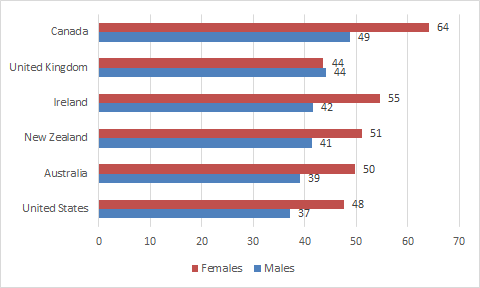
Figure 1: % population who have attained at least tertiary education, age 25 – 34 by gender (2012)
Source: OECD family database.
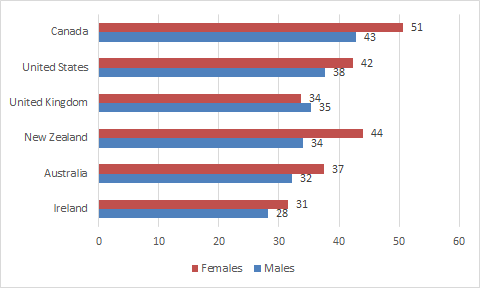
Figure 2 shows that the stark reversing of the gender gap in educational attainment shown in figure 1 was somewhat more recent in the US, UK and to a lesser extent in Ireland and Australia. In the UK and USA, educational attainment by gender was pretty equal for the earlier generation of graduates as compared to today’s 25 to 34-year-olds. The reversing of the gender gap in educational attainment dates back several decades in Canada and New Zealand.
Figure 2: % population who have attained at least tertiary education, age 45 – 54 by gender (2012)
Source: OECD family database.
Another rather stunning illustration of the size of the graduate premium in the USA
14 Jun 2015 Leave a comment
in economics of education, human capital, labour economics, occupational choice, politics - USA Tags: College premium, education premium, graduate premium
The average length of Ph.D. dissertations
13 Jun 2015 Leave a comment
in economics of education Tags: graduate premium, Ph.D. study
Subject by subject: How long is the average dissertation?
(Source: bit.ly/1And9nk) http://t.co/Zxydm8i86r—
Max Roser (@MaxCRoser) June 08, 2015
Prison incarceration rates by race and education
12 Jun 2015 1 Comment
in discrimination, economics of crime, economics of education, human capital, labour economics, labour supply, law and economics, occupational choice, politics - USA Tags: compensating differentials, crime and punishment, criminal deterrence, law and order, racial discrimination, racism
Male African American high school dropouts facing a nearly 70% cumulative risk of imprisonment by their early 30s. However, the increase in incarceration rates among high school graduates appeared to be much the same for both blacks and whites.
This hints that racism is not as good explanatory of high rates of African-American male incarceration. Police do not know whether the people they arrest have high school diplomas or not but most of the people they arrest are high school dropouts. This suggests that the opportunity cost and rewards of crime over lawful occupational pursuits is a driver of the supply of crime.
The reversing gender gap in one chart
11 Jun 2015 Leave a comment
in discrimination, economics of education, gender, human capital, labour economics, labour supply, occupational choice, poverty and inequality Tags: gender wage gap, lost boys, reversing gender gap
Gender gap in bachelor's is 6 percentage points. Men now where women were a decade ago.
nces.ed.gov/programs/diges… http://t.co/u9rAsIcfY0—
S Dynarski (@dynarski) June 01, 2015
New Zealand primary school teachers have experienced rapid wages growth by international standards
10 Jun 2015 Leave a comment
in economics of education, human capital, labour economics, labour supply, occupational choice, politics - Australia, politics - New Zealand, politics - USA Tags: teachers pay
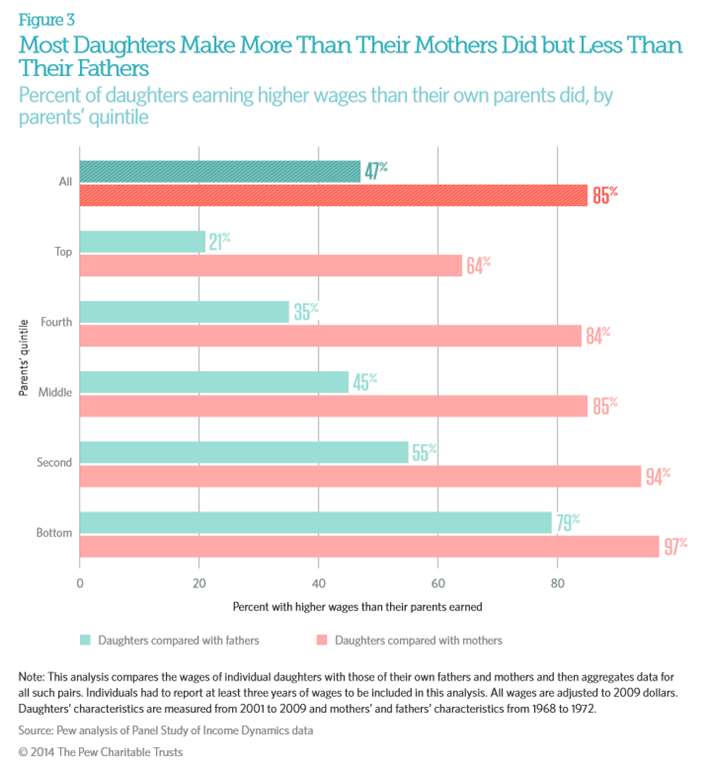
Almost 8 in 10 daughters raised by the lowest- earning men make more money per hour than their fathers did
08 Jun 2015 Leave a comment
in discrimination, economics of education, gender, human capital, labour economics, labour supply, occupational choice, poverty and inequality Tags: economic mobility, gender wage gap, reversing gender gap
John Nash’s letter of recommendation
07 Jun 2015 Leave a comment
in economics of education Tags: John Nash
Shortest recommendation letter ever? http://t.co/S6PLl7HlQn—
Anupreeta Das (@PreetaTweets) June 05, 2015
In College and Hiding From Scary Ideas
07 Jun 2015 Leave a comment
in economics of education, liberalism Tags: free speech, Left-wing hypocrisy, political correctness, speech codes, Twitter left

Now what was it that the Nordics had over New Zealand in education?
05 Jun 2015 Leave a comment
in economics of education, politics - New Zealand Tags: education spending, Finland, Iceland, Nordic countries, Norway, Scandinavia, Sweden, teacher pay
Unemployment by educational level and degree level
02 Jun 2015 Leave a comment
in business cycles, economics of education, human capital, job search and matching, labour economics, labour supply, macroeconomics, occupational choice, unemployment Tags: education premium, graduate premium
Don't listen to naysayers. College is worth it, even for so-so students. nyti.ms/1JC1ZiN http://t.co/Wnr5BnwumM—
The Upshot (@UpshotNYT) April 24, 2015


Recent Comments