The graduate premium for New Zealand is at the bottom of the OECD ladder
05 Jul 2015 Leave a comment
in economics of education, human capital, labour economics, occupational choice, politics - New Zealand Tags: College premium, education premium, graduate premium

The evolution of the scientific method in climate science
03 Jul 2015 Leave a comment
in economics of bureaucracy, economics of education, environmental economics, global warming, rentseeking Tags: academic bias, climate alarmism, global warming, green rent seeking, philosophy of science, publish or perish, scientific fraud
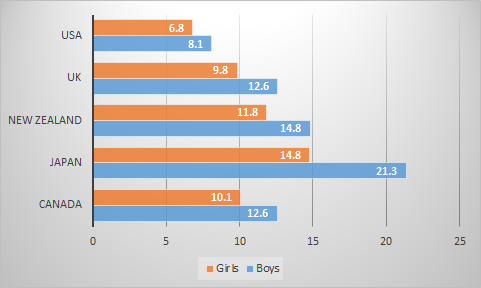
Top performers in science by gender, USA, UK, Japan, Canada, Australia and New Zealand
02 Jul 2015 Leave a comment
in discrimination, economics of education, gender, human capital, labour economics Tags: Australia, British economy, Canada, Japan, lost boys, reversing gender gap
Why are Japanese 15-year-old girls as good at science as teenagers anywhere else in the world?
Figure 1: Percentage achieving the proficiency level 5 or higher in sciences by gender, USA, UK, Japan, Canada, Australia, New Zealand, 2012
Source: OECD StatExtract.
Top performers in maths by gender, USA, UK, Japan, Canada, Australia and New Zealand
01 Jul 2015 5 Comments
in economics of education, gender, human capital, labour economics Tags: Australia, British economy, Canada, Japan, lost boys, reversing gender gap
Figure 1: Percentage achieving the proficiency level 5 or higher in mathematics by gender, USA, UK, Japan, Canada, Australia, New Zealand, 2012

Source: OECD StatExtract.
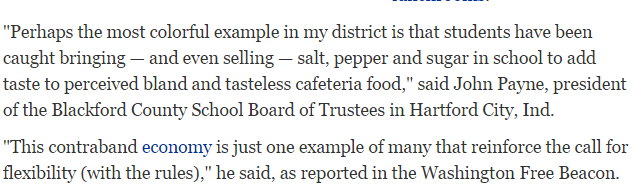
Kids Create Cafeteria Black Market To Bypass Food Nannies
30 Jun 2015 Leave a comment
in economics of crime, economics of education, economics of regulation, entrepreneurship, health economics, industrial organisation, law and economics, survivor principle Tags: black markets, economics of prohibition, entrepreneurial alertness, food, nanny state, police, The fatal conceit, unintended consequences
Top performers in reading by gender, USA, UK, Japan, Canada, Australia and New Zealand
30 Jun 2015 Leave a comment
in discrimination, economics of education, gender, human capital, labour economics Tags: Australia, British economy, Canada, Japan, lost boys, reversing gender gap
Figure 1: percentage achieving the proficiency level 5 or higher in reading by gender, USA, UK, Japan, Canada, Australia, New Zealand, 2012

Source: OECD StatExtract.
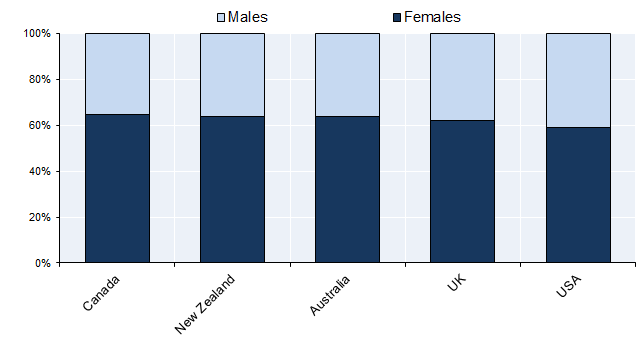
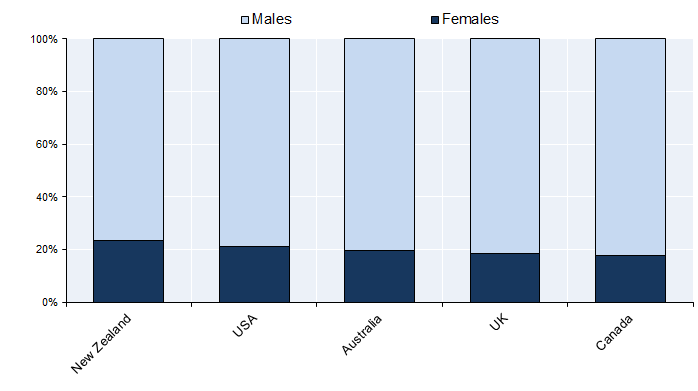
Humanities, arts, computing and engineering degrees awarded by gender, USA, UK, Canada, Australia and New Zealand
30 Jun 2015 Leave a comment
in discrimination, economics of education, gender, human capital, labour economics, occupational choice Tags: economics of personality traits, gender wage gap, reversing gender gap
Figure 1: Percentage of tertiary degrees awarded in humanities and arts qualifications by gender, 2012
Source: OECD Education Database.
Figure 2: percentage of tertiary degrees awarded in computing qualifications by gender, 2012
Source: OECD Education Database.
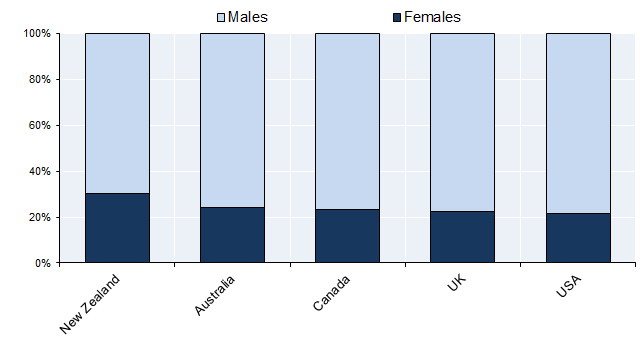
Figure 3: Percentage of tertiary degrees awarded in engineering, manufacturing and construction qualifications by gender, 2012
Source: OECD Education Database.
Tertiary education attainment of young adults in Australia, New Zealand, USA, UK and Canada, 2000 and 2011
24 Jun 2015 Leave a comment
in economics of education, human capital, labour economics, labour supply, occupational choice, politics - Australia, politics - New Zealand, politics - USA Tags: Australia, British economy, Canada, College premium, educational attainment, graduate premium
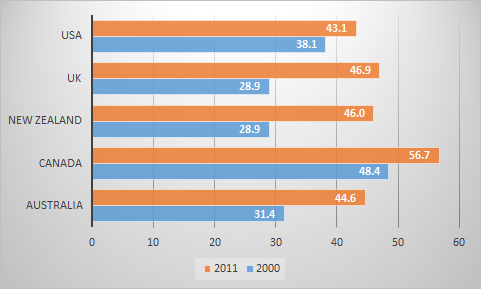
Figure 1: tertiary educational attainment of adults aged 25 to 34 in Australia, New Zealand, USA, UK and Canada, 2000 and 2011
Source: OECD Factbook.
The academic bias that dare not speak its name
23 Jun 2015 2 Comments
Academic libs in soc sci and humanities, cons in business and nursing, moderates in engineering and computer sci http://t.co/ixwbWb5M6X—
Whyvert (@whyvert) May 23, 2015
More on the college premium and economic mobility
22 Jun 2015 Leave a comment
in economics of education, human capital, labour economics, labour supply, occupational choice Tags: College premium, economic mobility, education premium, graduate premium
"…most powerful instrument of economic mobility for low-income ppl is 4 yr college degree." nyti.ms/1ji4fTl http://t.co/94xbbJW4Ny—
Equitable Growth (@equitablegrowth) May 15, 2014
There is a lot of truth in this
19 Jun 2015 Leave a comment
in economics of education, human capital Tags: endogenous growth theory, learning externalities
The rise and rise of educational attainment
18 Jun 2015 Leave a comment
in economics of education, human capital, labour economics, labour supply, occupational choice Tags: educational attainment
Average years of schooling in US over time. Rise slowed in the 1970s. brook.gs/14C4Kmo http://t.co/abs2A8BvAx—
Richard V. Reeves (@RichardvReeves) January 09, 2015
The costs of teacher tenure in the USA
18 Jun 2015 Leave a comment
in economics of education, labour economics, labour supply, law and economics, managerial economics, occupational choice, organisational economics, personnel economics, rentseeking, unions Tags: employment protection laws
Education and single motherhood
18 Jun 2015 Leave a comment
in economics of education, gender, labour economics, labour supply, occupational choice, politics - Australia, politics - New Zealand, politics - USA, welfare reform Tags: single mothers
There's a clear increase in single-parent households for parents who haven’t gone to college: on.wsj.com/1B1Xeuq http://t.co/eW2fH8bX5O—
Real Time Economics (@WSJecon) May 17, 2015


Recent Comments