Chris Bishop announced: The derelict and unsafe Gordon Wilson Flats in Wellington will lose its protected heritage status and become eligible for demolition through an amendment to the Resource Management Act (RMA) in the coming weeks, RMA Reform and Housing Minister Chris Bishop says. “The Gordon Wilson Flats were used as social housing until 2012, […]
Bish vs the numpties
Bish vs the numpties
18 Jun 2025 Leave a comment
in economics of regulation, environmental economics, law and economics, politics - New Zealand, property rights, urban economics Tags: heritage protection
Very Expensive Affordable Housing
10 Jun 2025 1 Comment
in applied price theory, economics of regulation, law and economics, politics - USA, property rights, urban economics Tags: housing affordability, offsetting behavior, The fatal conceit, unintended consequences
In my post Affordable Housing is Almost Pointless, I highlighted how point systems for awarding tax credits prioritize DEI, environmental features, energy efficiency, and other secondary goals far more than low cost. A near-comic example comes from D.C., where so-called affordable housing units now cost between $800,000 and $1.3 million dollars each! One such unit […]
Very Expensive Affordable Housing
HA.,HA., Thump: Hawaii Sued by the Babylon Bee and Other Groups Over Speech Crimes
09 Jun 2025 Leave a comment
in economics of regulation, politics - USA Tags: free speech

We have previously discussed laws that seek to criminalize “materially deceptive” political content worldwide, including memes and parodies. A civil law was blocked in California, where satirists and comedians opposed a Democratic law barring parodies and other expressions considered misleading. Now, legislators in Hawaii are trying again with a new law (S 2687) that criminalizes […]
HA.,HA., Thump: Hawaii Sued by the Babylon Bee and Other Groups Over Speech Crimes
America’s Housing Supply Problem: The Closing of the Suburban Frontier?
08 Jun 2025 1 Comment
in economics of bureaucracy, economics of regulation, income redistribution, politics - USA, Public Choice, regulation, rentseeking, urban economics Tags: housing affordability, land supply, zoning
Housing prices across much of America have hit historic highs, while less housing is being built. If the U.S. housing stock had expanded at the same rate from 2000-2020 as it did from 1980-2000, there would be 15 million more housing units. This paper analyzes the decline of America’s new housing supply, focusing on large […]
America’s Housing Supply Problem: The Closing of the Suburban Frontier?
How America Built the World’s Most Successful Market for Generic Drugs
06 Jun 2025 1 Comment
in applied price theory, economics of regulation, entrepreneurship, health economics, industrial organisation Tags: drug lags
The United States has some of the lowest prices in the world for most drugs. The U.S. generic drug market is competitive and robust—but its success is not accidental. It is the result of a series of deliberate, well-designed policy interventions. The 1984 Hatch-Waxman Act allowed generic drug manufacturers to bypass costly safety and efficacy […]
How America Built the World’s Most Successful Market for Generic Drugs
No Exit, No Entry
05 Jun 2025 Leave a comment
in applied price theory, development economics, economics of bureaucracy, economics of regulation, growth disasters, growth miracles, industrial organisation, labour economics, labour supply, law and economics, property rights, Public Choice, survivor principle Tags: employment law, India
In our textbook, Modern Principles, Tyler and I contrast basic U.S. labor law, at-will employment—where employers may terminate workers for any reason not explicitly illegal (e.g., racial or sexual discrimination), without notice or severance—with Portugal’s “just cause” regime, which requires employers to prove a valid reason, give advance notice, pay severance, and endure extensive regulatory […]
No Exit, No Entry
The Ultra Vires Reach of the Resource Management Act: Te Tiriti Obligations, Private Citizens, and the Erosion of Legal Boundaries
05 Jun 2025 Leave a comment
in economics of bureaucracy, economics of regulation, law and economics, politics - New Zealand, property rights, Public Choice, rentseeking Tags: constitutional law
Zoran Rakovic writes – This essay argues that the New Zealand government has acted ultra vires by interpreting and applying the Resource Management Act 1991 (RMA) in ways that impose Te Tiriti o Waitangi obligations upon private citizens and resource consent applicants without express statutory authority or due compensation. The practice violates foundational principles of […]
The Ultra Vires Reach of the Resource Management Act: Te Tiriti Obligations, Private Citizens, and the Erosion of Legal Boundaries
Again, There is No Right to a Stable Climate
04 Jun 2025 1 Comment
in constitutional political economy, economics of bureaucracy, economics of climate change, economics of regulation, energy economics, environmental economics, environmentalism, global warming, law and economics, politics - USA, property rights, Public Choice, rentseeking, resource economics Tags: climate activists, climate alarmism, nuisance suits

Announced this week was this from Inside Climate News: Trump Executive Orders Violate Young People’s Rights to a Stable Climate, a Lawsuit Alleges. Excerpts in italics with my bolds. Twenty-two young people from across the country sued the Trump administration over the executive orders, which prioritize the expansion of fossil fuels. The complaint, filed Thursday […]
Again, There is No Right to a Stable Climate
SCOTUS Slaps Down Green Overreach: 8-0 Ruling Frees Infrastructure from NEPA Shackles
03 Jun 2025 Leave a comment
in economics of bureaucracy, economics of regulation, environmental economics, environmentalism, law and economics, politics - USA, property rights, Public Choice
he fact that the project might foreseeably lead to the construction or increased use of a separate project does not mean the agency must consider that separate project’s environmental effects
SCOTUS Slaps Down Green Overreach: 8-0 Ruling Frees Infrastructure from NEPA Shackles
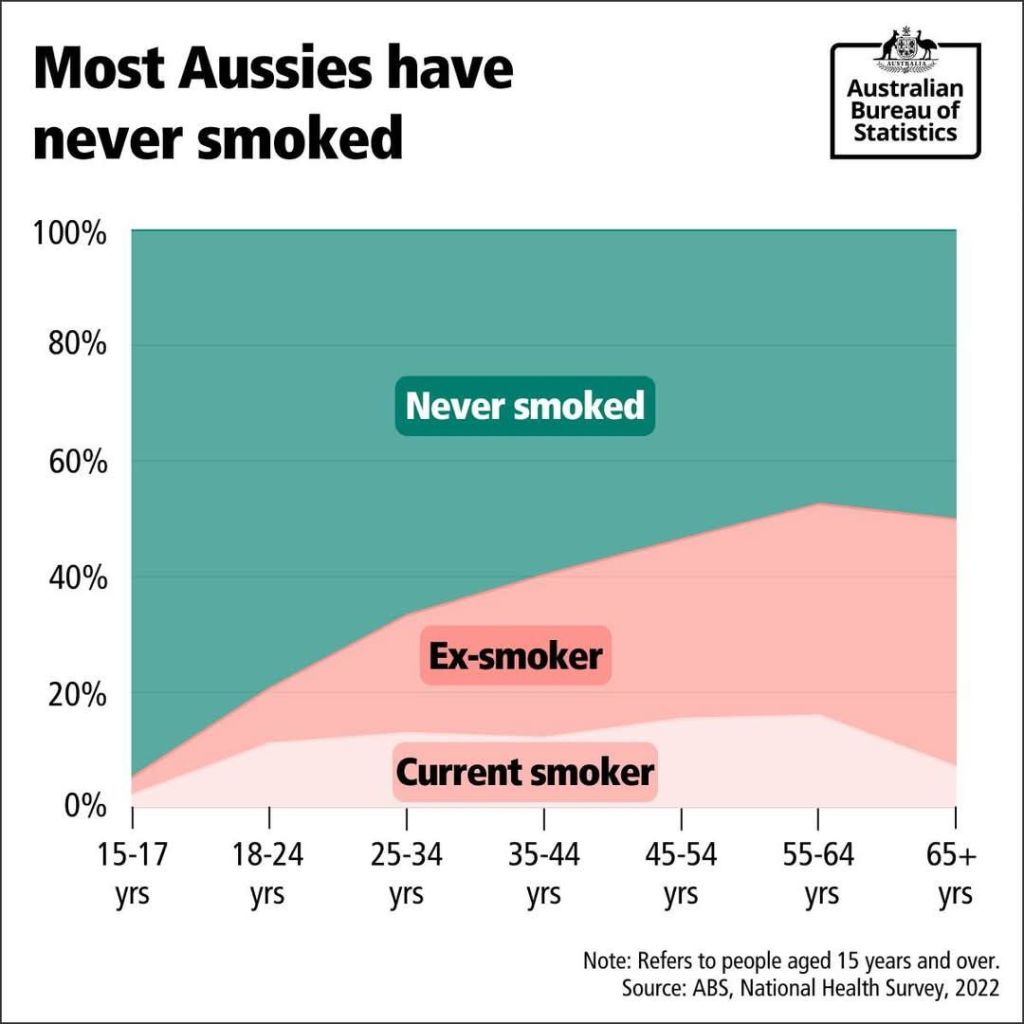
No smoking
02 Jun 2025 Leave a comment
in economics of information, economics of regulation, health economics, industrial organisation Tags: economics of smoking
Why the U.S. Produces More Unicorns Than China and the EU
01 Jun 2025 1 Comment
in applied price theory, comparative institutional analysis, development economics, economic history, economics of regulation, entrepreneurship, human capital, industrial organisation, labour economics, occupational choice, poverty and inequality, survivor principle Tags: creative destruction
The United States has produced about twice as many unicorns (private startups valued at $1B+) as China and more than four times as many as the European Union. These numbers reflect deep institutional and cultural advantages in the U.S. startup ecosystem. Table: Number of Unicorns Created Since ~1990 Region Cumulative Unicorns United States ~1,950 China…
Why the U.S. Produces More Unicorns Than China and the EU
Liability for Climate Change: An Inequitable Economic Disaster
29 May 2025 Leave a comment
in economics of climate change, economics of regulation, energy economics, environmental economics, environmentalism, global warming, law and economics, politics - USA, property rights, Public Choice, rentseeking Tags: climate alarmism, nuisance suits
What is already clear are the serious and senseless economic consequences that will follow if states are allowed to punish fossil fuel companies for their lawful past production.
Liability for Climate Change: An Inequitable Economic Disaster
Life is full of tradeoffs: We can have more data centers and local tax revnue or less tourism and a dirtier environment
29 May 2025 1 Comment
in economics of regulation, politics - USA, public economics, urban economics Tags: NIMBY, zoning
See Small-Town Locals and Newcomers Unite Against a Common Foe: Data Centers: Residents in Appalachian tourist area band together to keep one of the largest data-center complexes in the world out of their no-stoplight community by Kris Maher of The WSJ. Excerpts:”residents [of DAVIS, W.Va.] are . . . determined to keep big tech out of…
Life is full of tradeoffs: We can have more data centers and local tax revnue or less tourism and a dirtier environment
New medicine approvals plan an exercise in not solving the problem
28 May 2025 Leave a comment
in applied price theory, economics of bureaucracy, economics of regulation, health economics, politics - New Zealand, Public Choice Tags: drug lags
Eric Crampton writes – New medicines are slow to be authorised for the New Zealand market. Even if a medicine has already been approved by many other trustworthy overseas regulators like those in Canada, the UK, Australia, and the EU, Medsafe can take a very long time to evaluate a medicine.
New medicine approvals plan an exercise in not solving the problem
The Latest Affordability Numbers
26 May 2025 Leave a comment
in economics of regulation, income redistribution, Public Choice, rentseeking, urban economics Tags: housing affordability, land supply, zoning
Housing in Canada, Hong Kong, New Zealand, and Singapore was slightly more affordable in 2024 than it had been in 2023. Wendell Cox’s latest assessment of housing affordability, when compared with last year’s assessment, shows that housing became slightly less affordable in Ireland and the United Kingdom, while affordability remained … Continue reading →
The Latest Affordability Numbers


Recent Comments