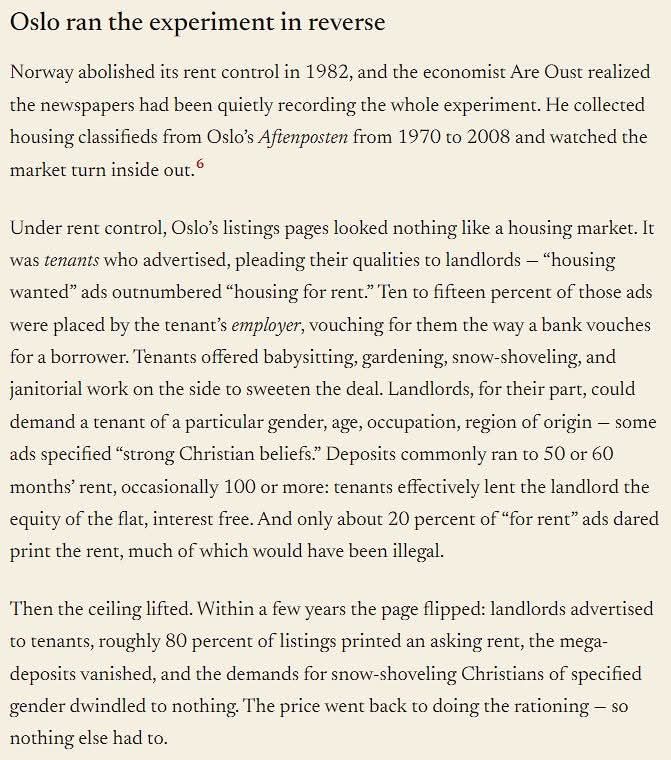
A rent control experiment
13 Aug 2026 1 Comment
in applied price theory, econometerics, economic history, economics of information, economics of regulation, law and economics, property rights Tags: offsetting behavior, rent control, unintended consequences
Utopian Dreams of Net-Zero
12 Aug 2026 1 Comment
in economics of climate change, economics of regulation, energy economics, environmentalism Tags: climate activists, climate alarmism, solar power, wind power
Whether one believes in the CO2 hypothesis or not, more fossils are existential. Both to ensure progress and growth, and to cope with climate change, manmade or not. The post Utopian Dreams of Net-Zero appeared first on Watts Up With That?.
Utopian Dreams of Net-Zero
Some Links
10 Aug 2026 Leave a comment
in applied price theory, economics of regulation, income redistribution, liberalism, libertarianism, Marxist economics, Public Choice, rentseeking, urban economics Tags: rent control
TweetChristine Rosen uncovers evidence of the pathetic appeal of the DSA. Two slices: But one aspect of the DSA’s appeal has been too often overlooked, particularly by conservative critics: its appeal as a form of instant community for a generation that often lacks one. DSA supporters are a highly homogenous group: 85 percent of DSA…
Some Links
The Crime of Winning: How Europe’s DMA Punishes Google for Competing
09 Aug 2026 Leave a comment
in applied price theory, economics of regulation, entrepreneurship, industrial organisation Tags: competition law

Brussels has found a new way to punish success. Today, the European Commission fined Google €890 million under the Digital Markets Act (DMA) for two familiar business practices—featuring its own products and charging for customers its platform helps attract. The Commission imposed €460 million for “self-preferencing,” or giving Google’s services prominent placement in search results,…
The Crime of Winning: How Europe’s DMA Punishes Google for Competing
New Zealand shows how to solve the equal pay crisis
07 Aug 2026 Leave a comment
in applied price theory, discrimination, economic history, economics of regulation, gender, human capital, labour economics, labour supply, occupational choice, poverty and inequality Tags: gender wage gap
Outgoing governments often try to craft a legacy for themselves by introducing policy traps that incoming governments find hard to undo, such as Rishi Sunak’s National Insurance cuts in 2024 or Gordon Brown’s introduction of the 50p top rate of income tax in 2010. Keir Starmer just did something similar by initiating a huge expansion in the […]
New Zealand shows how to solve the equal pay crisis
Britain told to rethink net zero strategy as costs soar
05 Aug 2026 1 Comment
in economics of climate change, economics of regulation, energy economics, environmental economics, environmentalism, global warming Tags: British politics, climate alarmism, solar power, wind power

By Paul Homewood Of course, it is not a rethink required – the whole needs scrapping now. A new report has warned the United Kingdom is set to face a £40 billion annual bill by the end of the decade as its drive towards net zero energy continues. In a new study The […]
Britain told to rethink net zero strategy as costs soar
Germany’s Industrial Suicide… Grid Agency Prepares Secret Power Rationing Plans Amid Electric Power Bottlenecks
04 Aug 2026 1 Comment
in economics of climate change, economics of regulation, energy economics, environmental economics, environmentalism, global warming Tags: Germany
The threat of sudden, uncompensated power shutdowns creates immense operational uncertainty. This environment deters foreign investors and pressures domestic industrial companies to shift investment and production abroad. Forced curtailments would primary hit energy-intensive key industries, including aluminum, copper, steel, chemical, glass, and paper manufacturing. The post Germany’s Industrial Suicide… Grid Agency Prepares Secret Power Rationing…
Germany’s Industrial Suicide… Grid Agency Prepares Secret Power Rationing Plans Amid Electric Power Bottlenecks
‘Market Power in Antitrust: Economic Analysis after Kodak,’ by Benjamin Klein
01 Aug 2026 Leave a comment
in applied price theory, economics of regulation, entrepreneurship, industrial organisation Tags: competition law

In 1992, the U.S. Supreme Court held in Eastman Kodak Co. v. Image Technical Services that a firm without market power in photocopiers might still possess market power in photocopier parts and service. The Court’s logic turned on opportunistic hold-up: Kodak could profit by trading short-run exploitation of locked-in customers for long-run losses in equipment…
‘Market Power in Antitrust: Economic Analysis after Kodak,’ by Benjamin Klein
The Sound of Silence: Fauci Takes the Fifth and the Heat Over his Diary Disclosures
31 Jul 2026 Leave a comment
in economics of crime, economics of regulation, health economics, law and economics, politics - USA Tags: economics of pandemics
Below is my column on Fox.com on yesterday’s “testimony” from Dr. Anthony Fauci. Americans deserve answers to the questions raised…
The Sound of Silence: Fauci Takes the Fifth and the Heat Over his Diary Disclosures
New UK PM Andy Burnham Has Supported a 90% Cut in Hydrocarbon Use Within 10 Years
31 Jul 2026 1 Comment
in economics of climate change, economics of regulation, energy economics, environmental economics, environmentalism, global warming Tags: British politics
As Manchester Mayor, Andy Burnham wanted to slash hydrocarbon use by 90% in 10 years. Now the new Energy Minister is making similar noises. Chris Morrison wonders if destroying modern society is still the plan. The post New UK PM Andy Burnham Has Supported a 90% Cut in Hydrocarbon Use Within 10 Years appeared first…
New UK PM Andy Burnham Has Supported a 90% Cut in Hydrocarbon Use Within 10 Years
The Endangered Species Act Reduces Housing
31 Jul 2026 Leave a comment
in applied price theory, econometerics, economics of regulation, environmental economics, environmentalism, law and economics, politics - USA, property rights, Public Choice, urban economics
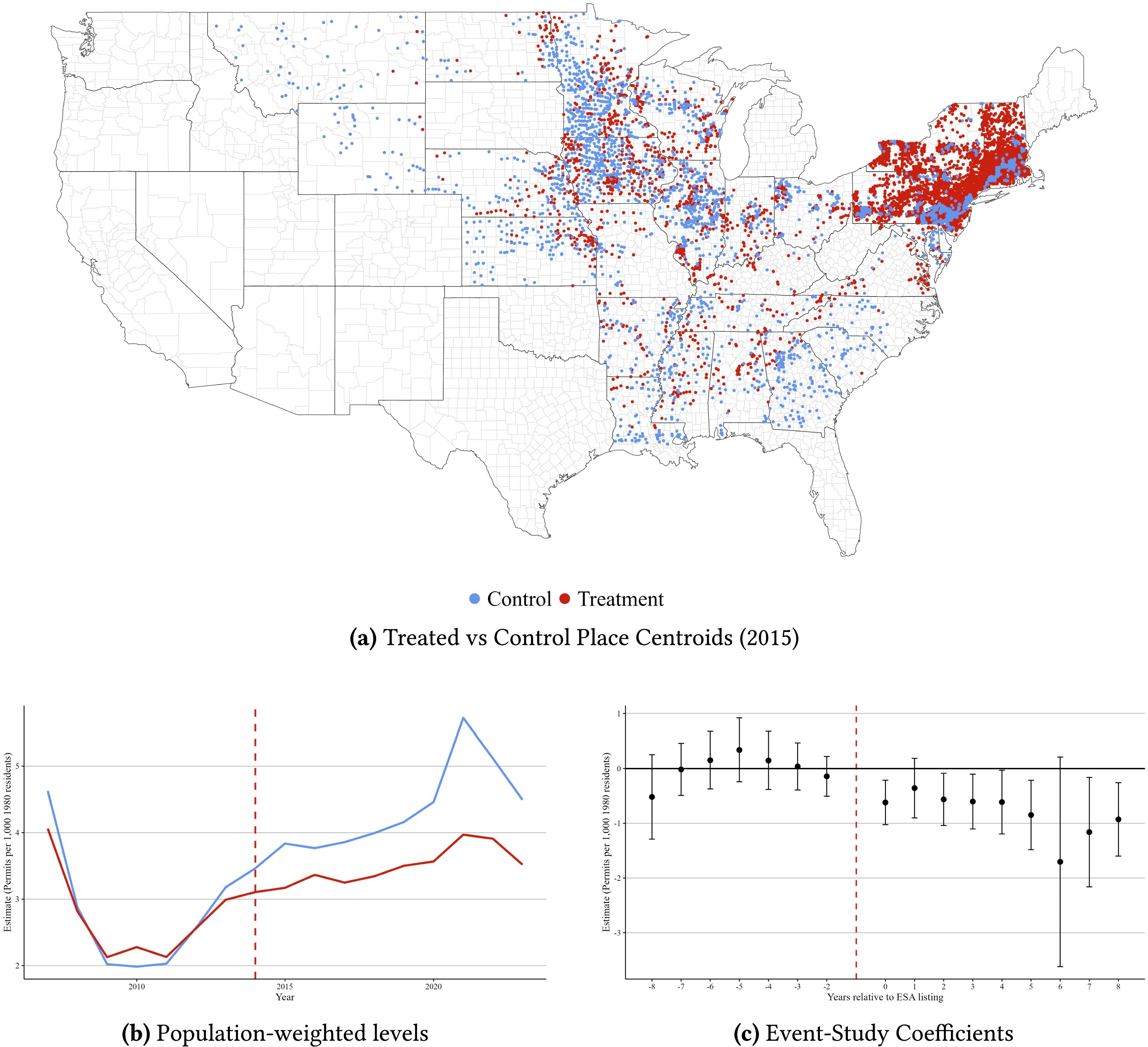
Max Tabarrok’s paper on the Endangered Species Act and housing (WP) has just been published in the Journal of Public Economics! It’s a clever paper: Max observed that the moment an animal is put on the endangered species list, developers face enhanced compliance costs and liability risk. But what’s important for an empirical economist is…
The Endangered Species Act Reduces Housing
Criminal “Villification”: Australia Court Upholds Conviction, Massive Fine, and Compelled Speech in Transgender Case
29 Jul 2026 Leave a comment
in discrimination, economics of regulation, gender, law and economics, liberalism, Marxist economics, politics - Australia, politics - USA, property rights Tags: free speech, political correctness, regressive left, sex discrimination
We have followed the evisceration of free speech values in the United Kingdom and other Western nations. Australia has been…
Criminal “Villification”: Australia Court Upholds Conviction, Massive Fine, and Compelled Speech in Transgender Case
The Apples and Oranges Tribunal
28 Jul 2026 Leave a comment
in applied price theory, discrimination, economics of education, economics of regulation, gender, labour economics, labour supply, law and economics, liberalism, Marxist economics, poverty and inequality, property rights Tags: gender wage gap, sex discrimination
Suppose that apples sell for more than oranges and Parliament in it’s wisdom decides that, at last, apples and oranges must be compared. Not by shoppers — shoppers are biased, they merely reveal what they are willing to pay — but by a tribunal, which will determine whether apples and oranges are of truly equal…
The Apples and Oranges Tribunal
Is Britain’s New Energy Secretary Even Crazier than Mad Ed?
27 Jul 2026 1 Comment
in economics of climate change, economics of regulation, energy economics, environmental economics, environmentalism, global warming, Marxist economics Tags: British politics
Energy secretary Miatta Fahnbulleh wants full Net Zero by 2030. The post Is Britain’s New Energy Secretary Even Crazier than Mad Ed? appeared first on Watts Up With That?.
Is Britain’s New Energy Secretary Even Crazier than Mad Ed?
NZ First and the oil and gas ban
26 Jul 2026 Leave a comment
in economics of regulation, energy economics, politics - New Zealand
Audrey Young writes: The ban was not in the NZF coalition agreement with Labour. They could have simply refused to back it, and there would not have been the votes for it. But they decided to back it. That is a fact. The post NZ First and the oil and gas ban first appeared on…
NZ First and the oil and gas ban


Recent Comments