I have a new working paper out. It proposes a price theory-based explanation of why states nationalize the production of “public goods” (i.e., non-excludable and non-rivalrous). This is different than existing explanations as the theory ignores whether private provision is efficient or superior to public provision. I call it the “redistributive engine” theory whereby the […]
Working paper: Why nationalize the production of public goods?
Working paper: Why nationalize the production of public goods?
09 Mar 2025 Leave a comment
in applied price theory, comparative institutional analysis, constitutional political economy, economic history, economics of bureaucracy, entrepreneurship, health economics, history of economic thought, Public Choice, public economics, rentseeking
The Licensing Racket
08 Mar 2025 Leave a comment
in applied price theory, economics of bureaucracy, entrepreneurship, human capital, income redistribution, industrial organisation, labour economics, labour supply, law and economics, occupational choice, occupational regulation, property rights, Public Choice, rentseeking
I review a very good new book on occupational licensing, The Licensing Racket by Rebecca Haw Allensworth in the WSJ. Most people will concede that licensing for hair braiders and interior decorators is excessive while licensing for doctors, nurses and lawyers is essential. Hair braiders pose little to no threat to public safety, but subpar […]
The Licensing Racket
Driving a Stake Through Stakeholder Capitalism
07 Mar 2025 Leave a comment
in economics of climate change, economics of regulation, energy economics, entrepreneurship, environmental economics, environmentalism, financial economics, global warming, politics - USA Tags: climate activists, greenwashing, regressive left
E, S, G does not cover core financial risks. We’re looking to assess financially-relevant environmental, social and governance factors, not financially-relevant financial factors.” Got that? Yup. It’s total hogwash.
Driving a Stake Through Stakeholder Capitalism
The 2023 Merger Guidelines Will Remain: What Does That Mean?
03 Mar 2025 Leave a comment
in applied price theory, economics of regulation, entrepreneurship, industrial organisation, politics - USA, survivor principle Tags: 2024 presidential election, competition law, merger law enforcement
Under current law, any US companies considering a merger or acquisition that is above $125 million in size must first report it to the government. The most recent data for 2023 says that 1,805 such transactions were reported in 2023, which was a relatively low number for recent years. In 2021 and 2022, for example,…
The 2023 Merger Guidelines Will Remain: What Does That Mean?
BP Faces “Existential Crisis” After Ruinous Attempt to Go Green
02 Mar 2025 Leave a comment
in applied price theory, economics of climate change, energy economics, entrepreneurship, environmental economics, environmentalism, financial economics, global warming, industrial organisation, politics - USA, survivor principle Tags: 2024 presidential election, climate activists, climate alarmism, efficient markets hypothesis, greenwashing
BP’s green pivot has backfired spectacularly, hammering profits and leaving the company vulnerable to a hedge fund siege, writes Jonathan Leake in the Telegraph.
BP Faces “Existential Crisis” After Ruinous Attempt to Go Green
Bands away
28 Feb 2025 Leave a comment
in entrepreneurship, labour economics, labour supply, Music Tags: creative destruction
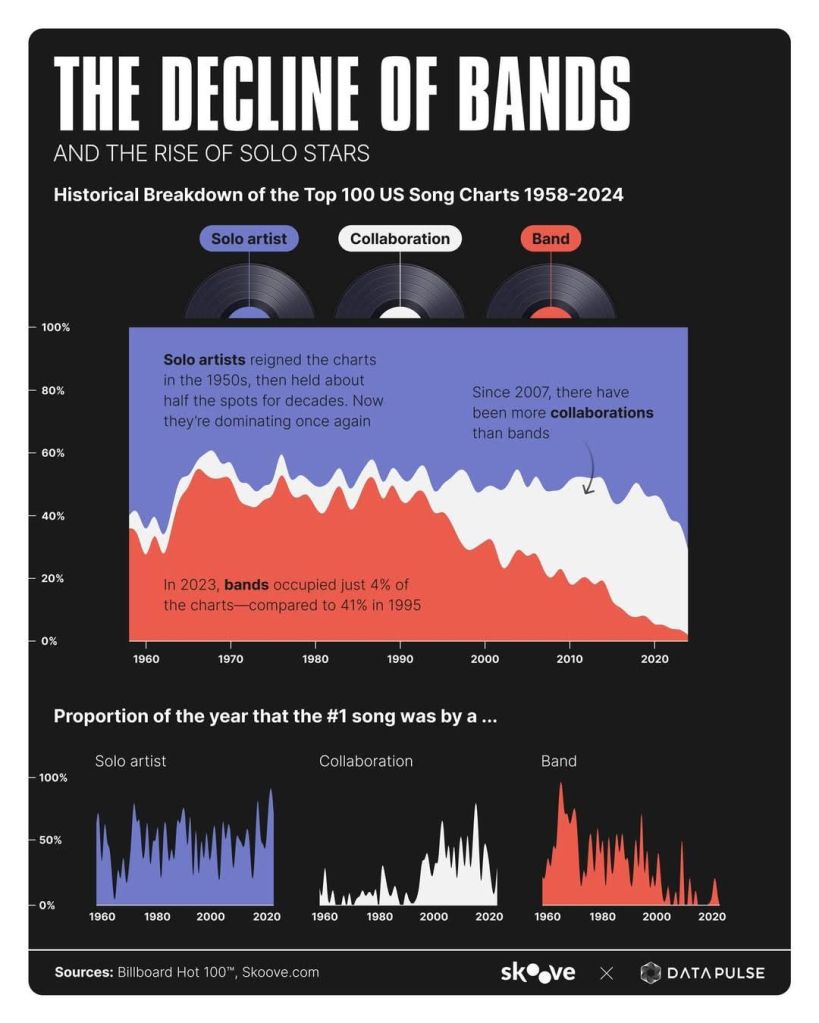
The American Rōnin: How Displaced “Disinformation Experts” Are Seeking New Opportunities in Europe and Academia
27 Feb 2025 Leave a comment
in economics of bureaucracy, economics of education, economics of information, economics of media and culture, entrepreneurship, financial economics, industrial organisation, law and economics, liberalism, Marxist economics, politics - USA, property rights, Public Choice, rentseeking Tags: 2024 presidential election, free speech, political correctness, regressive left

Below is my column in the Hill on the new American emigres: “disinformation experts” who are finding themselves unemployed with the restoration of free speech protections. Here is the column:
The American Rōnin: How Displaced “Disinformation Experts” Are Seeking New Opportunities in Europe and Academia
BP To Abandon Green Targets
25 Feb 2025 Leave a comment
in economics of climate change, energy economics, entrepreneurship, environmental economics, environmentalism, global warming Tags: climate alarmism

By Paul Homewood From the Telegraph:
BP To Abandon Green Targets
The Royal Society Moves to Expel Musk Over His Political Views
21 Feb 2025 Leave a comment
in economics of education, entrepreneurship, law and economics, liberalism, Marxist economics, property rights, transport economics Tags: free speech, political correctness, regressive left, space

Founded in 1660, the Royal Society is one of the most prominent scientific organizations in the world with associations to such luminaries as Sir Isaac Newton and Charles Darwin. Despite that proud history, British scientists are pushing to politicize the society and expel Elon Musk because they disagree with his political views. It is not […]
The Royal Society Moves to Expel Musk Over His Political Views
Alex and I consider how to reform the NSF in economics
10 Feb 2025 Leave a comment
in applied price theory, economics of education, entrepreneurship Tags: creative destruction, R&D
Here is a redux of our 2016 Journal of Economic Perspectives piece. Here is the abstract: We can imagine a plausible case for government support of science based on traditional economic reasons of externalities and public goods. Yet when it comes to government support of grants from the National Science Foundation (NSF) for economic research, […]
Alex and I consider how to reform the NSF in economics
Goldilocks and the Laffer Curve
09 Feb 2025 Leave a comment
in applied price theory, budget deficits, economic growth, entrepreneurship, fiscal policy, labour economics, labour supply, macroeconomics, politics - USA, public economics Tags: taxation and entrepreneurship, taxation and investment, taxation and labour supply

Other than Art Laffer, I think of myself as the world’s biggest advocate of the Laffer Curve. I’ve literally written hundreds of columns explaining and promoting the concept. My goal is to help people understand that there is not a linear relationship between tax rates and tax revenue. Why is this the case? Because when […]
Goldilocks and the Laffer Curve
Trade 101 for Trumpies
08 Feb 2025 Leave a comment
in applied price theory, applied welfare economics, Austrian economics, comparative institutional analysis, constitutional political economy, development economics, entrepreneurship, industrial organisation, international economics, politics - USA Tags: 2024 presidential election
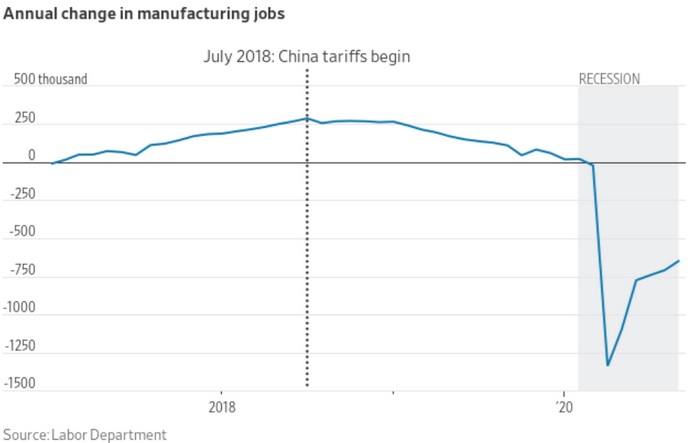
To augment my four-part video series about trade (dealing with the WTO, creative destruction, deficits, and economics), here’s part of my recent lecture about Trump’s trade policy to the Universidad de Libertad in Mexico City For those who (mistakenly) want to skip the video, my speech focused on these five themes. Trade deficits don’t matter. […]
Trade 101 for Trumpies
By 2025 we were supposed to have closed the gap
05 Feb 2025 Leave a comment
in economic growth, economics of regulation, entrepreneurship, human capital, industrial organisation, labour economics, labour supply, macroeconomics, politics - New Zealand, poverty and inequality
Don Brash and Michael Reddell write – When Don was young and Michael’s parents were young, New Zealand had among the very highest material standards of living in the world. It really was, in the old line, one of the very best places to bring up children. But no longer. For 75 years now, with […]
By 2025 we were supposed to have closed the gap
Levels of Industrial Policy
05 Feb 2025 Leave a comment
in applied price theory, comparative institutional analysis, development economics, economic history, entrepreneurship, industrial organisation, Public Choice, rentseeking Tags: industry policy
In arguments over industrial policy, there’s often a moment where someone makes an assertion like: “Every nation has industrial policy. Even not having an industrial policy is a type of industrial policy. The only relevant question is what kind of industrial policy we should choose.” In my experience, the people who make this argument then…
Levels of Industrial Policy
Mocking European Statism
04 Feb 2025 1 Comment
in applied price theory, Austrian economics, comparative institutional analysis, economic growth, economics of bureaucracy, economics of regulation, entrepreneurship, environmental economics, financial economics, industrial organisation, international economics, labour economics, labour supply, law and economics, liberalism, macroeconomics, Marxist economics, property rights, Public Choice, public economics, rentseeking, survivor principle, theory of the firm Tags: employment law, European Union
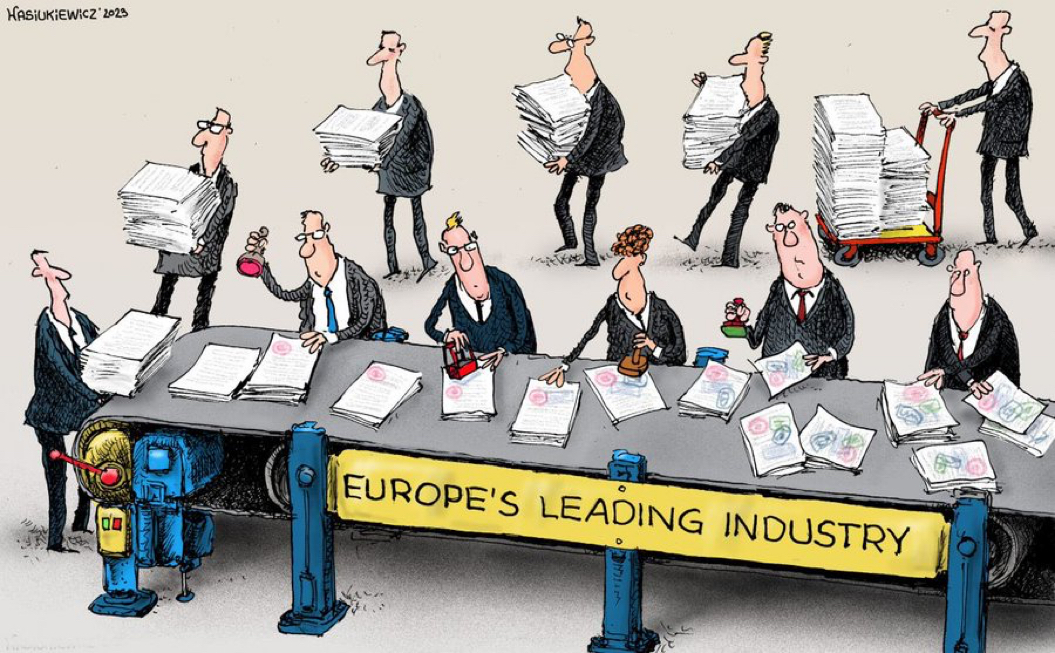
I have a special page for humor involving Europe, but I have not added to it since sharing some Brexit humor in 2016. Let’s being the process of catching up with some amusing cartoons and memes mocking our government-loving cousins on the other side of the Atlantic Ocean. I’ve made the serious point that bureaucrats […]
Mocking European Statism
 Utopia, you are standing in it!
Recent Comments