The year ahead: Oliver Hartwich reflects on nearly five decades of living through technological transformation – and finds a giant wellspring of optimism Oliver Hartwich writes – When Newsroom’s editor Jonathan Milne invited me to write one of two special pieces for the summer break, I faced quite the conundrum. My options were to either […]
A pessimist’s reasons to be optimistic in 2025
22 Jan 2025 Leave a comment
in applied price theory, economics of regulation, entrepreneurship, industrial organisation, labour economics, law and economics, macroeconomics, politics - New Zealand
No Tech Workers or No Tech Jobs?
19 Jan 2025 1 Comment
in economics of education, entrepreneurship, human capital, industrial organisation, labour economics, labour supply, occupational choice

Several recent tweets(xeets) about tech talent re-ignited the conversation about native-born STEM workers and American policy. For the Very Online, Christmas 2024 was about the H-1B Elon tweets. Elon Musk implies that “elite” engineering talent cannot be found among Americans. Do Americans need to import talent? What would it take to home grow elite engineering […]
No Tech Workers or No Tech Jobs?
Quotation of the Day…
19 Jan 2025 1 Comment
in Adam Smith, applied price theory, comparative institutional analysis, development economics, economic history, economics of love and marriage, economics of regulation, entrepreneurship, history of economic thought, industrial organisation, labour economics, labour supply, law and economics, poverty and inequality, property rights, unemployment

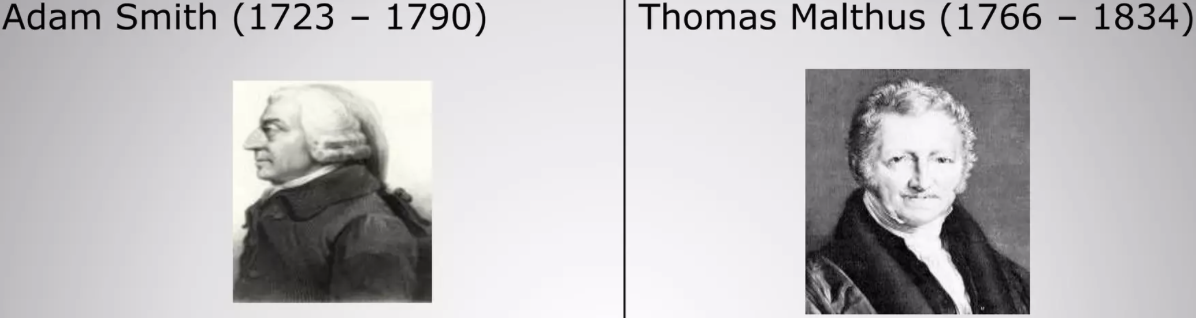
Tweet… is from page 53 of the late, great Harold Demsetz’s excellent 2008 book, From Economic Man to Economic System: Adam Smith and Thomas Malthus differed in their forecasts of mankind’s future. Smith (1776), in his Wealth of Nations, offered an optimistic view, basing this on his understanding of the new economic system that began…
Quotation of the Day…
Canada’s missing entrepreneurs
18 Jan 2025 Leave a comment
in applied price theory, economics of regulation, entrepreneurship, industrial organisation, regulation Tags: Canada
From John Ruffalo.
Canada’s missing entrepreneurs
Natural Diamonds Had a Rough Year—Some Hope to Restore Their Shine
18 Jan 2025 Leave a comment
in applied price theory, entrepreneurship, industrial organisation, market efficiency, survivor principle Tags: creative destruction
Lab-grown diamonds are gaining share, but they might be getting too cheap and largeBy Jinjoo Lee of The WSJ. Excerpts:”After a postpandemic surge in demand in 2021 and 2022, natural-diamond prices are down about 8% compared with the first quarter of 2020, while lab-grown diamond prices are down 75%” [if they are substitutes for each…
Natural Diamonds Had a Rough Year—Some Hope to Restore Their Shine
Further proof the Council just made things worse
17 Jan 2025 Leave a comment
in applied price theory, comparative institutional analysis, economics of bureaucracy, economics of regulation, entrepreneurship, industrial organisation, politics - New Zealand, Public Choice, public economics, rentseeking, survivor principle
Stuff reports: Reading Cinemas is set to return to Wellington after it was revealed on Tuesday night that the cinema chain’s owner, Reading International, intends to undertake a redevelopment of the old building. The company has entered into a Sale and Purchase Agreement with Prime Property Group, with part of the deal including a seismic upgrade […]
Further proof the Council just made things worse
Martha
15 Jan 2025 Leave a comment
in economic history, economics of crime, entrepreneurship, industrial organisation, law and economics
Martha (Netflix): A compelling bio on Martha Stewart. Her divorce from Andrew Stewart happened more than 30 years ago so the intensity of her anger and bitterness comes as a surprise. With barely concealed rage, she recounts his affairs and how poorly he treated her. “But didn’t you have an affair before he did?” asks […]
Martha
The Acemoglu arguments against high-skilled immigration
13 Jan 2025 Leave a comment
in applied price theory, economics of education, entrepreneurship, human capital, international economics, labour economics, labour supply, occupational choice, politics - USA, poverty and inequality Tags: economics of immigration
Here is Daron Acemoglu’s Project Syndicate piece, mostly critical on high-skilled immigration. Here is the first argument from Acemoglu: …one would expect corporate America’s growing need for skilled STEM workers to translate into advocacy for, and investments in, STEM education. But an overreliance on the H-1B program may have broken this link and made American […]
The Acemoglu arguments against high-skilled immigration
Will Australia’s Mandatory Climate Reporting make Greenwashing Illegal?
13 Jan 2025 Leave a comment
in economics of climate change, economics of information, economics of regulation, energy economics, entrepreneurship, environmental economics, environmentalism, financial economics, global warming, politics - Australia Tags: climate activists, climate alarmism

Legal penalties for greenwashing could force Aussie companies to declare their total lack of interest in climate action.
Will Australia’s Mandatory Climate Reporting make Greenwashing Illegal?
‘A Huge Win’: Woke ‘Cartel’ Of Financial Giants Dealt Death Blow 11 Days Before Trump Takes Office
13 Jan 2025 Leave a comment
in applied price theory, economics of climate change, energy economics, entrepreneurship, environmental economics, environmentalism, financial economics, global warming, politics - USA, Public Choice, rentseeking Tags: efficient markets hypothesis
“The news of BlackRock’s departure from NZAM should be music to the ears of every American consumer,” Will Hild, executive director of conservative nonprofit Consumers’ Research, told the Daily Caller News Foundation. “NZAM is an illegitimate cartel of asset managers pushing harmful and costly net zero policies across the entire economy. The activities of NZAM and its members raise prices on Americans everywhere from the gas pump to the grocery store.”
‘A Huge Win’: Woke ‘Cartel’ Of Financial Giants Dealt Death Blow 11 Days Before Trump Takes Office
Some Links
12 Jan 2025 Leave a comment
in applied price theory, budget deficits, development economics, economic growth, economic history, economics of regulation, entrepreneurship, fiscal policy, global financial crisis (GFC), great recession, growth disasters, growth miracles, human capital, income redistribution, industrial organisation, international economics, job search and matching, labour economics, labour supply, macroeconomics, monetary economics, poverty and inequality, Public Choice, rentseeking, survivor principle, unemployment
TweetGMU Econ alum Holly Jean Soto busts the myth of “greedflation.” Scott Lincicome identifies an interesting contrast between the facts and opinion about China. George Will decries the spinelessness of the modern U.S. Congress. A slice: The incoming president will be able, on a whim, to unilaterally discombobulate international commerce — and the domestic economy…
Some Links
Mr. Haltiwanger and the Austrians
11 Jan 2025 1 Comment
in applied price theory, Austrian economics, economic history, entrepreneurship, history of economic thought, Israel Kirzner
In November, I chided Austrian economists for neglecting the John Haltiwanger’s empirical work on creative destruction:Around 2000, I discovered that John Haltiwanger, a very mainstream economist, had a pile of empirical evidence vindicating the importance of Schumpeterian creative destruction. That pile is now a mountain. At the time, I tried to get Austrians to start…
Mr. Haltiwanger and the Austrians
Meta dismantles misinformation industry
09 Jan 2025 Leave a comment
in economics of information, entrepreneurship, industrial organisation, law and economics, liberalism, politics - Australia, politics - New Zealand, politics - USA, property rights, Public Choice, survivor principle Tags: 2024 presidential election, free speech, political correctness, regressive left
Mark Zuckerberg announced: In recent years we’ve developed increasingly complex systems to manage content across our platforms, partly in response to societal and political pressure to moderate content. This approach has gone too far. As well-intentioned as many of these efforts have been, they have expanded over time to the point where we are making […]
Meta dismantles misinformation industry
A Reading deal that doesn’t cost ratepayers
08 Jan 2025 Leave a comment
in economics of bureaucracy, entrepreneurship, industrial organisation, law and economics, politics - New Zealand, property rights, Public Choice, rentseeking, survivor principle
NewstalkZb reports: The derelict Reading Cinema complex on Wellington’s Courtenay Place has finally been sold, with a local developer snapping up the 1.5-hectare plot. The property was at the centre of a controversial deal between Wellington City Council and Reading International last year, after the council tried to buy the land under the quake-prone building […]
A Reading deal that doesn’t cost ratepayers
Meta Culpa: Zuckerberg Joins Musk in the Global Fight for Free Speech
08 Jan 2025 Leave a comment
in economics of information, economics of regulation, entrepreneurship, law and economics, liberalism, politics - USA Tags: creative destruction, free speech, political correctness, regressive left

Below is my column in Fox.com on the potentially historic change in policy at Meta to restore free speech protections. As one of the longest and loudest critics of the company over its censorship history, it is admittedly hard to trust. However, an alliance of Mark Zuckerberg with Elon Musk could prove the most important […]
Meta Culpa: Zuckerberg Joins Musk in the Global Fight for Free Speech
Recent Comments