Quotation of the Day from French Economist Frederic Bastiat in the 1850s http://t.co/2ECWtb6m9u—
Mark J. Perry (@Mark_J_Perry) August 14, 2015
Why @NZGreens @nzlabour @GreenpeaceNZ hate applied welfare economics
21 Aug 2015 Leave a comment
in applied welfare economics, economics of regulation, energy economics, environmental economics, health economics, international economics, labour economics, law and economics, politics - New Zealand, Public Choice Tags: antiforeign bias, antimarket bias, expressive voting, Greenpeace, Leftover Left, make-work bias, methodology of economics, New Zealand Greens, New Zealand Labour Party, rational ignorance, rational irrationality
@NZGreens @GreenpeaceNZ Senator Leyonhjelm on the blood on the hands of the modern Luddites
19 Aug 2015 Leave a comment
in applied price theory, development economics, economic history, economics of information, economics of media and culture, economics of regulation, environmental economics, environmentalism, growth disasters, growth miracles, health economics, liberalism Tags: Anti-Science left, expressive voting, GMOs, golden rice, Greenpeace, Luddites, New Zealand Greens, precautionary principle, rational ignorance, rational irrationality, The Great Escape
Good as Gold: Can Golden Rice and Other Biofortified Crops Prevent Malnutrition? ow.ly/QQ1VT #Harvard http://t.co/O3SwpGhsXD—
Golden Rice (@Golden_Rice) August 13, 2015
INFOGRAPHICS: The Impacts of #Biotechnology: A Close Look at the Latest Study ow.ly/GUi4U @FoodInsight http://t.co/JQsmrm2Lv1—
Golden Rice (@Golden_Rice) January 07, 2015
Anti-Golden Rice keyboard
Used by opponent to debate against supporters of #goldenrice
@EcoSenseNow @Golden_Rice http://t.co/q6xt5j7hb1—
Golden Rice Now (@paulevans18) August 21, 2015
.@gpph If this girl could have eaten #goldenrice for lunch, she would not be blind today. ALLOW GOLDEN RICE NOW http://t.co/3UlwHAdWdZ—
Golden Rice Now (@paulevans18) July 29, 2015
Julian Simon and William Buckley on Cross–Fire
18 Aug 2015 Leave a comment
in applied price theory, applied welfare economics, economic history, energy economics, entrepreneurship, environmental economics, environmentalism, liberalism, resource economics Tags: commodity prices, creative destruction, entrepreneurial alertness, Julian Simon, peak oil, The Great Enrichment, The Great Escape, The Great Fact, William Buckley
The track record on banking on solar energy innovation becoming cost competitive
18 Aug 2015 Leave a comment
in economic history, energy economics, entrepreneurship, environmental economics, global warming, politics - USA, Public Choice, rentseeking Tags: Big Solar, creative destruction, green rent seeking, renewable energy, renewable resources, solar energy
The Great Escape is on-going
18 Aug 2015 Leave a comment
in applied welfare economics, development economics, economic history, environmental economics, growth disasters, growth miracles, health economics Tags: child mortality, global poverty, infant mortality, life expectancies, stream poverty, The Great Escape, The Great Fact
https://twitter.com/humanprogress/status/631179133989617665/photo/1
The total number of undernourished persons is falling despite population growth. buff.ly/1MgKWqd #food #health http://t.co/YfAltqvxVy—
HumanProgress.org (@humanprogress) August 11, 2015
Extreme poverty is declining, but more quickly in some places than others. See the data: buff.ly/1DDz0O5 http://t.co/W1a0WpCxHI—
HumanProgress.org (@humanprogress) August 11, 2015
Has the ‘Peak Oil’ drama peaked?
17 Aug 2015 Leave a comment
in economic history, energy economics, entrepreneurship, environmental economics, resource economics Tags: creative destruction, entrepreneurial alertness, peak oil, The Great Enrichment

Remember Peak Oil? Just a few years ago Green Party leaders Jeanette Fitzsimons and Russell Norman routinely issued warnings about ‘the world running out of oil’ and told us that we needed to move freight off roads and on to shipping and rail, and commuters out of cars and on to trains, buses and bicycles.
They weren’t alone of course. An April 2006 article in The Economist reported that:
For years a small group of geologists has been claiming that the world has started to grow short of oil, that alternatives cannot possible replace it and that an imminent peak in production will lead to economic disaster. In recent months this view has gained wider acceptance on Wall Street and in the media. Recent books on oil have bewailed the threat. Every few weeks, its seems, “Out of Gas”, “The Empty Tank” and “The Coming Economic Collapse: How You Can…
View original post 651 more words
On the inefficiency of fuel efficiency standards
17 Aug 2015 Leave a comment
in applied price theory, applied welfare economics, economics of regulation, energy economics, environmental economics Tags: fuel efficiency standards, offsetting behaviour, The fatal conceit, The pretense to knowledge, unintended consequences
How humans cause mass extinctions?
17 Aug 2015 Leave a comment
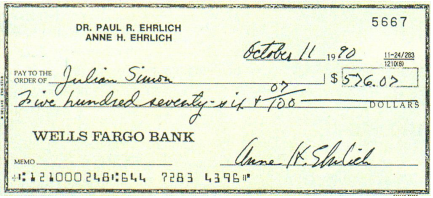
in environmental economics, environmentalism Tags: cranks, doomsday prophets, endangered species, Paul Ehrlich
HT: MasterResource

If Someone Replaced Your Car with a Prius, Would You Drive More?
17 Aug 2015 Leave a comment
in applied price theory, energy economics, entrepreneurship, environmental economics, industrial organisation Tags: offsetting behaviour, The fatal conceit, The pretense to knowledge, unintended consequences
Settled science part 1: Is science ever actually settled?
17 Aug 2015 Leave a comment
in applied welfare economics, energy economics, environmental economics, history of economic thought Tags: climate alarmism, conjecture and ref patient, global warming, methodology of economics, philosophy of science, philosophy of social sciences

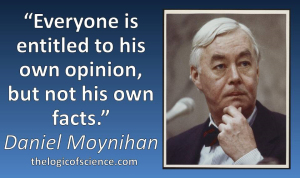 We are constantly told that “everyone has a right to their opinion” and “there are two sides to every story.” Our entire news system is predicated on the notion that we need to give fair time to both sides of every situation. The problem with this type of thinking is that it leads to the misconception that both sides are equally valid, or, at the very least, that there must be some truth to both sides, but in many cases, only one side has any merit. In other words, it’s often not opinion #1 vs. opinion #2, rather, it is fact vs. fiction. One “side” is reality, while the other “side” is a fairy tail. For example, if you want to say that the island of Jamaica is being carried around on the back of giant sea turtle, that’s not your opinion, you’re just wrong. There wouldn’t be two legitimate…
View original post 1,489 more words
The Battle Over Global Warming Is All in Your Head
16 Aug 2015 Leave a comment
in applied price theory, applied welfare economics, economics of information, economics of media and culture, energy economics, environmental economics, global warming Tags: climate alarmism, doomsday prophecies, global warming, political psychology
Unexpected kind word for Parliament House protesters @GreenpeaceNZ @RusselNorman @NZGreens @greencatherine
15 Aug 2015 2 Comments
in constitutional political economy, economics of crime, environmental economics, global warming, law and economics, liberalism, politics - New Zealand, Public Choice, Rawls and Nozick, rentseeking Tags: civil disobedience, climate alarmism, expressive voting, Greenpeace, John Rawls, Justice Scalia, Leftover Left, rule of law
PRESS RELEASE: Greenpeace Parliament Climbers Convicted of Trespass bit.ly/1DRfKMG #realclimateaction http://t.co/sxRokpwRNk—
Greenpeace NZ (@GreenpeaceNZ) August 13, 2015
The Greenpeace vandals who trespassed at Parliament, climbing up to put signs down the front in flagrant disregard of the most ample possible options for peaceful protest right outside at least had the integrity to plead guilty. That shows some sort of fidelity to law and an acknowledgement that what they did was a criminal offence.
John Rawls makes the point that the purpose of civil disobedience is not to impose your will upon others but through your protest to implore them to reconsider their position and change the law or policy you are disputing.
Rawls argues that civil disobedience is never covert or secretive; it is only ever committed in public, openly, and with fair notice to legal authorities. Openness and publicity, even at the cost of having one’s protest frustrated, offers ways for the protesters to show their willingness to deal fairly with authorities. Rawls argues:
- for a public, non-violent, conscientious yet political act contrary to law being done (usually) with the aim of bringing about a change in the law or policies of the government;
- that appeals to the sense of justice of the majority;
- which may be direct or indirect;
- within the bounds of fidelity to the law; and
- whose protesters are willing to accept punishment. Although civil disobedience involves breaking the law, it is for moral rather than selfish reasons; the willingness to accept arrest is proof of the integrity of the act.
Rawls argues, and too many forget, that civil disobedience and dissent more generally contribute to the democratic exchange of ideas by forcing the champions of dominant opinion to defend their views.
Legitimate non-violent direct action are publicity stunts to gain attention and provoke debate within the democratic framework, where we resolve our differences by trying to persuade each other and convince the electorate.
Too many acts of non-violent direct action aim to impose their will on others rather than peaceful protests designed to bring about democratic change in the laws or policies of the incumbent government. That ‘might does not make right’ is fundamental to the rule of law. As United States Supreme Court Justice Antonin Scalia said
The virtue of a democratic system [with a constitutionally guaranteed right to free speech] is that it readily enables the people, over time, to be persuaded that what they took for granted is not so and to change their laws accordingly..
Both sides passionately but respectfully attempt to persuade their fellow citizens to accept their views. Win or lose, advocates for today’s losing causes can continued pressing their cases, secure in the knowledge that an electoral loss today can be negated by a later electoral win, which is democracy in action as Justice Kennedy explains:
…a democracy has the capacity—and the duty—to learn from its past mistakes; to discover and confront persisting biases; and by respectful, rationale deliberation to rise above those flaws and injustices…
It is demeaning to the democratic process to presume that the voters are not capable of deciding an issue of this sensitivity on decent and rational grounds.
The process of public discourse and political debate should not be foreclosed even if there is a risk that during a public campaign there will be those, on both sides, who seek to use racial division and discord to their own political advantage. An informed public can, and must, rise above this. The idea of democracy is that it can, and must, mature.
Freedom embraces the right, indeed the duty, to engage in a rational, civic discourse in order to determine how best to form a consensus to shape the destiny of the Nation and its people. These First Amendment dynamics would be disserved if this Court were to say that the question here at issue is beyond the capacity of the voters to debate and then to determine.
John Rawls’ view that fidelity to law and democratic change through trying to persuade each other is at the heart of civil disobedience reflects the difference between the liberal and the left-wing on democracy and social change as Jonathan Chait observed this week:
Liberals treat political rights as sacrosanct. The left treats social and economic justice as sacrosanct. The liberal vision of political rights requires being neutral about substance.
To the left, this neutrality is a mere guise for maintaining existing privilege; debates about “rights” can only be resolved by defining which side represents the privileged class and which side represents the oppressed…
Liberals believe that social justice can be advanced without giving up democratic rights and norms. The ends of social justice do not justify any and all means.
How the left-wing and liberal visions of democracy are different nymag.com/daily/intellig… http://t.co/Qk5vS9SaV4—
Jonathan Chait (@jonathanchait) August 13, 2015
Why are Australian power prices so high?
15 Aug 2015 Leave a comment
in energy economics, environmental economics, global warming, politics - Australia, politics - New Zealand, politics - USA Tags: carbon pricing, climate alarmism, power prices, solao energy, solar power, wind power
‘Climate culture’ versus ‘knowing disbelief’
15 Aug 2015 Leave a comment
in applied price theory, economics of information, economics of media and culture, environmental economics, global warming Tags: climate change, conjecture and refutation, global warming, philosophy of science, political psychology

by Andy West
Climate culture versus knowing disbelief.
View original post 2,438 more words
Shocker! EPA chief admits nature can ‘restore’ itself (but only if the EPA caused the problem)
15 Aug 2015 Leave a comment
in comparative institutional analysis, economics of bureaucracy, economics of media and culture, economics of regulation, environmental economics, industrial organisation, Public Choice, public economics Tags: constitutional law, sovereign immunity
 Utopia, you are standing in it!

Recent Comments