@GreenpeaceNZ @savethearctic real reason @Shell stopped Arctic drilling @NZGreens
07 Oct 2015 Leave a comment
5 Ways People Power Helped Defeat Shell >> bit.ly/1L4KgAP #savethearctic http://t.co/e3Bn319yOe—
Greenpeace Canada (@GreenpeaceCA) October 06, 2015
Today in Energy: Sustained low oil prices could reduce exploration and production investment go.usa.gov/3twad http://t.co/zH8EpFc4Xx—
EIA (@EIAgov) September 24, 2015
CHART: Thanks to #fracking, US produced >89% of energy consumed this year (through June) for 1st time since 1984 http://t.co/8yEUac1pBA—
Mark J. Perry (@Mark_J_Perry) September 29, 2015
CHART: Thanks to #fracking, US petroleum imports this year through August (25.3%) are lowest in 44 years, since 1971 http://t.co/ThSbPTVDkH—
Mark J. Perry (@Mark_J_Perry) September 29, 2015
New EIA Data: US oil output fell to 9.1 bpd last week, down by 508,000 bpd from July peak ir.eia.gov/wpsr/overview.… http://t.co/VwAjeQ2dEN—
Mark J. Perry (@Mark_J_Perry) September 30, 2015
Energy Milestone: Thanks #fracking US Nat Gas Production Increased in July to New Record High eia.gov/dnav/ng/ng_pro… http://t.co/8KECE6ftxm—
Mark J. Perry (@Mark_J_Perry) September 30, 2015
Humanity keeps finding new reserves of energy: buff.ly/1LbOCcW #progress http://t.co/QhzgYkjWEi—
HumanProgress.org (@humanprogress) October 04, 2015
@RichardTol on energy pollution trade-offs
05 Oct 2015 Leave a comment
in energy economics, environmental economics, global warming Tags: air pollution, Richard Tol, trade-offs
BBC @RHarrabin on RE emissions pollution etc, good summary of complexity by @RichardTol
bbc.co.uk/news/science-e… http://t.co/xQNGzlpUSe—
Roddy Campbell (@Roddy_Campbell) September 29, 2015
Energy poverty and Euro inflation rates
04 Oct 2015 Leave a comment
in energy economics, environmental economics, global warming Tags: climate alarmism, energy poverty, energy prices, EU, green rent seeking, power prices
I wonder what caused that negative inflation print? ec.europa.eu/eurostat/docum… http://t.co/rYI5VnZOzI—
Lorcan Roche Kelly (@LorcanRK) September 30, 2015
@GreenpeaceNZ The 25th anniversary of the famous bet between Julian Simon and Paul Ehrlich
03 Oct 2015 Leave a comment
in economics, energy economics, entrepreneurship, environmental economics, resource economics
A 2011 blog post of mine on "the bet" rogerpielkejr.blogspot.com/2011/10/cornuc…
Attached a bigger bin of commodities & bet dates in red http://t.co/SC6HeuRwys—
Roger Pielke Jr. (@RogerPielkeJr) April 29, 2015
@AlexEpstein on why you should love fossil fuels
02 Oct 2015 Leave a comment
in development economics, energy economics, environmental economics Tags: Alex Epstein, climate alarmism, energy poverty, The Great Enrichment, The Great Escape
@World_Wildlife on the cost of moving to a low carbon economy @jamespeshaw @GreenpeaceNZ @NZGreens
01 Oct 2015 Leave a comment
in applied price theory, environmental economics, global warming, Public Choice, rentseeking Tags: climate alarmism, evidence-based policy, expressive voting, global warming, green rent seeking, low carbon economy, rational ignorance, rational rationality

It was not a sell-out for me to buy organic pumpkin soup tonight
01 Oct 2015 Leave a comment
in economics of media and culture, environmental economics, health economics Tags: carbon footprint, food prices economics of agriculture, food snobs, green rent seeking, organic food, The meaning of competition
It just happen to be cheaper tonight otherwise I would never go over to the dark side. Organic has a worse carbon footprint and uses DHMO, but I do not care either way for this crime against the climate I just committed.

The financial performance of Landcorp since 2007
29 Sep 2015 Leave a comment
in economic history, environmental economics, industrial organisation, politics - New Zealand, resource economics, survivor principle Tags: agricultural economics, Landcorp, privatisation, state owned enterprises
Landcorp is a state-owned enterprise of the New Zealand government. Its core business is pastoral farming including dairy, sheep, beef and deer. In January 2012, Landcorp managed 137 properties carrying 1.5 million stock units on 376,156 hectares of land. Its total return to shareholders, the taxpayers, has been quite up-and-down in recent years.
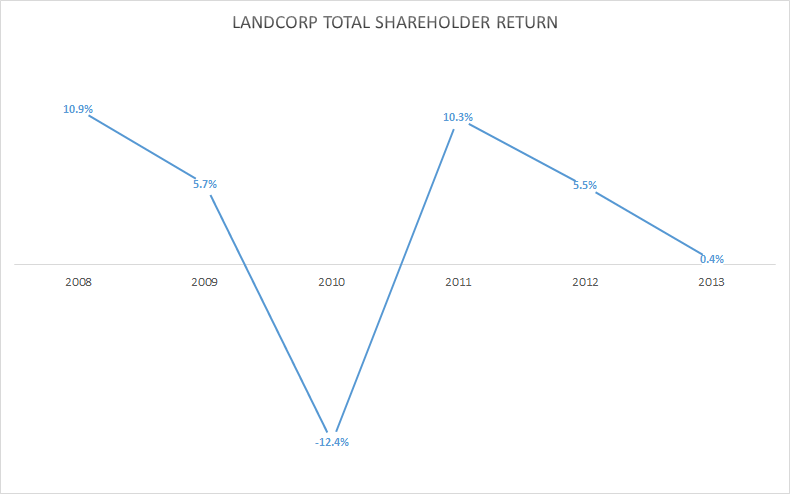
Source: The New Zealand Treasury – data released under the Official Information Act.
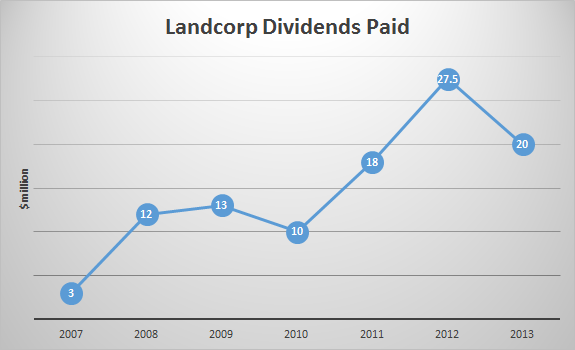
Source: The New Zealand Treasury – data released under the Official Information Act.
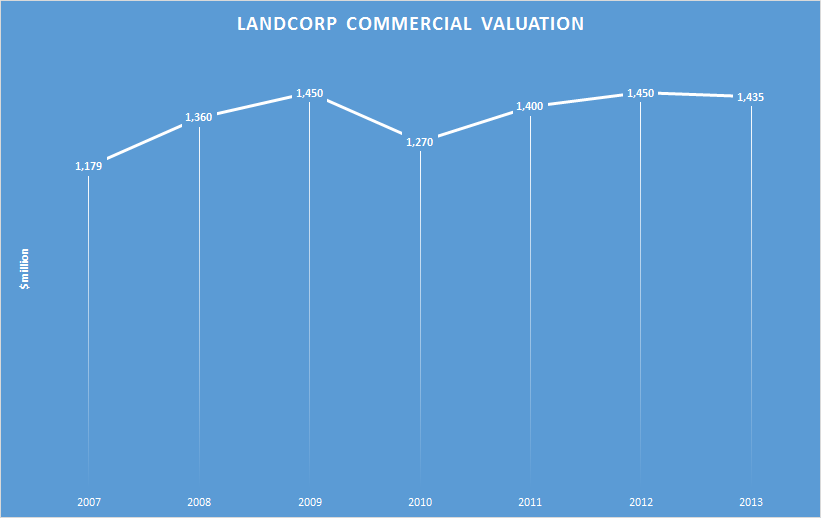
Source: The New Zealand Treasury – data released under the Official Information Act.
.
RT @NZGreens @GreenpeaceNZ @KevinHague Allow Golden Rice Now
25 Sep 2015 Leave a comment
in development economics, economics of regulation, environmental economics, growth disasters, growth miracles, health economics Tags: child mortality, child poverty, economics of agriculture, extreme poverty, global hunger, global poverty, GMOs, golden rice, Greenpeace, infant mortality, Luddites, malnutrition, New Zealand Greens, unintended consequences
Good as Gold: Can Golden Rice and Other Biofortified Crops Prevent Malnutrition? ow.ly/QQ1VT #Harvard http://t.co/O3SwpGhsXD—
Golden Rice (@Golden_Rice) August 13, 2015
RT @GreenpeaceNZ are right: Do not send anyone to @cop21 The summit is waste of time
25 Sep 2015 Leave a comment
in environmental economics, global warming, politics - Australia, politics - New Zealand, politics - USA, Public Choice Tags: China, climate alarmism, climate treaties, global warming, green tariffs, Greenpeace, international environmental law, Paris Summit 2015, Twitter left
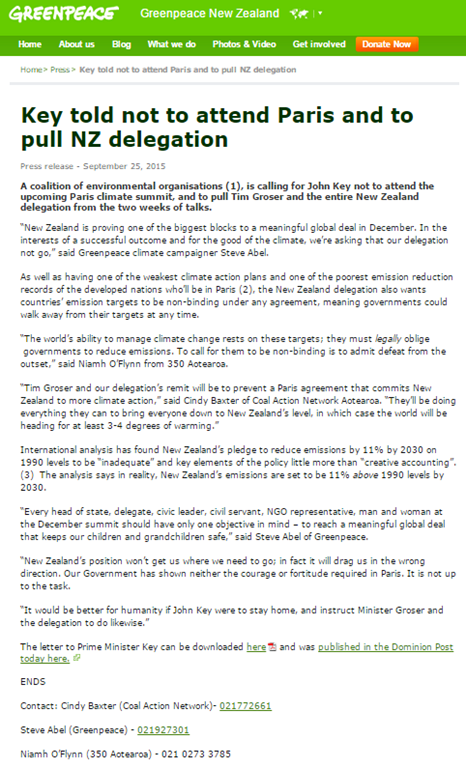
Greenpeace is right in saying in their open letter with others that New Zealand should not send a minister to the climate talks in Paris later this year. I agree for different reasons.
An open letter from @GreenpeaceNZ, @350nz & @coalaction to @johnkeypm not to send anyone to #climate talks in Paris. http://t.co/C1hBJ1teNU—
ActionStation (@actionstation) September 25, 2015
In common with many previous climate summits, the Paris talks will be a futile gesture that will have no significant effect on the pace of global warming and holding the summit is a waste of taxpayers money.
Nothing will come of them because the developing countries have no interest in postponing their development because of a minor inconvenience from global warming.
Do us all a favour @JohnKeyPM, don't send Tim to Paris >> stuff.co.nz/environment/cl… #GroserDontGo #COP21 http://t.co/DaqvPGZ4Ls—
Greenpeace NZ (@GreenpeaceNZ) September 25, 2015
The easy way to tell if there is anything going to happen at a climate summit is the seniority of the delegation.

The Chinese made it clear at the Copenhagen summit in 2009 that they were not interested in an agreement by sending a Vice Minister of Foreign Affairs to a key side meeting of the American and French presidents, the British Prime Minister and the German Chancellor. All subsequent policy manoeuvrings by the Chinese on global warming are an attempt to head off green tariffs on their exports.
Is renewable energy the face of the future?
23 Sep 2015 Leave a comment
in energy economics, environmental economics, global warming Tags: Big Solar, Big Wind, climate alarmists, hydropower, renewable energy, solar power, wind power
EIA Forecast for US Energy Sources to 2040. Fossil fuels will supply >80%, renewables 8%, it's a 'fossil fuel future' http://t.co/B923DH9ncW—
Mark J. Perry (@Mark_J_Perry) June 11, 2015
Entrepreneurial alertness in vehicle emissions testing
23 Sep 2015 1 Comment
in economics of crime, entrepreneurship, environmental economics, industrial organisation, law and economics, survivor principle, transport economics Tags: air pollution, entrepreneurial alertness, vehicle emissions testing, Volkswagen
Here's how Volkswagen's system for fooling the emission tests worked: nyti.ms/1Fdlcus http://t.co/U7hlLejNK0—
NYT Business (@nytimesbusiness) September 22, 2015
Many conservationists are against effective rhino conservation
23 Sep 2015 Leave a comment
in applied price theory, development economics, entrepreneurship, environmental economics, growth disasters, growth miracles, law and economics, property rights Tags: Africa, agricultural economics, do gooders, economics of conservation, economics of endangered species, endangered species, expressive voting, Leftover Left, Twitter left, unintended consequences
https://twitter.com/ConversationUK/status/646227223716872197/photo/1
https://twitter.com/dlAfrican/status/646215227076292608
Capturing the economic value of wildlife for the benefit of wildlife. New in PERC Reports: bit.ly/1JHerwj http://t.co/yijFIChPDo—
PERC (@PERCtweets) September 13, 2015
How private ownership and trophy hunting saved the southern white rhino: bit.ly/1HhZy55 #WorldRhinoDay http://t.co/s4PudPwrrI—
PERC (@PERCtweets) September 22, 2015
 Utopia, you are standing in it!

Recent Comments