Will a global climate change treaty be signed this year?
27 Feb 2015 Leave a comment
in environmental economics, global warming, politics - USA Tags: climate alarmism, expressive voting, global warming, international public goods, rational ignorance, rational irrationality
On ad hominem attacks
26 Feb 2015 Leave a comment
in development economics, environmental economics, environmentalism, global warming Tags: activists, climate alarmism, conjecture and refutation, green rent seeking, philosophy of science, precautionary principle
Al Gore and those Arctic polar ice caps
26 Feb 2015 Leave a comment
in environmental economics, global warming Tags: Al Gore, Arctic ice caps, climate alarmists, global warming
Which climate change is worse – global warming or global cooling?
26 Feb 2015 1 Comment
in economic history, environmental economics, global warming Tags: climate alarmism, global cooling, global warming
Climate experts believe the next ice age is on its way
25 Feb 2015 Leave a comment
in environmental economics, global warming Tags: climate alarmism, conjecture and refutation, global cooling, global warming
Killer green technologies alert – electric cars
25 Feb 2015 Leave a comment
in environmental economics, global warming, health economics Tags: electric cars, killer green technologies
The shifting sources of greenhouse gas emissions
24 Feb 2015 Leave a comment
in development economics, environmental economics, global warming, growth miracles, politics - Australia, politics - New Zealand, politics - USA Tags: China, climate alarmism, free riding, game theory, global public goods, global warming

The sustainability of wind turbines
24 Feb 2015 Leave a comment
in energy economics, environmental economics, global warming Tags: wind welfare
On arguments from authority
22 Feb 2015 Leave a comment
in environmental economics, environmentalism, global warming, liberalism, politics - Australia, politics - New Zealand, politics - USA Tags: climate alarmism, conjecture and refutation, philosophy of science
The real corngate
22 Feb 2015 Leave a comment
in energy economics, environmental economics Tags: ethonol
The smart, green economy, not – electric cars version
20 Feb 2015 Leave a comment
in energy economics, environmental economics, global warming, rentseeking Tags: Big Green, Bjørn Lomborg, electric cars, green rent seeking
Al Gore Buys CA Shoreline Mansion…Awkward
19 Feb 2015 Leave a comment
Al Gore has snapped up an ocean front property in California. Obviously, rising sea levels are not any time soon for him when it comes to putting his money where his mouth is. The only explanation is that Mr. Gore does not actually believe his predictions of doom.


Former Vice President Al Gore and his wife, Tipper, have added a Montecito/ Santa Barbara CA -area property to their real estate holdings, reports the Montecito Journal.
The couple spent $8,875,000 on an ocean-view villa on 1.5 acres with a swimming pool, spa and fountains, a real estate source familiar with the deal confirms. The Italian-style house has six fireplaces, five bedrooms and nine bathrooms.
Some of the most memorable images from Al Gore’s movie, An Inconvenient Truth, are the graphics that show how rising ocean levels will dramatically alter our planet’s coastlines. As Greenland’s ice sheets collapse, Gore predicts that our shores will be flooded and sea-bordering cities will sink beneath the water leaving millions of people homeless. His narration tells the audience that, due to global warming, melting ice could release enough water to cause at 20-foot rise in sea level “in the near future.” Al PT…
View original post 2 more words
Niagara Falls has frozen over
19 Feb 2015 Leave a comment
in environmental economics, global warming Tags: climate alarmism, Niagra Falls

HT: dailymail.co.uk
Who gains from global warming alarmism?
18 Feb 2015 2 Comments
in environmental economics, global warming, Public Choice, rentseeking Tags: activists, climate alarmism, global warming, green rent seeking
Why did environmentalists change her mind about pollution taxes being a ‘licence to pollute’?
18 Feb 2015 Leave a comment
in energy economics, environmental economics, environmentalism, global warming
When I was a lad, the environmental movement was dead set against pollution taxes. Robert N. Stavins and Bradley W. Whitehead said in 1992:
…for many years, market-based incentives were characterized by environmentalists, not only as impractical, but also as “licenses to pollute.” Over time, environmental groups have frequently applied a different and more rigorous standard in measuring market-based systems against their command-and-control counterparts, possibly because of their belief that market-based systems legitimize pollution by purporting to sell the right to pollute. This old suspicion likely continues among many rank-and-file environmentalists.
How times have changed. Now the environmental movement of the biggest champions of carbon taxes as well as carbon trading. What gives? Anything more than cynical political opportunism? Concede nothing until the last moment when it is tactically opportune to sideline opposition.
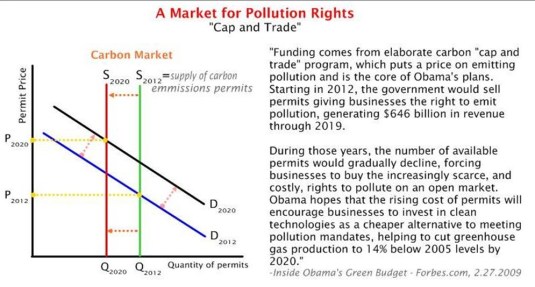
Initially, all environmental regulations were command and control regulations that specified quantities and the technologies to be mandated and gave no role to prices to ensure that the pollution reduction was done by those who could do it cheapest. Robert Crandall noticed the shift in position in his recent essay on pollution controls:
… environmentalists have increasingly realized that markets can work to allocate pollution reduction responsibilities efficiently among firms and across industries. Although the command-and-control approach is still the norm, environmental lobbyists and legislators have, on occasion, considered market-based approaches to pollution control. Most of the proposals for limiting global warming, for example, explicitly include market-based approaches for controlling carbon dioxide emissions.
The reason for the change in tactics by the environmental movement is quite straightforward. The deadweight cost of regulation and taxes that leads to increasing resistance from those subject to existing and proposed environmental regulations.
- The deadweight losses of taxes, transfers and regulation are a constraint on inefficient policies (Becker 1983, 1985; Peltzman 1989).
- The deadweight loss is the difference between winner’s gain less the loser’s losses from a tax or regulation-induced change in output. Changes in behaviour due to taxes and regulation reduce output and investment.
- Policies that significantly cut the total wealth available for distribution by governments are avoided because they reduce the payoff from taxes and regulation relative to the germane counter-factual, which are other even costlier modes of redistribution (Becker 1983, 1985).
The rising deadweight cost of regulation due to technological change, and the dissipation of wealth through these rising costs progressively enfeebled environmental groups lobbying for more regulation. This allowed industry and consumers to win the initiative in resisting more environmental regulation. The cost of reducing carbon emissions is a classic example. Another is the United States acid rain allowance market.
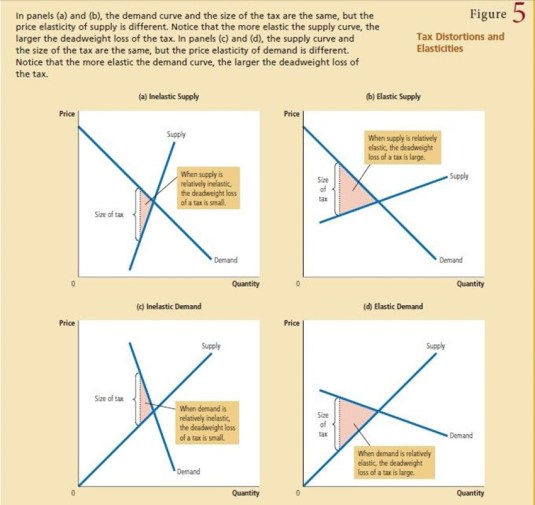
In the case of carbon emissions, the additional political pressure that the winners had to exert to keep the same reduction in carbon emissions had to overcome rising pressure from the losers such as carbon intensive industries and they consist customers to escape their escalating losses of complying with any sort of further carbon emission regulation.
Eventually, the fight was no longer worthwhile relative to the alternatives. Taxed, regulated and subsidised groups can find common ground in wealth enhancing policies and an encompassing interest in mitigating any reduction in wealth from public policies (Becker 1983, 1985; Peltzman 1989).

In the case of global warming, both the environmental movement, and carbon intensive industries, and consumers find common ground in finding a cheaper way of reducing carbon emissions. That is done by agreeing to either carbon trading or carbon taxes. Coalitions of environmentalists and industry also form where carbon emission taxes or trading disadvantage the competition of some industries and some competitors within the same industry.

Carbon trading was a classic example of these dark coalitions. There’s a big difference in their cost to industry depending on whether carbon trading quotas are auctioned or given away to the incumbent firms for free or at a discount price.


Recent Comments