TweetHere’s a letter to The Hill. Editor: Pres. Trump said that “China probably will eat those tariffs” (“Trump says China ‘probably will eat those tariffs’,” April 29). So the president believes that the tariffs will be ‘eaten’ by China – meaning, he believes the tariffs won’t result in higher prices in America of Chinese goods.…
Twisted Illogic
Twisted Illogic
02 May 2025 Leave a comment
in applied price theory, history of economic thought, industrial organisation, international economics, politics - USA, Public Choice, rentseeking Tags: 2024 presidential election, free trade, tarrifs
Capitalism, Socialism, and Social Desirability Bias
01 May 2025 Leave a comment
in applied price theory, comparative institutional analysis, development economics, economic history, entrepreneurship, history of economic thought, industrial organisation Tags: capitalism and freedom
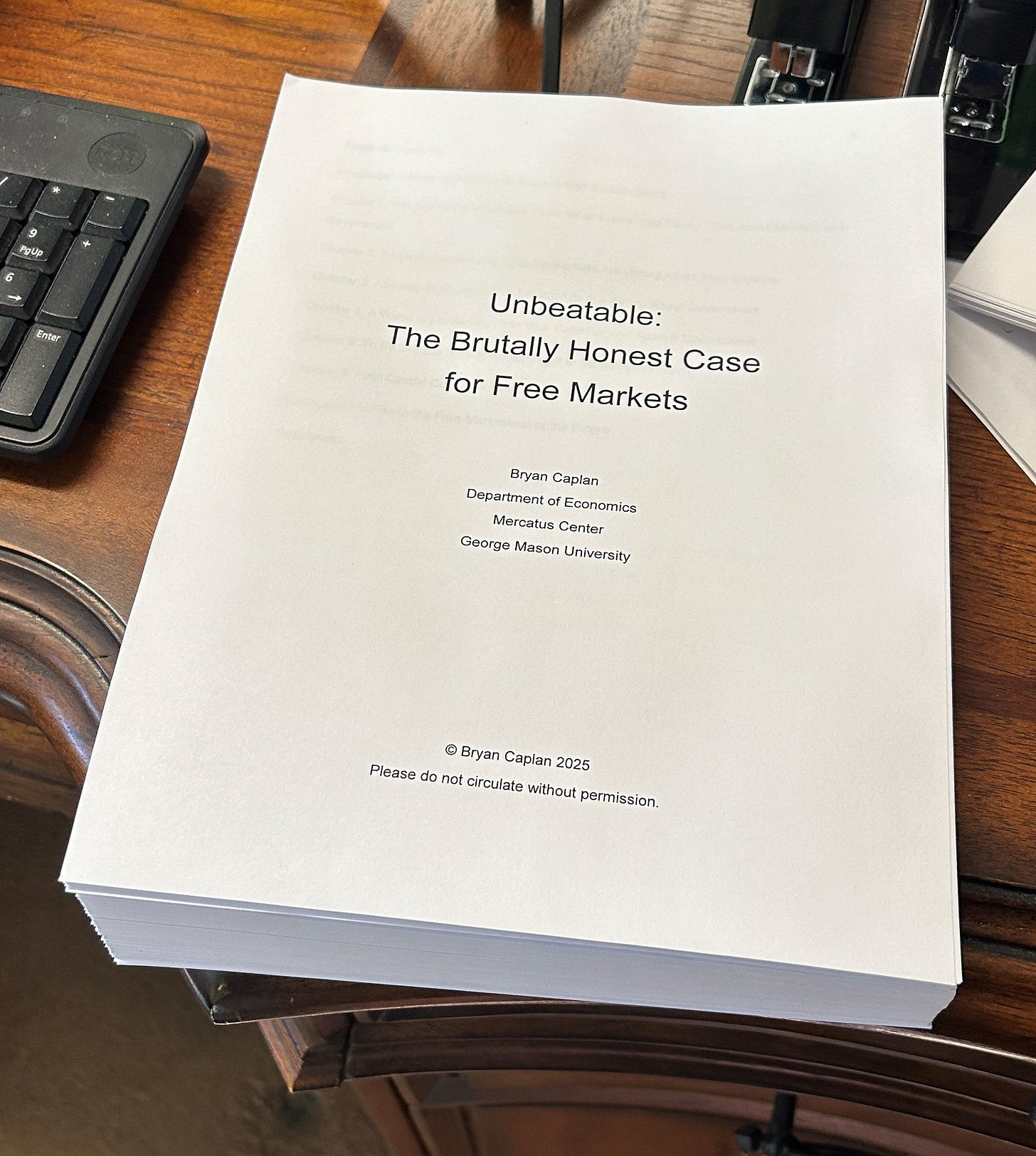
An excerpt from the Introduction of *Unbeatable*
Capitalism, Socialism, and Social Desirability Bias
Smith Reviews Stiglitz
24 Apr 2025 Leave a comment
in applied price theory, Austrian economics, comparative institutional analysis, economics of information, economics of regulation, entrepreneurship, experimental economics, history of economic thought, industrial organisation
Vernon Smith reviews Joe Stiglitz’s book The Road to Freedom: Stiglitz did work in the abstract intellectual theoretical tradition of neoclassical economics showing how the standard results were changed by asymmetric or imperfect information. He is oblivious, however, to the experimental lab and field empirical research showing that agent knowledge of all such information is […]
Smith Reviews Stiglitz
Long-Run Effects of Trade Wars
24 Apr 2025 Leave a comment
in applied price theory, applied welfare economics, comparative institutional analysis, development economics, econometerics, history of economic thought, industrial organisation, labour economics, labour supply, politics - USA, unemployment Tags: 2024 presidential election, free trade, tariffs, unintended consequences
This short note shows that accounting for capital adjustment is critical when analyzing the long-run effects of trade wars on real wages and consumption. The reason is that trade wars increase the relative price between investment goods and labor by taxing imported investment goods and their inputs. This price shift depresses capital demand, shrinks the […]
Long-Run Effects of Trade Wars
My debate with Dani Rodrik about tariffs and free trade
22 Apr 2025 Leave a comment
in applied price theory, applied welfare economics, comparative institutional analysis, development economics, economic history, history of economic thought, industrial organisation, international economic law, international economics, labour economics, politics - USA, unemployment Tags: 2024 presidential election, free trade, tariffs
This occurred in Knoxville, you can watch it here. Lots of fun, and p.s. I am more of a free trader than he is. We did have some disagreements.
My debate with Dani Rodrik about tariffs and free trade
Ronald Reagan in 1982 on Free Trade
20 Apr 2025 Leave a comment
in applied price theory, economic history, history of economic thought, industrial organisation, international economic law, international economics, liberalism, libertarianism, politics - USA, Public Choice, rentseeking Tags: free trade, tariffs
TweetWhen President Ronald Reagan delivered this address in November 1982, I was a 24-year-old graduate student. Radically libertarian at that point for almost six years, I was sufficiently astute enough to know that Reagan wasn’t terrible on most of the issues that I cared about, but I was nevertheless insufficiently mature and astute enough to…
Ronald Reagan in 1982 on Free Trade
Victor Davis Hanson Should Stick to the Classics
18 Apr 2025 Leave a comment
in applied price theory, comparative institutional analysis, economic history, history of economic thought, industrial organisation, international economics, politics - USA Tags: 2024 presidential election, free trade, tarrifs
TweetHere’s a letter to The Daily Signal. Editor: Suppose I submitted to you an essay in which Thucydides is described as a first-century Roman senator who wrote a biography of Charlemagne – would you publish it? Of course not. The ignorance of such an essay would be palpable. But I would never write such a…
Victor Davis Hanson Should Stick to the Classics
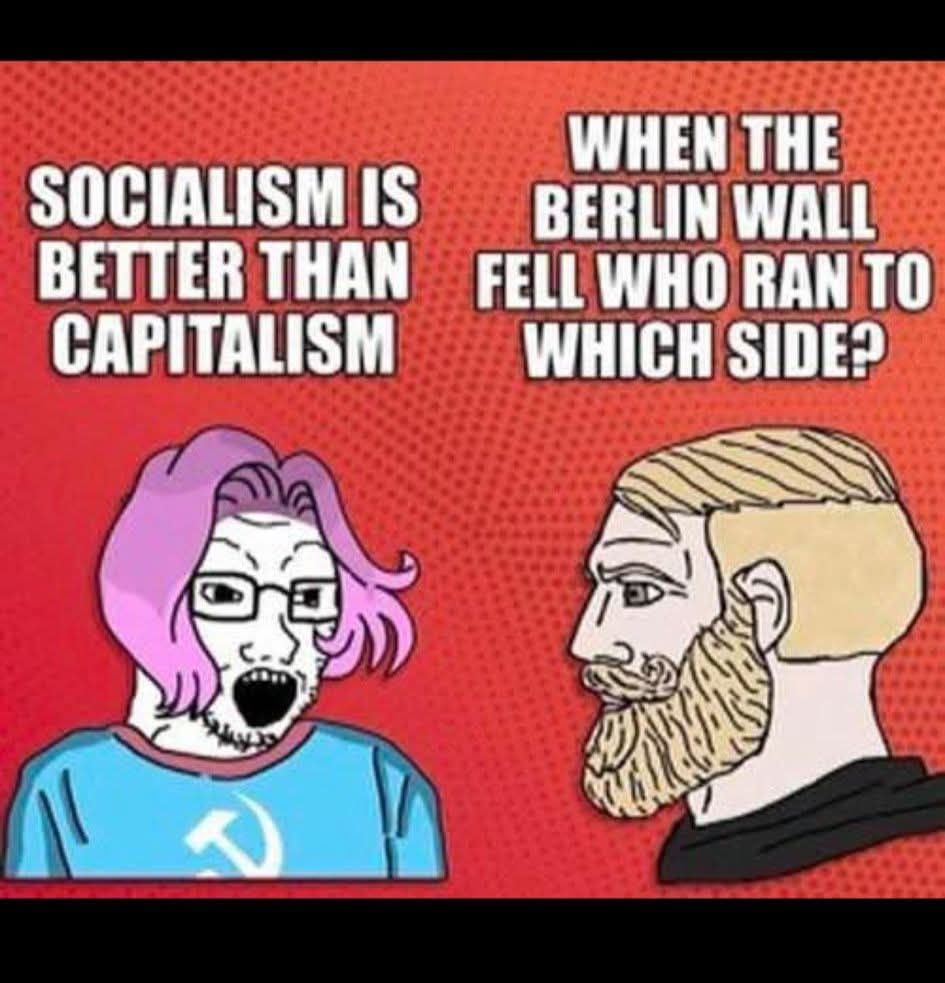
For @AOC @SenSanders @Greens @NZGreens
16 Apr 2025 Leave a comment
in economic history, history of economic thought, liberalism, Marxist economics Tags: Berlin wall, East Germany, free speech, regressive left
Against cultural equivalence
15 Apr 2025 1 Comment
in economic history, history of economic thought, law and economics, liberalism, libertarianism, Marxist economics, property rights Tags: Age of Enlightenment, The Great Enrichment
The assertion that all cultures are equal has become a widely accepted axiom in contemporary discourse, shaped significantly by well-intentioned efforts to foster global tolerance and respect. However, it is not only possible but necessary to challenge this view. While cultural relativism emphasizes understanding and tolerance, it need not extend to cultural equivalence. Indeed, an […]
Against cultural equivalence
Some Links
14 Apr 2025 1 Comment
in applied price theory, history of economic thought, industrial organisation, international economics, politics - USA Tags: 2024 presidential election, free trade, tarrifs
TweetBob Graboyes masterfully exposes many of the fallacies that fuel Trump’s destructive trade ‘policy.’ Three slices: In 2016, Donald Trump promised, “We’re gonna win so much that you may get tired of winning.” His advisors must have reached that point, as evidenced by the bizarre, incoherent “Liberation Day” tariff policy they helped craft. Trump supporters have…
Some Links
Why Tariffs Don’t Cause and Won’t Fix Trade Deficits
12 Apr 2025 Leave a comment
in applied price theory, history of economic thought, industrial organisation, international economics, politics - USA Tags: free trade, tarrifs, unintended consequences

There’s a fundamental misconception at the root of President Trump’s tariff policies, which is the mistaken claim that the existence of a US trade deficit proves that trade is unfair. There are two related mistaken claims. One is a claim that if tariff and non-tariff barriers to trade were removed, then trade would be balanced.…
Why Tariffs Don’t Cause and Won’t Fix Trade Deficits
Why Economics Is Really Called ‘the Dismal Science’: The (not-so-dismal) origin myth of a ubiquitous term
11 Apr 2025 1 Comment
in history of economic thought
By Derek Thompson of The Atlantic Monthly. From 2013. “The story goes like this: Thomas Carlyle, a Scottish writer and philosopher, called economics “the dismal science” in reference to Thomas Malthus, that lugubrious economist who claimed humanity was trapped in a world where population growth would always strain natural resources and bring widespread misery. Dismal,…
Why Economics Is Really Called ‘the Dismal Science’: The (not-so-dismal) origin myth of a ubiquitous term
When Genius Failed
10 Apr 2025 1 Comment
in applied price theory, business cycles, economic growth, economics of information, economics of regulation, entrepreneurship, financial economics, global financial crisis (GFC), history of economic thought, industrial organisation, macroeconomics, politics - USA

Myron Scholes was on top of the world in 1997, having won the Nobel Prize in economics that year for his work in financial economics, work that he had applied in the real world in a wildly successful hedge fund, Long Term Capital Management. But just one year later, LTCM was saved from collapse only […]
When Genius Failed
Book review: The Economists’ Hour
10 Apr 2025 Leave a comment
in applied price theory, economic history, history of economic thought, labour economics, macroeconomics

Once upon a time, economists were backroom advisers, crunching numbers and developing theories, but rarely in the limelight and certainly not the central actors in political decision-making. However, as Binyamin Appelbaum outlines in his 2019 book The Economists’ Hour, that all changed in the late 1960s. The title of the book references the period from…
Book review: The Economists’ Hour
Daniel Hannan on the Logical Contradictions in the Case for Trump’s Tariffs
06 Apr 2025 Leave a comment
in applied price theory, economic history, history of economic thought, industrial organisation, international economics, liberalism, politics - USA, Public Choice, rentseeking Tags: 2024 presidential election, free trade, tariffs
Tweet The post Daniel Hannan on the Logical Contradictions in the Case for Trump’s Tariffs appeared first on Cafe Hayek.
Daniel Hannan on the Logical Contradictions in the Case for Trump’s Tariffs
 Utopia, you are standing in it!
Recent Comments