We break down how much of a tariff is ‘passed through’ to customersBy Jason Douglas, Anthony DeBarros and Danny Dougherty of The WSJ. Excerpts:”For example, a 10% tariff on shoes from China would raise their sticker price 4% or so, but on wine or olive oil from Italy, almost 10%.Why the difference? Tariffs aren’t the…
How Much Do Tariffs Raise Prices?
How Much Do Tariffs Raise Prices?
08 Mar 2025 Leave a comment
in applied price theory, economic history, history of economic thought, industrial organisation, international economics, politics - USA Tags: 2024 presidential election, free trade, tariffs
Peter Navarro Conducts a Master Class In Looking Only at That Which Is Seen
06 Mar 2025 Leave a comment
in applied price theory, history of economic thought, industrial organisation, international economic law, international economics, International law, survivor principle Tags: current account, free trade, tariffs
TweetHere’s a letter to USA Today. Editor: Defending Pres. Trump’s aluminum tariffs, Peter Navarro focuses exclusively on the effects of these tariffs on U.S. aluminum producers (“Trump tariffs will save American jobs and level the playing field,” Feb. 28). He points out what no serious defender of free trade denies, namely, that punitive taxation of…
Peter Navarro Conducts a Master Class In Looking Only at That Which Is Seen
Forty years of floating
01 Mar 2025 Leave a comment
in budget deficits, business cycles, economic growth, economic history, Euro crisis, global financial crisis (GFC), great recession, history of economic thought, inflation targeting, macroeconomics, monetary economics Tags: floating exchange rates

Last year there was an interesting new book out, made up of 29 collected short papers by (more or less) prominent economists given at a 2023 conference to mark Floating Exchange Rates at Fifty. The fifty years related to the transition back to generalised floating of the major developed world currencies in 1973 (think USD, […]
Forty years of floating
Does the Feldstein-Horioka Puzzle mean National’s Foreign Investment Ambitions Won’t Raise NZ Productivity?
26 Feb 2025 Leave a comment
in applied price theory, econometerics, economic history, financial economics, history of economic thought, international economics, macroeconomics, politics - New Zealand Tags: foreign investment
The NZ Herald’s Editor has declared its journalists will be promoted or fired on the basis of factors like how many clicks they get on their articles. Yes, the Herald is now officially “click bait”. We’re trying to avoid the mistake of writing shallow nonsense at this Blog. So on that note, here’s a somewhat…
Does the Feldstein-Horioka Puzzle mean National’s Foreign Investment Ambitions Won’t Raise NZ Productivity?
Keynes on the Soviet Union
21 Feb 2025 Leave a comment
in history of economic thought, macroeconomics, Marxist economics Tags: British politics, Russian revolution
I had not known of this passage, which I am packaging with its introduction from Gavan Tredoux: John Maynard Keynes has the undeserved reputation of a critic of the USSR. Few know that he reviewed Sidney and Beatrice Webb’s mendacious tome The Soviet Union: a New Civilization (1935/1937/1943) fawningly. Perhaps the most embarrassing thing Keynes […]
Keynes on the Soviet Union
The Spectacular Economic Ignorance of Peter Navarro
20 Feb 2025 1 Comment
in applied price theory, Austrian economics, history of economic thought, industrial organisation, international economics, labour economics, labour supply, survivor principle, unemployment Tags: 2024 presidential election, free trade, tarrifs
TweetHere’s a letter to the New York Times. Editor: Encountering, in David Leonhardt’s report, a summary of Peter Navarro’s attempted justifications of Trump’s tariffs makes the head spin (“A Disagreement on Tariffs,” February 18). Navarro’s arguments are so illogical, self-contradictory, and economically ignorant that they’d be merely laughable were he not an advisor to the…
The Spectacular Economic Ignorance of Peter Navarro
Some Links
06 Feb 2025 Leave a comment
in applied price theory, applied welfare economics, economic history, history of economic thought, international economics, politics - USA Tags: 2024 presidential election, free trade, game theory, tariffs
TweetNational Review‘s Charles Cooke explains that Trump’s trade war is needless. Two slices: How do I hate President Trump’s capricious levying of tariffs? Let me count the ways. They are constitutionally suspect, statutorily usurpative, diplomatically toxic, and culturally chaotic; they represent a profound political risk for the new administration — the potential upsides of which…
Some Links
When politicians campaign on competition, be very worried
31 Jan 2025 Leave a comment
in applied price theory, applied welfare economics, Armen Alchian, Austrian economics, comparative institutional analysis, economics of information, economics of regulation, entrepreneurship, experimental economics, history of economic thought, law and economics, politics - New Zealand, property rights Tags: competition law
Targeting big existing businesses may be tempting to politicians, but ensuring market openness will do more good Eric Crampton writes – It’s fair to say that economists like competition. It’s also fair to say that when politicians start talking about competition, economists ought to get a little bit nervous.
When politicians campaign on competition, be very worried
When did sustained economic growth begin?
31 Jan 2025 Leave a comment
in applied price theory, econometerics, economic growth, economic history, history of economic thought, labour economics, labour supply, macroeconomics, poverty and inequality Tags: The Great Enrichment
The subtitle is New Estimates of Productivity Growth in England from 1250 to 1870, and the authors are Paul Bouscasse, Emi Nakamura, and Jón Steinsson. Abstract: We estimate productivity growth in England from 1250 to 1870. Real wages over this period were heavily influenced by plague-induced swings in the population. Our estimates account for these […]
When did sustained economic growth begin?
The capitalist revolution Africa needs
31 Jan 2025 Leave a comment
in development economics, growth disasters, growth miracles, history of economic thought Tags: Africa
Economist: In the coming years Africa will become more important than at any time in the modern era. Over the next decade its share of the world’s population is expected to reach 21%, up from 13% in 2000, 9% in 1950 and 11% in 1800. As the rest of the world ages, Africa will become…
The capitalist revolution Africa needs
Quotation of the Day…
19 Jan 2025 1 Comment
in Adam Smith, applied price theory, comparative institutional analysis, development economics, economic history, economics of love and marriage, economics of regulation, entrepreneurship, history of economic thought, industrial organisation, labour economics, labour supply, law and economics, poverty and inequality, property rights, unemployment
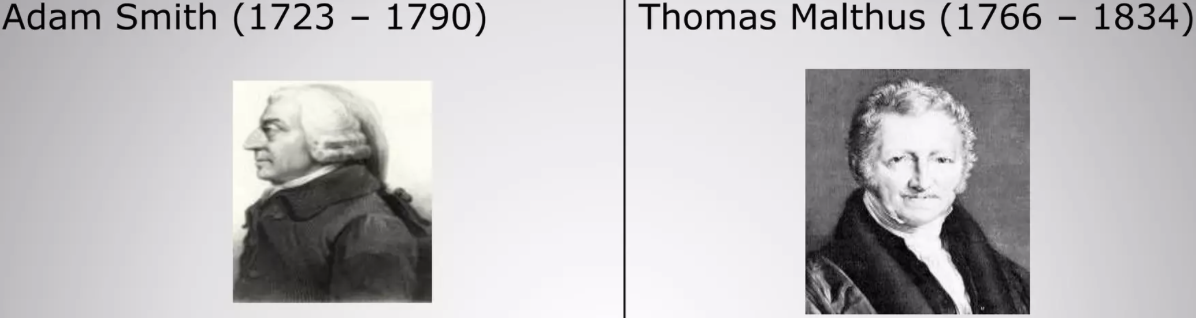
Tweet… is from page 53 of the late, great Harold Demsetz’s excellent 2008 book, From Economic Man to Economic System: Adam Smith and Thomas Malthus differed in their forecasts of mankind’s future. Smith (1776), in his Wealth of Nations, offered an optimistic view, basing this on his understanding of the new economic system that began…
Quotation of the Day…
Mr. Haltiwanger and the Austrians
11 Jan 2025 1 Comment
in applied price theory, Austrian economics, economic history, entrepreneurship, history of economic thought, Israel Kirzner
In November, I chided Austrian economists for neglecting the John Haltiwanger’s empirical work on creative destruction:Around 2000, I discovered that John Haltiwanger, a very mainstream economist, had a pile of empirical evidence vindicating the importance of Schumpeterian creative destruction. That pile is now a mountain. At the time, I tried to get Austrians to start…
Mr. Haltiwanger and the Austrians
Left-Wing Economists Were Wildly Wrong about Javier Milei and his Libertarian Agenda for Argentina
10 Jan 2025 Leave a comment
in applied price theory, Austrian economics, budget deficits, business cycles, comparative institutional analysis, constitutional political economy, development economics, economic growth, economics of regulation, financial economics, fiscal policy, growth disasters, growth miracles, history of economic thought, income redistribution, international economics, labour economics, law and economics, liberalism, libertarianism, macroeconomics, Marxist economics, monetarism, monetary economics, political change, politics - USA, property rights, Public Choice, public economics, rentseeking, unemployment Tags: Argentina
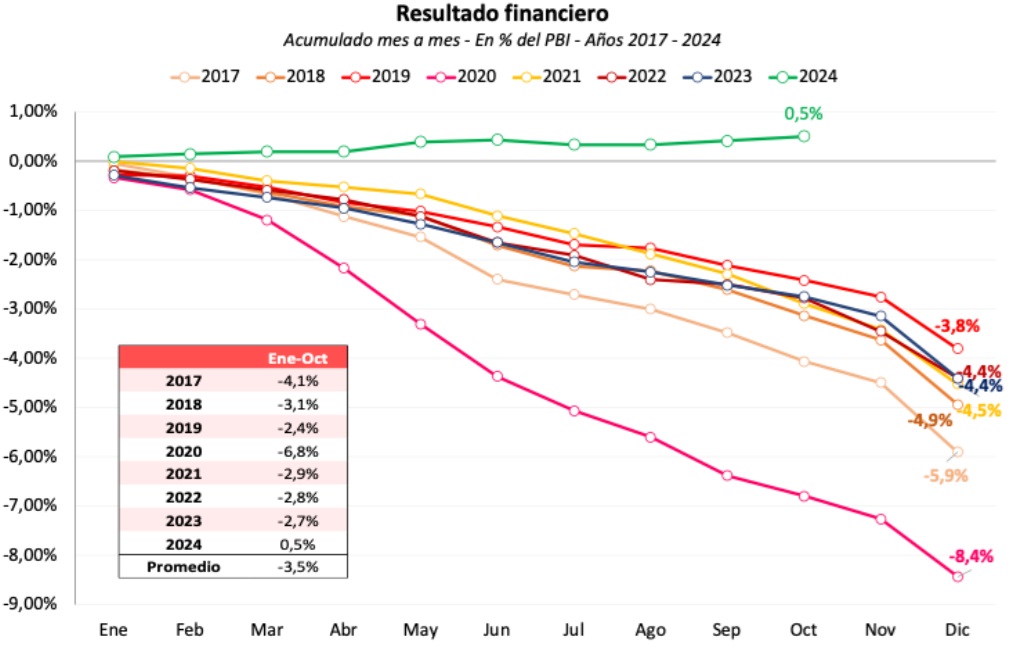
It’s easy to mock economists. Consider the supposedly prestigious left-leaning academics who asserted in 2021 that Biden’s agenda was not inflationary. At the risk of understatement, they wound up with egg on their faces.* Today, we’re going to look at another example of leftist economists making fools of themselves. It involves Argentina, where President Javier […]
Left-Wing Economists Were Wildly Wrong about Javier Milei and his Libertarian Agenda for Argentina
Some Links
02 Jan 2025 Leave a comment
in applied price theory, economics of regulation, history of economic thought, industrial organisation, politics - USA
TweetMike Munger explains that “the only way to gain jobs is to lose jobs.” Two slices: Politicians want to create jobs, “good-paying union jobs,” in existing industries. But that’s not what markets do. The “destructive” part of creative destruction eliminates jobs in existing industries. In a dynamic economy, innovations indivision of labor can create good-paying…
Some Links
On the Great F.A. Hayek
30 Dec 2024 Leave a comment
in applied price theory, applied welfare economics, economic history, F.A. Hayek, history of economic thought
TweetJonathan Fortier and his colleagues at Libertarianism.org produced this truly splendid 21-minute-long video to commemorate the 50th anniversary of Hayek’s receipt of the Nobel Prize in economics. The post On the Great F.A. Hayek appeared first on Cafe Hayek.
On the Great F.A. Hayek
 Utopia, you are standing in it!
Recent Comments