How can I not link to a new Sam Peltzman piece on such a topic? Here goes: Since 1972, the General Social Survey has periodically asked whether people are happy with Yes, Maybe or No type answers. Here I use a net “happiness” measure, which is percentage Yes less percentage No with Maybe treated as […]
The Anatomy of Marital Happiness
The Anatomy of Marital Happiness
22 Mar 2025 Leave a comment
in applied price theory, econometerics, economic history, economics of love and marriage, industrial organisation, labour economics, population economics Tags: dating markets, economics of fertility, marriage and divorce, marriage premium
Commerce Secretary Lutnick Is Among Those Government Officials Who Are Ignorant of Basic Economic Facts
21 Mar 2025 Leave a comment
in applied price theory, economic history, industrial organisation, international economics, market efficiency, politics - USA, survivor principle, transport economics Tags: 2024 presidential election, free trade, tarrifs
TweetHere’s a note to the Highland County Press. Editor: Commerce secretary Howard Lutnick asserts that NAFTA allowed U.S. automobile producers to “screw” American auto workers by shifting auto-industry production to Mexico and Canada (“Trump Cabinet members: Tariff plans are working; tariffs could eliminate federal income tax for those earning less than $150,000,” March 20). Mr.…
Commerce Secretary Lutnick Is Among Those Government Officials Who Are Ignorant of Basic Economic Facts
Stop waiting for a foreign hero: NZ’s supermarket sector needs competition from within
21 Mar 2025 Leave a comment
in applied price theory, economics of regulation, industrial organisation, law and economics, politics - New Zealand Tags: competition law
Lisa M. Katerina Asher, Catherine Sutton-Brad and Drew Franklin write – New Zealand’s concentrated supermarket sector is back in the spotlight after Finance Minister Nicola Willis said she was open to offering “VIP treatment” to a third international player willing to create competition. However, New Zealanders hoping for a foreign hero to break up the […]
Stop waiting for a foreign hero: NZ’s supermarket sector needs competition from within
Why tit-for-tat tariffs may not work against Trump
16 Mar 2025 Leave a comment
in applied price theory, industrial organisation, international economics, International law, politics - USA, Public Choice, rentseeking Tags: 2024 presidential election, game theory, tariffs

Last week, my ECONS101 class covered game theory. At the end of the final lecture, after we had been covering repeated games and tit-for-tat strategies, a really perceptive student asked me about Trump’s tariffs. A lot of the rhetoric about tariffs has been posed in terms of tit-for-tat (see here and here, for example). The…
Why tit-for-tat tariffs may not work against Trump
*Progressive Myths*: The Kling Club Convo
14 Mar 2025 Leave a comment
in applied price theory, comparative institutional analysis, constitutional political economy, economic history, entrepreneurship, history of economic thought, income redistribution, industrial organisation, labour economics, law and economics, liberalism, Marxist economics, politics - USA, property rights, Public Choice, rentseeking Tags: The Great Enrichment
Long ago, I co-blogged for EconLog with Arnold Kling. Now he’s running a book club for Liberty Fund. Last month, Arnold invited me and philosopher Rachel Ferguson to discuss Mike Huemer’s new Progressive Myths. Enjoy!
*Progressive Myths*: The Kling Club Convo
Boettke on the Socialist Calculation Debate
14 Mar 2025 Leave a comment
in applied price theory, Austrian economics, comparative institutional analysis, constitutional political economy, economics of information, entrepreneurship, history of economic thought, industrial organisation, law and economics, property rights Tags: economics of planning
An excellent EconTalk episode with Pete Boettke on the socialist calculation debate. I like Boettke on the three Ps. The three Ps–property, prices, and profits and loss. Property incentivizes us. Prices guide us. Profits lure us to new changes and losses discipline us. Today, “incentives matter” is often considered the first lesson of economics. But […]
Boettke on the Socialist Calculation Debate
Did you know the Magna Carta was against tariffs?
13 Mar 2025 Leave a comment
in applied price theory, economic history, history of economic thought, industrial organisation, international economics Tags: 2024 presidential election, constitutional law, tariffs
One clause of the Magna Carta says: All merchants shall have safe and secure exit from England, and entry to England, with the right to tarry there and to move about as well by land as by water, for buying and selling by the ancient and right customs, quit from all evil tolls So tariffs […]
Did you know the Magna Carta was against tariffs?
Trump Doubles Down on Protectionist Failure
12 Mar 2025 1 Comment
in applied price theory, industrial organisation, international economics, politics - USA, survivor principle Tags: 2024 presidential election, tarrifs
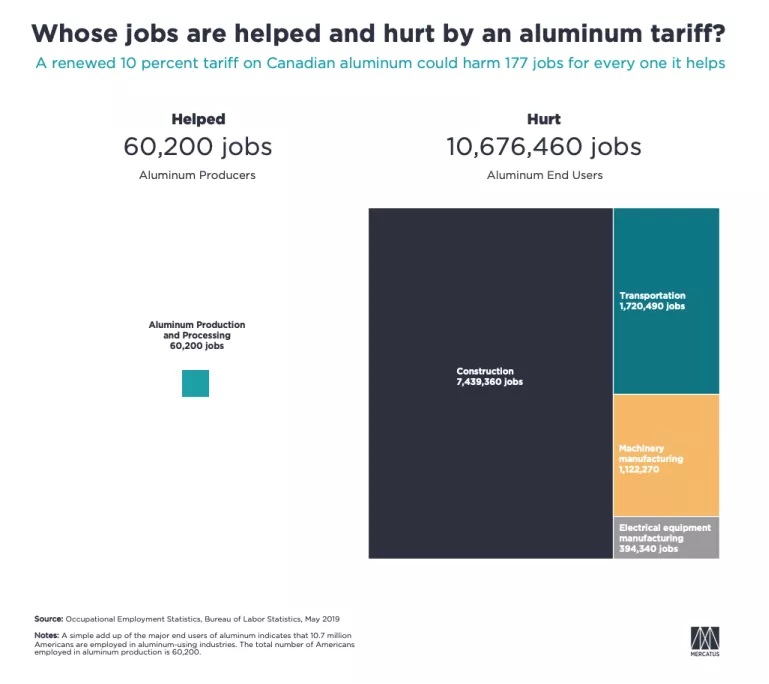
I shared a “Trade 101 for Trumpies” presentation last month in hopes of educating people about the foolishness of protectionism. Perhaps it should have been a remedial class because the president has just announced another increase in taxes on steel and aluminum from Canada. This is insanely bad economic policy for the simple reason that […]
Trump Doubles Down on Protectionist Failure
Max Rashbrooke has been kidnapped again to be replaced by a neoliberal doppelganger
08 Mar 2025 Leave a comment
in applied price theory, comparative institutional analysis, economics of bureaucracy, industrial organisation, managerial economics, market efficiency, organisational economics, politics - New Zealand, Public Choice, public economics Tags: privatisation
How Much Do Tariffs Raise Prices?
08 Mar 2025 Leave a comment
in applied price theory, economic history, history of economic thought, industrial organisation, international economics, politics - USA Tags: 2024 presidential election, free trade, tariffs
We break down how much of a tariff is ‘passed through’ to customersBy Jason Douglas, Anthony DeBarros and Danny Dougherty of The WSJ. Excerpts:”For example, a 10% tariff on shoes from China would raise their sticker price 4% or so, but on wine or olive oil from Italy, almost 10%.Why the difference? Tariffs aren’t the…
How Much Do Tariffs Raise Prices?
The Licensing Racket
08 Mar 2025 Leave a comment
in applied price theory, economics of bureaucracy, entrepreneurship, human capital, income redistribution, industrial organisation, labour economics, labour supply, law and economics, occupational choice, occupational regulation, property rights, Public Choice, rentseeking
I review a very good new book on occupational licensing, The Licensing Racket by Rebecca Haw Allensworth in the WSJ. Most people will concede that licensing for hair braiders and interior decorators is excessive while licensing for doctors, nurses and lawyers is essential. Hair braiders pose little to no threat to public safety, but subpar […]
The Licensing Racket
Peter Navarro Conducts a Master Class In Looking Only at That Which Is Seen
06 Mar 2025 Leave a comment
in applied price theory, history of economic thought, industrial organisation, international economic law, international economics, International law, survivor principle Tags: current account, free trade, tariffs
TweetHere’s a letter to USA Today. Editor: Defending Pres. Trump’s aluminum tariffs, Peter Navarro focuses exclusively on the effects of these tariffs on U.S. aluminum producers (“Trump tariffs will save American jobs and level the playing field,” Feb. 28). He points out what no serious defender of free trade denies, namely, that punitive taxation of…
Peter Navarro Conducts a Master Class In Looking Only at That Which Is Seen
More Deficient Economic Thinking
03 Mar 2025 Leave a comment
in applied price theory, industrial organisation, international economics Tags: current account, free trade, tarrifs
TweetHere’s a letter to the Wall Street Journal. Editor: Anthony deBarros and Peter Santilli report on “the countries fueling America’s $1.2 trillion goods trade deficit” (March 1). With respect, what’s the point of such a report? Eighty percent of U.S. GDP is produced by the service sector – implying that the vast majority of Americans…
More Deficient Economic Thinking
The 2023 Merger Guidelines Will Remain: What Does That Mean?
03 Mar 2025 Leave a comment
in applied price theory, economics of regulation, entrepreneurship, industrial organisation, politics - USA, survivor principle Tags: 2024 presidential election, competition law, merger law enforcement
Under current law, any US companies considering a merger or acquisition that is above $125 million in size must first report it to the government. The most recent data for 2023 says that 1,805 such transactions were reported in 2023, which was a relatively low number for recent years. In 2021 and 2022, for example,…
The 2023 Merger Guidelines Will Remain: What Does That Mean?
BP Faces “Existential Crisis” After Ruinous Attempt to Go Green
02 Mar 2025 Leave a comment
in applied price theory, economics of climate change, energy economics, entrepreneurship, environmental economics, environmentalism, financial economics, global warming, industrial organisation, politics - USA, survivor principle Tags: 2024 presidential election, climate activists, climate alarmism, efficient markets hypothesis, greenwashing
BP’s green pivot has backfired spectacularly, hammering profits and leaving the company vulnerable to a hedge fund siege, writes Jonathan Leake in the Telegraph.
BP Faces “Existential Crisis” After Ruinous Attempt to Go Green
 Utopia, you are standing in it!
Recent Comments