Does Child Labor Help Children in Poverty?
12 Jun 2016 Leave a comment
in development economics, economic history, growth disasters, growth miracles, industrial organisation, labour economics, labour supply Tags: child labour
Tyler Cowen on Joseph Schumpeter
10 Jun 2016 Leave a comment
in development economics, entrepreneurship, industrial organisation, Joseph Schumpeter, survivor principle Tags: creative destruction
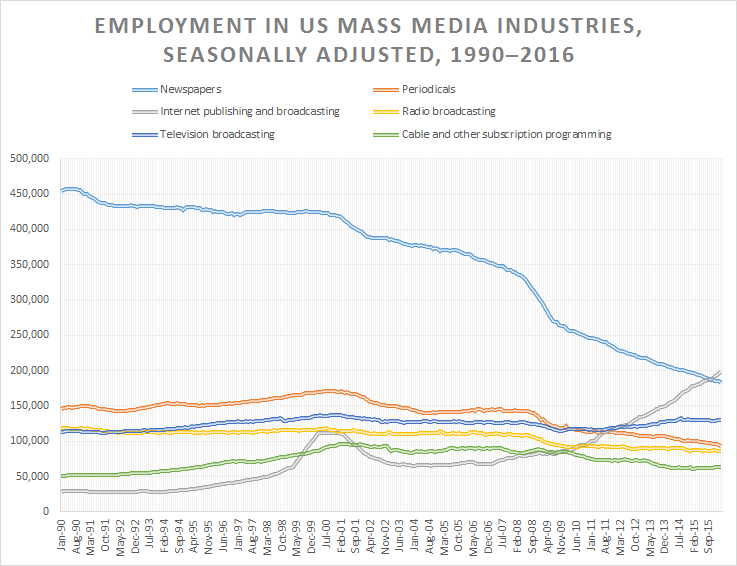
Creative destruction in mass media employment since 1990
09 Jun 2016 Leave a comment
in economic history, economics of media and culture, entrepreneurship, industrial organisation, labour economics, labour supply, occupational choice, survivor principle Tags: entrepreneurial alertness, legacy media, mass media, radio, social media
The Bureau of Labour Statistics chart included books which I took it out along with a few others to confine the information to newspapers and other competitors in the mass media. People still study journalism but more and more go to public relations jobs in government and business.
..
#FeeltheBern? There’s a Cure.
09 Jun 2016 Leave a comment
in applied price theory, applied welfare economics, comparative institutional analysis, economic history, economics of education, economics of regulation, health economics, income redistribution, industrial organisation, international economics, politics - USA, Public Choice, public economics, rentseeking Tags: 2016 presidential election, antimarket bias, crony capitalism, living wage, pessimism bias, top 1%
Creative destruction in personal computing platforms
09 Jun 2016 Leave a comment
in economic history, entrepreneurship, industrial organisation, survivor principle, technological progress Tags: creative destruction, desktops, entrepreneurial alertness, PCs, smartphones
Is Monopoly a Justification for Government Regulation?
08 Jun 2016 Leave a comment
in applied price theory, Austrian economics, economics, economics of regulation, industrial organisation, survivor principle Tags: antitrust economics, competition and monopoly, monopoly, natural monopolies
How the FT reported the D-Day landings in 1944.
06 Jun 2016 Leave a comment
in economic history, industrial organisation, survivor principle, war and peace Tags: D-Day, World War II
How the FT reported the D-Day landings in 1944. We are nothing if not focused on our core mission…always. http://t.co/cEIVRmgEU7—
Financial Times (@FT) June 05, 2014
#MiltonFriedman v. @berniesanders
05 Jun 2016 Leave a comment
in applied price theory, applied welfare economics, comparative institutional analysis, constitutional political economy, development economics, economic history, economics, economics of regulation, entrepreneurship, growth disasters, growth miracles, income redistribution, industrial organisation, labour economics, macroeconomics, Milton Friedman, minimum wage, occupational choice, politics - USA, Public Choice, public economics Tags: 2016 presidential election, Leftover Left
Hayek on what determines market incomes
05 Jun 2016 Leave a comment
in applied price theory, entrepreneurship, F.A. Hayek, human capital, industrial organisation, labour economics, labour supply, occupational choice, poverty and inequality, survivor principle Tags: distributive justice, social justice

3 common myths about capitalism
05 Jun 2016 Leave a comment
in applied price theory, applied welfare economics, development economics, economic history, growth disasters, growth miracles, industrial organisation Tags: capitalism and freedom, The Great Fact
Big Mac Economics
04 Jun 2016 Leave a comment
in Austrian economics, economics, economics of media and culture, entrepreneurship, industrial organisation, survivor principle Tags: BigMac Index, entrepreneurial alertness, McDonald's, purchasing power parity
Walter Williams discusses market versus political solutions to the problems of racism and private property
03 Jun 2016 Leave a comment
in applied price theory, applied welfare economics, comparative institutional analysis, constitutional political economy, discrimination, industrial organisation, labour economics Tags: racial discrimination, Walter Williams
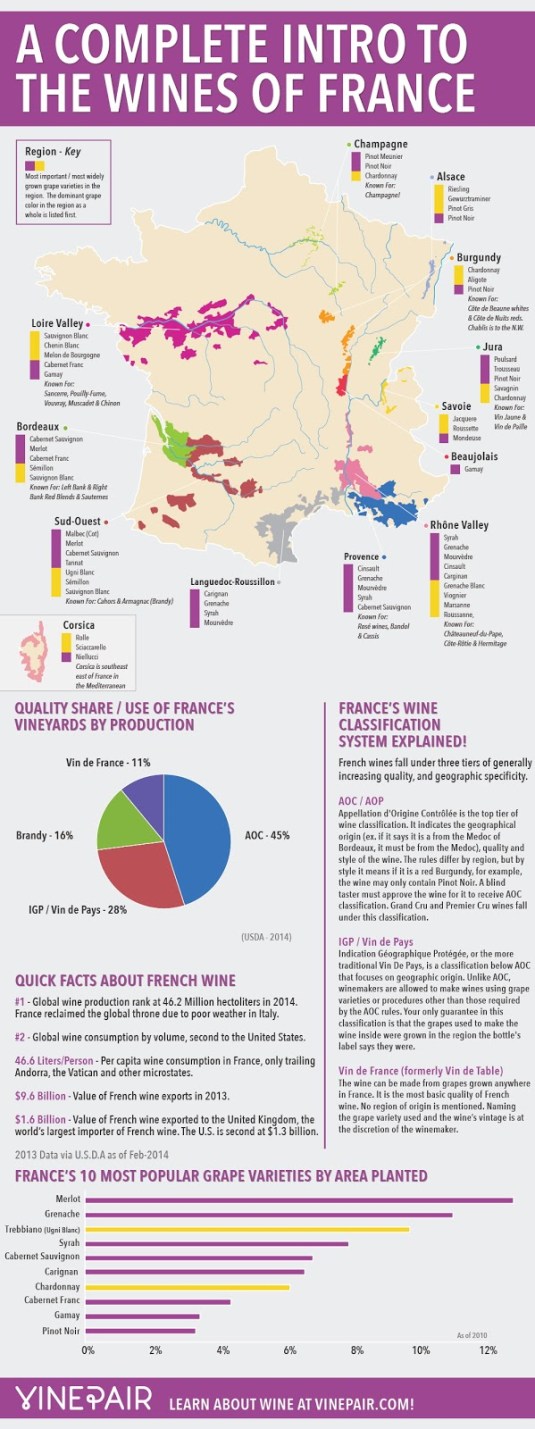
A map of the wines of France
03 Jun 2016 Leave a comment
in industrial organisation Tags: France, geography, wine


Recent Comments