The following is written in Don’s capacity as Hobson’s Pledge trustee. You may not have heard of InternetNZ or know exactly what they…
DON BRASH: From the internet to medicines, nothing in New Zealand is safe from Treaty mania
DON BRASH: From the internet to medicines, nothing in New Zealand is safe from Treaty mania
01 Mar 2025 Leave a comment
in economics of education, economics of regulation, industrial organisation, labour economics, liberalism, Marxist economics, occupational regulation, politics - New Zealand Tags: affirmative action, free speech, political correctness, racial discrimination, regressive left
$50 million of taxpayer money on a ski field
01 Mar 2025 Leave a comment
in applied price theory, fiscal policy, industrial organisation, macroeconomics, politics - New Zealand, Public Choice, public economics, rentseeking, survivor principle Tags: corporate welfare
Newsroom has a summary of taxpayer money spent on Mt Ruapehu: How often have we been told this is the final assistance. We are now deep into the sunk cost fallacy.
$50 million of taxpayer money on a ski field
Mandated Board Diversity Reduces Firm Value
27 Feb 2025 Leave a comment
in applied price theory, discrimination, econometerics, economics of regulation, financial economics, gender, industrial organisation, labour economics, occupational choice, politics - USA Tags: efficient markets hypothesis, sex discrimination
Jon Klick finds that when courts in CA surprisingly invalidated a set of DEI laws, the market value of firms subject to those laws increased: California mandated that firms headquartered in the state include women (SB 826) and underrepresented minorities (AB 979) on their corporate boards. These laws, passed in 2018 and 2020 respectively, were […]
Mandated Board Diversity Reduces Firm Value
The American Rōnin: How Displaced “Disinformation Experts” Are Seeking New Opportunities in Europe and Academia
27 Feb 2025 Leave a comment
in economics of bureaucracy, economics of education, economics of information, economics of media and culture, entrepreneurship, financial economics, industrial organisation, law and economics, liberalism, Marxist economics, politics - USA, property rights, Public Choice, rentseeking Tags: 2024 presidential election, free speech, political correctness, regressive left

Below is my column in the Hill on the new American emigres: “disinformation experts” who are finding themselves unemployed with the restoration of free speech protections. Here is the column:
The American Rōnin: How Displaced “Disinformation Experts” Are Seeking New Opportunities in Europe and Academia
The Spectacular Economic Ignorance of Peter Navarro
20 Feb 2025 1 Comment
in applied price theory, Austrian economics, history of economic thought, industrial organisation, international economics, labour economics, labour supply, survivor principle, unemployment Tags: 2024 presidential election, free trade, tarrifs
TweetHere’s a letter to the New York Times. Editor: Encountering, in David Leonhardt’s report, a summary of Peter Navarro’s attempted justifications of Trump’s tariffs makes the head spin (“A Disagreement on Tariffs,” February 18). Navarro’s arguments are so illogical, self-contradictory, and economically ignorant that they’d be merely laughable were he not an advisor to the…
The Spectacular Economic Ignorance of Peter Navarro
Trade 101 for Trumpies
08 Feb 2025 Leave a comment
in applied price theory, applied welfare economics, Austrian economics, comparative institutional analysis, constitutional political economy, development economics, entrepreneurship, industrial organisation, international economics, politics - USA Tags: 2024 presidential election
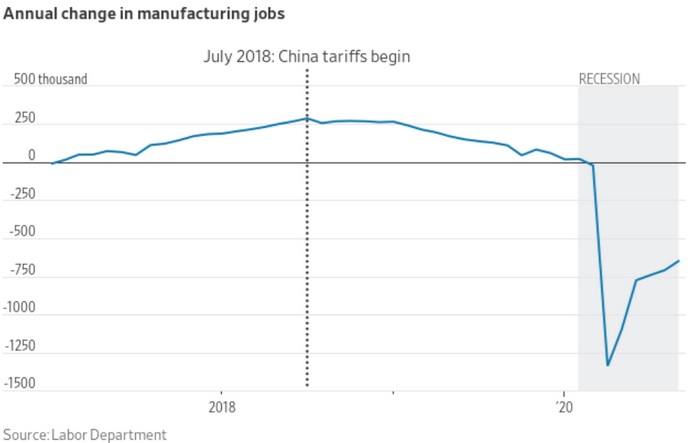
To augment my four-part video series about trade (dealing with the WTO, creative destruction, deficits, and economics), here’s part of my recent lecture about Trump’s trade policy to the Universidad de Libertad in Mexico City For those who (mistakenly) want to skip the video, my speech focused on these five themes. Trade deficits don’t matter. […]
Trade 101 for Trumpies
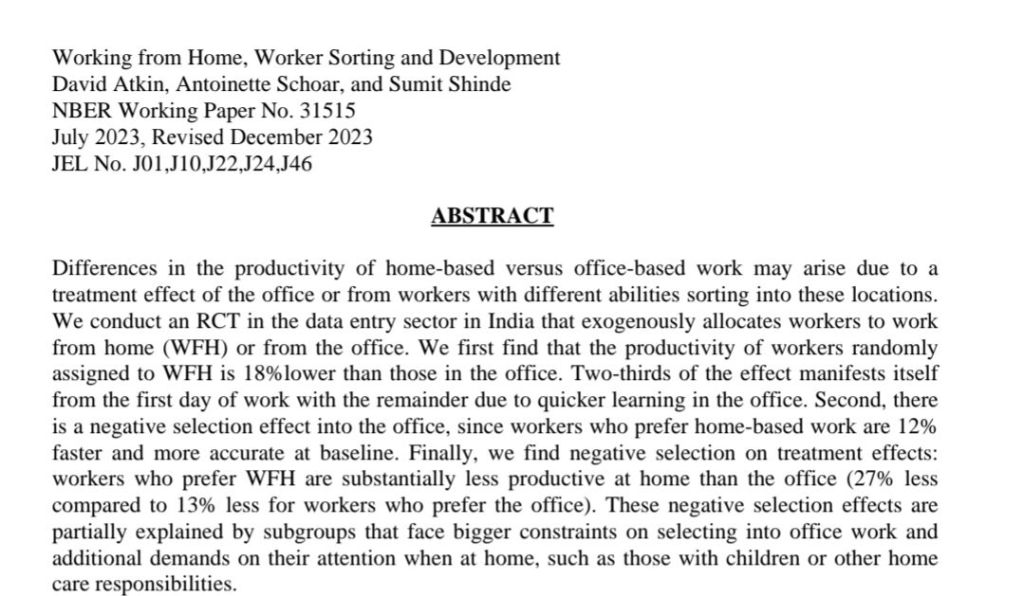
A negative productivity shock from working from home
08 Feb 2025 Leave a comment
in applied price theory, experimental economics, industrial organisation, labour economics, labour supply, managerial economics, occupational choice, organisational economics, personnel economics Tags: economics of pandemics
By 2025 we were supposed to have closed the gap
05 Feb 2025 Leave a comment
in economic growth, economics of regulation, entrepreneurship, human capital, industrial organisation, labour economics, labour supply, macroeconomics, politics - New Zealand, poverty and inequality
Don Brash and Michael Reddell write – When Don was young and Michael’s parents were young, New Zealand had among the very highest material standards of living in the world. It really was, in the old line, one of the very best places to bring up children. But no longer. For 75 years now, with […]
By 2025 we were supposed to have closed the gap
Levels of Industrial Policy
05 Feb 2025 Leave a comment
in applied price theory, comparative institutional analysis, development economics, economic history, entrepreneurship, industrial organisation, Public Choice, rentseeking Tags: industry policy
In arguments over industrial policy, there’s often a moment where someone makes an assertion like: “Every nation has industrial policy. Even not having an industrial policy is a type of industrial policy. The only relevant question is what kind of industrial policy we should choose.” In my experience, the people who make this argument then…
Levels of Industrial Policy
Mocking European Statism
04 Feb 2025 1 Comment
in applied price theory, Austrian economics, comparative institutional analysis, economic growth, economics of bureaucracy, economics of regulation, entrepreneurship, environmental economics, financial economics, industrial organisation, international economics, labour economics, labour supply, law and economics, liberalism, macroeconomics, Marxist economics, property rights, Public Choice, public economics, rentseeking, survivor principle, theory of the firm Tags: employment law, European Union
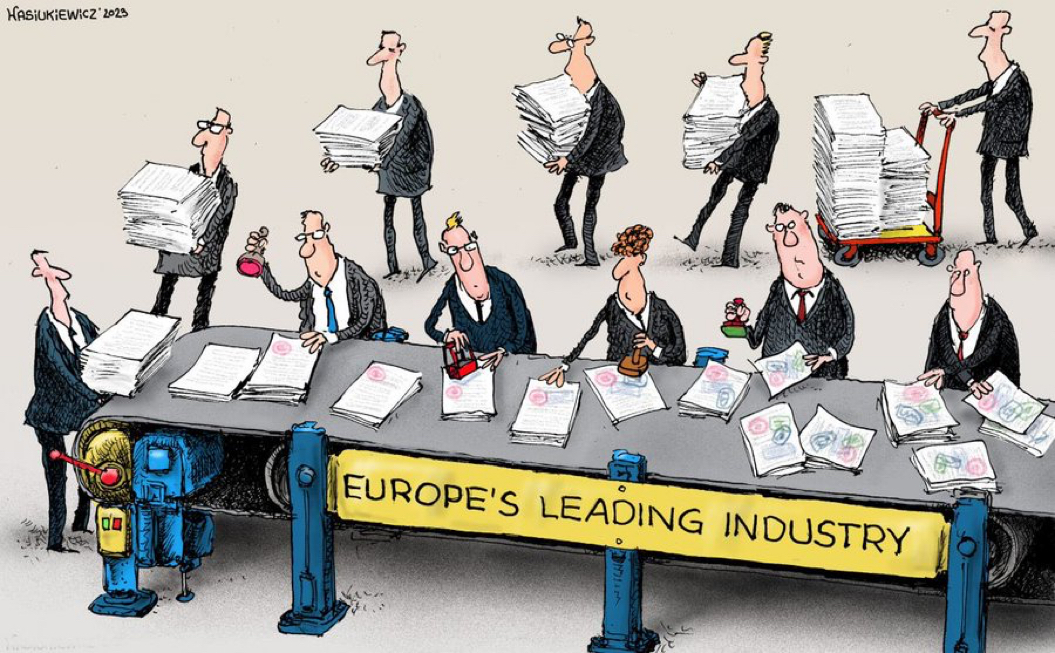
I have a special page for humor involving Europe, but I have not added to it since sharing some Brexit humor in 2016. Let’s being the process of catching up with some amusing cartoons and memes mocking our government-loving cousins on the other side of the Atlantic Ocean. I’ve made the serious point that bureaucrats […]
Mocking European Statism
…And the Really Stupid Sh*t Begins
02 Feb 2025 Leave a comment
in applied price theory, development economics, income redistribution, industrial organisation, international economic law, international economics, International law, politics - USA, Public Choice Tags: 2024 presidential election, Canada, China, free trade, Mexico, tariffs

Trump’s first few weeks have been a mix of good and bad for this libertarian, all against a backdrop of horror at how Imperial the presidency has become. But as of today, perhaps the most destructive and stupid initiative has begun: Because we are all tired of those fentanyl-toting Canadians crossing the border illegally. I…
…And the Really Stupid Sh*t Begins
Technological Disruption in the Labor Market
02 Feb 2025 Leave a comment
in econometerics, economic history, human capital, industrial organisation, labour economics, labour supply, occupational choice, poverty and inequality, unemployment Tags: creative destruction
By David J. Deming, Christopher Ong, and Lawrence H. Summers. From NPR’s Planet Money. Summers was Secretary of the Treasury from 1999 to 2001, director of the National Economic Council from 2009 to 2010 and president of Harvard University from 2001 to 2006.”Obviously, there is a big fear right now that artificial intelligence will kill…
Technological Disruption in the Labor Market
Can President Trump break the International Corporate Tax Cartel?
01 Feb 2025 Leave a comment
in entrepreneurship, financial economics, fiscal policy, industrial organisation, International law, macroeconomics, politics - USA, Public Choice, public economics Tags: taxation and entrepreneurship, taxation and investment
From the Economist: The international tax system has long suffered from two related problems: firms go to great lengths to book profits in low-tax jurisdictions, and governments thus have strong incentives to compete with each other in cutting levies so as to attract investment [only a dirigiste would consider this a problem]. Hoping to forestall…
Can President Trump break the International Corporate Tax Cartel?
My 92nd St. Y debate with Robert Kuttner on income inequality
29 Jan 2025 Leave a comment
in applied price theory, entrepreneurship, human capital, income redistribution, industrial organisation, labour economics, labour supply, liberalism, Marxist economics, politics - USA, poverty and inequality, Public Choice Tags: top 1%
Here goes: Ex po st, the Manhattan audience swung thirty (!) points in my favor, compared to the pre-debate poll. This was a fun event for me.
My 92nd St. Y debate with Robert Kuttner on income inequality
Daron Acemoglu expects only a tiny macroeconomic impact of AI
26 Jan 2025 Leave a comment
in applied price theory, economic growth, entrepreneurship, industrial organisation, labour economics, labour supply, macroeconomics, unemployment
It would be fair to say that 2024 Nobel Prize winner Daron Acemoglu has been a bit of a sceptic about the impacts of generative AI (for example, see here). This scepticism is exemplified in a new paper forthcoming in the journal Economic Policy (ungated earlier version here). Acemoglu first notes that:Some experts believe that truly…
Daron Acemoglu expects only a tiny macroeconomic impact of AI
 Utopia, you are standing in it!
Recent Comments