There is a new and optimistic paper by Lukas Althoff and Hugo Reichardt: Artificial intelligence is changing which tasks workers do and how they do them. Predicting its labor market consequences requires understanding how technical change affects workers’ productivity across tasks, how workers adapt by changing occupations and acquiring new skills, and how wages adjust…
AI, labor markets, and wages
AI, labor markets, and wages
18 Jan 2026 Leave a comment
in applied price theory, econometerics, economic growth, industrial organisation, labour economics, labour supply, macroeconomics, poverty and inequality Tags: creative destruction, pessimist bias
‘Market Power in Antitrust Cases,’ by William M. Landes and Richard A. Posner
17 Jan 2026 Leave a comment
in applied price theory, economics of regulation, history of economic thought, industrial organisation, law and economics, politics - USA, Richard Posner Tags: competition law

William M. Landes and Richard A. Posner’s 1981 Harvard Law Review article “Market Power in Antitrust Cases” is a true classic. Showing the value of interdisciplinary work within the law & economics tradition, it brought real clarity to what “market power” means and how courts should assess it—cutting through vague labels like “monopoly power” and…
‘Market Power in Antitrust Cases,’ by William M. Landes and Richard A. Posner
Why Some US Indian Reservations Prosper While Others Struggle
06 Jan 2026 Leave a comment
in applied price theory, development economics, economics of bureaucracy, economics of regulation, entrepreneurship, growth disasters, growth miracles, industrial organisation, labour economics, law and economics, politics - USA, property rights, Public Choice

Our colleague Thomas Stratmann writes about the political economy of Indian reservations in his excellent Substack Rules and Results. Across 123 tribal nations in the lower 48 states, median household income for Native American residents ranges from roughly $20,000 to over $130,000—a sixfold difference. Some reservations have household incomes comparable to middle-class America. Others face persistent…
Why Some US Indian Reservations Prosper While Others Struggle
Why not leave rubbish collection to the private sector?
31 Dec 2025 Leave a comment
in applied price theory, comparative institutional analysis, economics of bureaucracy, environmental economics, industrial organisation, politics - New Zealand, privatisation, Public Choice, urban economics
Radio NZ reports: Auckland Councillors have voted not to proceed with a six-month trial of fortnightly kerbside rubbish collections in parts of the city, after considering public feedback. The proposed trial would’ve halved the number of kerbside collections in Te Atatū, Panmure, Tāmaki, Clendon Park and Weymouth, with the intention of reducing waste to landfill.…
Why not leave rubbish collection to the private sector?
Celebrating Two Years of Libertarian Success in Argentina
27 Dec 2025 Leave a comment
in applied price theory, Austrian economics, budget deficits, comparative institutional analysis, constitutional political economy, development economics, economic growth, economics of bureaucracy, economics of regulation, fiscal policy, growth disasters, history of economic thought, income redistribution, industrial organisation, labour economics, liberalism, libertarianism, macroeconomics, Public Choice, rentseeking, unemployment Tags: Argentina
As explained in my four-part series (here, here, here, and here) and in this clip from a recent interview, Javier Milei’s first two years have been amazingly successful. There are two points in the interview that deserve emphasis. First, Javier Milei’s libertarian policies already have been extremely beneficial for the Argentine economy. Inflation has dramatically […]
Celebrating Two Years of Libertarian Success in Argentina
John Oliver goes after Bari Weiss and CBS News
22 Dec 2025 1 Comment
in industrial organisation, liberalism, Marxist economics, politics - USA, television, TV shows Tags: media bias
A reader sent me a video-containing email with the header “John Oliver destroys Bari Weiss”, with the message below saying, “Somebody had to do it.” Well, yes, somebody should criticize the Free Press, which is becoming, in my view, more political (right-centrist) and less full of news. And even news stories aren’t really written by…
John Oliver goes after Bari Weiss and CBS News
Vertical Restraints in the EU: Economics Has Updated, Law Hasn’t Installed the Patch
17 Dec 2025 Leave a comment
in applied price theory, economics of regulation, industrial organisation, law and economics Tags: competition law

Online commerce has transformed how firms design their distribution systems, yet EU competition law continues to treat many online-sales restrictions as suspect by default. This tension lies at the heart of today’s vertical restraints debate. While the economic theory of vertical agreements has been largely settled for decades, the legal framework has not fully absorbed…
Vertical Restraints in the EU: Economics Has Updated, Law Hasn’t Installed the Patch
“AI is everywhere but in the productivity statistics…”
15 Dec 2025 Leave a comment
in applied price theory, econometerics, economic history, economics of information, entrepreneurship, history of economic thought, industrial organisation Tags: creative destruction
These people are saying it is there too. Though I am not quite sure what they (or anyone, for that matter) mean by AI: First, we argue that AI can already be seen in productivity statistics for the United States. The production and use effects of software and software R&D (alone) contributed (a) 50 percent…
“AI is everywhere but in the productivity statistics…”
Humanity Has a Huge Surplus of Economic Misunderstanding
13 Dec 2025 Leave a comment
in applied price theory, history of economic thought, industrial organisation, international economics, politics - USA, Public Choice, rentseeking Tags: free trade, tarrifs
TweetHere’s a letter to AP Fact Check. Editor: Melissa Goldin does a deep dive into the cause(s) of the U.S. “agricultural trade deficit” (“FACT FOCUS: Trump blames Biden for the agricultural trade deficit. It’s not that simple,” December 10). To what extent is this “deficit” caused by the policies of Biden? To what extent is…
Humanity Has a Huge Surplus of Economic Misunderstanding
Evaluating the Sale of Warner Bros Discovery to Netflix from an Antitrust Perspective
09 Dec 2025 1 Comment
in applied price theory, economics of regulation, industrial organisation, market efficiency Tags: competition law

Warner Bros. Discovery (WBD) has announced that it is selling its major assets to Netflix, including Warner Bros. Pictures (home of Harry Potter), DC Studios, and HBO Max. Netflix was chosen among a group of bidders that also included Paramount and Comcast. This post explores some of the antitrust issues and hurdles that a combined…
Evaluating the Sale of Warner Bros Discovery to Netflix from an Antitrust Perspective
Antitrust at the Agencies: Meta Analysis Edition
09 Dec 2025 Leave a comment
in applied price theory, economics of regulation, industrial organisation, law and economics, politics - USA Tags: competition law

The memorandum and order in FTC v. Meta Platforms Inc. that U.S. District Court Judge James E. Boasberg filed Nov. 18, ruling in favor of Meta, has now been followed by a Dec. 2 revised order that contained fewer redactions. The memorandum doesn’t exactly provide the law & economics analysis I would have produced, had…
Antitrust at the Agencies: Meta Analysis Edition
Media bias in New Zealand yet again
08 Dec 2025 Leave a comment
in economics of information, economics of media and culture, industrial organisation, politics - New Zealand, survivor principle Tags: media bias
Chris McVeigh writes – If you took a double at the TAB, with the Pope getting married as one leg and Radio New Zealand admitting to a smidgen of left wing partiality as the other, you could be forgiven for thinking that the smart money would be on the Vatican gig bringing home the bacon […]
Media bias in New Zealand yet again
Metrics, Markets, and Merger Scrutiny: A Netflix-WBD Combination
06 Dec 2025 Leave a comment
in applied price theory, economics of regulation, entrepreneurship, industrial organisation, politics - USA Tags: competition law, creative destruction

This morning’s announced merger between Netflix and Warner Bros. Discovery (WBD) would create a global media company of unprecedented scale. The transaction will also almost certainly attract scrutiny from antitrust regulators—most likely the U.S. Justice Department (DOJ) Antitrust Division, rather than the Federal Trade Commission (FTC). The deal would offer a direct test of the…
Metrics, Markets, and Merger Scrutiny: A Netflix-WBD Combination
Is Competitiveness Transforming Competition Policy?
06 Dec 2025 Leave a comment
in applied price theory, economics of regulation, entrepreneurship, industrial organisation, international economics Tags: competition law, creative destruction
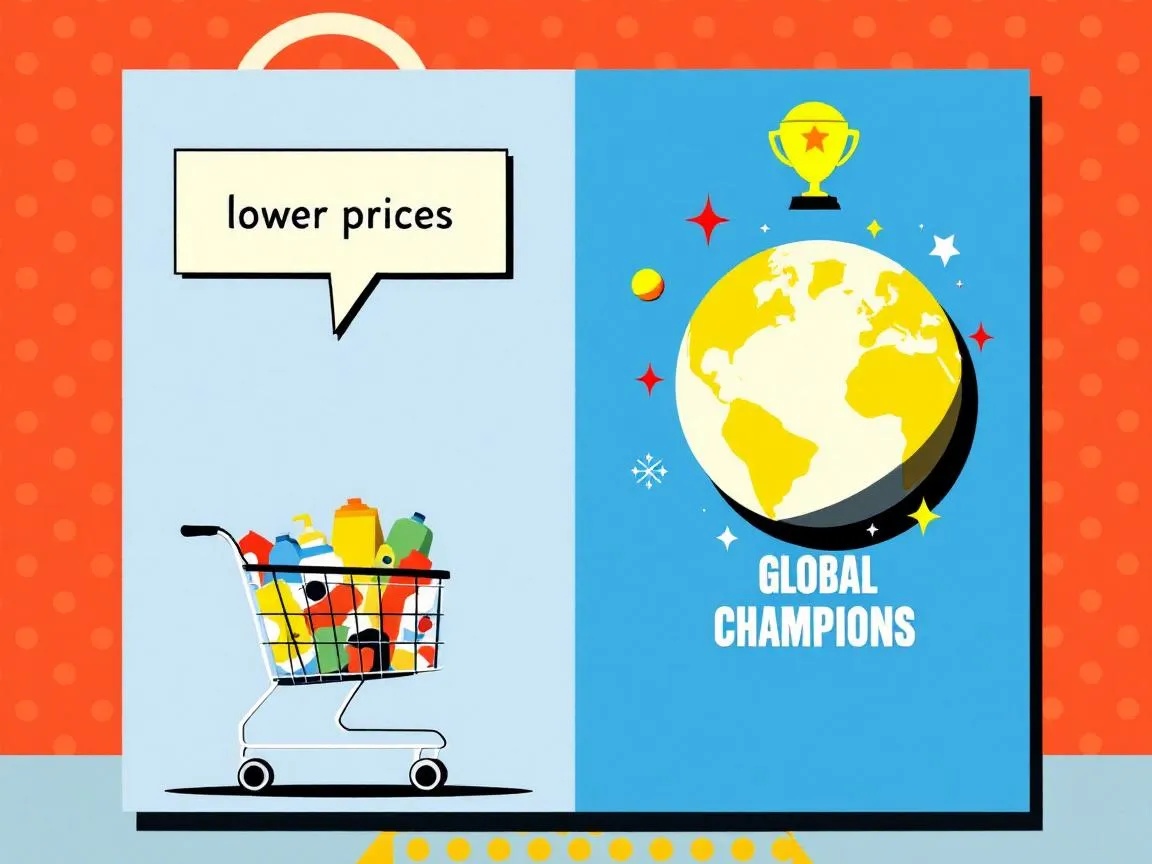
Nations around the world are reassessing antitrust policy (generally called “competition policy” overseas). Governments, regulators, and industry leaders are increasingly asking whether traditional antitrust enforcement is holding back the “competitiveness” of domestic firms. The term now shows up in speeches by European commissioners, in UK government directives, in U.S. merger battles, and in Canadian legislative…
Is Competitiveness Transforming Competition Policy?
What should we sell?
02 Dec 2025 Leave a comment
in applied price theory, industrial organisation, politics - New Zealand, privatisation
Newsroom has an article on the 10 SOEs that a Government could sell. I’ve done a matrix looking at which could be best to sell. Asset Competitive Value Sensitivity Prospects QV B $54m D Y Landcorp A $1.6b B Y AsureQuality B $100m C Y Kordia B $62m C Y Kiwibank B $2.6b A Y…
What should we sell?
 Utopia, you are standing in it!
Recent Comments