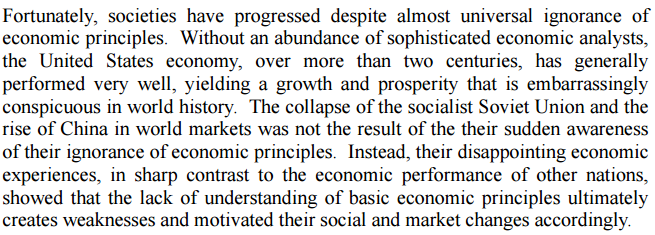
Alchian and Allen on the superfluousness of economic principles to civilisation
13 Aug 2016 Leave a comment
in applied price theory, Armen Alchian, comparative institutional analysis, constitutional political economy, development economics, economic history, industrial organisation, international economics Tags: industrial revolution, The Great Enrichment, The Great Escape, The Great Fact
Why politicians and bureaucrats can never pick winners?
12 Aug 2016 Leave a comment
in economics of bureaucracy, entrepreneurship, industrial organisation, politics - New Zealand
If politicians and bureaucrats were any good at picking winners, they will be on a fabulously well paid package at a hedge fund.
Culture of Gowth: Origins of the Modern Economy
08 Aug 2016 Leave a comment
in behavioural economics, comparative institutional analysis, constitutional political economy, development economics, economic history, growth disasters, growth miracles, industrial organisation, law and economics, Public Choice Tags: industrial revolution, The Great Fact
Anti-competitive mergers make little sense to me
04 Aug 2016 Leave a comment
in applied price theory, industrial organisation, survivor principle Tags: competition and monopoly, competition law, mergers and takeovers
There are two main arguments against mergers and acquisitions. The first of these is that they are paper shuffling with little in the way of cost advantages. The second is they allow the combined firm to raise its prices because it faces less competition.
I find these arguments to be in direct contradiction. Anti-competitive mergers must be high risk venture if there is little in the way of cost savings. Two previously efficient firm sizes are disturbed permanently in the hope of some ability to raise prices in the future without provoking too much new entry or expansion from the competitive fringe.
It is far better just to keep on colluding or just compete rather than risk permanently damaging the efficient operation of both firms.

West Wing – ‘You reversed my position.’
22 Jul 2016 Leave a comment
in economics, economics of crime, industrial organisation, law and economics, survivor principle, television Tags: West Wing

Yes Prime Minister on a minister of manufacturing @jamespeshaw @julieannegenter
21 Jul 2016 Leave a comment
in comparative institutional analysis, economics, economics of bureaucracy, economics of media and culture, industrial organisation, international economics, politics - New Zealand, Public Choice, rentseeking, survivor principle, television Tags: corporate welfare, industry policy, New Zealand Greens, picking losers, picking winners, Yes Prime Minister
Useless @SparkNZ only sells mobile monthly plans with @Spotify
21 Jul 2016 2 Comments
in administration, industrial organisation
I gave Spark one last chance today because I did not have any coins to park outside the 2 degrees shop this morning.

Showing their ability to snatch defeat from the jaws of victory, their only online plans with any decent amount of data come with this useless thing I have never heard of before called Spotify. That is an extra $10 a month for something of no value to me.
There was no way of opting out of this useless $10 addition to my bill or any way of even contacting them to talk about it.
Had my plan of a month’s vintage to dump Spark working perfectly. Balance was $1; prepay plan due to expire tomorrow with next to no data left to use.
Product bundling only works if you bundle it was something of value to the consumer. If you bundle your product with something of value only to a small subset of mobile users, you turn business away.
Labor, Jobs, and the Modern Economy | Becker Friedman Institute
20 Jul 2016 Leave a comment
in economics, industrial organisation, Joseph Schumpeter, labour economics, politics - USA, population economics, technological progress Tags: creative destruction
% Australian top incomes from wages, salaries and pensions since 1954
19 Jul 2016 Leave a comment
in economic history, human capital, industrial organisation, labour economics, occupational choice, politics - Australia, poverty and inequality Tags: Australia, CEO pay, superstar wages, superstars, top 1%, top incomes
Australia has had a working rich for a long time now. Australian top income earners are top wage earners. They are athletes, celebrities, business executives and in the professions.
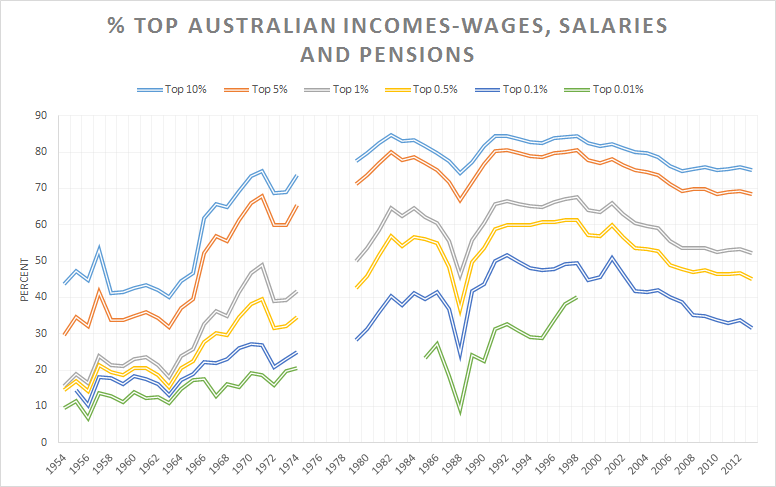
Source: The World Wealth and Income Database.
% US top incomes from wages, salaries and pensions, 1913 – 2015,
18 Jul 2016 Leave a comment
in applied welfare economics, economic history, human capital, industrial organisation, labour economics, occupational choice, politics - USA, poverty and inequality, survivor principle Tags: CEO pay, entrepreneurial alertness, superstar wages, superstars, top 1%, top incomes
The rich in the USA long ago became a working rich; most top incomes are from wages and salaries.
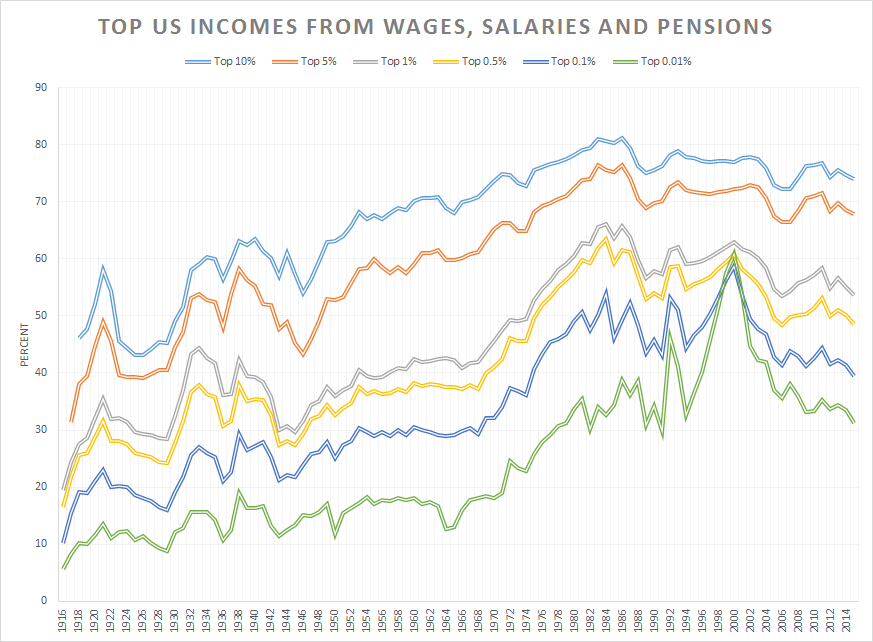
Source: The World Wealth and Income Database.
Why are there too many castles on the Rhine river?
09 Jul 2016 Leave a comment
in applied price theory, industrial organisation Tags: competition and monopoly, monopoly pricing
The Economist Crony Capitalism Index
08 Jul 2016 Leave a comment
in applied price theory, applied welfare economics, comparative institutional analysis, constitutional political economy, development economics, economics of bureaucracy, entrepreneurship, financial economics, growth disasters, growth miracles, industrial organisation, politics - USA, Public Choice, rentseeking, survivor principle Tags: crony capitalism, superstar wages, superstars, top 1%

…
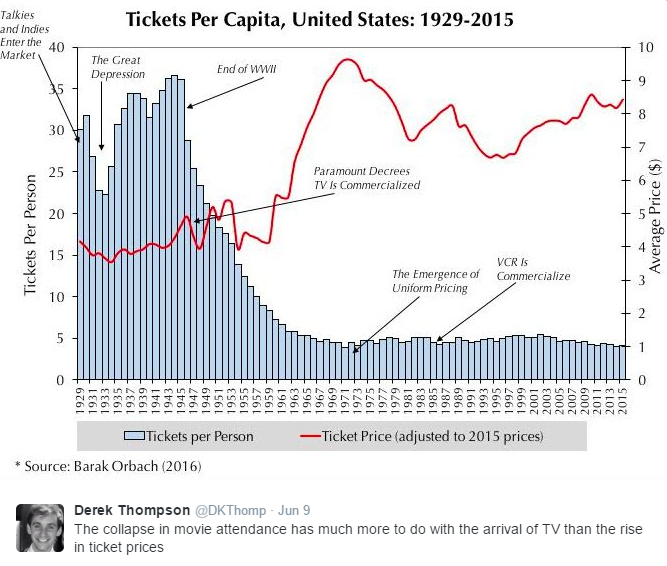
 Utopia, you are standing in it!
Recent Comments