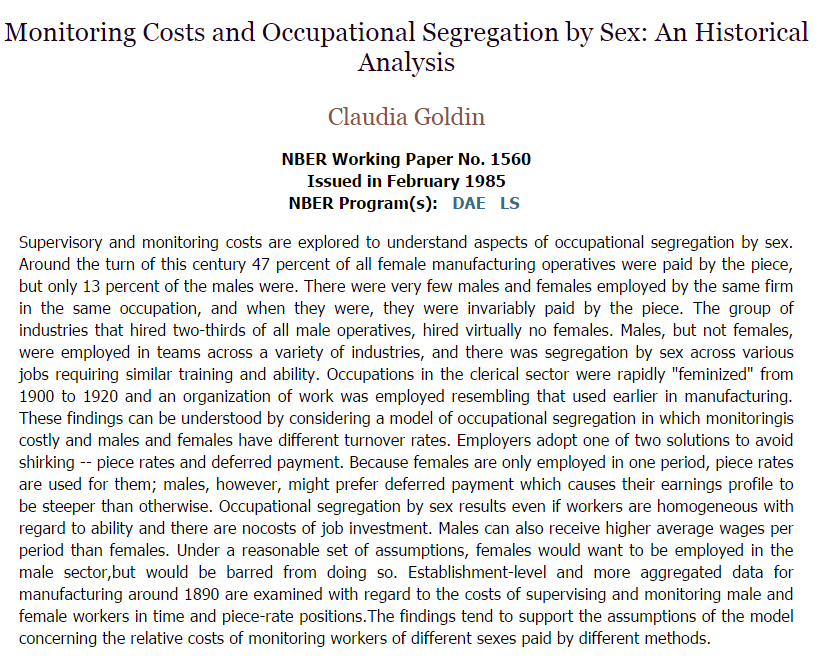
Published: Goldin, Claudia. “Monitoring Costs and Occupational Segregation by Sex: An Historical Analysis,” Journal of Labor Economics, Vol. 4, (January 1986), pp. 1-27.
Celebrating humanity's flourishing through the spread of capitalism and the rule of law
06 Mar 2017 Leave a comment
Published: Goldin, Claudia. “Monitoring Costs and Occupational Segregation by Sex: An Historical Analysis,” Journal of Labor Economics, Vol. 4, (January 1986), pp. 1-27.
06 Feb 2017 Leave a comment
in entrepreneurship, financial economics, human capital, industrial organisation, labour supply, occupational choice, poverty and inequality, survivor principle Tags: superstars, top 1%


02 Feb 2017 Leave a comment
in applied price theory, economic history, industrial organisation, survivor principle Tags: creative destruction, The meaning of competition
25 Jan 2017 1 Comment
in comparative institutional analysis, constitutional political economy, economic history, economics of regulation, entrepreneurship, fiscal policy, industrial organisation, macroeconomics, survivor principle Tags: economic reform
23 Jan 2017 Leave a comment
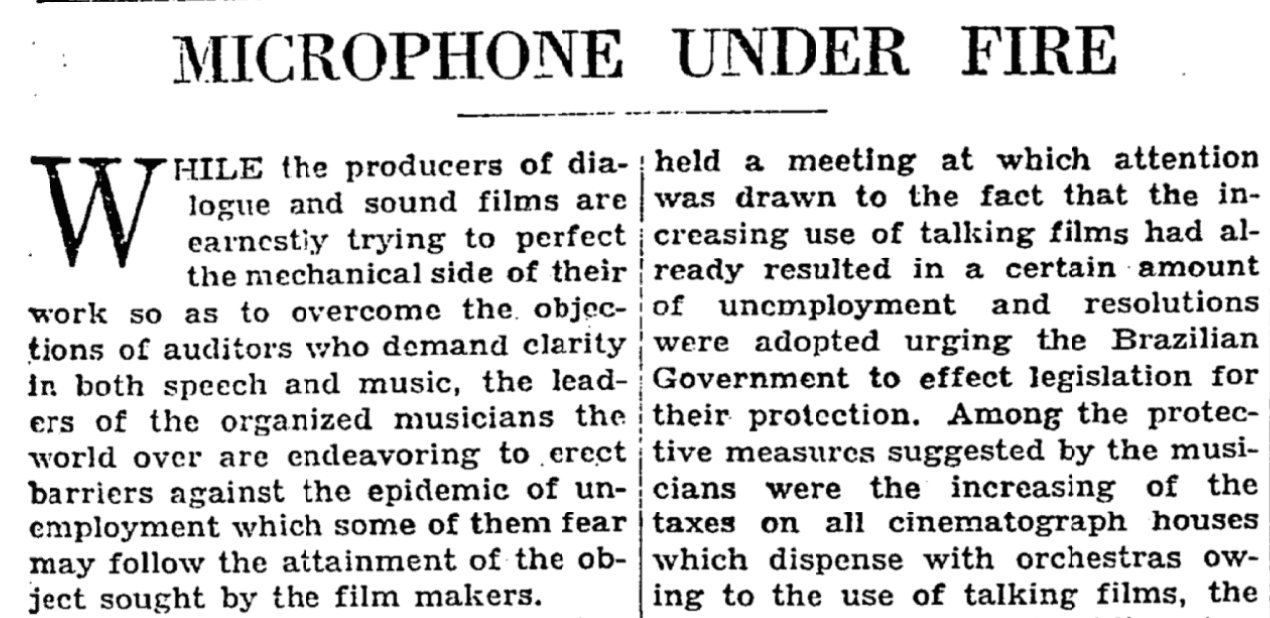
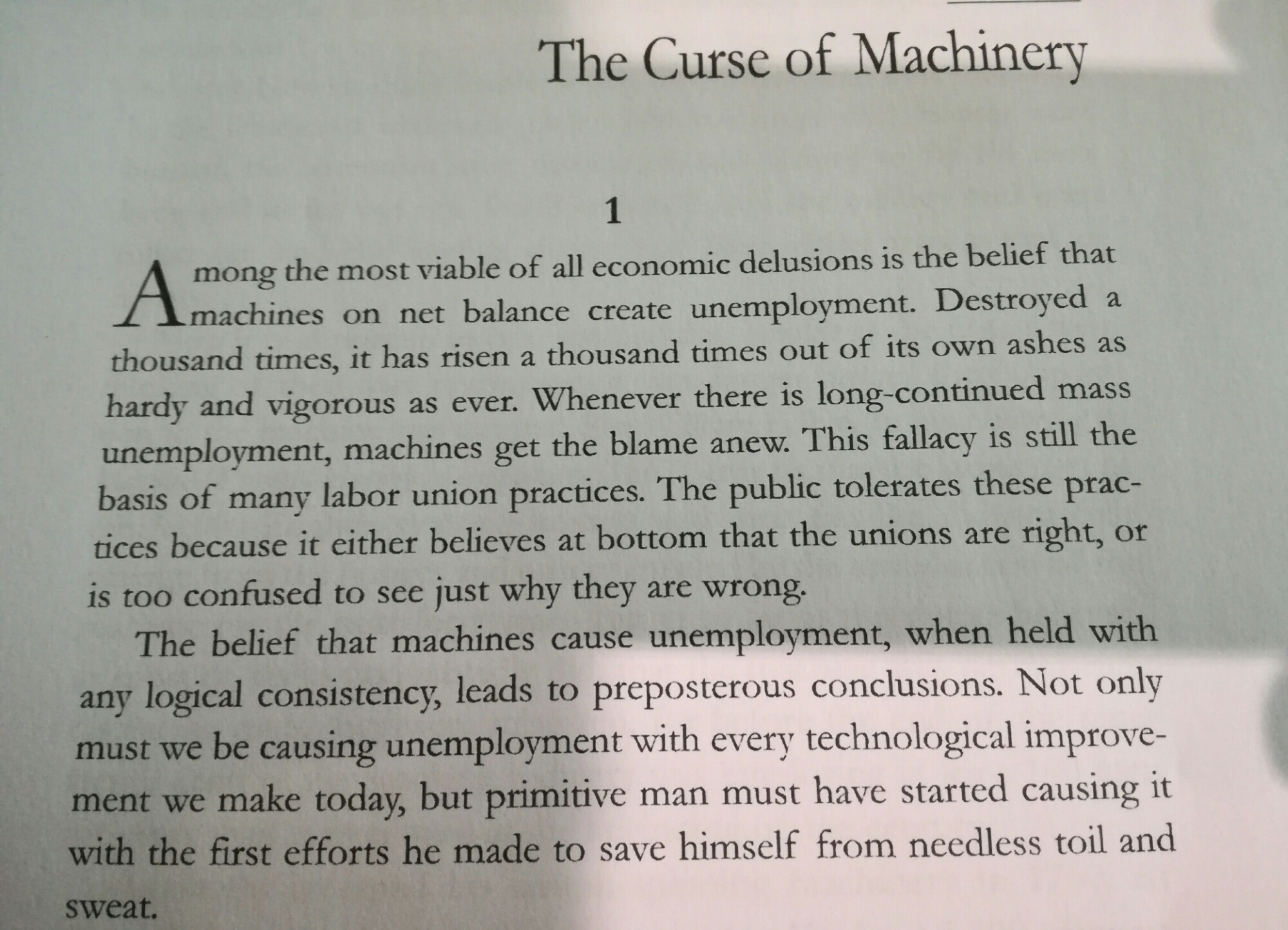
in economic history, industrial organisation, labour economics, labour supply, movies, survivor principle Tags: Apollo 13, automation, technological unemployment
The robots are coming have got nothing on the mid 20th century in terms of man being replaced by a machine.
One of my favourite scenes from Apollo 13 happens to be online. Tom Hanks and the Apollo 13 crew and ground control were using slide rules to make the critical calculations about re-entry trajectories. That had not been automated in 1969.
I went to high school just after slide rules were replaced by simple calculators.
I am reading some great essays from the 1960s at the moment about the great fear that people had from the computer entering the factory.
The reason for claiming that this time it was different was computed could automate calculations millions of times faster than people could. The computer could monitor and react to events without human intervention as Yale Brozen explained in the mid-60s
The hallmarks of automation, to distinguish it from mechanization or automatic
methods, are its sensing, feed-back, and self-adjusting characteristics. Because it senses changing requirements and adjusts without human intervention, it presumably does away with the need for human attendants or human labor. This is very fearful indeed to those who depend upon jobs for their livelihood.
19 Jan 2017 Leave a comment
in applied price theory, industrial organisation, labour economics, survivor principle Tags: technological unemployment
17 Jan 2017 Leave a comment
in entrepreneurship, industrial organisation, survivor principle, transport economics Tags: creative destruction, Uber
Celebrating humanity's flourishing through the spread of capitalism and the rule of law
Celebrating humanity's flourishing through the spread of capitalism and the rule of law
Celebrating humanity's flourishing through the spread of capitalism and the rule of law
Celebrating humanity's flourishing through the spread of capitalism and the rule of law
Celebrating humanity's flourishing through the spread of capitalism and the rule of law
Celebrating humanity's flourishing through the spread of capitalism and the rule of law
Celebrating humanity's flourishing through the spread of capitalism and the rule of law
A History of the Alt-Right
Econ Prof at George Mason University, Economic Historian, Québécois
Celebrating humanity's flourishing through the spread of capitalism and the rule of law
Scholarly commentary on law, economics, and more
Beatrice Cherrier's blog
Celebrating humanity's flourishing through the spread of capitalism and the rule of law
Celebrating humanity's flourishing through the spread of capitalism and the rule of law
Celebrating humanity's flourishing through the spread of capitalism and the rule of law
Why Evolution is True is a blog written by Jerry Coyne, centered on evolution and biology but also dealing with diverse topics like politics, culture, and cats.
Celebrating humanity's flourishing through the spread of capitalism and the rule of law
A rural perspective with a blue tint by Ele Ludemann
DPF's Kiwiblog - Fomenting Happy Mischief since 2003
Celebrating humanity's flourishing through the spread of capitalism and the rule of law
The world's most viewed site on global warming and climate change
Tim Harding's writings on rationality, informal logic and skepticism
A window into Doc Freiberger's library
Let's examine hard decisions!
Commentary on monetary policy in the spirit of R. G. Hawtrey
Thoughts on public policy and the media
Celebrating humanity's flourishing through the spread of capitalism and the rule of law
Politics and the economy
A blog (primarily) on Canadian and Commonwealth political history and institutions
Reading between the lines, and underneath the hype.
Economics, and such stuff as dreams are made on
"The British constitution has always been puzzling, and always will be." --Queen Elizabeth II
Celebrating humanity's flourishing through the spread of capitalism and the rule of law
Celebrating humanity's flourishing through the spread of capitalism and the rule of law
WORLD WAR II, MUSIC, HISTORY, HOLOCAUST
Undisciplined scholar, recovering academic
Celebrating humanity's flourishing through the spread of capitalism and the rule of law
Res ipsa loquitur - The thing itself speaks
In Hume’s spirit, I will attempt to serve as an ambassador from my world of economics, and help in “finding topics of conversation fit for the entertainment of rational creatures.”
Researching the House of Commons, 1832-1868
Articles and research from the History of Parliament Trust
Reflections on books and art
Posts on the History of Law, Crime, and Justice
Celebrating humanity's flourishing through the spread of capitalism and the rule of law
Exploring the Monarchs of Europe
Cutting edge science you can dice with


Recent Comments