
Creative destruction in jobs is nothing new
02 Jul 2017 Leave a comment
in economic history, industrial organisation, labour economics, labour supply, survivor principle Tags: automaton, creative destruction
The economics behind music festivals
02 Jul 2017 Leave a comment
in applied price theory, entrepreneurship, industrial organisation, Music, survivor principle
The Balance of Industries and Creative Destruction
30 Jun 2017 Leave a comment
in applied price theory, entrepreneurship, industrial organisation, survivor principle Tags: creative destruction, invisible hand
Price Floors: Airline Fares
23 Jun 2017 Leave a comment
in applied price theory, applied welfare economics, entrepreneurship, industrial organisation, survivor principle Tags: entrepreneurial alertness, peak load pricing, price discrimination
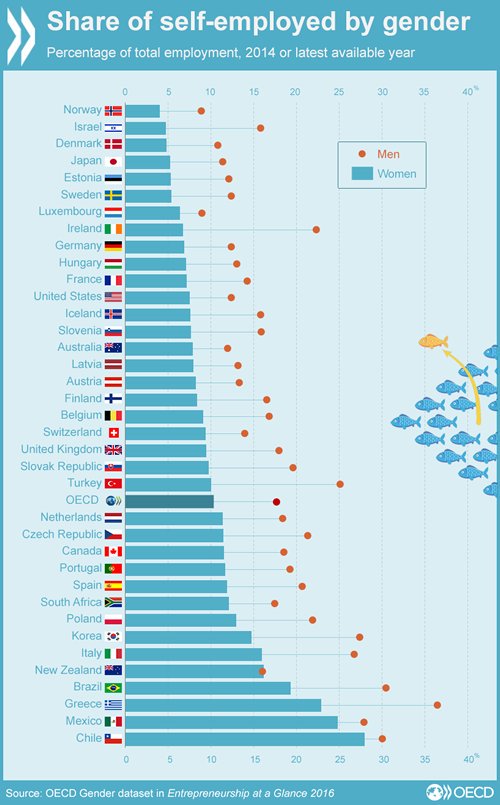
No gender gap in self-employment in New Zealand
26 May 2017 Leave a comment
in discrimination, entrepreneurship, gender, industrial organisation, labour economics, labour supply, occupational choice, Robert E. Lucas, survivor principle Tags: female labour supply
Wellywood is in an expensive global subsidy market
24 May 2017 Leave a comment
in applied price theory, industrial organisation, politics - New Zealand, Public Choice, rentseeking, survivor principle Tags: film subsidies, Hollywood economics, wars of attrition
The $300 million in film subsidies in the coming budget is riding off the back of Sir Peter Jackson’s phenomenal success. Our politicians will not consider pulling out of this global subsidy market until they have backed a few box office bombs.
The first law of Hollywood economics illustrates how fickle moviemaking is: “Nobody knows anything … Not one person in the entire motion picture field knows for a certainty what’s going to work. Every time out it’s a guess and, if you’re lucky, an educated one (Goldwin 1989).”
Big budgets, star power and large marketing budgets do not reduce ‘the terror of the box office’. Industry profits depend on the rare blockbuster; 78 percent of films are unprofitable (Walls 2005). Taxpayers cannot afford to pick winners in an industry of flops and the occasional blockbuster.
You do not have to be much of a film buff to remember box office flops with big names in them. Every Robert De Niro fan has been asking for a fair time now why did he agree to his latest film? Bruce Willis spent the middle part of his career recovering from a few box office bombs.
Many famous films and TV shows succeeded because the producers made something that audiences did not know they wanted to see until they saw it. Their success surprised everyone, including their producers. Star Wars, Rocky, The Rocky Horror Picture Show, One Flew over the Cuckoo’s Nest, My Big Fat Greek Wedding, The Godfather, Fawlty Towers and Seinfeld are all examples.
We watched the Seinfeld pilot last week. How did it ever get picked up (and initially only for four episodes)? George Clooney appeared in 23 failed pilots before hitting it big. These are the freaky odds taxpayers are playing when selecting which films to subsidise.
The most profitable movies of all time such as National Lampoon’s Animal House often had tiny budgets. Donald Sutherland is still kicking himself for insisting on a $50,000 cash rather than $35,000 plus 15% of the eventual $500 million gross (in present-day dollars). He thought he had made a nifty deal for one day’s work in a $2.5 million film, signing on only as a favour to his old baby sitter John Landis. You just never know when the biggest break in your life is passing you by in show business.
Sir Alec Guinness hated every day on the Star Wars set but made most of the money he ever made in his life from his 2 ¼%. It was supposed to be 2 ½% but did not think it important to get the increase from 2% in writing before the film’s first release in a mere 32 theatres.
George Lucas planned to be out of town to escape some of the backwash of failure at the box office. He was in LA through a mix-up in dates and only realised he was rich when he went out for a hamburger to be caught up in massive traffic jams around a theatre playing Star Wars.
Think of any successful film in the first half of the 1970s, Steve McQueen turn down it down; any successful film in the second half of the 70s including Star Wars, James Caan turned it down. Sean Connery turned down Lord of the Rings.
On Academy Awards night, the audience is full of stars showing surprising grace under pressure in an emotional profession. They show their true acting chops by jumping up, applauding and faking genuine smiles despite their having turned down the Oscar-winning role.
Many classics have modest initial reviews or weak box offices such as Blade Runner and Get Carter. Radical uncertainty about whether you will like what you see is part of the experience sought when going to the movies. My favourite movie is Casablanca the second time I saw it at Uni for $1.
Studios and investors cope with this extreme uncertainty through a portfolio approach. They invest in many films and in both established and new talent and hope to get lucky.
New Zealand taxpayers cannot diversify the risk of frequent flops with a global portfolio approach. We have only enough cash to spare to subsidise a few films. Many of these are now sequels or franchises that sooner or later will tire with their inherently fickle audiences.
Any industry which survives on the grace and favour of the subsidy granter is inherently vulnerable; doubly so when consumer tastes are so unpredictable. With 6000 or so employed in the NZ film industry, the danger is politicians will never turn the subsidy tap off because of job losses.
New Zealand is a bit player in a global subsidy market where national, state and city governments are all pitching big to attract a bit of glamour their way.

The poor returns on film subsidies are well-known. The Treasury estimated taxpayers spent $472 billion in seven years for net economic benefits of just $13.6 million from 2004 to 2011; an annual rate of return of less than one percent. Treasury found only limited evidence of spill-overs to tourism.
The infant industry argument for subsidies does not stand up if only because they never grow up. Perpetually subsidising the film industry as the basic business model makes no sense at all.
Looking past the tinsel town glamour, film subsidies are a race to the bottom for the taxpayer. That does not count for much when there are photo opportunities for politicians with movie stars.
Market-based assurance of quality and performance alert
12 May 2017 Leave a comment
in economics of information, industrial organisation, survivor principle Tags: competition as a discovery procedure, experience goods, The meaning of competition experience goods
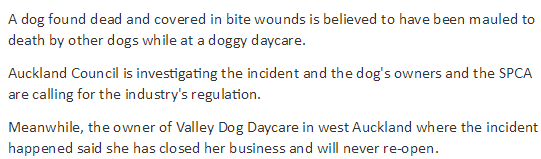
Why does an industry need regulation when incidents of malfeasance are front page news that closes the offending business for good? Social media is another market discipline of quality.
Sociologist documents what Gary Becker knew in 1957
12 May 2017 Leave a comment
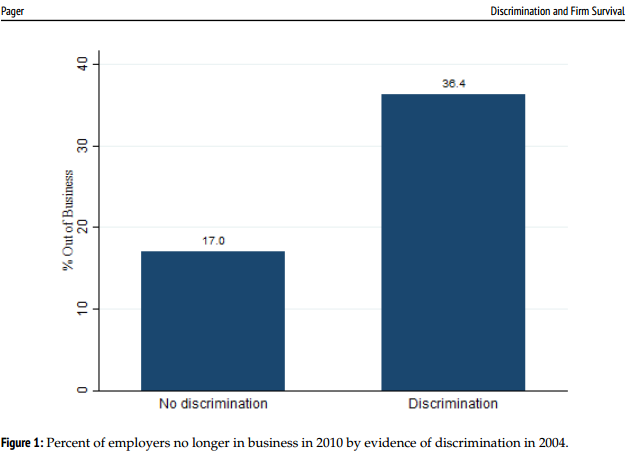
Source: Pager, Devah. 2016. “Are Firms that Discriminate More Likely to Go Out of Business?” Sociological Science (September):849-859. PDF
Free To Choose in Under 2 Minutes – Episode 1 The Power of the Market
09 May 2017 Leave a comment
in applied price theory, industrial organisation, international economics, labour economics, labour supply, Milton Friedman, occupational choice, survivor principle Tags: capitalism and freedom
Johan Norberg – Picking Winners or Losers
06 May 2017 Leave a comment
in applied price theory, economics of bureaucracy, industrial organisation, politics - New Zealand, Public Choice, rentseeking, survivor principle Tags: industry policy, picking winners
Trailblazers: The New Zealand Story – Full Video
29 Apr 2017 Leave a comment
in economic history, economics of regulation, industrial organisation, politics - New Zealand, Public Choice, public economics, rentseeking, survivor principle
Making trouble again for @stevenljoyce for @TaxpayersUnion
21 Apr 2017 Leave a comment
in applied price theory, applied welfare economics, industrial organisation, international economics, politics - New Zealand, Public Choice, rentseeking, survivor principle Tags: picking winners

The Dutch disease for the benefit of #GarethMorgan @stevenljoyce
18 Apr 2017 1 Comment
in applied price theory, applied welfare economics, economic history, industrial organisation, international economics, politics - New Zealand, Public Choice, rentseeking, survivor principle Tags: Dutch disease, export subsidies, picking winners
I am putting in a Official Information Act request to see if anyone advise ministers that a export promotion target results in a matching increase in imports along with a large appreciation in the New Zealand dollar. Did New Zealand dodge the Dutch disease from this foolhardy export promotion policy? The Dutch Disease story is one of sectoral shifts.
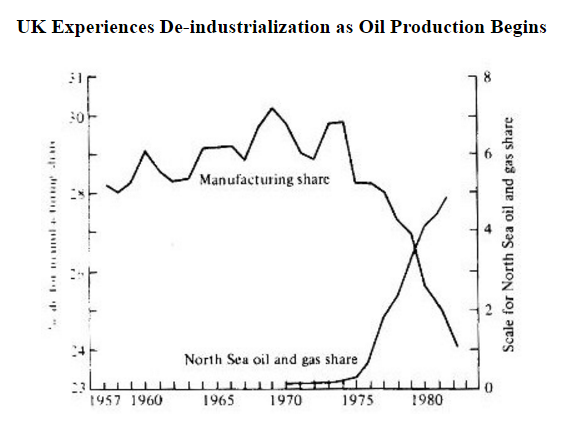
In the 1960s, with fixed exchange rates under the Bretton Woods system, the Netherlands discovered off-shore natural gas. As natural gas was extracted, it increased domestic income and spending. Investment was redirected toward the natural gas sector. Dutch wages and prices began to rise gradually. The Dutch guilder became overvalued in real terms, their industrial products became uncompetitive, and the manufacturing sector shrunk. This phenomenon of de-industrialization in the presence of rich natural resources was called the Dutch disease. They got natural gas but lost manufacturing.
In the late 1970s and early 80s, the UK experienced similar de-industrialization under a floating exchange rate regime. They discovered and exploited the North Sea oil fields. Since the global oil price was rising, the UK was expected to earn a great amount of foreign exchange in the future. But even before these earnings were realized, the British pound appreciated suddenly in both nominal and real terms. This damaged the British manufacturing sector.
Source: MF model – float
If there is an increasing demand for New Zealand exports if the Business Growth Agenda target of increasing New Zealand exports was successful, there is an increase in demand for New Zealand dollars to pay for these exports. This will result in an appreciation of the New Zealand dollar making imports cheaper. This will switch demand for New Zealand competing industries to these imports.
This process of currency appreciation and expenditure switching will continue until export match exports again. There is nothing wrong with an export boom as long as it is based on comparative advantage rather than subsidies.


Recent Comments