The Greens are most upset that a Labour party private members bill to specify a minimum wage for contractors was voted down by one vote in parliament yesterday.
If you earn than the minimum wage as a contractor, that is a signal wrapped in an incentive. Your poor hourly earnings is a signal to you that maybe you should get out of that contracting business and go back to being an employee where you will be paid at least the minimum wage.
Many small businesses make no profits at all in the first year or so as they build the business. The founders of the business get by on savings, which they anticipated when they drew up their business plan. No one expects a business to make an immediate profit or always be profitable.
Contractors are entrepreneurs chancing their arm. They need crisp signals about whether they are succeeding, failing or could succeed if they try harder or do something different. A minimum wage for contractors masks those important market signals of success and failure.
If your dream of owning your own business is not even paying the minimum wage, maybe it is time to get out of the contracting business.
There are two main arguments against mergers and acquisitions. The first of these is that they are paper shuffling with little in the way of cost advantages. The second is they allow the combined firm to raise its prices because it faces less competition.
I find these arguments to be in direct contradiction. Anti-competitive mergers must be high risk venture if there is little in the way of cost savings. Two previously efficient firm sizes are disturbed permanently in the hope of some ability to raise prices in the future without provoking too much new entry or expansion from the competitive fringe.
It is far better just to keep on colluding or just compete rather than risk permanently damaging the efficient operation of both firms.
The best the Minister for Economic Development, Steven Joyce, could do in response to my recent report on corporate welfare was nit-picking. Joyce said my definition of corporate welfare was flawed and that spending on R&D will grow the economy. He said
“To brand things like tourism promotion and building cycle-ways as corporate welfare is, I think, creative but not accurate at all.”
just somebody picking out a whole bunch of government programmes that in many cases don’t involve payments to firms at all…
Those that do involve payments to firms are specifically designed to encourage the development for example of the business R&D industry. Politicians don’t choose them.
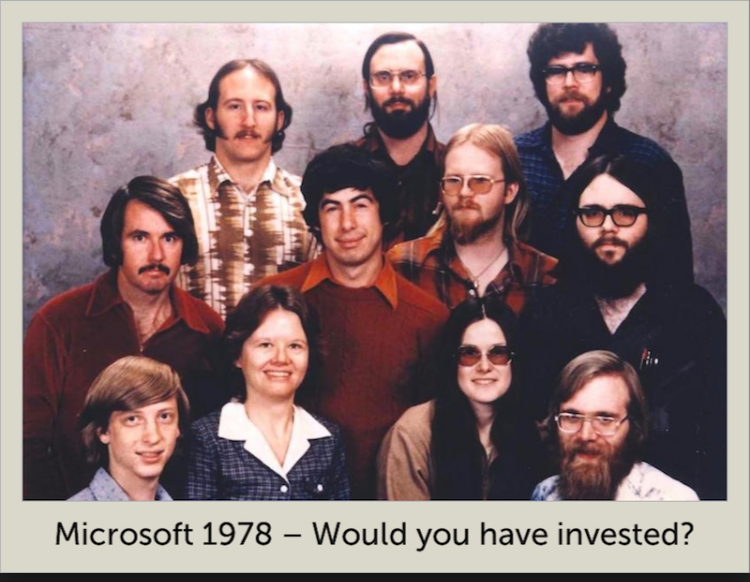
Payments in kind are business subsidies. R&D is so important to the economy that the last thing you want is its direction to be biased by funding from government. Bureaucrats have a conservative bias and do not fund oddballs and long shots. The oddballs and hippies in the picture below could only afford the photo because they won a radio competition in Arizona.
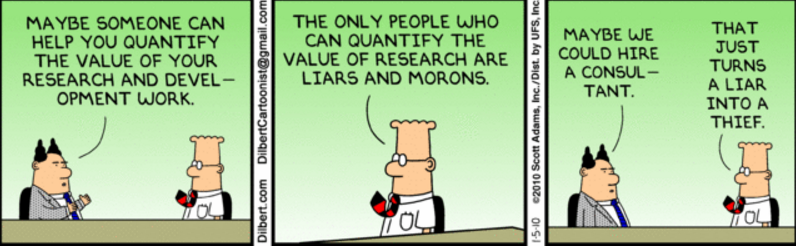
The R&D expenditure that was criticised in my report was commercialisation, not basic research, which was specifically praised. Which research to commercialise is for entrepreneurs.
There is no reason whatsoever to think bureaucrats administering R&D subsidy budgets set by politicians are any better than private entrepreneurs at picking the next big thing.
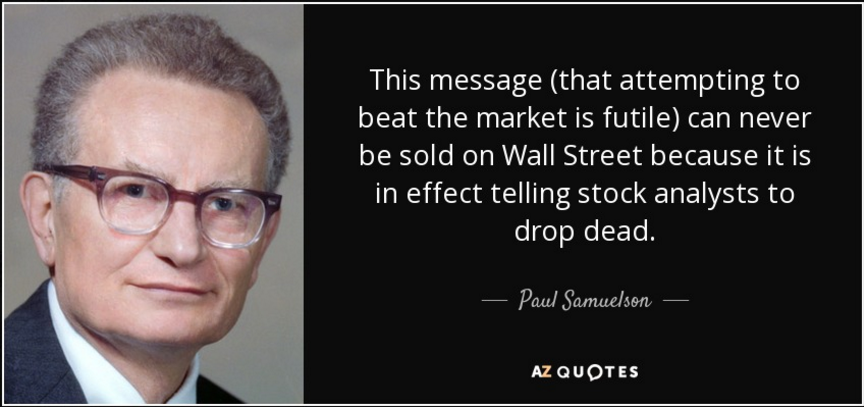
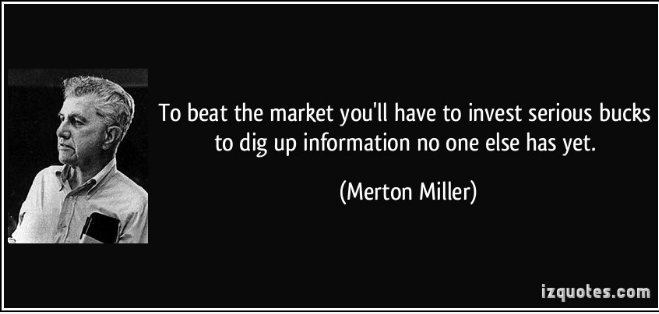
If bureaucrats were any good at picking winners, were any good at beating the market, they would go work for a hedge fund on an astronomically better salary package. The salary package of one top hedge fund manager exceeds the entire payroll budget of most New Zealand government departments including those administering R&D subsidies and other hand-outs.
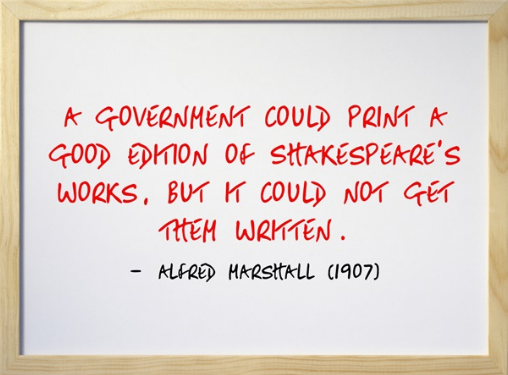
Government expenditure in vital areas such as innovation should be justified on the basis of cost-benefit ratios and a rationale for why bureaucrats have superior access to information about the entrepreneurial prospects of unproven technologies and product prototypes.
Subsidies should not be defended because of their popularity and sexiness as Mr Joyce did for the film industry, tourism promotion and ultra-fast broadband
If they told New Zealanders that in their view tourism promotion should be cancelled, the film industry should close down, that their shouldn’t be any ultra-fast broadband…I don’t think people would be that enamoured with it.
On irrigation funding, Mr. Joyce cited a report by NZIER that found irrigation contributes $2.2 billion to the economy. Irrigation is a private good which can funded by pricing it properly including the recovery of capital costs. There is no case for a subsidy.
Public goods have spillovers, private goods such as water and irrigation do not. Users can fund the irrigation themselves buying as little or as much water as they are willing to pay out for out their own pockets. The NZIER report noted that it was not about the case for public funding:
… we are not able to quantify the environmental or social impacts if irrigation had never occurred. We also do not attempt to investigate the relative merits of public versus private sector funding of the schemes.
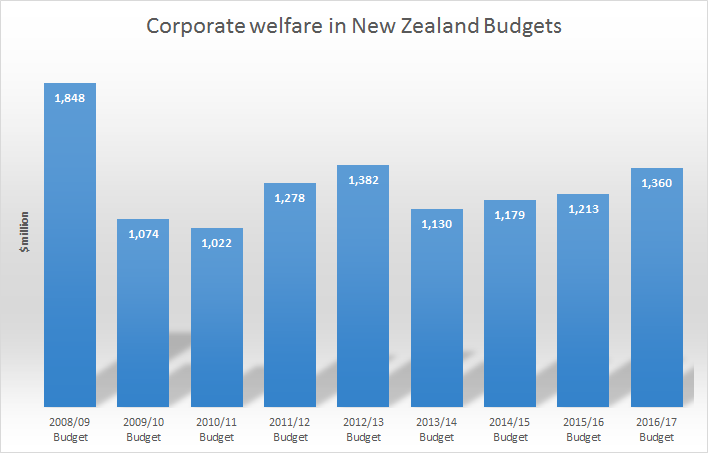
My latest corporate welfare report is out at the Taxpayers Union website. The company tax could be 6 percentage points lower but for this generosity of politicians picking winners.
Source: New Zealand Budget Papers, various years.
It is not as bad as you think under the last Labour government budget. $700 million of those hand-outs to business was seed capital for agricultural research institute. That institute to be run out of the investment income on that $700 million one-off injection which the incoming National Party-led government cancelled.
Another $675 million in that last Labour budget was to KiwiRail and OnTrack. Other than that, the Labour Party ran a pretty tight ship on business subsidies. There are no particular record of picking winners. Labour did buy a real loser in KiwiRail. You heard it here first.
Why Evolution is True is a blog written by Jerry Coyne, centered on evolution and biology but also dealing with diverse topics like politics, culture, and cats.
In Hume’s spirit, I will attempt to serve as an ambassador from my world of economics, and help in “finding topics of conversation fit for the entertainment of rational creatures.”
“We do not believe any group of men adequate enough or wise enough to operate without scrutiny or without criticism. We know that the only way to avoid error is to detect it, that the only way to detect it is to be free to inquire. We know that in secrecy error undetected will flourish and subvert”. - J Robert Oppenheimer.




 Utopia, you are standing in it!
Recent Comments