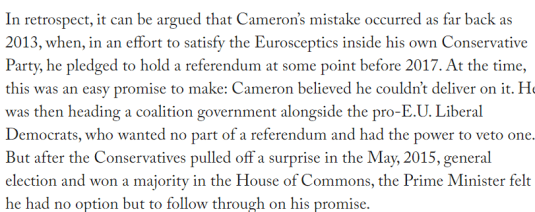
“Yes, Minister” on the Brexit Referendum
16 Jun 2016 Leave a comment
in constitutional political economy, international economics Tags: Brexit, British economy, British politics, Common market, European Union
How #drugs travel the world
13 Jun 2016 Leave a comment
in economics of crime, industrial organisation, international economics, law and economics Tags: black markets, drug decriminalisation, economics of prohibition, marijuana decriminalisation, smuggling
Why are landlocked countries poorer?
10 Jun 2016 Leave a comment
in applied price theory, international economic law, international economics Tags: burden of geography, economics of borders
#FeeltheBern? There’s a Cure.
09 Jun 2016 Leave a comment
in applied price theory, applied welfare economics, comparative institutional analysis, economic history, economics of education, economics of regulation, health economics, income redistribution, industrial organisation, international economics, politics - USA, Public Choice, public economics, rentseeking Tags: 2016 presidential election, antimarket bias, crony capitalism, living wage, pessimism bias, top 1%
Winkel tripel projection
06 Jun 2016 Leave a comment
in international economics, International law Tags: maps

.
@RealDonaldTrump @BernieSanders are wrong on taxing imports
31 May 2016 Leave a comment
in applied price theory, applied welfare economics, economic history, international economics Tags: 2016 presidential election, left-wing populists, right-wing populists
Trading across Borders Doing Business ranking 2016 – high income OECD countries
30 May 2016 Leave a comment
in international economics Tags: Australia, British economy, Common market, customs unions, economics of borders, European Union, free trade areas, Germany
What did Australia do wrong to have the worst ranking of the high income countries for doing business across borders. New Zealand is not much better. The British are not benefiting as much as they could from the common market. Being in continental Europe must have advantages except if your Germany.
Can free trade agreements help solidify emerging democracies?
24 May 2016 Leave a comment
in constitutional political economy, defence economics, international economics, Public Choice, rentseeking Tags: autocracy, customs unions, emerging democracies, free trade agreements, military coups, preferential trading agreements
Source: “Free Trade Agreements and the Consolidation of Democracy” (April 2014) American Economic Journal: Macroeconomics. American Economic Association.
Kowloon: City of anarchy
22 May 2016 Leave a comment
in economics of crime, international economics, International law, law and economics, property rights Tags: Hong Kong
Saving Ocean Fisheries with Property Rights
17 May 2016 Leave a comment
in applied price theory, comparative institutional analysis, economics of regulation, environmental economics, fisheries economics, industrial organisation, international economics, law and economics, privatisation, property rights Tags: common property, economics of fisheries, individual transferable quotas, tragedy of the commons
Brexit: the Movie
15 May 2016 Leave a comment
in applied price theory, applied welfare economics, comparative institutional analysis, constitutional political economy, economic history, economics of regulation, industrial organisation, international economics Tags: Brexit, Common market
I hope no one in @OxfamGB’s #taxhaven clip were fresh from a #TPPANoWay march?
11 May 2016 Leave a comment
in applied price theory, development economics, economic history, growth disasters, growth miracles, income redistribution, international economic law, international economics, Public Choice, rentseeking Tags: antiforeign bias, Left-wing hypocrisy, neocolonialism, Oxfam, rational irrationality, reactionary left, tax havens, TPP
I hope none in this clip protesting against tax havens as short changing everybody else were fresh from protesting how international economic agreements such as the TPPA infringe on the sovereignty of countries.
If you standing up for national sovereignty that includes standing up for the right of other countries doing things that you do not like within their own country.
If countries have the right to set taxes and tariffs as high as they like, they have just the same right to set them as low as they like.
All that plucky rhetoric of TPPA no way and how international economic agreements violate the sovereignty of countries and developing countries in particular is forgotten in a flash by Oxfam.
Oxfam manages the blinding hypocrisy of opposing the Transpacific Partnership on national sovereignty grounds and at the same time call for international treaties to bully small countries about their tax policies, which overrides their economic sovereignty.
The sovereign rights of developing countries to find their own way does not extend to undermining the tax bases of the rich countries struggling to finance their welfare states.
The Pacific Islands, the once were heroes of the recent Paris climate talks, turn into pariahs once they start looking out for themselves and setting up offshore financial centres and tax havens.
Developing countries are free to impoverish themselves by embracing socialism, but if they decide to attract investment and jobs through low tax rates and offshore financial centres, a new form of colonialism is embraced by the reactionary left as embodied by Oxfam.
When my father was born, 7 in 10 people lived in absolute poverty.
Today, it's 1 in 10! https://t.co/1Caqku3AY1—
Tim Fernholz (@TimFernholz) October 21, 2015


Recent Comments