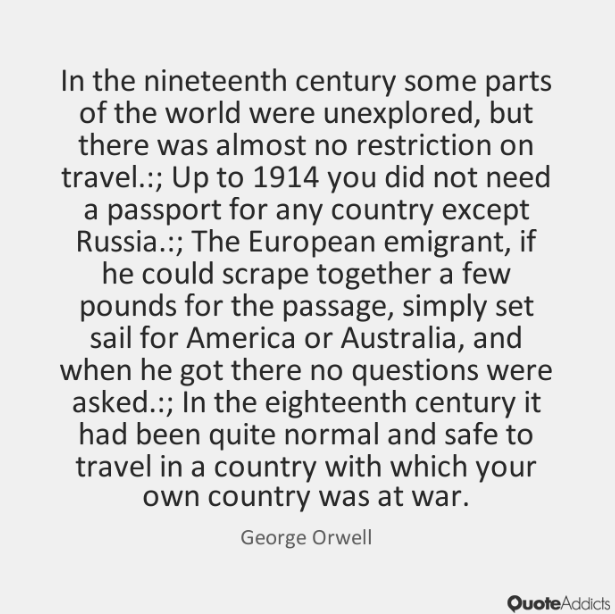
Alchian and Allen on the superfluousness of economic principles to civilisation
13 Aug 2016 Leave a comment
in applied price theory, Armen Alchian, comparative institutional analysis, constitutional political economy, development economics, economic history, industrial organisation, international economics Tags: industrial revolution, The Great Enrichment, The Great Escape, The Great Fact
Milton Friedman Speaks – Free Trade: Producer vs. Consumer
27 Jul 2016 Leave a comment
in applied price theory, international economics, Milton Friedman Tags: free trade
Yes Prime Minister on a minister of manufacturing @jamespeshaw @julieannegenter
21 Jul 2016 Leave a comment
in comparative institutional analysis, economics, economics of bureaucracy, economics of media and culture, industrial organisation, international economics, politics - New Zealand, Public Choice, rentseeking, survivor principle, television Tags: corporate welfare, industry policy, New Zealand Greens, picking losers, picking winners, Yes Prime Minister
Six-foot tall man found inside a suitcase trying to cross Italy-Switzerland border
07 Jul 2016 Leave a comment
in economics, international economics Tags: economics of immigration
The Brexit vote is about the supremacy of Parliament
30 Jun 2016 Leave a comment
in economics, international economic law, international economics, International law Tags: British economy, British politics, Common market, European Union
Why did voters vote to Leave or Remain? @JulieAnneGenter @Income_Equality
28 Jun 2016 Leave a comment
in constitutional political economy, international economic law, international economics, International law, Public Choice Tags: British economy, British politics, Common market, European Union, pessimism bias, single market, Twitter left, voter demographics
There were few difference across the political spectrum as to why voters voted to Remain or Leave. This is according to Lord Ashcroft’s survey on referendum day of over 12,000 voters.

Source: How the United Kingdom voted on Thursday… and why – Lord Ashcroft Polls
Labour and Tory voters voted to leave to regain control over immigration and sovereignty.
Labour and Tory voters who wanted to remain thought the EU and its single market was a good deal not worth putting at risk. It is all about identity politics, not inequality.
Vote Leave voters are a grumpy lot who think things have been getting worse for 30 years:
Leavers see more threats than opportunities to their standard of living from the way the economy and society are changing, by 71% to 29% – more than twice the margin among remainers…
By large majorities, voters who saw multiculturalism, feminism, the Green movement, globalisation and immigration as forces for good voted to remain in the EU; those who saw them as a force for ill voted by even larger majorities to leave.
% difference between UK’s GDP per capita and EU founding members since 1950
25 Jun 2016 Leave a comment
in economic growth, economic history, international economics, International law
Eurosclerosis started in the 1970s while the British disease came to an end with the election of the Thatcher government so the chart paper is misleading.

Source: Britain’s EU membership: New insight from economic history | VOX, CEPR’s Policy Portal.
The ever astute @JohnCassidy nails why #Brexit occurred
25 Jun 2016 Leave a comment
in constitutional political economy, international economic law, international economics, International law
Patrick Minford explains #Brexit
22 Jun 2016 Leave a comment
in applied welfare economics, comparative institutional analysis, economics, international economic law, international economics, International law, Public Choice Tags: Brexit, British economy, British politics, Common market, European Union
Division of Labor: Burgers and Ships
20 Jun 2016 Leave a comment
in applied price theory, industrial organisation, international economics
Should Britain stay or go after @MrRBourne’s best single #Brexit comment
16 Jun 2016 Leave a comment
in applied price theory, constitutional political economy, international economic law, international economics
I have not as yet decided on in or out. It is a close call. Best to divide the economic estimates of the cost of #Brexit by two and you get a more accurate estimate.
What made me move most towards leaving is the remark in the linked video by the Conservative Party Euro MP Daniel Hannan that the recent austerity cuts totalling £36 billion while British contributions to the European Union budget were £38 billion.
The snapshot tweet is the single most sensible comment on the economic costs when quantified as a percentage of GDP. The costs of leaving might well be small.

The Remain campaign is incompetent. It is unable to hit on good soundbites, much less the central case against leaving.
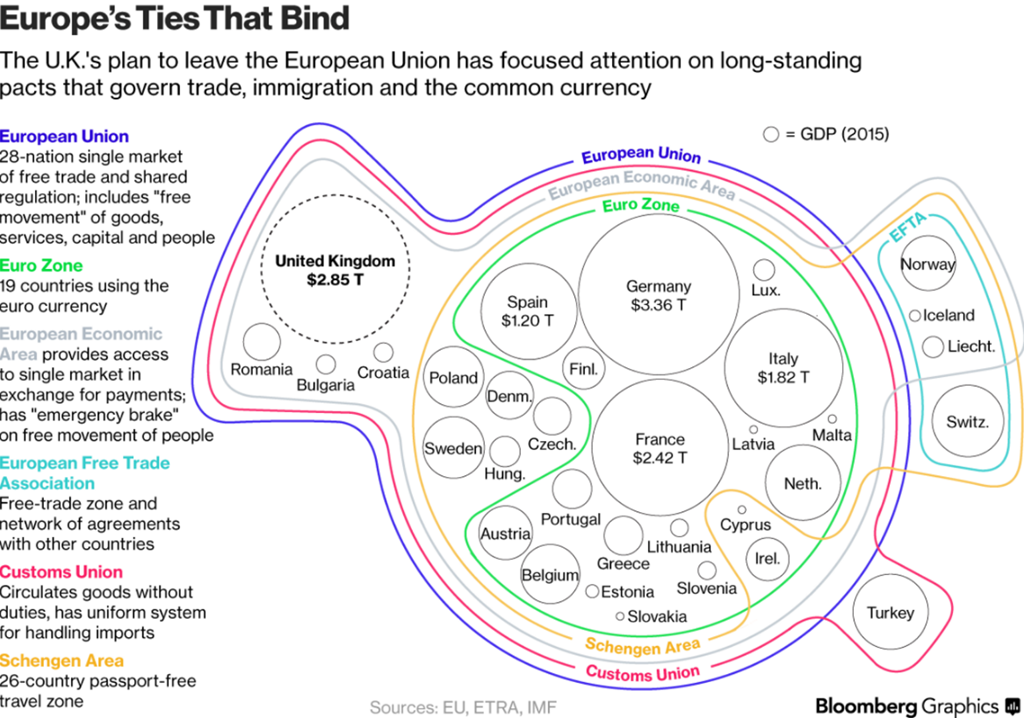
The main case to remain is it will preserve the current travel privileges of British citizens. British can go anywhere in the European Union as they like for business, pleasure, a job or to retire. No need for visas. If the British were to leave, they have to renegotiate visa access.
That renegotiation of these access will not be as easy as you might think because there are several secessionists minded provinces such as in Spain and Italy who are told that they will not be eligible for European Union membership if they succeed.
Spain has every intention of vetoing a European Union membership application from an independent Scotland to set an example to its own succession minded provinces.
Spain and Italy have every reason to be difficult over the British these are arrangements for the same reason. Signalling the costs of succession to the Lombard region of northern Italy, the Basque provinces and Catalonia
Scotland was told in no uncertain terms that if it left the United Kingdom, there would have to be border controls on the Scottish border, a new Hadrian’s Wall, because of EU law and border control agreements. Those border controls would have to remain until Scotland joined the European Union or otherwise made a deal.

The case to remain would be stronger if the British had stronger border controls against illegal immigration, and it just left the European Court of Justice and its increasingly silly decisions.
Much of the current wave of refugees arises from Turkey allowing illegal immigrants to cross its borders to go on to the European Union as a way of signalling that Turkey would be much more cooperative if it were a member of the European Union.
Number of asylum applications in EU has broken record set in 1992 – then and now compared: theguardian.com/world/ng-inter… http://t.co/qhpBagphGO—
Alberto Nardelli (@AlbertoNardelli) October 15, 2015
Turkey is increasingly undemocratic under the current president and there is always the background threat of a military coup. European Union member states must be democracies, which is why Turkey’s application for membership has stalled for many years.
How UK refugee commitment compares with other countries
bit.ly/1OuZamF http://t.co/LcnAsJePIN—
Guardian Data (@GuardianData) September 08, 2015
Parties ranging from UKIP to Alternative for Germany will get stronger and stronger unless control over borders is restored.
Neo-colonial @oxfamnz continues to bully small island states
16 Jun 2016 Leave a comment
in applied price theory, development economics, environmental economics, global warming, international economic law, international economics, public economics
Oxfam joins others on the reactionary left in seeking to bully former colonies over their economic policies, in particular, their tax policies that promote tax havens.

The Cayman Islands is a British overseas territory that chooses to stay British with limited self-government. If the British were to start bullying it over its tax haven and offshore financial centre policies, it would immediately seek independence.
This attempt by former colonial masters to bully small countries to toe their line on tax policies is not done in any way for the benefit of these former colonies and their economic development. It is old-fashioned imperialism with a new motivation, tax imperialism. The aim is to prevent capital flight and the erosion of the business tax base in developed countries.
This is a seething hypocrisy given that Oxfam was all for #TPPANoWay. It is OK to go your own way on tariffs, intellectual property and investment and other economic regulations but not taxes. Countries have a tariff sovereignty but not a tax sovereignty.
This is a self-serving neo-colonial hypocrisy. The sovereignty arguments for #TPPANoWay are identical to those for the right of countries to act as tax havens. Identical. Tariffs deny other countries export markets; tax havens deny other countries tax revenue.
Small island states were left-wing and environmentalist heroes on climate change at the most recent conference on global warming in Paris but are villains regarding tax havens. In both cases, these small countries are exercising their sovereignty regarding their foreign policies and economic policies.
Oxfam believes that the democratic rights of former colonies do not extend to shaping their own economic policies. Oxfam wants them to be put on a neo-colonial leash.


Recent Comments