Appeared before the Parliamentary committee on the #TPPA today
03 Mar 2016 1 Comment
in international economics, politics - New Zealand Tags: conspiracy theories, ISDS, New Zealand Greens, TPPA
One of the cathartic things about leaving the public service is I do not have to be deferential to politicians anymore. I can treat them like ordinary people and tell them where to go when they annoy me. In consequence, I am not in any way nervous about appearing before a parliamentary committee.
This Parliamentary committee was very unlike the last. Staying on after giving my submission was a pain rather than a learning experience.
A parade of conspiracy theories about the investor state dispute settlement process followed my testimony, which was first of the day. I left after about 45 minutes.
In my testimony, I got a standard question from David Clark, a Labour MP, about whether more time should be that given to make submissions because the complexities of the intellectual property chapter.
Kennedy Graham, the Green MP, then asked a bizarre question about how could New Zealand sign a trade agreement that would compromise environmental standards. His example was a trade agreement where it is agreed to start using coal as a power source again in New Zealand.
So weird with this question that I did not give the obvious answer which was this parade of horribles is so unlikely that it is not a serious question. What I did say was it is very unlikely New Zealand would ever sign such an agreement.
If a parade of horribles and weird hypotheticals is the best you can do, you do not have much of an argument against the TPPA.
#Childpoverty has nothing to do with @AmnestyNZ
25 Feb 2016 Leave a comment
in economics of bureaucracy, international economics, politics - New Zealand
What gave Amnesty International its strength, appeal and political credibility was most could agree with its opposition to the imprisonment of prisoners of conscience and to torture and that political prisoners should be put on trial.
Including child poverty as part of its most recent international annual report proves Robert Conquest’s 3rd law of politics: the behaviour of any bureaucratic organization can best be understood by assuming that it is controlled by a secret cabal of its enemies
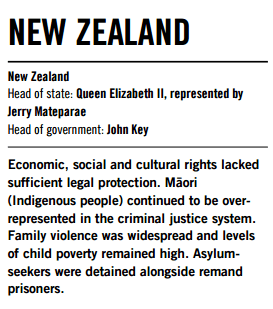
Source: 2015/16 Annual report – The State of the World’s Human Rights | Amnesty International NZ.
Amnesty International should not be giving people reasons not to join. It should stick to its original mission, which most people support. An NGO with members from across the political spectrum has much more credibility and influence.
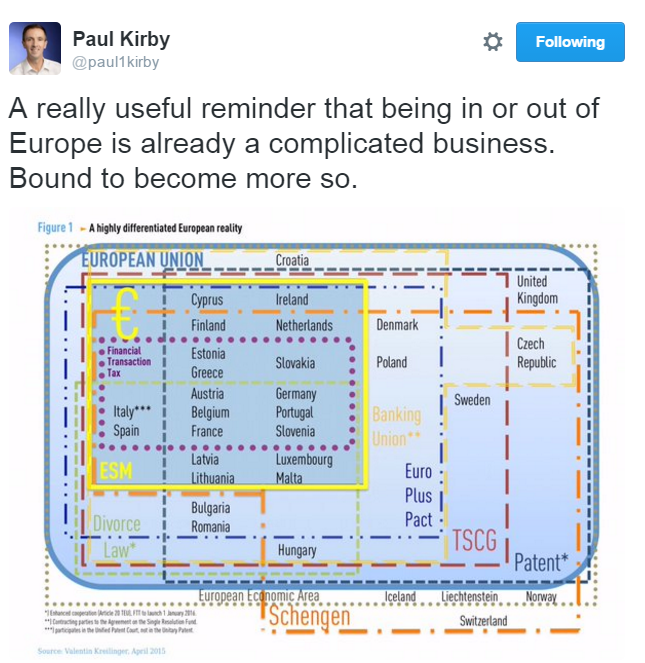
The case for and against #Brexit
22 Feb 2016 Leave a comment
Trade policy parallels @BernieSanders @realdonaldtrump @NZGreens? @nzlabour?
20 Feb 2016 Leave a comment
in international economics, politics - New Zealand, politics - USA, Public Choice

Source: Trade Policy Parallels | Econbrowser.
Note: PNTR is Permanent Normal Trade Relations, formerly “Most Favored Nation” status.
@BernieSanders @realDonaldTrump have the same trade policies
20 Feb 2016 Leave a comment
in international economics, politics - USA Tags: antiforeign bias, antimarket bias, left-wing populism 2016 presidential election, rational irrationality, right-wing populism
NZ tariffs eliminated immediately for #TPPA countries
16 Feb 2016 Leave a comment
in international economic law, international economics, politics - New Zealand

My submission to Parliamentary committee on TPPA treaty examination
15 Feb 2016 2 Comments
in applied welfare economics, international economic law, international economics, politics - New Zealand Tags: customs unions, intellectual property, preferential trading agreements, TPPA, trade creation, trade diversion
Despite all the passions about the TPPA, the correct starting post for an economist on regional trade agreements is lukewarm opposition. That is the position of Paul Krugman. Paul Krugman summarised the TPPA well recently from a standpoint of a professional economist:
I’ve described myself as a lukewarm opponent of the Trans-Pacific Partnership; although I don’t share the intense dislike of many progressives, I’ve seen it as an agreement not really so much about trade as about strengthening intellectual property monopolies and corporate clout in dispute settlement — both arguably bad things, not good, even from an efficiency standpoint….
What I know so far: pharma is mad because the extension of property rights in biologics is much shorter than it wanted, tobacco is mad because it has been carved out of the dispute settlement deal, and Republicans in general are mad because the labour protection stuff is stronger than expected. All of these are good things from my point of view. I’ll need to do much more homework once the details are clearer.
Krugman then reminded that a trade agreement is most politically viable when it is most socially harmful. This is the point that the opponents of the TPPA miss. They will not want to discuss how some trade agreements are good deals but others are bad. That would admit that trade agreements can be welfare enhancing, and sometimes they are but sometimes not.
The correct economic name for free trade agreements is preferential trading agreements. These agreements give tariff and other preferences to some countries over others.
Tariffs are lower for the members of the agreement, creating more trade, but there is also trade division.
CER offers a neat example of trade diversion. Instead of buying cars from the cheapest source and collecting tariff revenue, the hopelessly inefficient Australian car industry did not have to pay tariffs so it made New Zealand into a major export market until tariffs were abolished in 1998.
Less tariff revenue because of CER but we still paid way over the odds for Australian instead of Japanese cars. We were worse off. Less tariff revenue but car prices pretty much as high as before.
New Zealand tariffs are minimal these days. The TPPA reduces the key tariffs on our exports at an excruciatingly slow pace.
There is no discussion of trade diversion in the National Interest Analysis before this committee. For that reason alone, the National Interests Analysis is inadequate and should be returned to the Ministry for further work. Right now, it would not pass a first semester test in a basic international economics course because that most basic risk from trade agreements is not discussed.
Most of the TPPA is not about tariffs. Many of these other chapters are suspicious add-ons to trade talks.
Developing countries rightly regard trade and environment clauses in any trade agreement as a new form of colonialism.
Unions, the Labour Party and Greens happily demand these intrusions into the regulatory sovereignty of developing countries to protect special interests against import competition.
The sovereignty objections to trade agreements are no different to those that can be made to climate change treaties and International Labour Organisation conventions. It is all in the details – what do we get in return?
Consistency would help too. Trade agreements should not include labour or environmental standards as they, for example, limit our right to deregulate our labour market. Be careful for what you wish for when you oppose international agreements on sovereignty grounds.
The intellectual property chapters of the TPPA are truly suspicious. With each new day, the case for patents and copyrights is weakening in the economic literature. Some have made powerful arguments to abolish patents and copyrights altogether.
There are modest extensions of the term limits of drug patents and much more mischief on copyright terms. These should be watched carefully in future trade talks and one day will be a deal breaker.
Good arguments can be made against investor state dispute settlement provisions even after the carve-outs. These provisions have no place in trade agreements between democracies.
Foreigners can take their chances in democratic politics like the rest of us. They might occasionally get a short deal because of left-wing or right-wing populism but these gusts of xenophobia are mostly an occasional irritant in the rich fabric of Western democracies.
Developing countries sign-up to investor state dispute settlement to signal they are open for business. Foreign investors do not have to put up with their corrupt courts and bureaucracies and hopelessly venial politicians.
The logic of regional trade negotiations is we cut tariffs we should have cut long ago in return for others cutting their tariffs which they too should have cut long ago.
Much is made of the cost-benefit analysis of the TPPA. All the critics are really saying is cost benefit analysis is really hard and often imprecise.
If the econometric estimates were not in doubt in this or any other public policy field, the academics are simply not trying hard enough to win tenure and promotion. Academics make their careers by being contrarian.
For this lukewarm opponent of regional trade agreements, the TPPA is a so-so deal with small net gains. There is no harm in signing it.
For Valentine’s Day, @ATabarrok presents I, Rose
14 Feb 2016 Leave a comment
in applied price theory, history of economic thought, industrial organisation, international economics Tags: division of labour, spontaneous order
The international drug trade mapped
11 Feb 2016 Leave a comment
in economics of crime, economics of regulation, international economics, law and economics Tags: drug trafficking, economics of prohibition, smuggling
Explaining free trade to @realdonaldtrump @BernieSanders with the same biased, bought and paid for video
08 Feb 2016 Leave a comment
in applied welfare economics, international economics, politics - USA Tags: 2016 presidential election, free trade, left-wing popularism, rational ignorance, rational irrationality, right-wing popularism
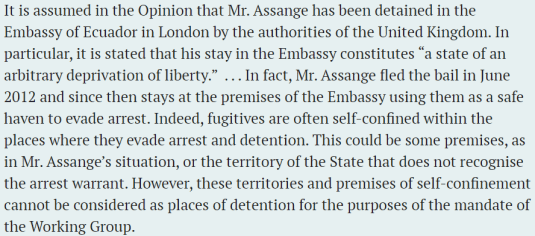
The Arbitrary Detention of Julian Assange? – Lawfare
07 Feb 2016 Leave a comment
in economics of crime, international economics, law and economics
#TPPANoWay @oxfamNZ @GreenpeaceUSA The Effects of Globalization
07 Feb 2016 Leave a comment
in applied price theory, applied welfare economics, development economics, economic history, growth disasters, growth miracles, international economics, Marxist economics Tags: customs unions, expressive voting, free trade, Leftover Left, ODA, preferential trading agreements, rational ignorance, rational irrationality, The Great Escape, The Great Fact, TPA, TPPA, Twitter left, Tyler Cowen
Why Does 1% of History Have 99% of the Wealth? @Oxfam #TPPANoWay
06 Feb 2016 Leave a comment
in development economics, economic history, growth disasters, growth miracles, history of economic thought, international economics Tags: capitalism and freedom, free trade, global poverty, globalisation, industrial revolution, international technology diffusion, technology diffusion, The Great Enrichment, The Great Fact, TPPA


Recent Comments