The case for and against #Brexit

https://twitter.com/EconEurope/status/701369827533971457

Image

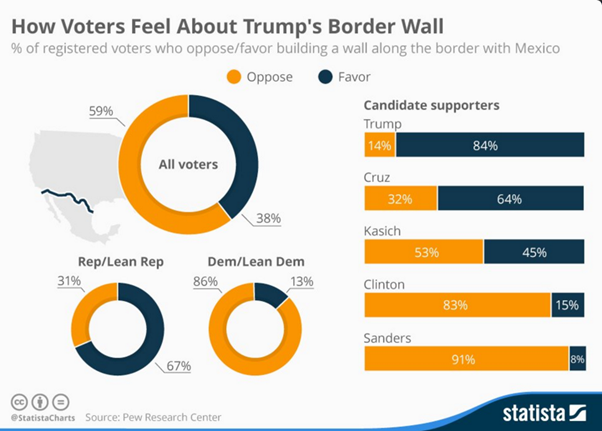
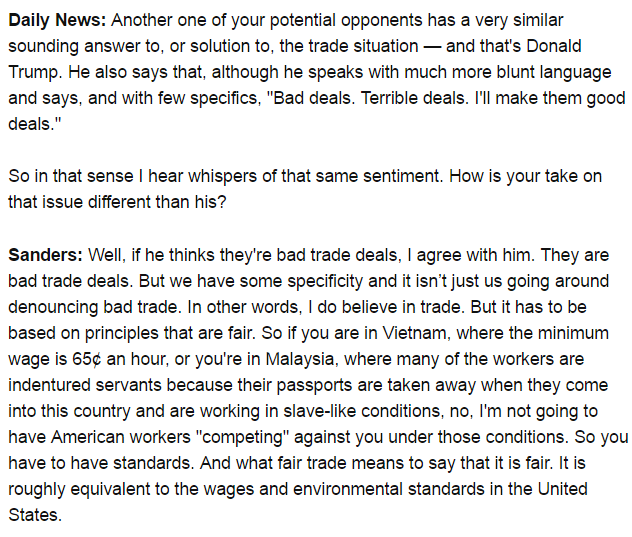
Trade policy parallels @BernieSanders @realdonaldtrump @NZGreens? @nzlabour?

Source: Trade Policy Parallels | Econbrowser.

Note: PNTR is Permanent Normal Trade Relations, formerly “Most Favored Nation” status.

@BernieSanders @realDonaldTrump have the same trade policies

NZ tariffs eliminated immediately for #TPPA countries

Source: Trade and Investment Policy Watch | PIIE Chart: Australia and New Zealand Don’t Delay Liberalization in TPP.

My submission to Parliamentary committee on TPPA treaty examination

Despite all the passions about the TPPA, the correct starting post for an economist on regional trade agreements is lukewarm opposition. That is the position of Paul Krugman. Paul Krugman summarised the TPPA well recently from a standpoint of a professional economist:

I’ve described myself as a lukewarm opponent of the Trans-Pacific Partnership; although I don’t share the intense dislike of many progressives, I’ve seen it as an agreement not really so much about trade as about strengthening intellectual property monopolies and corporate clout in dispute settlement — both arguably bad things, not good, even from an efficiency standpoint….

What I know so far: pharma is mad because the extension of property rights in biologics is much shorter than it wanted, tobacco is mad because it has been carved out of the dispute settlement deal, and Republicans in general are mad because the labour protection stuff is stronger than expected. All of these are good things from my point of view. I’ll need to do much more homework once the details are clearer.

Krugman then reminded that a trade agreement is most politically viable when it is most socially harmful. This is the point that the opponents of the TPPA miss. They will not want to discuss how some trade agreements are good deals but others are bad. That would admit that trade agreements can be welfare enhancing, and sometimes they are but sometimes not.

The correct economic name for free trade agreements is preferential trading agreements. These agreements give tariff and other preferences to some countries over others.

Tariffs are lower for the members of the agreement, creating more trade, but there is also trade division.

CER offers a neat example of trade diversion. Instead of buying cars from the cheapest source and collecting tariff revenue, the hopelessly inefficient Australian car industry did not have to pay tariffs so it made New Zealand into a major export market until tariffs were abolished in 1998.

Less tariff revenue because of CER but we still paid way over the odds for Australian instead of Japanese cars. We were worse off. Less tariff revenue but car prices pretty much as high as before.

New Zealand tariffs are minimal these days. The TPPA reduces the key tariffs on our exports at an excruciatingly slow pace.

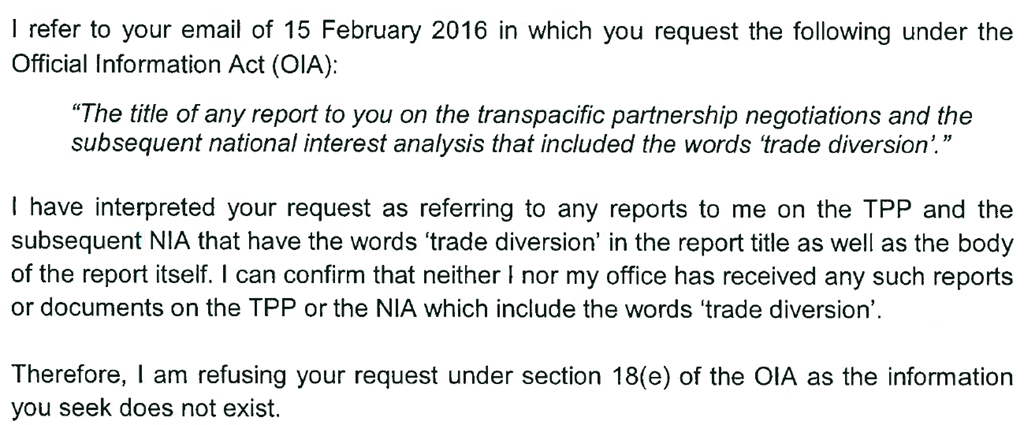
There is no discussion of trade diversion in the National Interest Analysis before this committee. For that reason alone, the National Interests Analysis is inadequate and should be returned to the Ministry for further work. Right now, it would not pass a first semester test in a basic international economics course because that most basic risk from trade agreements is not discussed.

Most of the TPPA is not about tariffs. Many of these other chapters are suspicious add-ons to trade talks.

Developing countries rightly regard trade and environment clauses in any trade agreement as a new form of colonialism.

Unions, the Labour Party and Greens happily demand these intrusions into the regulatory sovereignty of developing countries to protect special interests against import competition.

The sovereignty objections to trade agreements are no different to those that can be made to climate change treaties and International Labour Organisation conventions. It is all in the details – what do we get in return?

Consistency would help too. Trade agreements should not include labour or environmental standards as they, for example, limit our right to deregulate our labour market. Be careful for what you wish for when you oppose international agreements on sovereignty grounds.

The intellectual property chapters of the TPPA are truly suspicious. With each new day, the case for patents and copyrights is weakening in the economic literature. Some have made powerful arguments to abolish patents and copyrights altogether.

There are modest extensions of the term limits of drug patents and much more mischief on copyright terms. These should be watched carefully in future trade talks and one day will be a deal breaker.


Good arguments can be made against investor state dispute settlement provisions even after the carve-outs. These provisions have no place in trade agreements between democracies.

Foreigners can take their chances in democratic politics like the rest of us. They might occasionally get a short deal because of left-wing or right-wing populism but these gusts of xenophobia are mostly an occasional irritant in the rich fabric of Western democracies.

Developing countries sign-up to investor state dispute settlement to signal they are open for business. Foreign investors do not have to put up with their corrupt courts and bureaucracies and hopelessly venial politicians.

The logic of regional trade negotiations is we cut tariffs we should have cut long ago in return for others cutting their tariffs which they too should have cut long ago.

Much is made of the cost-benefit analysis of the TPPA. All the critics are really saying is cost benefit analysis is really hard and often imprecise.

If the econometric estimates were not in doubt in this or any other public policy field, the academics are simply not trying hard enough to win tenure and promotion. Academics make their careers by being contrarian.

For this lukewarm opponent of regional trade agreements, the TPPA is a so-so deal with small net gains. There is no harm in signing it.

For Valentine’s Day, @ATabarrok presents I, Rose

The international drug trade mapped

Explaining free trade to @realdonaldtrump @BernieSanders with the same biased, bought and paid for video

The Arbitrary Detention of Julian Assange? – Lawfare

Source: The Arbitrary Detention of Julian Assange? – Lawfare.

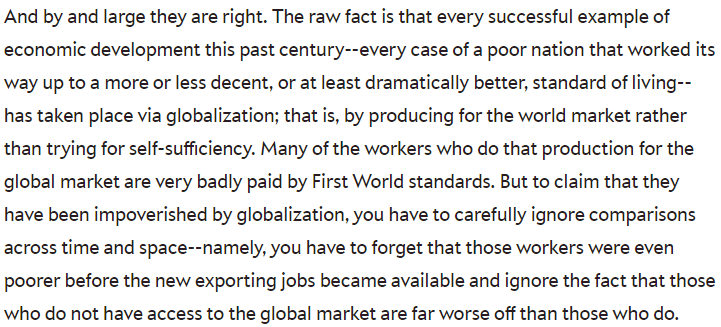
#TPPANoWay @oxfamNZ @GreenpeaceUSA The Effects of Globalization

Why Does 1% of History Have 99% of the Wealth? @Oxfam #TPPANoWay

Trading across the Mexican, Puerto Rican and US borders – World Bank Doing Business rankings, 2015

Source: World Bank Doing Business database 2015.

#TPPANoWay sovereignty objections apply equally to @ILO conventions

New Zealand has signed and ratified dozens of International Labour Organisation Conventions dating back to 1921. They all fetter the sovereignty of New Zealand. As a member of the ILO, New Zealand is required to report on its application of ILO Conventions.

That limitation on the sovereignty of New Zealand is no more and no less than in an international trade agreement. New Zealand can renounce an international trade agreement and has renounced nine International Labour Organisation conventions.

Jane Kelsey makes the following points about the legal implications of the Trans-Pacific Partnership agreement:

The 30 chapter Trans-Pacific Partnership Agreement (TPPA) constrains domestic law and policy at central government level, and in places by local government and SOEs, in diverse areas beyond traditional aspects of international trade.

…The TPP provides cumulative opportunities for foreign states and corporations to influence domestic decisions which may be burdensome and intrusive.

The exact same objections apply to the ILO conventions. The union movement does not hesitate to argue that the democratic process in New Zealand should be overridden because the proposal at hand purportedly conflicts with an ILO convention.

For example, when the government was choosing to deregulate collective bargaining, the sovereignty of Parliament was questioned because of an ILO convention. Helen Kelly, CTU President said:

in Parliament on 4 June, the Minister was asked if he agreed with advice from officials that the ability for employers to opt out of multi-employer bargaining may breach our obligations under ILO Convention 98 on the right to organise and collective bargaining.

…There is no point attending such an important UN ILO conference at the time your Government is being advised it is breaching its undertakings to that very organisation…

The CTU President also referred to the regulatory impact statement prepared for that collective bargaining legislation:

The paper also points out that these changes open NZ up to international examination by the International Labour Organisation (ILO) for non-compliance with Convention 98 – on the Right to Organise and Collectively Bargain, which New Zealand has signed up to.

Helen Kelly says “at least four of the proposals are deemed to be inconsistent with our international obligations, and two of them are classified as uncertain. Why the Government wants law changes that damage our international obligations is unclear.”

Council of Trade Unions submissions to minimum wage reviews have at least a dozen references to ILO conventions and the requirement to honour their provisions.


Posner and Goldsmith rightly argue that international law is a product of states pursuing their interests on the international stage. It does not induce states to comply contrary to their interests. The possibilities for what it can achieve are limited.

Government sign-up to various international agreements depending on their political priorities. You cannot complain that governments that you did not vote do what government you voted for also did, which was sign up to international agreements that suited their political agendas. The solution is to work harder to win the next general election.

As for opposing trade agreements on sovereignty grounds, it is rank hypocrisy for the union movement to do so given the number of times it cites international labour agreements when it suits them and seeks their inclusion in trade agreements to raise labour costs in developing countries.

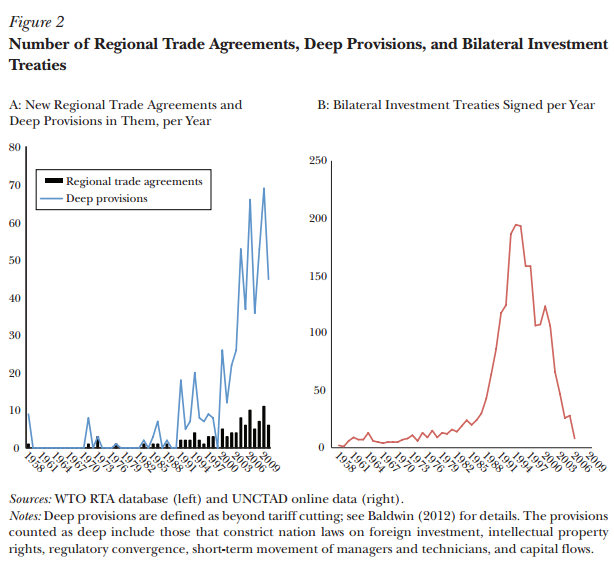
#TPPANoWay @janlogie topics in preferential training agreements

Image

Tim Hazledine loses the plot when arguing for #TPPANoWay

The op-ed by Tim Hazledine today made a poor case against the Trans-Pacific Partnership agreement (TPPA). A much better case could be made but for his still fighting the 1990 election in New Zealand, which was about the future of economic reform.

He starts off strong by saying that the agreement is a mixed bag. I am of the same view. The TPPA is a so-so deal with small net gains.

The TPPA and other trade agreements have dubious chapters such as the trade and environmental clauses, the intellectual property chapter and investor-state dispute settlement. Good arguments can be mounted against all of them, especially the inclusion of trade and environmental clauses into trade agreements.


Hazledine makes few of these points of mine, preferring instead to start with a rant against economic reform in New Zealand:

One of the more gormless of the 1980s “Rogernomics” economic policy experiments was to slash tariffs on imports without seeking equivalent concessions from our trading partners.

That didn’t do us much good then, but means now that matching reductions under the TPP is relatively painless for New Zealand, because our tariffs are already so low.

He wants to put tariffs back up again so that the poor pay well over the odds to import goods that are often not made in New Zealand and when they were they were very expensive.

Henry Simons argued that economics and in particular applied price theory is most useful both to the student and the political leader as a prophylactic against popular fallacies. Paul Krugman explained the twisted logic of trade negotiations well in this tradition when he said:

Anyone who has tried to make sense of international trade negotiations eventually realizes that they can only be understood by realizing that they are a game scored according to mercantilist rules, in which an increase in exports – no matter how expensive to produce in terms of other opportunities foregone – is a victory, and an increase in imports – no matter how many resources it releases for other uses – is a defeat.

The implicit mercantilist theory that underlies trade negotiations does not make sense on any level, indeed is inconsistent with simple adding-up constraints; but it nonetheless governs actual policy.

The economist who wants to influence that policy, as opposed to merely jeering at its foolishness, must not forget that the economic theory underlying trade negotiations is nonsense – but he must also be willing to think as the negotiators think, accepting for the sake of argument their view of the world.

The logic of trade negotiations is they are about cutting tariffs we should have cut long ago in return to others cutting their tariffs which they too should have cut long ago if they had any concern for the welfare of their own country rather than special interests.

Tim Hazledine swallows the logic of trade negotiations hook, line and sinker with all the enthusiasm of a non-economist but he is a professional economist. Professional economists laugh at the mercantilist logic of trade negotiations.

Paul Krugman summarised the TPPA well recently from a standpoint of a professional economist, which occasional he still is:

I’ve described myself as a lukewarm opponent of the Trans-Pacific Partnership; although I don’t share the intense dislike of many progressives, I’ve seen it as an agreement not really so much about trade as about strengthening intellectual property monopolies and corporate clout in dispute settlement — both arguably bad things, not good, even from an efficiency standpoint….

What I know so far: pharma is mad because the extension of property rights in biologics is much shorter than it wanted, tobacco is mad because it has been carved out of the dispute settlement deal, and Republicans in general are mad because the labour protection stuff is stronger than expected. All of these are good things from my point of view. I’ll need to do much more homework once the details are clearer.

Krugman then reminded that a trade agreement is most politically viable when it is most socially harmful. This is the point that the opponents of the TPPA miss. They will not want to discuss how some trade agreements are good deals but others are bad. That would admit that trade agreements can be welfare enhancing, and sometimes they are but sometimes not.

Hazledine’s op-ed improves noticeably when he talks about sovereignty but this will backfire on him as I will show shortly:

what perhaps most concerns TPP doubters is possible loss of sovereignty – control by legitimate New Zealand governments over New Zealand policies and institutions: Pharmac, mining, greenhouse gases, fracking, biomedical patents, the Treaty of Waitangi and others have been raised as being at risk. TPP supporters have attempted to soothe such concerns, but I’d say they should come clean. Of course the TPP will weaken New Zealand’s sovereignty. That is what these things are supposed to do!

The fundamental idea or ideology behind the TPP is that national governments cannot be trusted to act independently on many issues, because they will inevitably succumb to local vested interests. Only the cleansing discipline of untrammelled global free-market forces will deliver efficient outcomes.

I fully understand the economic logic of this position, and could easily myself compile a long list of harmful effects of local vested interests, at the top of which would actually be those Canadian etc dairy and other agricultural policies.

But the basic premise is flawed. Most of the sovereignty we are giving up is not ceded to the invisible hand of free, competitive markets. It is not even handed over to larger sovereign states, such as the United States. It is largely to be conceded in the cause of making the world a safer place for huge, stateless multinational corporations to roam. Are we sure this is what we want?

I agree that treaties reduce sovereignty. That is what they are about. I am particularly concerned about treaties that reduce New Zealand’s sovereignty over its greenhouse gas emissions. These sovereignty arguments against trade agreements apply equally to climate treaties.

Likewise, trade agreements should not include trade and environmental standards as they limit the right of New Zealand to deregulate its labour market.

All too often unions point out that this or that International Labor Organisation convention signed decades ago conflicts with labour market deregulation. That undermines the sovereignty of New Zealand regarding the regulation of the economy just as much is the TPPA.

Previous Older Entries Next Newer Entries

Vincent Geloso

Econ Prof at George Mason University, Economic Historian, Québécois

Bassett, Brash & Hide

Celebrating humanity's flourishing through the spread of capitalism and the rule of law

Truth on the Market

Scholarly commentary on law, economics, and more

The Undercover Historian

Beatrice Cherrier's blog

Matua Kahurangi

Celebrating humanity's flourishing through the spread of capitalism and the rule of law

Temple of Sociology

Celebrating humanity's flourishing through the spread of capitalism and the rule of law

Velvet Glove, Iron Fist

Celebrating humanity's flourishing through the spread of capitalism and the rule of law

Why Evolution Is True

Why Evolution is True is a blog written by Jerry Coyne, centered on evolution and biology but also dealing with diverse topics like politics, culture, and cats.

Down to Earth Kiwi

Celebrating humanity's flourishing through the spread of capitalism and the rule of law

NoTricksZone

Celebrating humanity's flourishing through the spread of capitalism and the rule of law

Homepaddock

A rural perspective with a blue tint by Ele Ludemann

Kiwiblog

DPF's Kiwiblog - Fomenting Happy Mischief since 2003

The Dangerous Economist

Celebrating humanity's flourishing through the spread of capitalism and the rule of law

Watts Up With That?

The world's most viewed site on global warming and climate change

The Logical Place

Tim Harding's writings on rationality, informal logic and skepticism

Doc's Books

A window into Doc Freiberger's library

The Risk-Monger

Let's examine hard decisions!

Uneasy Money

Commentary on monetary policy in the spirit of R. G. Hawtrey

Barrie Saunders

Thoughts on public policy and the media

Liberty Scott

Celebrating humanity's flourishing through the spread of capitalism and the rule of law

Point of Order

Politics and the economy

James Bowden's Blog

A blog (primarily) on Canadian and Commonwealth political history and institutions

Science Matters

Reading between the lines, and underneath the hype.

Peter Winsley

Economics, and such stuff as dreams are made on

A Venerable Puzzle

"The British constitution has always been puzzling, and always will be." --Queen Elizabeth II

The Antiplanner

Celebrating humanity's flourishing through the spread of capitalism and the rule of law

Bet On It

Celebrating humanity's flourishing through the spread of capitalism and the rule of law

History of Sorts

WORLD WAR II, MUSIC, HISTORY, HOLOCAUST

Roger Pielke Jr.

Undisciplined scholar, recovering academic

Offsetting Behaviour

Celebrating humanity's flourishing through the spread of capitalism and the rule of law

JONATHAN TURLEY

Res ipsa loquitur - The thing itself speaks

Conversable Economist

In Hume’s spirit, I will attempt to serve as an ambassador from my world of economics, and help in “finding topics of conversation fit for the entertainment of rational creatures.”

The Victorian Commons

Researching the House of Commons, 1832-1868

The History of Parliament

Articles and research from the History of Parliament Trust

Books & Boots

Reflections on books and art

Legal History Miscellany

Posts on the History of Law, Crime, and Justice

Sex, Drugs and Economics

Celebrating humanity's flourishing through the spread of capitalism and the rule of law

European Royal History

Exploring the Monarchs of Europe

Tallbloke's Talkshop

Cutting edge science you can dice with

Marginal REVOLUTION

Small Steps Toward A Much Better World

NOT A LOT OF PEOPLE KNOW THAT

“We do not believe any group of men adequate enough or wise enough to operate without scrutiny or without criticism. We know that the only way to avoid error is to detect it, that the only way to detect it is to be free to inquire. We know that in secrecy error undetected will flourish and subvert”. - J Robert Oppenheimer.

STOP THESE THINGS

The truth about the great wind power fraud - we're not here to debate the wind industry, we're here to destroy it.

Lindsay Mitchell

Celebrating humanity's flourishing through the spread of capitalism and the rule of law

Alt-M

Celebrating humanity's flourishing through the spread of capitalism and the rule of law

croaking cassandra

Economics, public policy, monetary policy, financial regulation, with a New Zealand perspective

The Grumpy Economist

Celebrating humanity's flourishing through the spread of capitalism and the rule of law