New #FactualFeminist on gender gap in criminal sentencing has >4,000 views — and only 1 thumb down–so far. https://t.co/gVr9KIKagg
— Christina Hoff Sommers (@CHSommers) March 17, 2015
Harvard students take the 1964 Louisiana Literacy Test that black voters had to pass to qualify to vote
16 Mar 2015 1 Comment
An International Look at the Single-Parent Family–where is New Zealand?
16 Mar 2015 1 Comment
in discrimination, economics of love and marriage, gender, labour economics, labour supply, law and economics, occupational choice, welfare reform Tags: economics of fertility, family demographics, labour demographics, single parents

The Workplace Is Even More Sexist In Movies Than In Reality | FiveThirtyEight
12 Mar 2015 Leave a comment

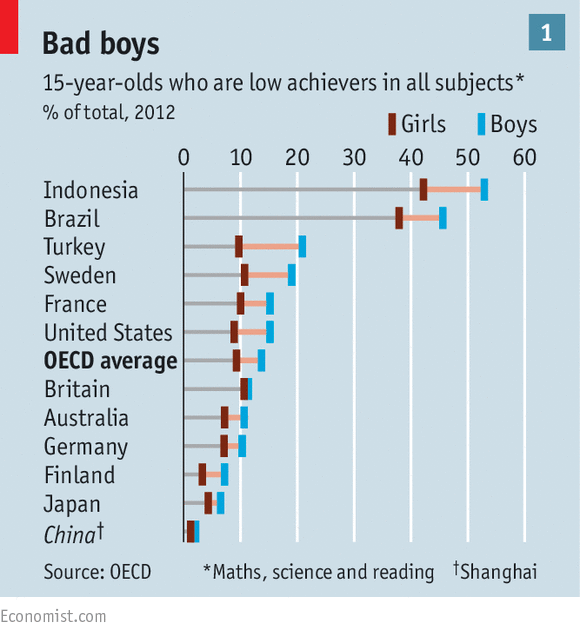
Gender Gap in Education Cuts Both Ways
11 Mar 2015 Leave a comment
in discrimination, economics of education, gender


The new gender gap in education
09 Mar 2015 Leave a comment
in discrimination, economic history, gender, labour economics, labour supply, politics - USA
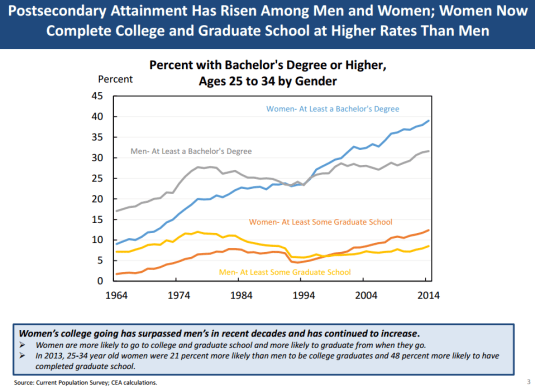
Source: whitehouse.gov

The explosion in women’s professional education just after the pill became widely available
07 Mar 2015 Leave a comment
in discrimination, economic history, economics of education, gender, labour economics, labour supply, occupational choice, politics - USA Tags: economics of fertility, engines of liberation, female labour supply, gender wage gap, reversing gender gap, The Pill
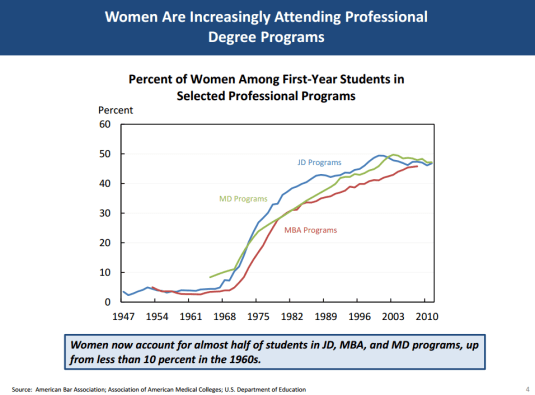
Source: whitehouse.gov
Another boy’s own analysis by the IMF of the decline of unions and inequality in recent decades
06 Mar 2015 Leave a comment
in discrimination, gender, human capital, labour economics, labour supply Tags: decline of unions, female labour force participation, gender analysis, gender wage gap, IMF, reversing gender wage gap, union power
we find strong evidence that lower unionization is associated with an increase in top income shares in advanced economies during the period 1980–2010

Gender analysis! Gender analysis! Where is the gender analysis, which is central to any analysis of inequality in and outside of the labour market!
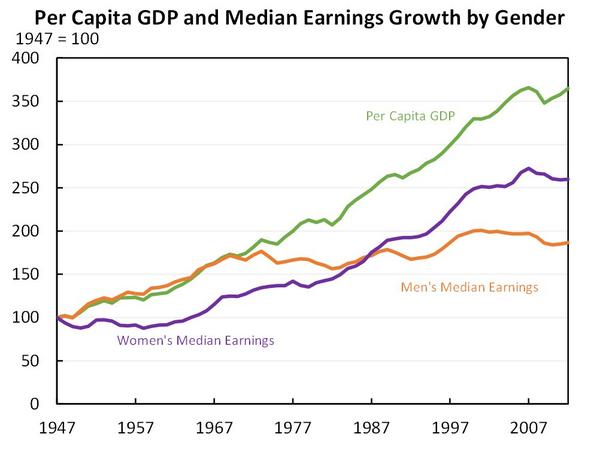
Women have done swimmingly over the last few decades in terms of closing the gender wage gap, increasing labour force participation and overtaking men in investment in higher education.
Who's the weaker sex? Women now make up the majority of university students around the world econ.st/1x1cUli http://t.co/6YWv6SuQc4—
The Economist (@TheEconomist) March 13, 2015
As for unions and women, their record of discrimination against women as threat to the union wage premium was so appalling that even Hollywood was willing to take a swipe at unions and the hostility with which mining unions, for example, greeted the first female miners.
In spite of women’s early involvement in labour struggles, deeply ingrained prejudices against women taking a full role in the workplace were often reinforced by labour unions themselves. Women were seen as mere auxiliaries to the movement, or worse, as threats to men’s jobs.
HT: whitehouse.gov
The gender wage gap emerges when women start to become mothers
05 Mar 2015 Leave a comment
in discrimination, economic history, gender, labour economics, labour supply, politics - USA

Source: whitehouse.gov
Bizarro lefties alert: @MaxRashbrooke “Maori and Pasifika children were disproportionately in poverty, highlighting systemic discrimination!”
05 Mar 2015 Leave a comment
in discrimination, politics - New Zealand, poverty and inequality
Lindsay Mitchell wrote a fine reply to the Amnesty International report suggesting that higher rates of child poverty among Māori and Pasifika is evidence of systematic discrimination.
Māori and Pasifika children were disproportionately in poverty, highlighting systemic discrimination
Figure 1: Real equivalised median household income (before housing costs) by ethnicity, 1988 to 2013 ($2013)

Source: Bryan Perry, Household incomes in New Zealand: Trends in indicators of inequality and hardship 1982 to 2013. Ministry of Social Development (July 2014).
The facts are clear, whatever systematic discrimination there might be, it must be falling rapidly because of the rapid increases in household real incomes in Mari and Pacific households in the last 20 years.
As shown in figure 1 below, between 1994 and 2010, real equivalised median New Zealand household income rose by 47%; for Māori, this rise was 68%; for Pasifika, the rise in real equivalised median household income was 77%.
Our friends on the Left cannot argue that an income gap is evidence of discrimination while arguing that a rapid closing of that gap is not evidence of falling discrimination? To do this, to paint pre-1984 New Zealand, pre-neoliberal New Zealand as an egalitarian paradise has to ignore up to two thirds of the population and the inequalities they suffered:
“New Zealand up until the 1980s was fairly egalitarian, apart from Māori and women, our increasing income gap started in the late 1980s and early 1990s,” says Max Rashbrooke.
The large improvements in Māori incomes since 1992 were based on rising Māori employment rates, fewer Māori on benefits or zero incomes, more Māori moving into higher paying jobs, and greater Māori educational attainment (Dixon and Maré 2007). Labour force participation rates of Māori increased from 45% in the late 1980s to about 62% in the last few years. Māori unemployment reached a 20-year low of 8 per cent from 2005 to 2008.
Rapid social improvement among Māori and Pasifika is simply ignored as an inconvenient truth for the Left over Left.


Recent Comments