
The British motherhood pay penalty starts at about 29
17 Jun 2016 Leave a comment
in discrimination, gender, labour economics
The asymmetric marriage premium and the motherhood penalty in the UK
09 Jun 2016 Leave a comment
in discrimination, gender, labour supply, law and economics

Source: Trades Union Congress – The Pregnancy Test: Ending Discrimination at Work for New Mothers (2016).
Gender differences in jobs and occupations since 1960
07 Jun 2016 Leave a comment
in economic history, economics, gender, human capital, labour economics, labour supply, occupational choice Tags: gender wage gap
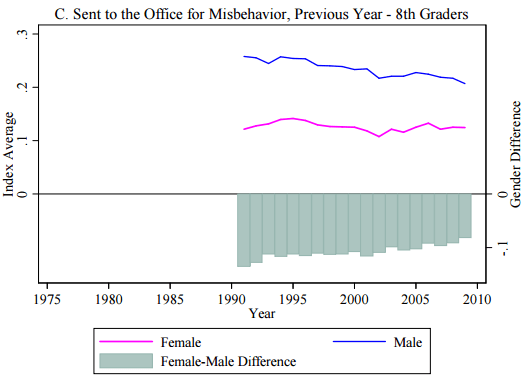
A reversing gender gap in teenage misbehaving?
05 Jun 2016 Leave a comment
in economics of education, gender
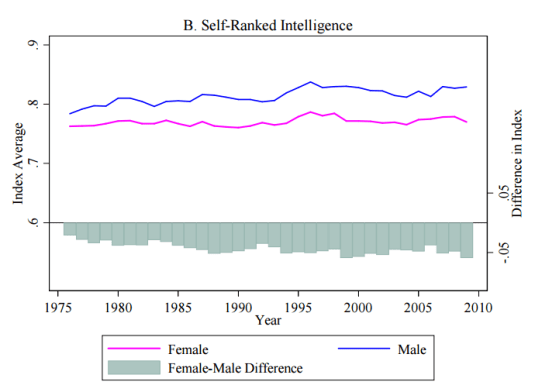
The widening gender gap in the teenage Dunning-Kruger effect
05 Jun 2016 Leave a comment
in economics of education, gender, human capital
Too close to the truth for comfort
04 Jun 2016 Leave a comment
in discrimination, economics of religion, gender, liberalism

HT: John Ansell
Dissenting opinion in the Fourth Circuit case on transgender students and restrooms
02 Jun 2016 Leave a comment
in discrimination, gender, labour economics, liberalism Tags: moral panic, political correctness, sex discrimination, social friction, transgender people

Until a few months ago, there is universal agreement particularly among women that men should not be allowed into female bathrooms and change rooms. There are relatively few transgender people according to New York at times estimates, and few had heard of them until recently to discriminate against them in long-standing bathroom arrangements.
This is not a case of sex discrimination. It is some people being rather unusual and not fitting into arrangements that suit everybody else. These arrangements regarding bathrooms, change rooms and privacy were crafted with absolutely no malice or hostility towards those who find them inconvenient such as transgender people. You just cannot please everybody.
There are certainly hostility and indeed violence against transgender people. That violence is by a minority full of hate looking for someone to hate on any criteria. There are some people are not nice and who take pleasure in being nasty and at times violent towards other people. That is separate from managing the long-standing human preference for bodily privacy.
Opposing discrimination is about telling people to stop being an arsehole. They have preferences about who they deal with that are appalling and mean. The segregation of bathrooms and changing rooms by sex is about a fundamental human desire for bodily privacy.
The Nordic Gender Equality Paradox
30 May 2016 Leave a comment
in applied price theory, discrimination, gender, labour economics Tags: Finland, gender wage gap, glass ceiling, Norway, Sweden
Bill Allen on the profitability of discrimination against women
26 May 2016 Leave a comment
in applied price theory, discrimination, entrepreneurship, gender, labour economics Tags: employer discrimination, gender wage gap
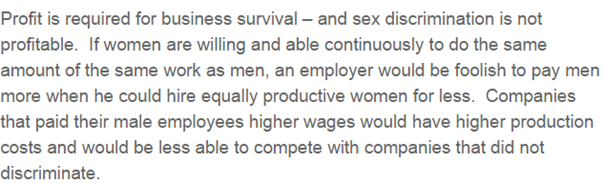
Source: Bonus Quotation of the Day… – Cafe Hayek from William Allen, The Midnight Economist.
More on the top 1% giving women a pass on the great wage stagnation
23 May 2016 Leave a comment
in discrimination, economic history, economics of media and culture, gender, human capital, labour economics, labour supply, occupational choice, poverty and inequality Tags: gender wage gap, middle class stagnation, reversing gender gap, wage stagnation
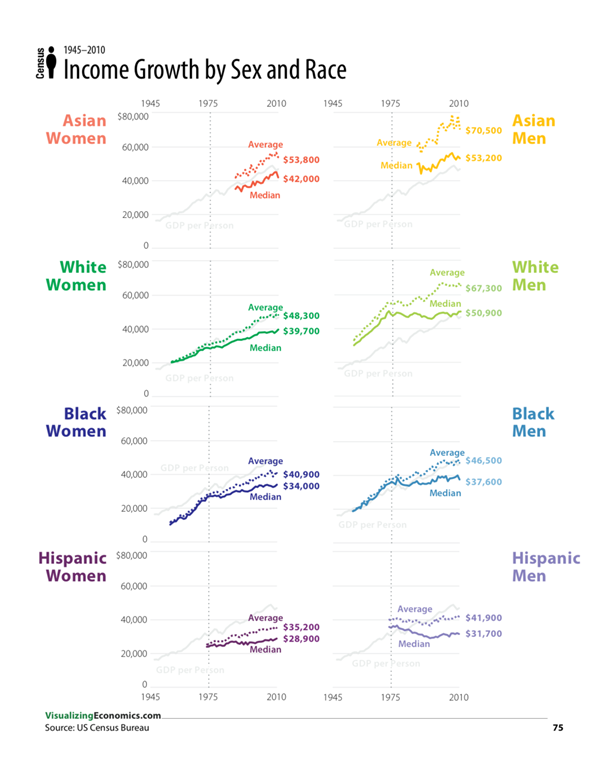
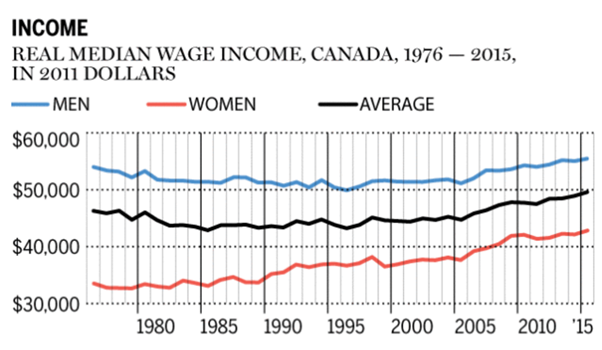
Source: Read Online — Visualizing Economics.
Is it merchandising that drives gender bias in Hollywood casting?
17 May 2016 Leave a comment
in discrimination, economics of media and culture, gender, industrial organisation, labour economics, labour supply, occupational choice, survivor principle Tags: entrepreneurial alertness, gender gap, gender wage gap, Hollywood economics

Iron Man 3 changed the gender of the film’s villain from female to male after pressure from the production company Marvel, which feared toy merchandise would not sell as well.
This is a rather frank admission of what drives gender bias in Hollywood casting decisions. Its customer preferences – customer discrimination. It was not nasty producers and directors choosing not to hire women.
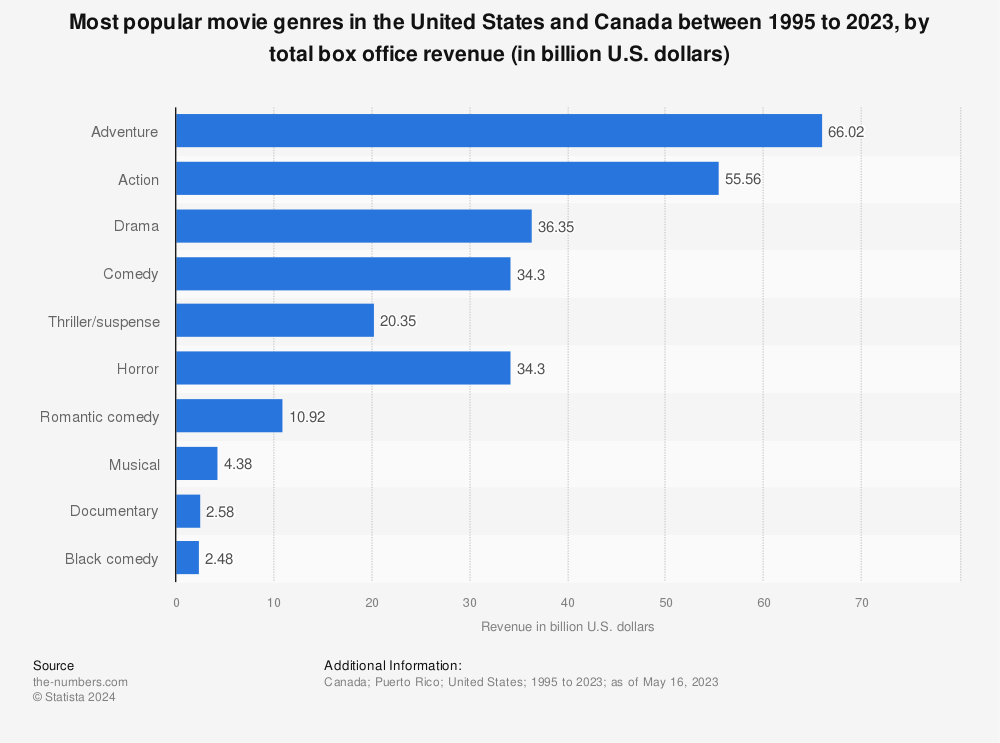
It was producers and directors casting a movie that might sell at the box office given what the box office wants. The great majority of box office sales is outside of the USA and US cultural values, interests and concepts of humour.

Hollywood is a cutthroat market where producers and directors do do whatever it takes to make their movie sell at the box office. But would not last very long if they indulge their personal preferences at the expense of the box office.
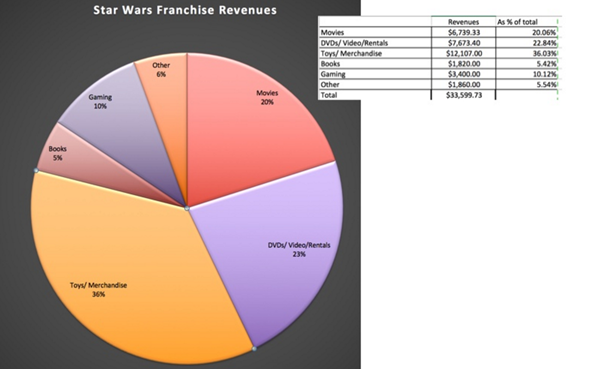
Not every movie has the merchandising potential of action films but they still have to pay careful attention to what audiences want to avoid having produced a run of flops and never get financing again.
That is not made any easier by the first law of Hollywood economics, which is nobody knows nothing. Audiences have a constant demand for novelty but they do not know what they want delay see it.
Giving birth in Australia was seriously dangerous until the mid-20th century
14 May 2016 Leave a comment
in economic history, gender, health economics, labour economics, labour supply Tags: maternal health, maternal labour force participation, The Great Escape
Medical progress contributed more than people realise to women’s liberation. The key area of progress was far fewer deaths in childbirth as the chart below for Australia shows. Deaths from childbirth disappeared from mortality statistics in the 1940s and 1950s.
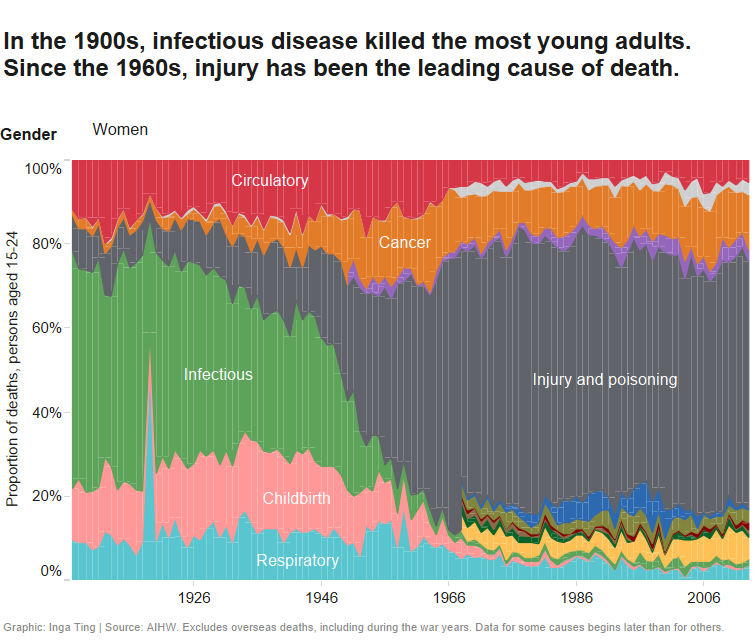
Source: Australian Institute of Health and Welfare via Sydney Morning Herald This chart shows how you will probably die, and it’s changed a lot in 100 years.
The next key area of medical progress was fewer disabling injuries subsequent because of childbirth that kept women out of the workforce for several years if not permanently. In Gender Roles and Medical Progress, Stefania Albanesi and Claudia Olivetti say
Consider a typical woman born around 1900. She married at 21 and gave birth to more than three live children between age 23 and 33. The high fetal mortality rate implied an even greater number of pregnancies, so that she would be pregnant for 36% of this time.
Health risks in connection to pregnancy and childbirth were severe. Septicemia, toxaemia, hemorrhages and obstructed labour could lead to prolonged physical disability and, in the extreme, death. In 1920 one mother died for each 125 living births. At a rate of 3.6 pregnancies per woman, the compounded risk of death from maternal causes was 2.9%.
For every death, twenty times as many mothers were estimated to suffer different degrees of disablement annually. Many maternal conditions had very long lasting or chronic effects on health, hindering women’s ability to work beyond their childbearing years.
Death in childbirth and serious complications from childbirth been forgotten in modern memory. So much so that there can be an entire year in New Zealand when no child nor mother dies in childbirth. When that does happen, there is a coroner’s enquiry.
The implications of medical progress around childbirth for female life expectancy has been equally forgotten as Albanesi and Olivetti explain
The development of bacteriology, the introduction of sulfominydes and antibiotics, and the diffusion of blood banks dramatically decreased the death rate from sepsis and hemorrhage. More specific interventions, such as the standardization of obstetric practices and the increased availability of pre-natal care, reduced the incidence of hypertensive disorders of pregnancy and obstructed labour, a causal factor for many forms of post-partum disability.
These developments lead to a stark decline in maternal mortality and a rise in the female-male differential in life expectancy at age 20 from 1.5 years in 1920 to 6 years in 1960.
At the beginning of the last century, the burden of childbirth and breastfeeding simply made it impossible for married women to work in any significant number as Albanesi and Olivetti explain
In addition, due to the lack of reliable alternatives, most infants were exclusively breast fed. Women would then be nursing for approximately a third of the time between age 23 and 33.
Since the average time required to feed one child ranges between 14 and 17 hours per week, with a 40 hour workweek, mothers would be nursing for 35%-43% of their potential working time in childbearing years.
Not surprisingly given this burden, few married women worked. Only 5.4% of married women aged 25 to 34 were in the labour force in 1900.
There was an extraordinary reduction in the number of years lost in disablement after childbirth in the early and mid-20th century as Albanese in Olivetti’s explain
…the years lost to disabilities associated with maternal conditions declined from 2.31 per pregnancy in 1920 to just 0.17 in 1960.
Medical progress around childbirth is the most important force driving the rise in the participation of married women during childbearing years and post-childbearing between 1935 and 1965. The health burden of giving birth is now measured in weeks rather than years.
Many sex differences are small on average but large at the extremes
11 May 2016 Leave a comment
in discrimination, economics, gender, health economics Tags: Bell Curce, gender gap
The gender wage gap uses bogus statistics
08 May 2016 Leave a comment
in discrimination, gender, labour economics Tags: gender wage gap


Recent Comments