
Source: Almost all men are stronger than almost all women [OC] : dataisbeautiful.
Celebrating humanity's flourishing through the spread of capitalism and the rule of law
30 Aug 2016 Leave a comment
in gender, health economics, labour economics Tags: economics of physiology, gender gap
29 Aug 2016 Leave a comment
in economics of education, gender, human capital, labour economics Tags: gender gaps, reversing gender gap
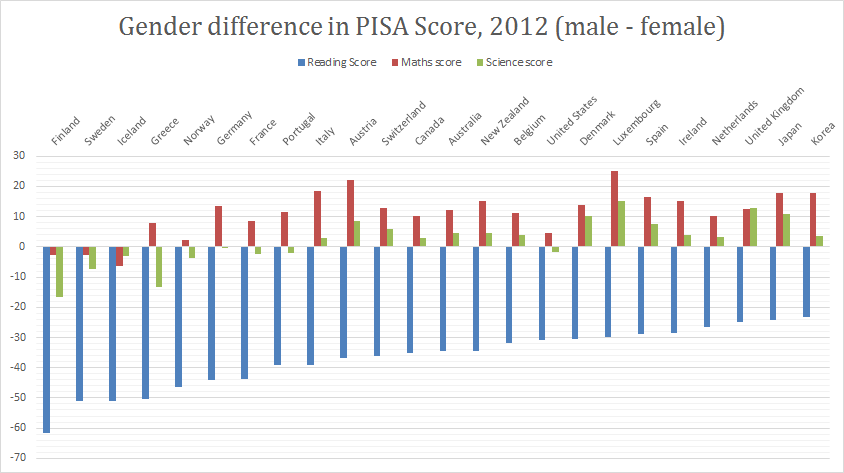
Source: OECD Programme for International Student Assessment (PISA) 2012.
28 Aug 2016 Leave a comment
in discrimination, economics of love and marriage, gender, human capital, labour economics, labour supply, occupational choice, poverty and inequality, transport economics Tags: asymmetric marriage premium, commuting times, compensating differentials, female labour force participation, gender gap, gender wage gap
The first three bars in each cluster of bars are for men. in almost all countries mothers with dependent children spend less time commuting than childless women. This might suggest that working mothers have found workplaces closer to home than women without children. The gender gap in commuting where it is present in the country is larger than the gap between mothers and other women in their commuting time.
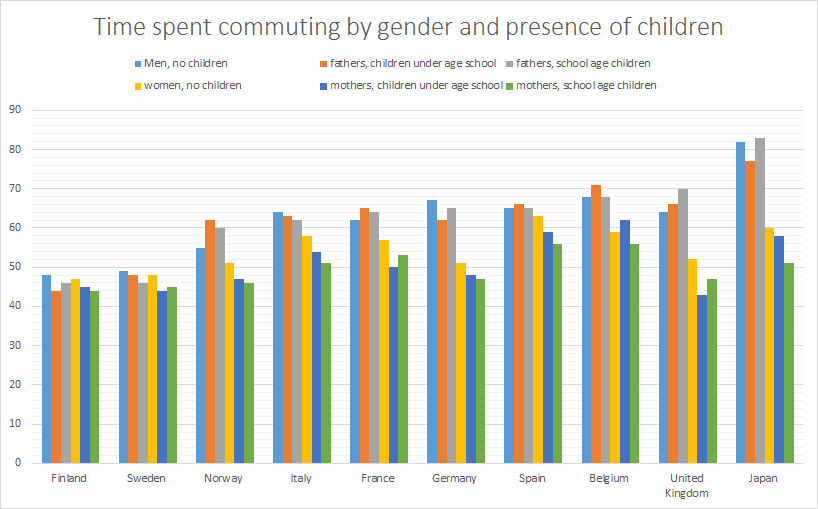
Source: OECD Family Database – OECD, Table LMF2.6.A.
10 Aug 2016 Leave a comment
in discrimination, economics, gender, labour economics Tags: gender wage gap, glass ceiling, Norway, Sweden
06 Aug 2016 Leave a comment
in applied price theory, discrimination, gender, labour economics, sports economics Tags: gender wage gap, superstar wages
30 Jul 2016 1 Comment
in economics of love and marriage, gender, labour economics, labour supply Tags: asymmetric marriage premium, female labour force participation, household production, marital division of labour
23 Jul 2016 Leave a comment
in discrimination, economics of education, gender, labour economics, occupational choice Tags: gender wage gap
11 Jul 2016 Leave a comment
in gender, labour economics, labour supply Tags: female labour force participation, female labour supply, part-time work, social insurance, taxation and labour supply
To account for full-time work being 35 hours per week in some countries but 40 hours others I have included both in the chart below. Not many Dutch women work full-time.
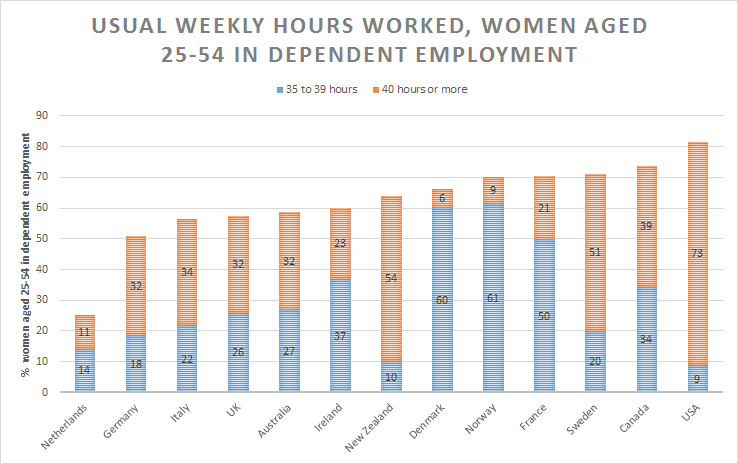
Data extracted on 11 Mar 2016 14:08 UTC (GMT) from OECD.Stat.
03 Jul 2016 Leave a comment
in discrimination, economics of education, gender, human capital, labour economics, labour supply, occupational choice, politics - USA Tags: employer discrimination, ethnic wage gap, gender wage gap, racial discrimination, racial wage gap
30 Jun 2016 Leave a comment
in discrimination, gender, occupational choice
26 Jun 2016 Leave a comment
in economics of love and marriage, gender Tags: economics of fertility, marriage and divorce, single parents
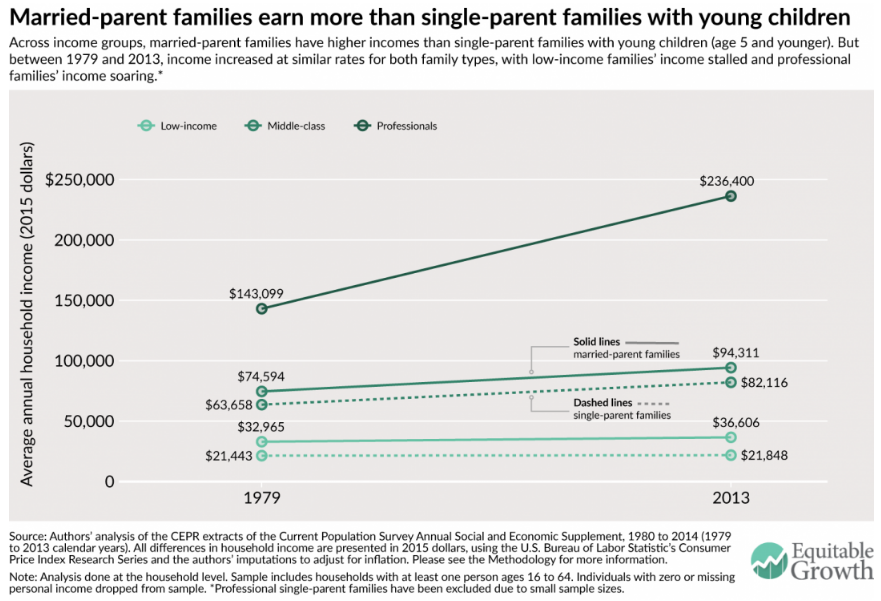
Over half of all births to young adults in the United States now occur outside of marriage, and many are unplanned. The result is increased poverty and inequality for children. The left argues for more social support for unmarried parents; the right argues for a return to traditional marriage. In Generation Unbound, Isabel V. Sawhill offers a third approach: change “drifters” into “planners.”
25 Jun 2016 Leave a comment
in discrimination, gender, human capital, labour economics, labour supply, occupational choice
Differences in raw gender wage gaps may be almost entirely the result of the individual choices made by both male and female workers.

23 Jun 2016 Leave a comment
in discrimination, gender, labour economics, politics - New Zealand, poverty and inequality
Control over the number and spacing of women was central to women’s liberation. Young Labour and the Wild Greens forgot that last night on the BackbencherTV show. Neither could handle the notion that people should wait until they can afford to have children before having them. This is an old working class value with which the Young Labour panel member completely disagreed.

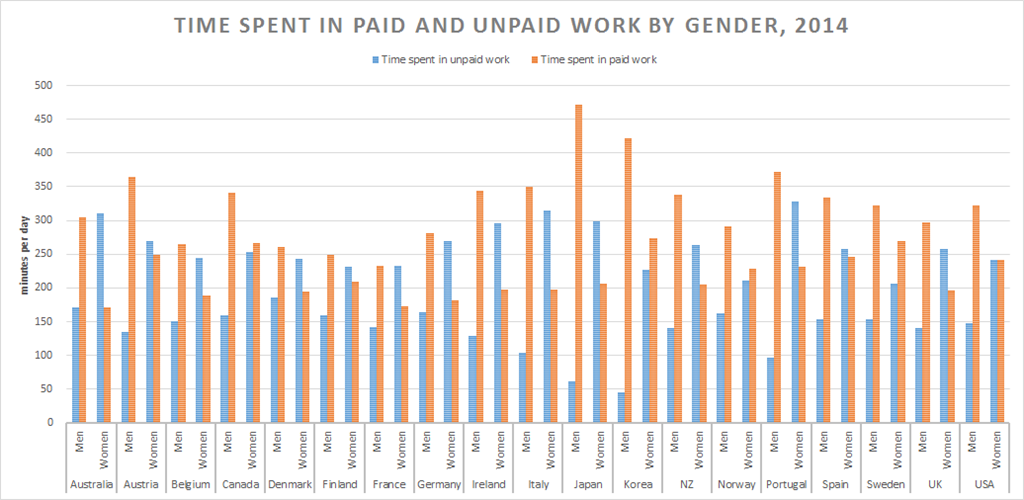
The number of children and the spacing between their births has been a major driver of the gender wage gap for decades. Central to greater female participation in the workforce and society outside the home is smaller families.
Many woman put-off having children to their late 20s and early 30s so they could first consolidate their education and career.
Bryan Caplan argues that there is an undeserving poor if they fail to follow the following reasonable steps to avoid poverty and hardship:
Raising a child takes a lot of effort and a lot of money. One poor person rarely has enough resources to comfortably provide this combination of effort and money.
Young Labour in particular has forgotten the old working class value of being a responsible parent able to afford to raise your children and give them the best things in life.
Being a parent is hard work that requires a bit of discipline if child poverty is to be avoided through ill-considered choices and a lack of family planning.
Young Labour has forgotten the policy of the Labour Party on family planning
Labour believes that all individuals should have control over their own sexual and reproductive lives. An individual’s choice to determine the number and timing of one’s children cannot be compromised.
To ensure that all people can make free and informed choices about their future, Labour supports safe, affordable and universal access to contraception, sexual and reproductive services and information. Labour recognises all women have the right to make their own choices about their own bodies, and should have access to abortion services
New Zealand has a high rate of unplanned pregnancies, estimated at between 40% and 60% of all pregnancies. Labour’s health spokesperson, Annette King agrees that it is a problem and for too long people have avoided dealing with it.
Celebrating humanity's flourishing through the spread of capitalism and the rule of law
Celebrating humanity's flourishing through the spread of capitalism and the rule of law
Celebrating humanity's flourishing through the spread of capitalism and the rule of law
Celebrating humanity's flourishing through the spread of capitalism and the rule of law
Celebrating humanity's flourishing through the spread of capitalism and the rule of law
Celebrating humanity's flourishing through the spread of capitalism and the rule of law
Celebrating humanity's flourishing through the spread of capitalism and the rule of law
Celebrating humanity's flourishing through the spread of capitalism and the rule of law
A History of the Alt-Right
Econ Prof at George Mason University, Economic Historian, Québécois
Celebrating humanity's flourishing through the spread of capitalism and the rule of law
Scholarly commentary on law, economics, and more
Beatrice Cherrier's blog
Celebrating humanity's flourishing through the spread of capitalism and the rule of law
Celebrating humanity's flourishing through the spread of capitalism and the rule of law
Celebrating humanity's flourishing through the spread of capitalism and the rule of law
Why Evolution is True is a blog written by Jerry Coyne, centered on evolution and biology but also dealing with diverse topics like politics, culture, and cats.
Celebrating humanity's flourishing through the spread of capitalism and the rule of law
A rural perspective with a blue tint by Ele Ludemann
DPF's Kiwiblog - Fomenting Happy Mischief since 2003
Celebrating humanity's flourishing through the spread of capitalism and the rule of law
The world's most viewed site on global warming and climate change
Tim Harding's writings on rationality, informal logic and skepticism
A window into Doc Freiberger's library
Let's examine hard decisions!
Commentary on monetary policy in the spirit of R. G. Hawtrey
Thoughts on public policy and the media
Celebrating humanity's flourishing through the spread of capitalism and the rule of law
Politics and the economy
A blog (primarily) on Canadian and Commonwealth political history and institutions
Reading between the lines, and underneath the hype.
Economics, and such stuff as dreams are made on
"The British constitution has always been puzzling, and always will be." --Queen Elizabeth II
Celebrating humanity's flourishing through the spread of capitalism and the rule of law
Celebrating humanity's flourishing through the spread of capitalism and the rule of law
WORLD WAR II, MUSIC, HISTORY, HOLOCAUST
Undisciplined scholar, recovering academic
Celebrating humanity's flourishing through the spread of capitalism and the rule of law
Res ipsa loquitur - The thing itself speaks
In Hume’s spirit, I will attempt to serve as an ambassador from my world of economics, and help in “finding topics of conversation fit for the entertainment of rational creatures.”
Researching the House of Commons, 1832-1868
Articles and research from the History of Parliament Trust
Reflections on books and art
Posts on the History of Law, Crime, and Justice
Celebrating humanity's flourishing through the spread of capitalism and the rule of law
Exploring the Monarchs of Europe


Recent Comments