02 Jul 2015
by Jim Rose
in discrimination, economics of education, gender, human capital, labour economics
Tags: Australia, British economy, Canada, Japan, lost boys, reversing gender gap
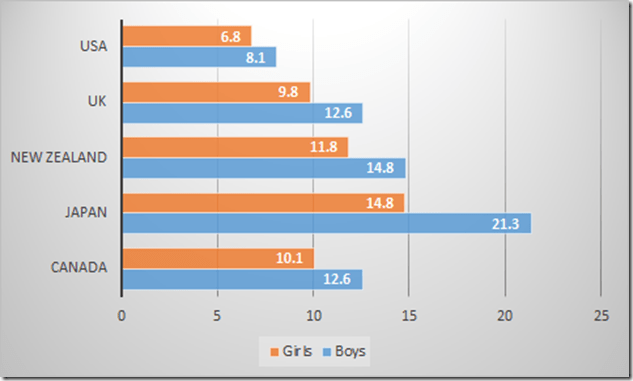
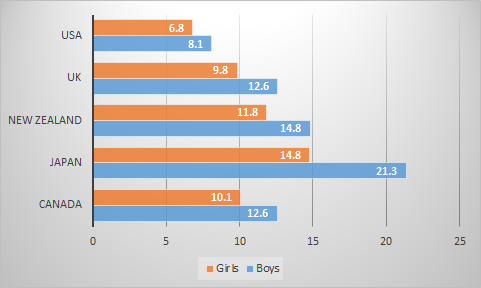
Why are Japanese 15-year-old girls as good at science as teenagers anywhere else in the world?
Figure 1: Percentage achieving the proficiency level 5 or higher in sciences by gender, USA, UK, Japan, Canada, Australia, New Zealand, 2012
Source: OECD StatExtract.
01 Jul 2015
by Jim Rose
in economics of education, gender, human capital, labour economics
Tags: Australia, British economy, Canada, Japan, lost boys, reversing gender gap
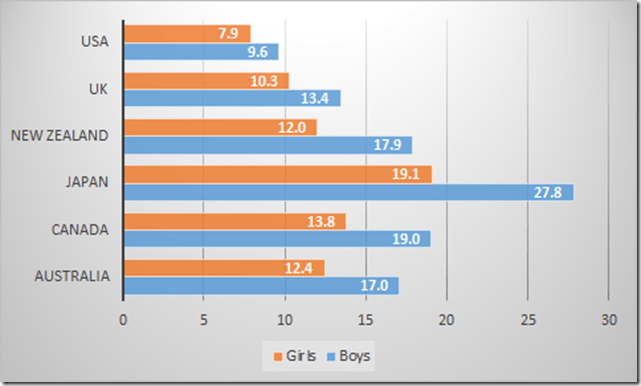
Figure 1: Percentage achieving the proficiency level 5 or higher in mathematics by gender, USA, UK, Japan, Canada, Australia, New Zealand, 2012
Source: OECD StatExtract.
01 Jul 2015
by Jim Rose
in gender, labour economics, labour supply, poverty and inequality, welfare reform
Tags: 1996, child poverty, economics of fertility, single mothers, single parents, taxation and the labour supply, welfare reforms
30 Jun 2015
by Jim Rose
in discrimination, economics of education, gender, human capital, labour economics
Tags: Australia, British economy, Canada, Japan, lost boys, reversing gender gap
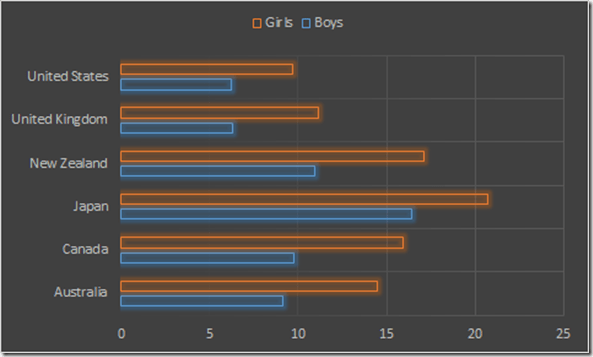
Figure 1: percentage achieving the proficiency level 5 or higher in reading by gender, USA, UK, Japan, Canada, Australia, New Zealand, 2012
Source: OECD StatExtract.
30 Jun 2015
by Jim Rose
in discrimination, economics of education, gender, human capital, labour economics, occupational choice
Tags: economics of personality traits, gender wage gap, reversing gender gap
Figure 1: Percentage of tertiary degrees awarded in humanities and arts qualifications by gender, 2012

Source: OECD Education Database.
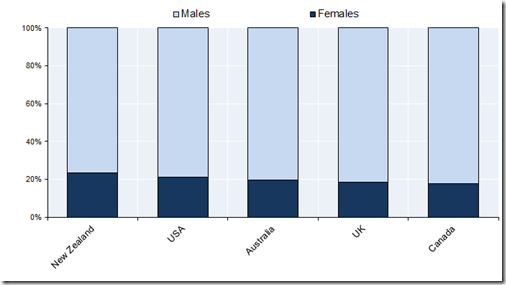
Figure 2: percentage of tertiary degrees awarded in computing qualifications by gender, 2012
Source: OECD Education Database.
Figure 3: Percentage of tertiary degrees awarded in engineering, manufacturing and construction qualifications by gender, 2012

Source: OECD Education Database.
20 Jun 2015
by Jim Rose
in gender, labour economics, labour supply, occupational choice, politics - Australia, politics - New Zealand, politics - USA, population economics
Tags: economics of fertility, economics of the family, single mothers, single parents
Figure 1: Proportion of births out of wedlock, 2011, Anglo-Saxon countries
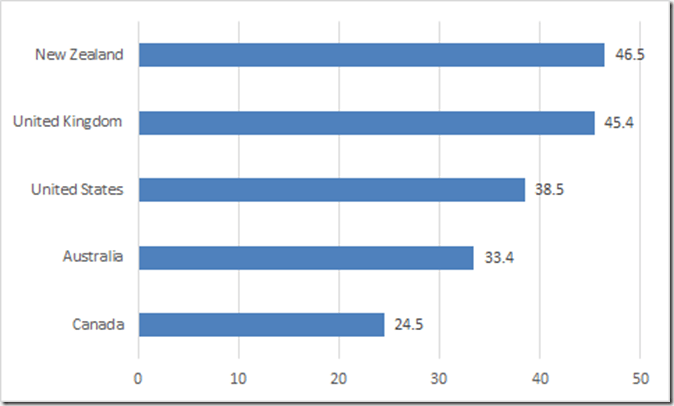
Source: OECD family database; no data for Ireland.
14 Jun 2015
by Jim Rose
in discrimination, economics of education, gender, human capital, labour economics, labour supply, occupational choice, politics - Australia, politics - New Zealand, politics - USA
Tags: Australia, British economy, Canada, College premium, education premium, gender wage gap, Ireland
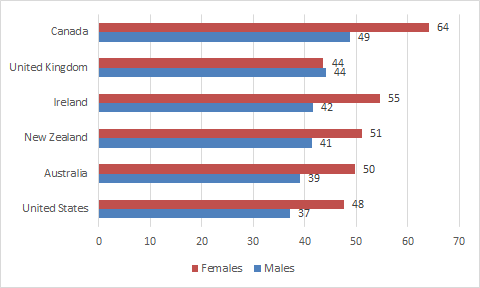
Figure 1: % population who have attained at least tertiary education, age 25 – 34 by gender (2012)
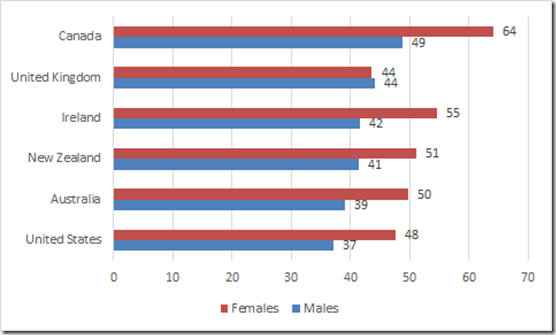
Source: OECD family database.
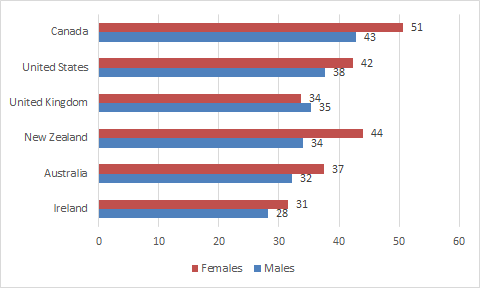
Figure 2 shows that the stark reversing of the gender gap in educational attainment shown in figure 1 was somewhat more recent in the US, UK and to a lesser extent in Ireland and Australia. In the UK and USA, educational attainment by gender was pretty equal for the earlier generation of graduates as compared to today’s 25 to 34-year-olds. The reversing of the gender gap in educational attainment dates back several decades in Canada and New Zealand.
Figure 2: % population who have attained at least tertiary education, age 45 – 54 by gender (2012)
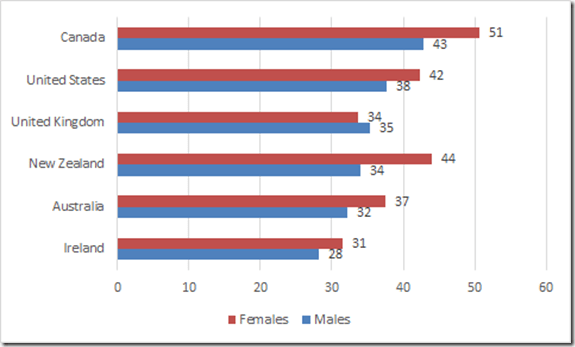
Source: OECD family database.
13 Jun 2015
by Jim Rose
in discrimination, gender, human capital, labour economics, labour supply, occupational choice, politics - Australia, politics - New Zealand, politics - USA, poverty and inequality
Tags: asymmetric marriage premium, Australia, British economy, Canada, gender wage gap, Ireland, labour demographics, maternal labour supply
In another blow for the inherent inequality of bargaining power between workers and employers, and for the patriarchy, the wage gap is larger for tertiary educated female full-time workers aged 35-44 than it is for female full-time workers who just finished high school.
Figure 1: gender wage gap for mean full-time, full-year earnings for tertiary educated workers aged 35 – 44, 2012
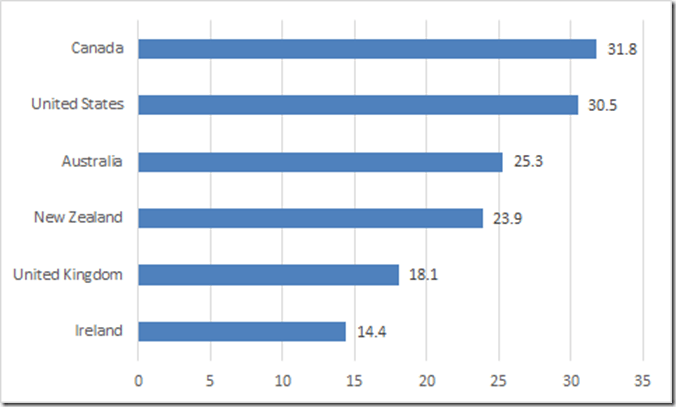
Source: OECD family database.
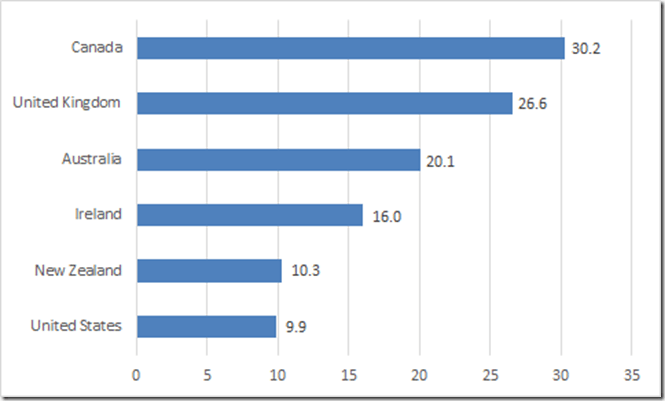
To add insult to injury, the gender wage gap further tertiary educated female workers is quite large in the USA but quite small for high school graduates.
Figure 2: gender wage gap for mean full-time, full-year earnings for below upper secondary educated workers aged 35 – 44, 2012
Source: OECD family database.
Canada seems to be a bit of a patriarchal hellhole while New Zealand does pretty well in gender wage gaps.
The gender gap in figure 1 and in figure 2 are unadjusted and calculated as the difference between mean average annual full-time, full-year earnings of men and of women as a percentage of men’s earnings.
12 Jun 2015
by Jim Rose
in discrimination, gender, human capital, labour economics, labour supply, occupational choice, politics - Australia, politics - New Zealand, politics - USA
Tags: Australia, British economy, Canada, gender wage gap, Ireland
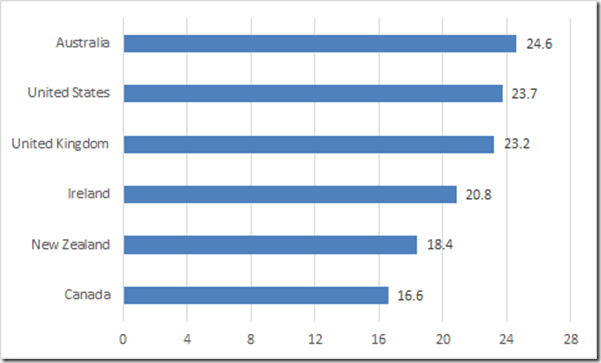
If there is an inherent inequality of bargaining power between workers and employers, as we are so frequently lectured by those in the self appointed know, why is the gender wage gap so small at the bottom of the earnings distribution?
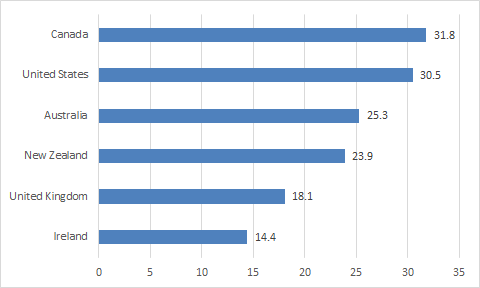
Figure 1: % Gender gap in full-time earnings at the bottom decile of earnings distribution, 2012

Source: OECD family database
Figure 2: % Gender gap in full-time earnings at the median decile of earnings distribution, 2012

Source: OECD family database
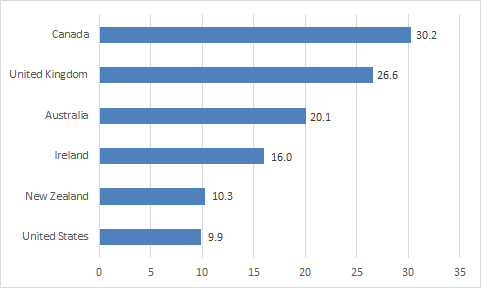
Figure 3: % Gender gap in full-time earnings at the top decile of earnings distribution, 2012
Source: OECD family database
The gender gaps are unadjusted, and are calculated as the difference between the earnings of men and women for their respective earnings percentile.
11 Jun 2015
by Jim Rose
in discrimination, gender, human capital, labour economics, labour supply, occupational choice, politics - Australia, politics - New Zealand, politics - USA
Tags: Australia, British economy, Canada, gender wage gap, Ireland
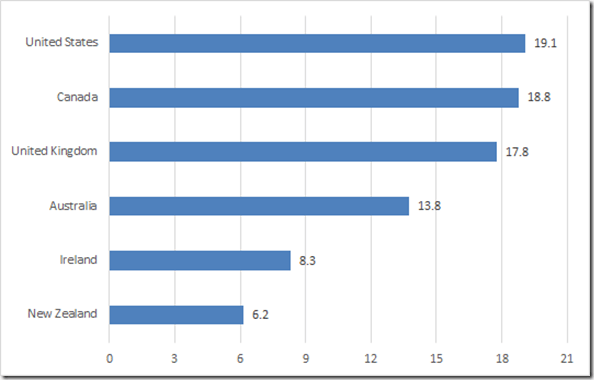
Figure 1: % gender gap in median earnings of full-time employees, 2012
Source: OECD family database
11 Jun 2015
by Jim Rose
in discrimination, entrepreneurship, gender, labour economics, labour supply, occupational choice, politics - Australia, politics - New Zealand, politics - USA
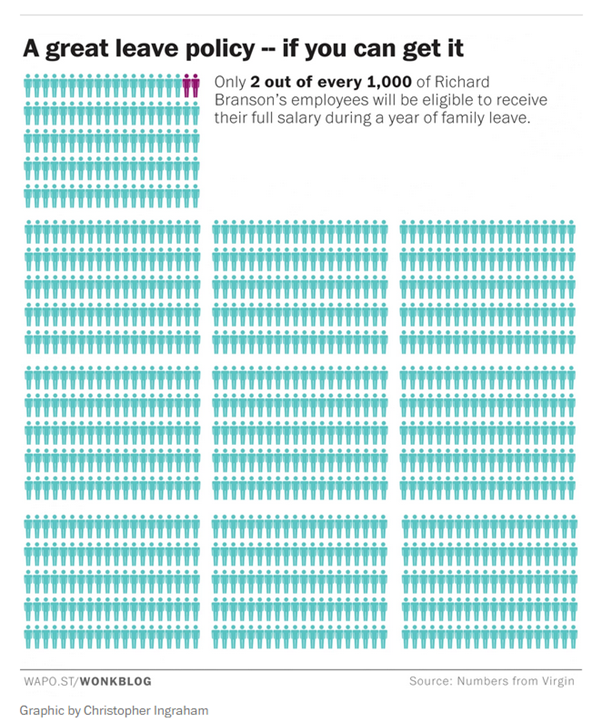
Tags: entrepreneurial alertness, maternity leave, paternity leave, Richard Branson
Previous Older Entries Next Newer Entries






Recent Comments