
Time to Revive an Out of Fashion Idea
Dude, Whatever Happened to Difference Feminism?
Celebrating humanity's flourishing through the spread of capitalism and the rule of law
17 Aug 2025 Leave a comment
in discrimination, economics of education, gender, human capital, labour economics, labour supply, occupational choice Tags: gender gap, sex discrimination
Time to Revive an Out of Fashion Idea
Dude, Whatever Happened to Difference Feminism?
11 Aug 2025 Leave a comment
in applied price theory, economic history, economics of regulation, human capital, labour economics, law and economics, liberalism, Marxist economics, politics - New Zealand, poverty and inequality, property rights, Public Choice, rentseeking, transport economics, urban economics Tags: family poverty, homelessness, regressive left
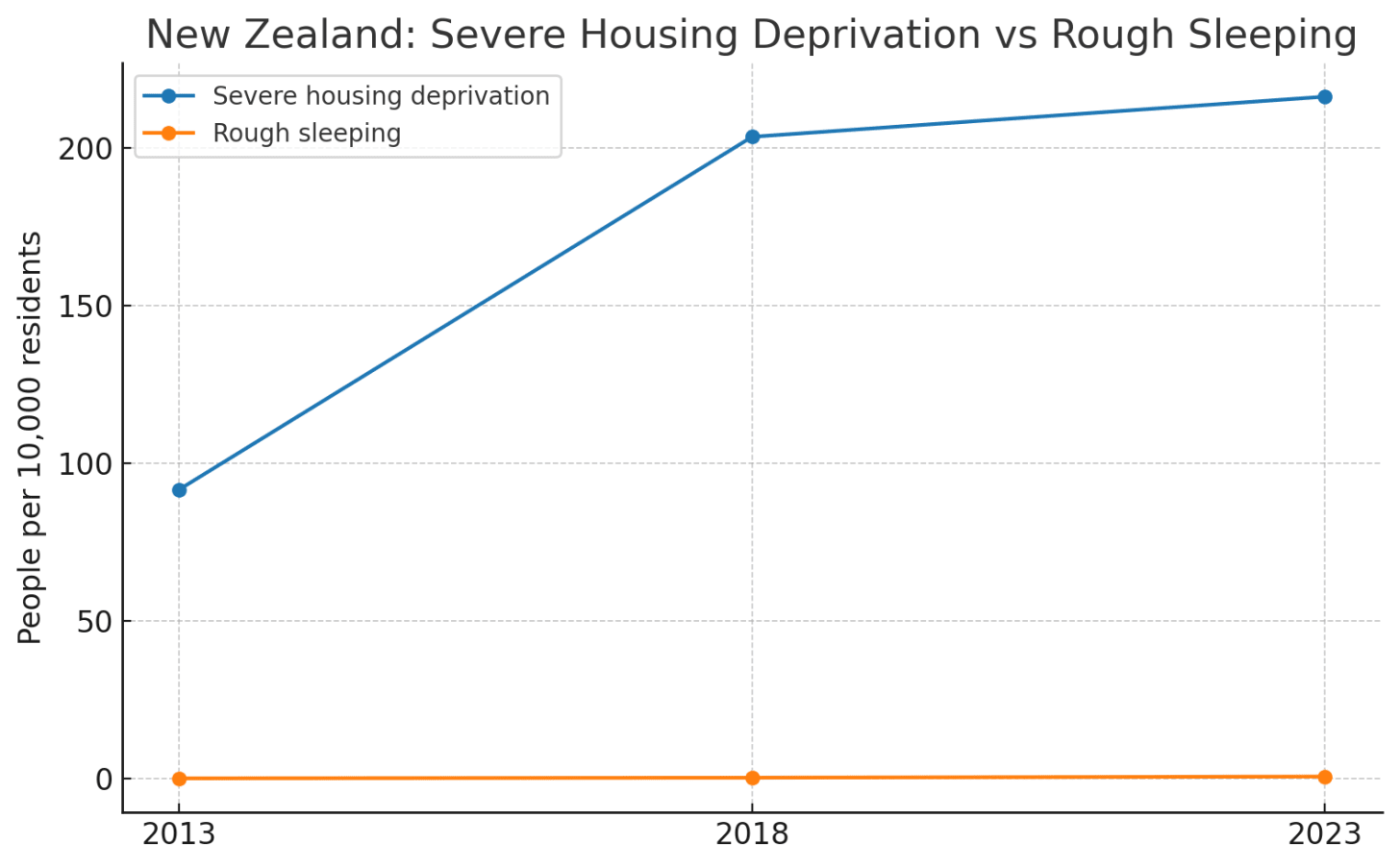
Ani O’Brien writes – Chlöe Swarbrick wants you to believe the Government is intentionally increasing homelessness. She told RNZ’s Mata with Mihingarangi Forbes: “The only conclusion that I can really come to is that this Government has intentionally increased homelessness…” It’s the kind of soundbite that plays well on social media. Outrage travels faster than nuance, and a […]
Chlöe Swarbrick’s homelessness hyperbole
11 Jul 2025 Leave a comment
in applied price theory, discrimination, fiscal policy, gender, human capital, income redistribution, labour economics, labour supply, occupational choice, politics - New Zealand, Public Choice, public economics, rentseeking Tags: gender wage gap, pay equity, sex discrimination
Michael Johnston writes – The way the government went about rolling back 33 pay equity claims lodged under the last government’s Pay Equity legislation was clumsy at best. The changes were made under urgency and applied retrospectively. It was not a good look. Predictable howls of rage and furious accusations ensued. Critics say the government […]
Govt fiscal constraints are the elephant in the pay equity room
03 Jul 2025 Leave a comment
in applied price theory, discrimination, econometerics, economic history, gender, health and safety, human capital, labour economics, labour supply, occupational choice, poverty and inequality Tags: gender wage gap, sex discrimination
02 Jul 2025 Leave a comment
in applied price theory, discrimination, econometerics, economics of regulation, gender, health and safety, human capital, income redistribution, labour economics, labour supply, occupational choice, politics - USA, Public Choice Tags: gender wage gap, sex discrimination
25 Jun 2025 Leave a comment
in applied price theory, economic history, history of economic thought, human capital, labour economics, labour supply, politics - USA, poverty and inequality Tags: economics of immigration, employment law, monopsony
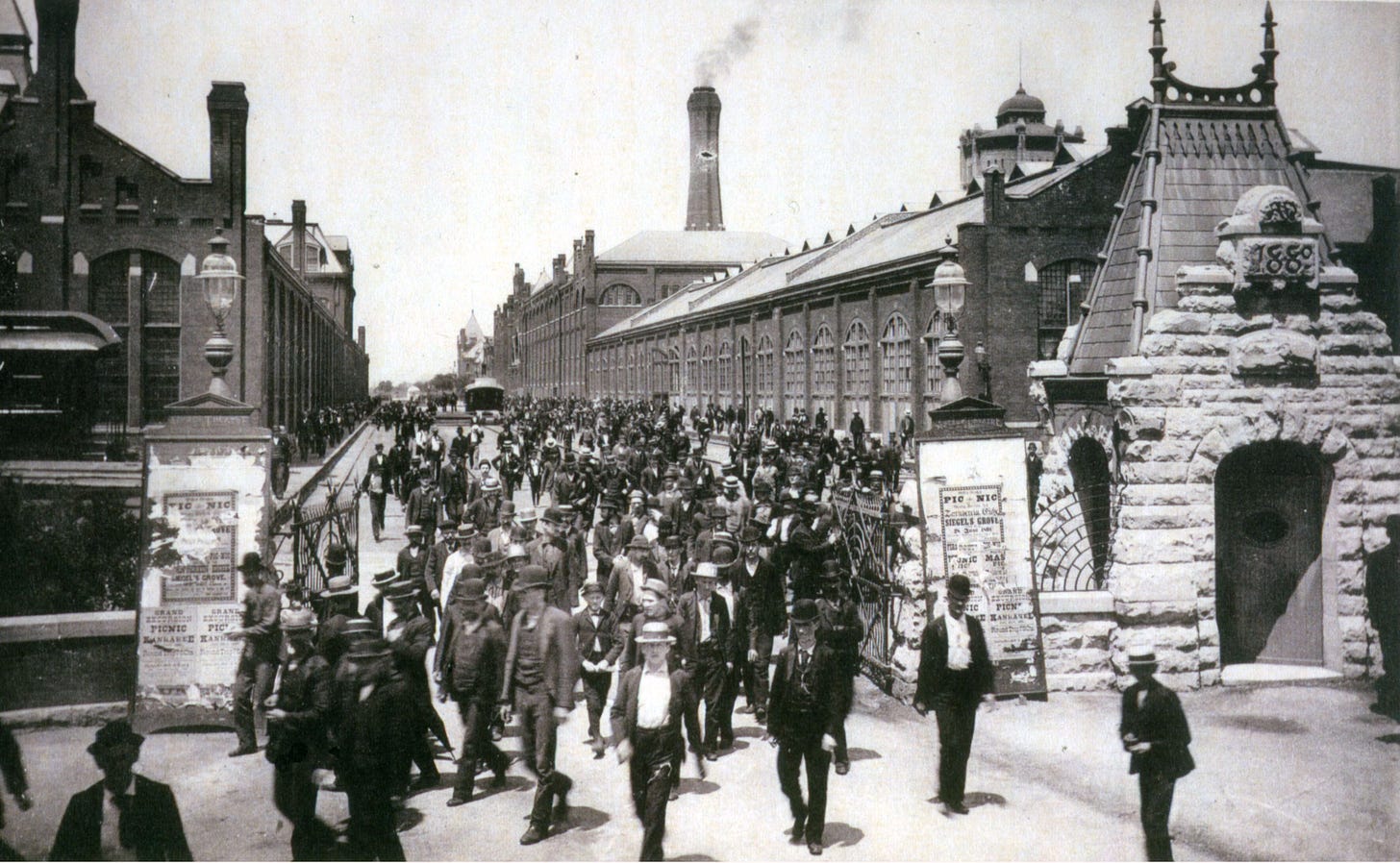
A quarter century ago, economist Price Fishback published “Operations of ‘Unfettered’ Labor Markets: Exit and Voice in American Labor Markets at the Turn of the Century” 1,762 more words
Unfettered: Fishback 25 Years Later
16 Jun 2025 Leave a comment
in applied price theory, discrimination, econometerics, economic history, economics of love and marriage, gender, human capital, labour economics, labour supply, law and economics, occupational choice, poverty and inequality Tags: gender wage gap, racial discrimination, sex discrimination
In the 1960 cohort, American men and women graduated from college at similar rates, and this was true for Whites, Blacks and Hispanics. But in more recent cohorts, women graduate at much higher rates than men. Gaps between race/ethnic groups have also widened. To understand these patterns, we develop a model of individual and family […]
What Explains Growing Gender and Racial Education Gaps?
01 Jun 2025 Leave a comment
in applied price theory, discrimination, gender, human capital, income redistribution, labour economics, labour supply, occupational choice, politics - New Zealand, poverty and inequality, Public Choice, rentseeking Tags: constitutional law, gender wage gap, sex discrimination
For all the gravitas which Dame Marilyn’s involvement has conferred upon PSCPE, it is important not to lose sight of the fact that it represents a deliberate attempt to morally overpower what is now the law of the land. Chris Trotter writes – The People’s Select Committee on Pay Equity (PSCPE) is looking for evidence. […]
Counting the Cost
01 Jun 2025 1 Comment
in applied price theory, comparative institutional analysis, development economics, economic history, economics of regulation, entrepreneurship, human capital, industrial organisation, labour economics, occupational choice, poverty and inequality, survivor principle Tags: creative destruction
The United States has produced about twice as many unicorns (private startups valued at $1B+) as China and more than four times as many as the European Union. These numbers reflect deep institutional and cultural advantages in the U.S. startup ecosystem. Table: Number of Unicorns Created Since ~1990 Region Cumulative Unicorns United States ~1,950 China…
Why the U.S. Produces More Unicorns Than China and the EU
23 May 2025 1 Comment
in discrimination, gender, human capital, labour economics, labour supply, occupational choice, politics - New Zealand, poverty and inequality Tags: gender wage gap, sex discrimination
The Herald reports: During her Budget presentation, Willis said that pay equity costs in 2020 were initially expected to reach $3.7b but there had since been a “blowout” with costs rising steeply, especially due to Labour’s 2022 decision to fund claims in the “funded sector”. The exact figure isn’t known, but as they have announced […]
The cost of Labour’s botched pay equity scheme
12 May 2025 Leave a comment
in discrimination, gender, health and safety, human capital, labour economics, labour supply, occupational choice, politics - New Zealand, poverty and inequality Tags: gender wage gap, sex discrimination
Nicola Willis writes: Having the C-word directed at me by a journalist in a mainstream publication wasn’t on my bingo-list for Mother’s Day 2025. Nor was being accused of “girl-math”. But there you have it, that’s what was thrown at me and my female colleagues in a recent newspaper column as hopelessly devoid of facts as it […]
Willis responds to Vance celling her a c**t
10 May 2025 Leave a comment
in applied price theory, applied welfare economics, Austrian economics, comparative institutional analysis, constitutional political economy, economic history, economics of education, economics of regulation, history of economic thought, human capital, labour economics, occupational choice
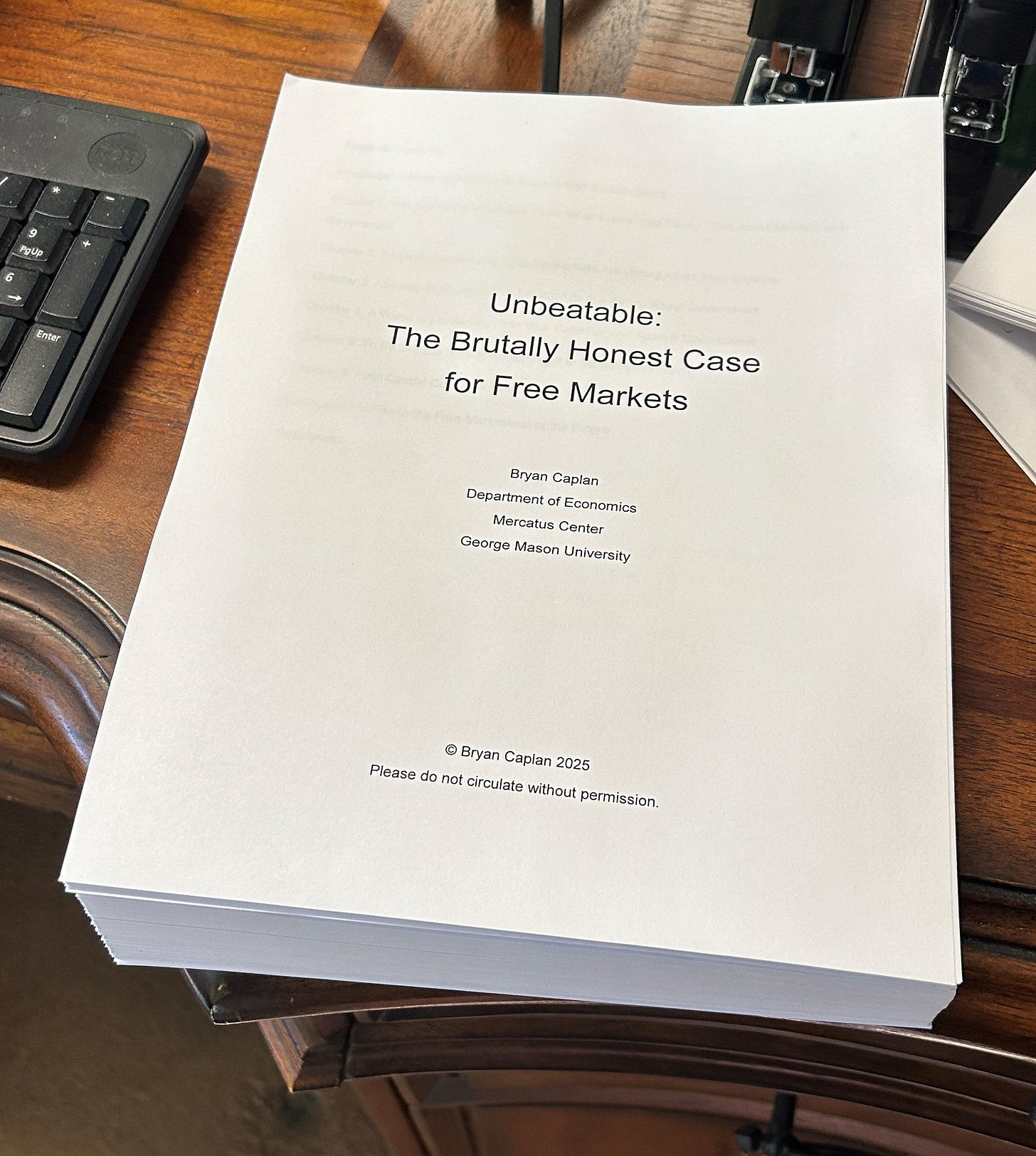
An excerpt from Chapter 1 of *Unbeatable*
The Mainstream World Is Not Free-Market
10 May 2025 1 Comment
in applied price theory, economic growth, entrepreneurship, human capital, labour economics, labour supply, macroeconomics, Public Choice Tags: Finland, taxation and entrepreneurship, taxation and investment, taxation and labour supply

I’m currently in Finland for meetings with various people and I learned that the country’s bloated public sector and expensive welfare state are imposing a very heavy cost on the economy. How heavy of a cost? According to IMF data, there’s been no growth in per-capita GDP over the past 18 years. Why is Finland […]
The Economic Consequences of Ever-Growing Government in Finland
08 May 2025 Leave a comment
in economics of love and marriage, human capital, labour economics, law and economics, population economics Tags: ageing society, South Korea

Fertility rates are falling around the world, but Republic of Korea is the outlier, with a fertility rate of 0.72 in 2024. The International Monetary Fund, in its report on Korea’s economic situation (generally quite good), thought that Korea’s low fertility justified adding an “Annex” to its most recent report on Korea’s economy: “Addressing Korea’s…
Korea’s Low Fertility Rate
07 May 2025 Leave a comment
in applied price theory, discrimination, economics of education, gender, health and safety, human capital, labour economics, labour supply, occupational choice, politics - New Zealand, poverty and inequality, Public Choice, rentseeking Tags: gender wage gap, sex discrimination
Labour leader Chris Hipkins has joined the chorus of those opposing changes to pay equity legislation. Does this mean he knows what a woman is now? It is easy for opposition parties and their allies to criticise proposed changes but Heather du Plessis-Allan points out the problem with existing legislation: . . . Those pay […]
Does he know what a woman is now?
Celebrating humanity's flourishing through the spread of capitalism and the rule of law
Scholarly commentary on law, economics, and more
Beatrice Cherrier's blog
Celebrating humanity's flourishing through the spread of capitalism and the rule of law
Celebrating humanity's flourishing through the spread of capitalism and the rule of law
Celebrating humanity's flourishing through the spread of capitalism and the rule of law
Why Evolution is True is a blog written by Jerry Coyne, centered on evolution and biology but also dealing with diverse topics like politics, culture, and cats.
Celebrating humanity's flourishing through the spread of capitalism and the rule of law
Celebrating humanity's flourishing through the spread of capitalism and the rule of law
A rural perspective with a blue tint by Ele Ludemann
DPF's Kiwiblog - Fomenting Happy Mischief since 2003
Celebrating humanity's flourishing through the spread of capitalism and the rule of law
The world's most viewed site on global warming and climate change
Tim Harding's writings on rationality, informal logic and skepticism
A window into Doc Freiberger's library
Let's examine hard decisions!
Commentary on monetary policy in the spirit of R. G. Hawtrey
Thoughts on public policy and the media
Celebrating humanity's flourishing through the spread of capitalism and the rule of law
Politics and the economy
A blog (primarily) on Canadian and Commonwealth political history and institutions
Reading between the lines, and underneath the hype.
Economics, and such stuff as dreams are made on
"The British constitution has always been puzzling, and always will be." --Queen Elizabeth II
Celebrating humanity's flourishing through the spread of capitalism and the rule of law
Celebrating humanity's flourishing through the spread of capitalism and the rule of law
WORLD WAR II, MUSIC, HISTORY, HOLOCAUST
Undisciplined scholar, recovering academic
Celebrating humanity's flourishing through the spread of capitalism and the rule of law
Res ipsa loquitur - The thing itself speaks
Celebrating humanity's flourishing through the spread of capitalism and the rule of law
Researching the House of Commons, 1832-1868
Articles and research from the History of Parliament Trust
Reflections on books and art
Posts on the History of Law, Crime, and Justice
Celebrating humanity's flourishing through the spread of capitalism and the rule of law
Exploring the Monarchs of Europe
Cutting edge science you can dice with
Small Steps Toward A Much Better World
“We do not believe any group of men adequate enough or wise enough to operate without scrutiny or without criticism. We know that the only way to avoid error is to detect it, that the only way to detect it is to be free to inquire. We know that in secrecy error undetected will flourish and subvert”. - J Robert Oppenheimer.
The truth about the great wind power fraud - we're not here to debate the wind industry, we're here to destroy it.
Celebrating humanity's flourishing through the spread of capitalism and the rule of law
Celebrating humanity's flourishing through the spread of capitalism and the rule of law
Economics, public policy, monetary policy, financial regulation, with a New Zealand perspective
Celebrating humanity's flourishing through the spread of capitalism and the rule of law
Restraining Government in America and Around the World
 Utopia, you are standing in it!
Recent Comments