That is my latest piece for The Free Press, focusing on the claims of Michael W. Green. Excerpt: Most of all, there is a major conceptual error in Green’s focus on high prices. To the extent that prices are high, it is not because our supply chains have been destroyed by earthquakes or nuclear bombs. […]
The myth of the $140,000 poverty line
The myth of the $140,000 poverty line
08 Dec 2025 Leave a comment
in applied price theory, labour economics, labour supply, poverty and inequality
Unfettered: Fishback 25 Years Later
07 Dec 2025 Leave a comment
in applied price theory, economic history, history of economic thought, labour economics, labour supply, poverty and inequality
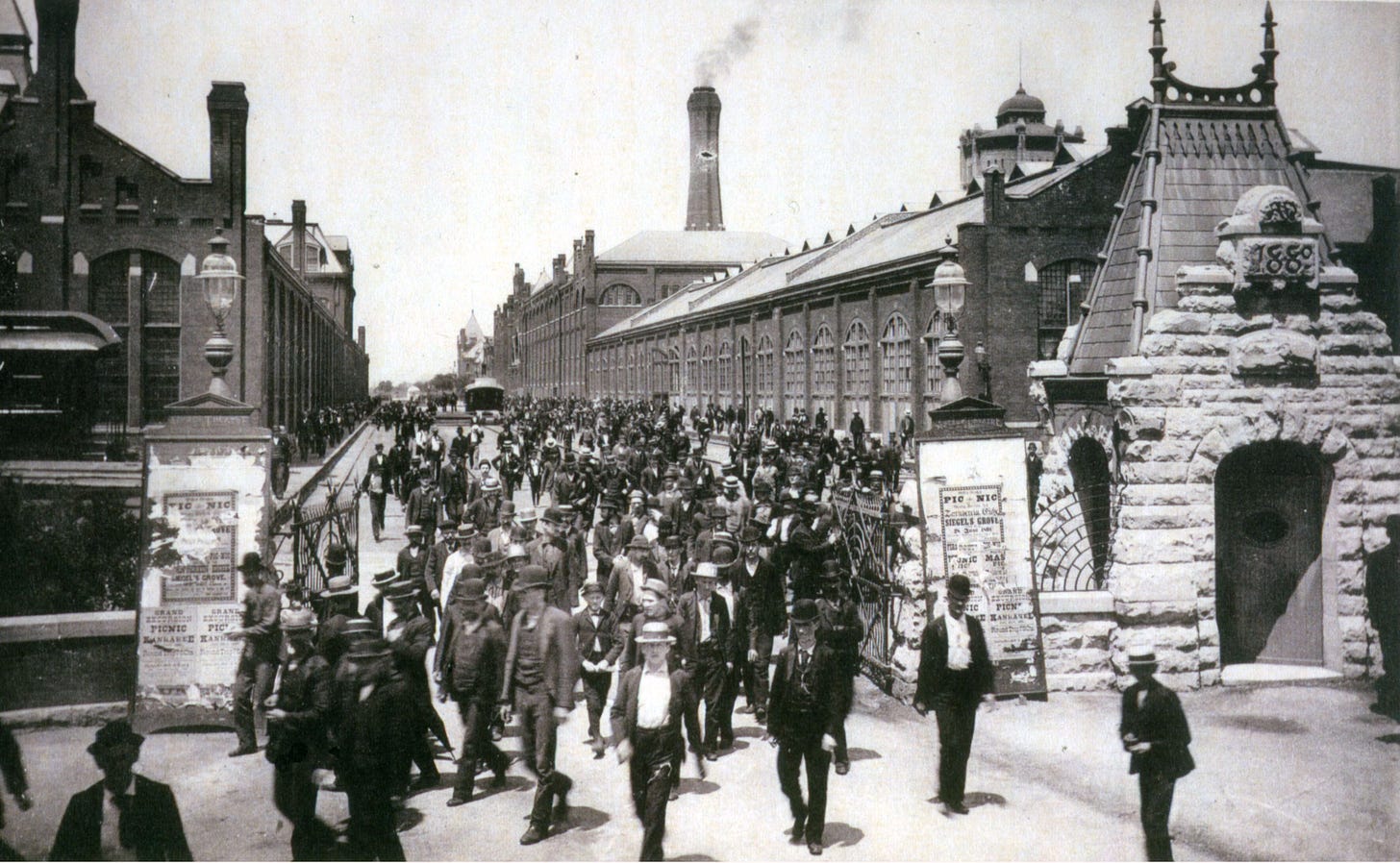
A quarter century ago, economist Price Fishback published “Operations of ‘Unfettered’ Labor Markets: Exit and Voice in American Labor Markets at the Turn of the Century” 1,762 more words
Unfettered: Fishback 25 Years Later
Human Capital Hara-Kiri
06 Dec 2025 Leave a comment
in human capital, labour economics, labour supply, occupational choice, poverty and inequality Tags: economics of immigration, Japan

In Japan, you see native-born East Asians doing menial jobs everywhere you look. You see Japanese janitors, Japanese street-sweepers, Japanese convenience store workers, Japanese crossing guards, Japanese taxi drivers, and Japanese laborers on construction sites. 904 more words
Human Capital Hara-Kiri
The Great Means-Testing Debate
05 Dec 2025 Leave a comment
in applied price theory, history of economic thought, human capital, labour economics, labour supply, Milton Friedman, occupational choice, poverty and inequality, unemployment, welfare reform
Nine years ago, I critically analyzed the Cohen-Friedman debate on means-testing Social Security. Only recently, though, did I find the original footage from 1971. As far as I know, this is the first time that any prominent social scientist made the “A program only for the poor will always be a poor program” argument that…
The Great Means-Testing Debate
My Econoboi Poverty Debate vs. Matt Bruenig
04 Dec 2025 Leave a comment
in applied price theory, human capital, labour economics, labour supply, occupational choice, politics - USA, poverty and inequality, welfare reform Tags: child poverty, family poverty, social insurance
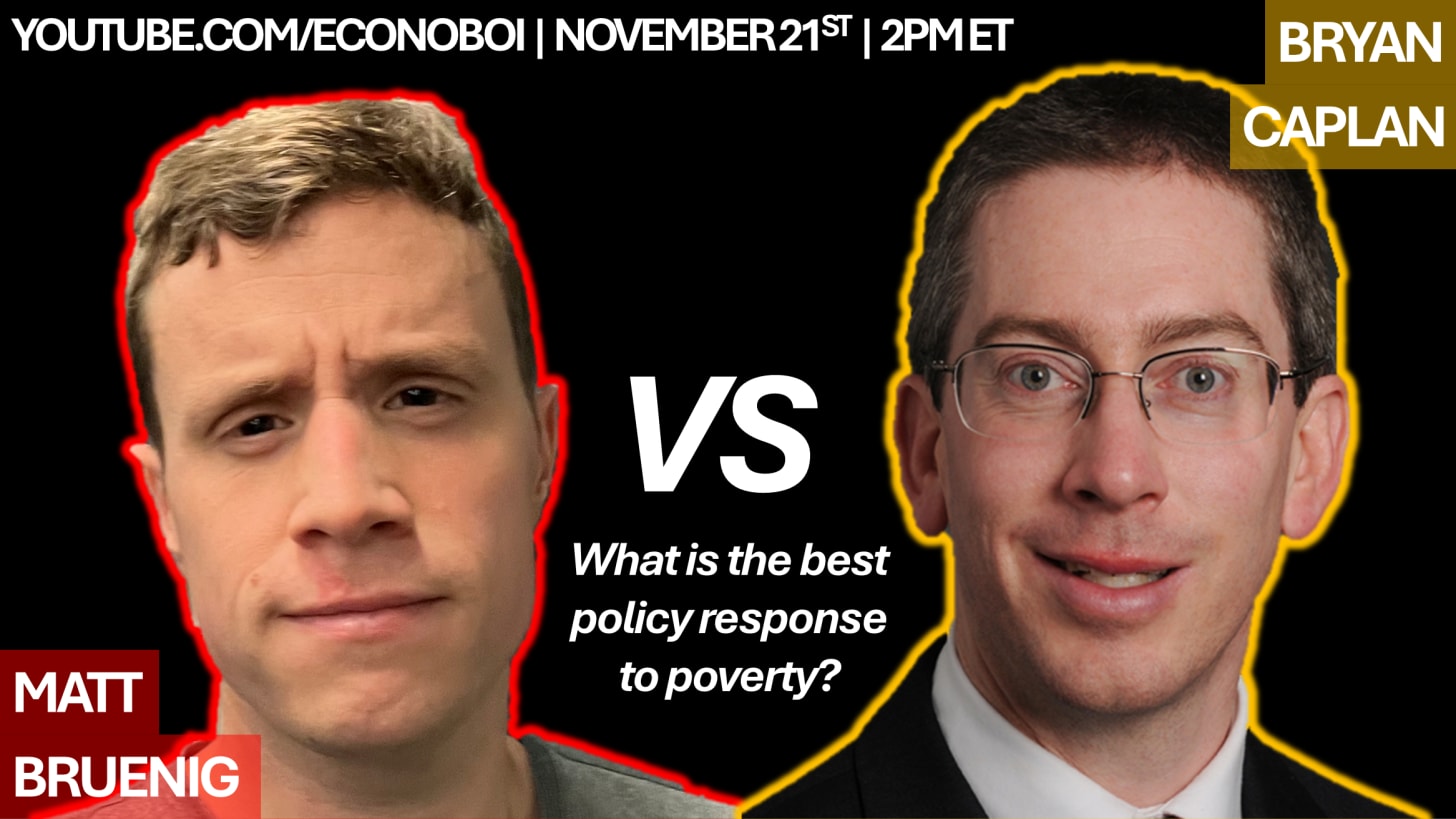
Tomorrow at 2 PM ET, I’ll be debating “What is the best policy response to poverty?” versus Matt Bruenig. Venue: Econoboi channel P.S. You might recall that… 9 more words
My Econoboi Poverty Debate vs. Matt Bruenig
Quotation of the Day…
03 Dec 2025 Leave a comment
in applied price theory, history of economic thought, labour economics, labour supply, poverty and inequality
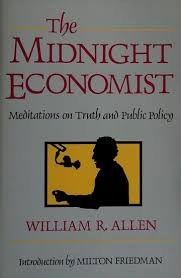
Tweet… is from page 181 of the late UCLA economist William Allen’s superb 1989 collection of the transcripts of his radio addresses, The Midnight Economist; specifically, it’s from Allen’s April 1985 address “Employment and Wages, Competition and Fairness”: The more valuable the worker, the higher the bid for his services. The high wage offer reflects…
Quotation of the Day…
The terrible Supreme Court decision on Uber
28 Nov 2025 Leave a comment
in applied price theory, economics of regulation, industrial organisation, labour economics, labour supply, occupational choice, politics - New Zealand, transport economics, urban economics Tags: employment law
The Supreme Court has ruled that four Uber drivers are employees of Uber, despite written agreements they are contractors, not employees. The practical effect of this decision is terrible. Uber has been great for passengers. Not only can we hold drivers to account through ratings, we save a lot of money. An Uber to the…
The terrible Supreme Court decision on Uber
The Flaw at the Core of the Supreme Court’s Uber Decision
25 Nov 2025 Leave a comment
in economics of regulation, industrial organisation, labour economics, labour supply, law and economics, occupational choice, politics - New Zealand, Public Choice, rentseeking, transport economics, urban economics Tags: creative destruction, employment law
Roger Partridge writes – The Supreme Court’s Uber judgment (Rasier Operations BV v E Tū Inc [2025] NZSC 162) has delivered clarity of a sort. The Court dismissed Uber’s appeal, upholding the finding that the drivers involved in the proceedings are employees when logged into the Uber app. Yet the decision is deeply flawed. The Court […]
The Flaw at the Core of the Supreme Court’s Uber Decision
The Milei Miracle, Part III
25 Nov 2025 Leave a comment
in applied price theory, comparative institutional analysis, development economics, economic growth, economics of regulation, fiscal policy, growth disasters, labour economics, labour supply, liberalism, libertarianism, macroeconomics, Marxist economics, unemployment Tags: Argentina

I’m still riding high after Javier Milei’s political party won a landslide in last month’s mid-term elections in Argentina. And I’m very much hoping and expecting that gives him enough legislative support to enact big reforms next year to further liberate the Argentinian economy (tax reform, free trade, and labor market liberalization). But let’s take […]
The Milei Miracle, Part III
The Adverse Consequences of High-Tax Welfare States
22 Nov 2025 Leave a comment
in economic growth, fiscal policy, labour economics, labour supply, macroeconomics, welfare reform

Honest leftists (the “Okunites“) generally acknowledge that laissez-faire policies deliver more growth, but they nonetheless favor high taxes and redistribution because they argue that social equality matters a lot. However, according to this chart, there’s a negative relationship between bigger government and social welfare indicators such as health, education, unemployment, and exclusion. Looking specifically at […]
The Adverse Consequences of High-Tax Welfare States
If this is employment law, the law needs to change
22 Nov 2025 Leave a comment
in economics of regulation, industrial organisation, labour economics, labour supply, law and economics, managerial economics, occupational choice, organisational economics, personnel economics, politics - New Zealand, property rights, Public Choice, transport economics, urban economics Tags: employment law
Eric Crampton writes – Yesterday [November 17], the Supreme Court ruled that Uber did not merely facilitate connections between four drivers and their various passengers – as Uber has maintained. And that the four drivers were not contractors for Uber either. Instead, those drivers were Uber employees while logged into the app.
If this is employment law, the law needs to change
Dishwashers and the 24/7 Time Constraint
22 Nov 2025 Leave a comment
in applied price theory, economic history, history of economic thought, labour economics, labour supply
In my own family, the reverence that we have for the dishwasher (and other time-saving devices) is such that we have a cat named “Josephine” after the Josephine Cochrane–the inventor of the first commercially viable dishwasher. (Also named because, as a kitten, she liked to forage in the back of the dishwasher.) Erin Braid provides…
Dishwashers and the 24/7 Time Constraint
*The Science of Second Chances*
15 Nov 2025 Leave a comment
in applied price theory, economics of crime, economics of education, human capital, labour economics, labour supply, law and economics, occupational choice Tags: criminal deterrence
The author is economist Jennifer Doleac, and the subtitle is A Revolution in Criminal Justice. Excerpt: We found that adding anyone charged with a felony to the law enforcement DNA database in Denmark reduced future criminal convictions by over 40 percent. Again, people responded to the higher probability of getting caught by committing fewer cimres. …
*The Science of Second Chances*
Some Links
09 Nov 2025 Leave a comment
in applied price theory, economics of education, human capital, labour economics, labour supply, politics - USA
TweetPhil Magness and Mike Ferguson discuss the recent oral arguments in the U.S. Supreme Court case against Trump’s use of IEEPA to impose tariffs. National Review‘s Dan McLaughlin dives deeply into what’s now on the U.S. Supreme Court’s plate regarding Trump’s IEEPA tariffs. Two slices: There are, however, two related problems for the government with…
Some Links


Recent Comments