The classic book, Economics in One Lesson reduces all of economics to a similar lesson:The art of economics consists in looking not merely at the immediate but at the longer effects of any act or policy; it consists in tracing the consequences of that policy not merely for one group but for all groups.The lesson of Chapter…
CA min wage goes up ==> CA employment declines
CA min wage goes up ==> CA employment declines
29 Jul 2025 Leave a comment
in applied price theory, income redistribution, labour economics, labour supply, minimum wage, politics - USA, Public Choice, rentseeking, unemployment Tags: California
Horseshoe Theory: Trump and the Progressive Left
26 Jul 2025 Leave a comment
in applied price theory, economics of regulation, history of economic thought, income redistribution, international economics, International law, labour economics, labour supply, Marxist economics, politics - USA, Public Choice, rentseeking Tags: 2024 presidential election, regressive left, tarrifs
Many of Trump’s signature policies overlap with those of the American progressive left—e.g. tariffs, economic nationalism, immigration restrictions, deep distrust of elite institutions, and an eagerness to use the power of the state. Trump governs less like Reagan, more like Perón. As Ryan Bourne notes, this ideological convergence has led many on the progressive left […]
Horseshoe Theory: Trump and the Progressive Left
Labor supply is elastic!
19 Jul 2025 Leave a comment
in applied price theory, labour economics, labour supply Tags: Denmark, taxation and labour supply
Even in Denmark: We investigate long-run earnings responses to taxes in the presence of dynamic returns to effort. First, we develop a theoretical model of earnings determination with dynamic returns to effort. In this model, earnings responses are delayed and mediated by job switches. Second, using administrative data from Denmark, we verify our model’s predictions […]
Labor supply is elastic!
Immigrant Assimilation Is Obviously High
19 Jul 2025 Leave a comment
in labour economics, labour supply, politics - USA, population economics Tags: economics of immigration

I recently argued that self-reports understate the personality gender gap. As long as some men rate their personalities relative to the average male, and some women rate their personalities relative to the average female, the gap the data reveal is less than the true gap. 798 more words
Immigrant Assimilation Is Obviously High
Woman of the day
18 Jul 2025 Leave a comment
in defence economics, discrimination, economic history, gender, labour economics, labour supply Tags: France, gender wage gap, sex discrimination
OTD in 1965, France changed the law to allow married women the right to work without their husbands’ permission. Yes, really. To mark the occasion, Woman of the Day is journalist Madeleine Riffaud, French Resistance, who didn’t need any man’s permission to fight for her country.… pic.twitter.com/nlp3f2GIsK — The Attagirls (@TheAttagirls) July 13, 2025
Woman of the day
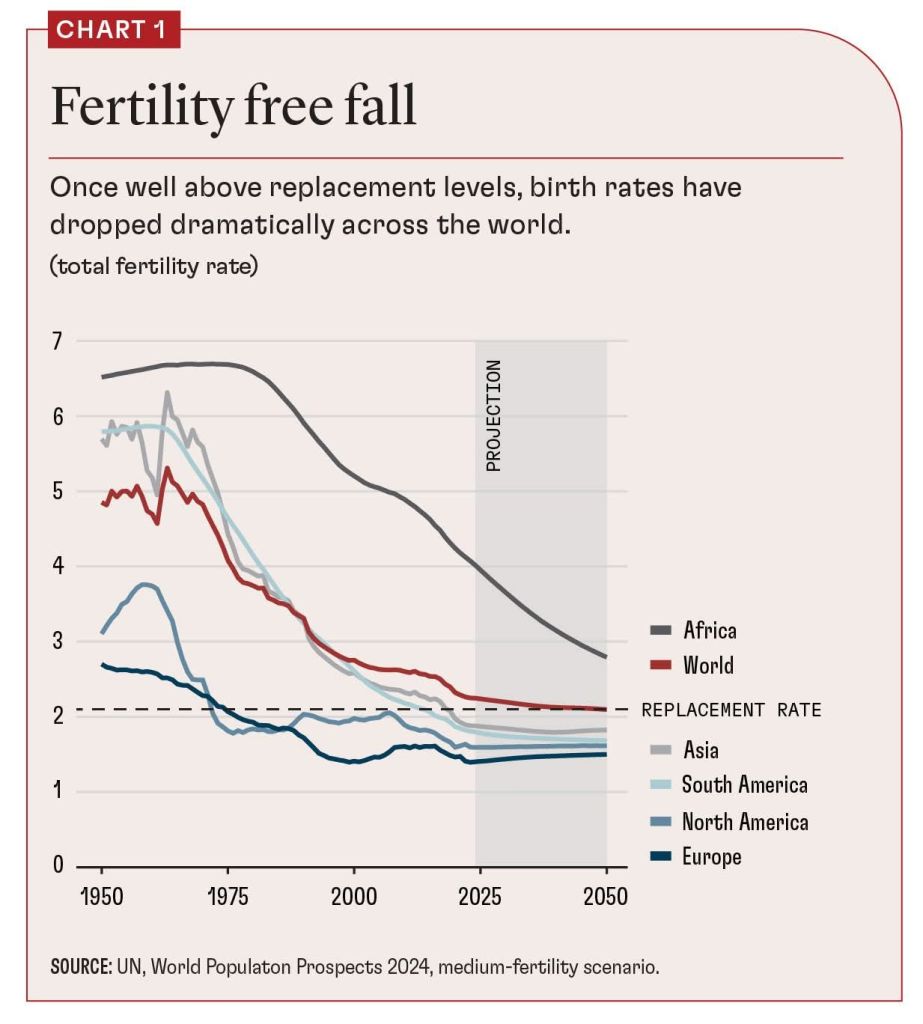
The population bust
15 Jul 2025 Leave a comment
in development economics, economic history, labour economics, labour supply, population economics Tags: ageing society, economics of fertility, population bust
Expanding the Milei Miracle: Labor Market Deregulation
12 Jul 2025 1 Comment
in development economics, economics of bureaucracy, economics of regulation, growth disasters, labour economics, labour supply, Public Choice Tags: Argentina, employment law

Part I of this video series gave a brief summary of how Javier Milei’s free market policies have rejuvenated Argentina’s economy. But more reform is needed and this second video makes the case for labor market deregulation. Politicians impose so-called employment protection laws because of “public choice.” To be more specific, they understand that the […]
Expanding the Milei Miracle: Labor Market Deregulation
Govt fiscal constraints are the elephant in the pay equity room
11 Jul 2025 Leave a comment
in applied price theory, discrimination, fiscal policy, gender, human capital, income redistribution, labour economics, labour supply, occupational choice, politics - New Zealand, Public Choice, public economics, rentseeking Tags: gender wage gap, pay equity, sex discrimination
Michael Johnston writes – The way the government went about rolling back 33 pay equity claims lodged under the last government’s Pay Equity legislation was clumsy at best. The changes were made under urgency and applied retrospectively. It was not a good look. Predictable howls of rage and furious accusations ensued. Critics say the government […]
Govt fiscal constraints are the elephant in the pay equity room
EPA Suspends over 140 Toxic Employees Who Wrote Letter Denouncing Trump Policies
09 Jul 2025 1 Comment
in economics of bureaucracy, economics of climate change, energy economics, environmental economics, environmentalism, global warming, labour economics, labour supply, occupational choice, personnel economics, politics - USA, Public Choice

The best part of this story is two fold. First, these individuals have done a good job of self-identif[ying] themselves as fifth columnists inside the Trump administration, making it easier to get rid of them.
EPA Suspends over 140 Toxic Employees Who Wrote Letter Denouncing Trump Policies
Who relies most heavily on welfare?
06 Jul 2025 Leave a comment
in labour economics, labour supply, politics - New Zealand, poverty and inequality, welfare reform Tags: social insurance

This short piece is a partial answer to the question posed. It addresses the ‘who’ but not the ‘why’.The following chart uses Census data from Statistics NZ and benefit data from MSD. Both sets are from March 2023.At that time there were 345,417 individuals reliant on a main benefit which primarily comprised Jobseeker (formerly Unemployment…
Who relies most heavily on welfare?
Same goes for performance management
05 Jul 2025 Leave a comment
in labour economics, labour supply, managerial economics, organisational economics, personnel economics

Federal Judge Rules Against Trump on Use of “Invasion” Powers to Expedite Deportations
05 Jul 2025 Leave a comment
in international economic law, international economics, International law, labour economics, labour supply, politics - USA Tags: economics of immigration

In Washington, D.C., District Court Judge Randolph Moss has issued a notable decision against the Trump Administration in Refugee and Immigrant Center for Legal and Educational Services v. Noem. Judge Moss rejected the use of Trump’s January 20 “invasion” executive proclamation to block undocumented immigrants from pursuing asylum applications and other legal pathways. The court essentially rules […]
Federal Judge Rules Against Trump on Use of “Invasion” Powers to Expedite Deportations
The Weird and Lovely Surge of US Productivity Growth
04 Jul 2025 Leave a comment
in applied price theory, econometerics, economic growth, economic history, industrial organisation, labour economics, labour supply, macroeconomics, politics - USA

In the long run, a rising standard of living is always and everywhere based on productivity growth. Thus, Austan Goolsbee notedin a keynote address at the “Summit” conference held at the Stanford Institute of Economic Policy Research (SIEPR) in February (“Remarks on Productivity Growth and Monetary Policy,” February 28, 2025): As Goolsbee notes, annual productivity…
The Weird and Lovely Surge of US Productivity Growth
“An Evolving Economic Force,” A Conversation with Claudia Goldin
03 Jul 2025 Leave a comment
in applied price theory, discrimination, econometerics, economic history, gender, health and safety, human capital, labour economics, labour supply, occupational choice, poverty and inequality Tags: gender wage gap, sex discrimination
The gender wage gap uses bogus statistics | FACTUAL FEMINIST
02 Jul 2025 Leave a comment
in applied price theory, discrimination, econometerics, economics of regulation, gender, health and safety, human capital, income redistribution, labour economics, labour supply, occupational choice, politics - USA, Public Choice Tags: gender wage gap, sex discrimination


Recent Comments