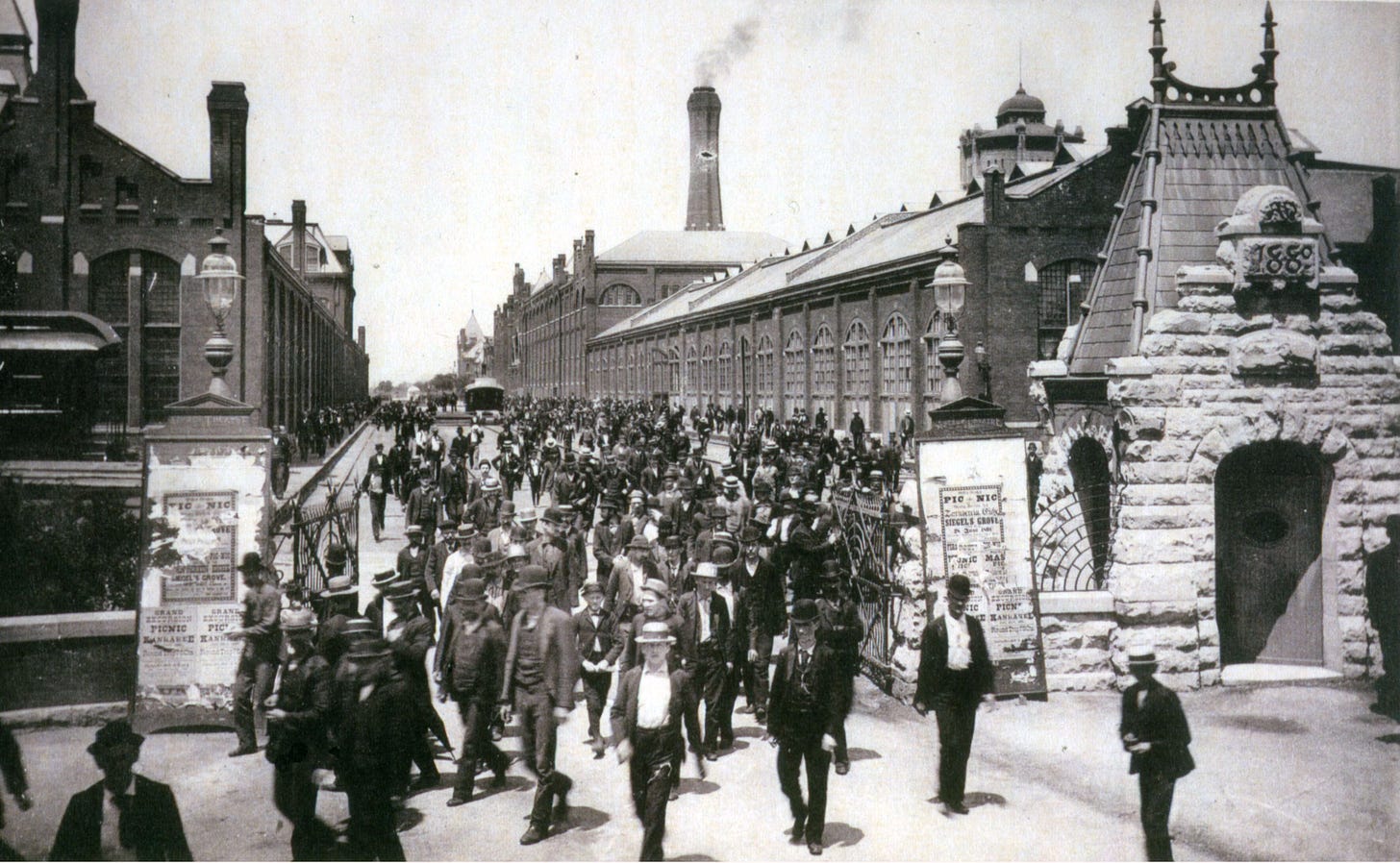
A quarter century ago, economist Price Fishback published “Operations of ‘Unfettered’ Labor Markets: Exit and Voice in American Labor Markets at the Turn of the Century” 1,762 more words
Unfettered: Fishback 25 Years Later
Celebrating humanity's flourishing through the spread of capitalism and the rule of law
25 Jun 2025 Leave a comment
in applied price theory, economic history, history of economic thought, human capital, labour economics, labour supply, politics - USA, poverty and inequality Tags: economics of immigration, employment law, monopsony
A quarter century ago, economist Price Fishback published “Operations of ‘Unfettered’ Labor Markets: Exit and Voice in American Labor Markets at the Turn of the Century” 1,762 more words
Unfettered: Fishback 25 Years Later
16 Jun 2025 Leave a comment
in applied price theory, discrimination, econometerics, economic history, economics of love and marriage, gender, human capital, labour economics, labour supply, law and economics, occupational choice, poverty and inequality Tags: gender wage gap, racial discrimination, sex discrimination
In the 1960 cohort, American men and women graduated from college at similar rates, and this was true for Whites, Blacks and Hispanics. But in more recent cohorts, women graduate at much higher rates than men. Gaps between race/ethnic groups have also widened. To understand these patterns, we develop a model of individual and family […]
What Explains Growing Gender and Racial Education Gaps?
12 Jun 2025 1 Comment
in labour economics, labour supply, population economics Tags: ageing society, Japan, population bust
Japan must stop being overly optimistic about how quickly its population is going to shrink, economists have warned, as births plunge at a pace far ahead of core estimates. Japan this month said there were a total of 686,000 Japanese births in 2024, falling below 700,000 for the first time since records began in the […]
Japan facts of the day
09 Jun 2025 Leave a comment
in economics of crime, labour economics, labour supply, law and economics, politics - USA Tags: economics of immigration

Below is my column at Fox.com on the return of Kilmar Abrego Garcia and what lies ahead in the case. Regardless of the outcome of the criminal prosecution, one thing seems virtually certain: Abrego Garcia will eventually go home . . . to El Salvador. Here is the column:
Hard Landing: The Return of Kilmar Abrego Garcia
05 Jun 2025 Leave a comment
in applied price theory, development economics, economics of bureaucracy, economics of regulation, growth disasters, growth miracles, industrial organisation, labour economics, labour supply, law and economics, property rights, Public Choice, survivor principle Tags: employment law, India
In our textbook, Modern Principles, Tyler and I contrast basic U.S. labor law, at-will employment—where employers may terminate workers for any reason not explicitly illegal (e.g., racial or sexual discrimination), without notice or severance—with Portugal’s “just cause” regime, which requires employers to prove a valid reason, give advance notice, pay severance, and endure extensive regulatory […]
No Exit, No Entry
01 Jun 2025 Leave a comment
in applied price theory, discrimination, gender, human capital, income redistribution, labour economics, labour supply, occupational choice, politics - New Zealand, poverty and inequality, Public Choice, rentseeking Tags: constitutional law, gender wage gap, sex discrimination
For all the gravitas which Dame Marilyn’s involvement has conferred upon PSCPE, it is important not to lose sight of the fact that it represents a deliberate attempt to morally overpower what is now the law of the land. Chris Trotter writes – The People’s Select Committee on Pay Equity (PSCPE) is looking for evidence. […]
Counting the Cost
26 May 2025 1 Comment
in labour economics, labour supply, population economics Tags: ageing society, Japan
25 May 2025 Leave a comment
in applied price theory, economic history, industrial organisation, labour economics, labour supply
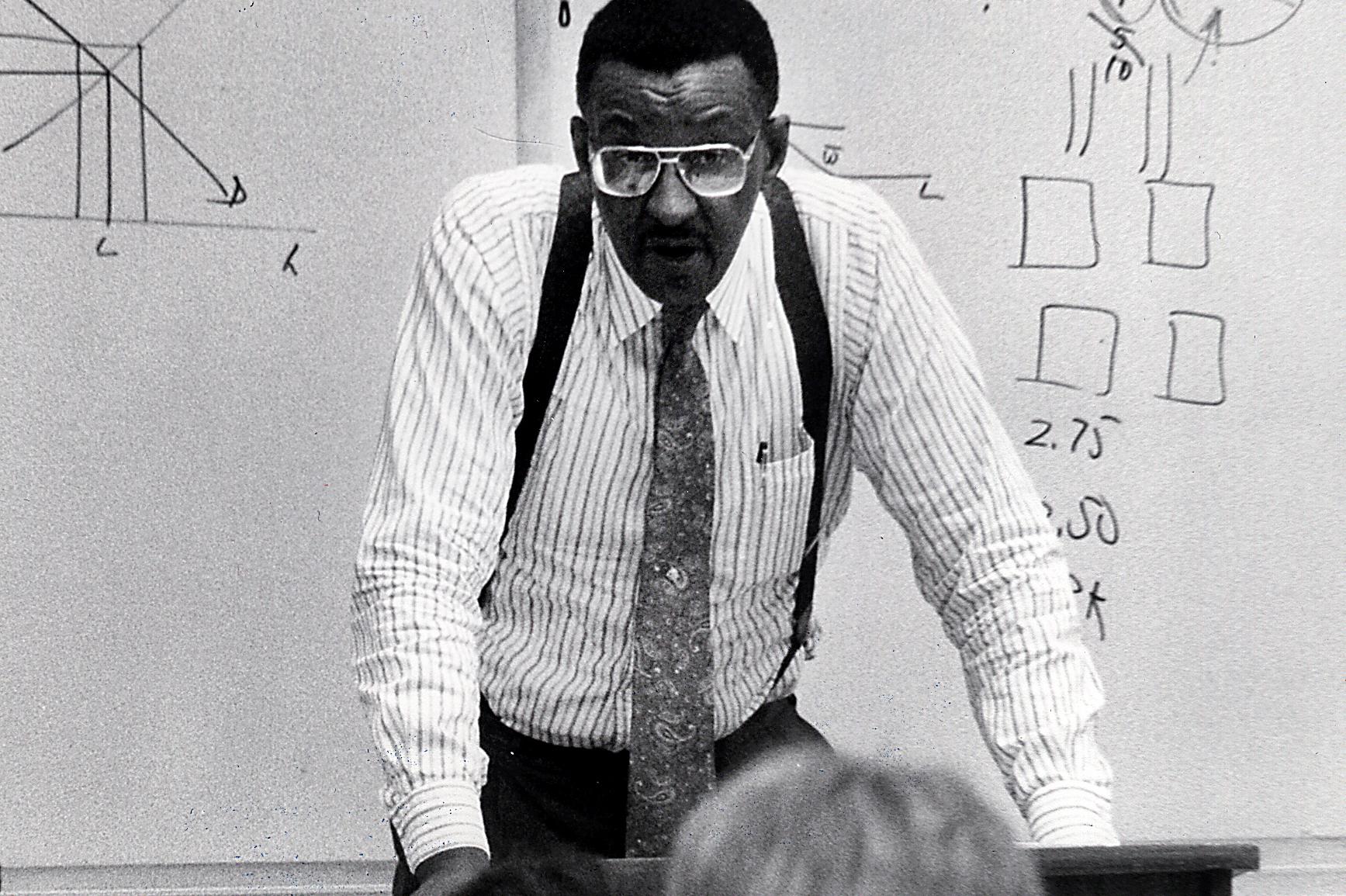
Tweet… is from my late, great colleague Walter Williams’s January 6th, 2011, column, “Settled ‘facts’ that just ain’t so“: U.S. manufacturing is going through the same kind of labor-saving technological innovation as agriculture. In 1790, farmers were 90 percent of the U.S. labor force. By 1900, only about 41 percent of our labor force was…
Quotation of the Day…
23 May 2025 1 Comment
in discrimination, gender, human capital, labour economics, labour supply, occupational choice, politics - New Zealand, poverty and inequality Tags: gender wage gap, sex discrimination
The Herald reports: During her Budget presentation, Willis said that pay equity costs in 2020 were initially expected to reach $3.7b but there had since been a “blowout” with costs rising steeply, especially due to Labour’s 2022 decision to fund claims in the “funded sector”. The exact figure isn’t known, but as they have announced […]
The cost of Labour’s botched pay equity scheme
13 May 2025 Leave a comment
in labour economics, labour supply, politics - USA, television, TV shows, unemployment
12 May 2025 Leave a comment
in discrimination, gender, health and safety, human capital, labour economics, labour supply, occupational choice, politics - New Zealand, poverty and inequality Tags: gender wage gap, sex discrimination
Nicola Willis writes: Having the C-word directed at me by a journalist in a mainstream publication wasn’t on my bingo-list for Mother’s Day 2025. Nor was being accused of “girl-math”. But there you have it, that’s what was thrown at me and my female colleagues in a recent newspaper column as hopelessly devoid of facts as it […]
Willis responds to Vance celling her a c**t
10 May 2025 1 Comment
in applied price theory, economic growth, entrepreneurship, human capital, labour economics, labour supply, macroeconomics, Public Choice Tags: Finland, taxation and entrepreneurship, taxation and investment, taxation and labour supply

I’m currently in Finland for meetings with various people and I learned that the country’s bloated public sector and expensive welfare state are imposing a very heavy cost on the economy. How heavy of a cost? According to IMF data, there’s been no growth in per-capita GDP over the past 18 years. Why is Finland […]
The Economic Consequences of Ever-Growing Government in Finland
07 May 2025 Leave a comment
in applied price theory, discrimination, economics of education, gender, health and safety, human capital, labour economics, labour supply, occupational choice, politics - New Zealand, poverty and inequality, Public Choice, rentseeking Tags: gender wage gap, sex discrimination
Labour leader Chris Hipkins has joined the chorus of those opposing changes to pay equity legislation. Does this mean he knows what a woman is now? It is easy for opposition parties and their allies to criticise proposed changes but Heather du Plessis-Allan points out the problem with existing legislation: . . . Those pay […]
Does he know what a woman is now?
06 May 2025 Leave a comment
in Economics of international refugee law, International law, labour economics, labour supply, law and economics, politics - USA Tags: economics of immigration

It was once said that possession is nine-tenths of the law, an acknowledgement that the possessor of property generally has the advantage in keeping it. This principle has been taken to absurd extremes in some squatter cases, where people invade homes and then demand the right to stay pending long legal challenges. Today, under both […]
Squatter Syndrome: How the Inefficiencies of Our Legal System Are Making a Mockery of Our Immigration Laws
05 May 2025 Leave a comment
in applied price theory, discrimination, econometerics, economics of education, experimental economics, gender, labour economics, labour supply, occupational choice Tags: gender gap, sex discrimination
I’ve written a couple of times about information interventions designed to attract more female students to study economics (see here and here). The results have generally been disappointing. That shouldn’t be too much of a surprise. If it was really simple to get people to change their behaviour with information, then advertising would be far…
Some weak evidence in favour of an information intervention in economics to close the gender gap
Celebrating humanity's flourishing through the spread of capitalism and the rule of law
Celebrating humanity's flourishing through the spread of capitalism and the rule of law
Celebrating humanity's flourishing through the spread of capitalism and the rule of law
Celebrating humanity's flourishing through the spread of capitalism and the rule of law
Celebrating humanity's flourishing through the spread of capitalism and the rule of law
Celebrating humanity's flourishing through the spread of capitalism and the rule of law
Celebrating humanity's flourishing through the spread of capitalism and the rule of law
Celebrating humanity's flourishing through the spread of capitalism and the rule of law
Celebrating humanity's flourishing through the spread of capitalism and the rule of law
A History of the Alt-Right
Econ Prof at George Mason University, Economic Historian, Québécois
Celebrating humanity's flourishing through the spread of capitalism and the rule of law
Scholarly commentary on law, economics, and more
Beatrice Cherrier's blog
Celebrating humanity's flourishing through the spread of capitalism and the rule of law
Celebrating humanity's flourishing through the spread of capitalism and the rule of law
Celebrating humanity's flourishing through the spread of capitalism and the rule of law
Why Evolution is True is a blog written by Jerry Coyne, centered on evolution and biology but also dealing with diverse topics like politics, culture, and cats.
Celebrating humanity's flourishing through the spread of capitalism and the rule of law
A rural perspective with a blue tint by Ele Ludemann
DPF's Kiwiblog - Fomenting Happy Mischief since 2003
Celebrating humanity's flourishing through the spread of capitalism and the rule of law
The world's most viewed site on global warming and climate change
Tim Harding's writings on rationality, informal logic and skepticism
A window into Doc Freiberger's library
Let's examine hard decisions!
Commentary on monetary policy in the spirit of R. G. Hawtrey
Thoughts on public policy and the media
Celebrating humanity's flourishing through the spread of capitalism and the rule of law
Politics and the economy
A blog (primarily) on Canadian and Commonwealth political history and institutions
Reading between the lines, and underneath the hype.
Economics, and such stuff as dreams are made on
"The British constitution has always been puzzling, and always will be." --Queen Elizabeth II
Celebrating humanity's flourishing through the spread of capitalism and the rule of law
Celebrating humanity's flourishing through the spread of capitalism and the rule of law
WORLD WAR II, MUSIC, HISTORY, HOLOCAUST
Undisciplined scholar, recovering academic
Celebrating humanity's flourishing through the spread of capitalism and the rule of law
Res ipsa loquitur - The thing itself speaks
In Hume’s spirit, I will attempt to serve as an ambassador from my world of economics, and help in “finding topics of conversation fit for the entertainment of rational creatures.”
Researching the House of Commons, 1832-1868
Reflections on books and art
Posts on the History of Law, Crime, and Justice
Celebrating humanity's flourishing through the spread of capitalism and the rule of law
Exploring the Monarchs of Europe


Recent Comments