Before I leave for the airport, I wanted to call people’s attention to this new, long op-ed piece by Andrew Sullivan in the NYT. Click to read, or find it archived for free here: Sullivan’s thesis is that extreme trans-activism has not only been inimical for society in several ways, but has also eroded respect […]
An important article by Andrew Sullivan
An important article by Andrew Sullivan
27 Jun 2025 1 Comment
in discrimination, gender, health economics, liberalism, Marxist economics, politics - USA Tags: free speech, political correctness, regressive left, sex discrimination
Weaker incentives in unionized plants make them more likely to close
27 Jun 2025 1 Comment
in applied price theory, econometerics, history of economic thought, labour economics, unions Tags: union power
Unionized plants have worse incentive alignment: 26% less likely to offer performance-based bonuses. 11% less likely to promote based on performance 13% less likely to dismiss workers for poor performance. Consequently, unionized plants have: Higher rates of business closures, lower investment slower employment growth BOTTOM LINE: right-to-work states (no unions) have higher employment and better outcomes. CITE:Maksimovic, Vojislav and…
Weaker incentives in unionized plants make them more likely to close
Unfettered: Fishback 25 Years Later
25 Jun 2025 Leave a comment
in applied price theory, economic history, history of economic thought, human capital, labour economics, labour supply, politics - USA, poverty and inequality Tags: economics of immigration, employment law, monopsony
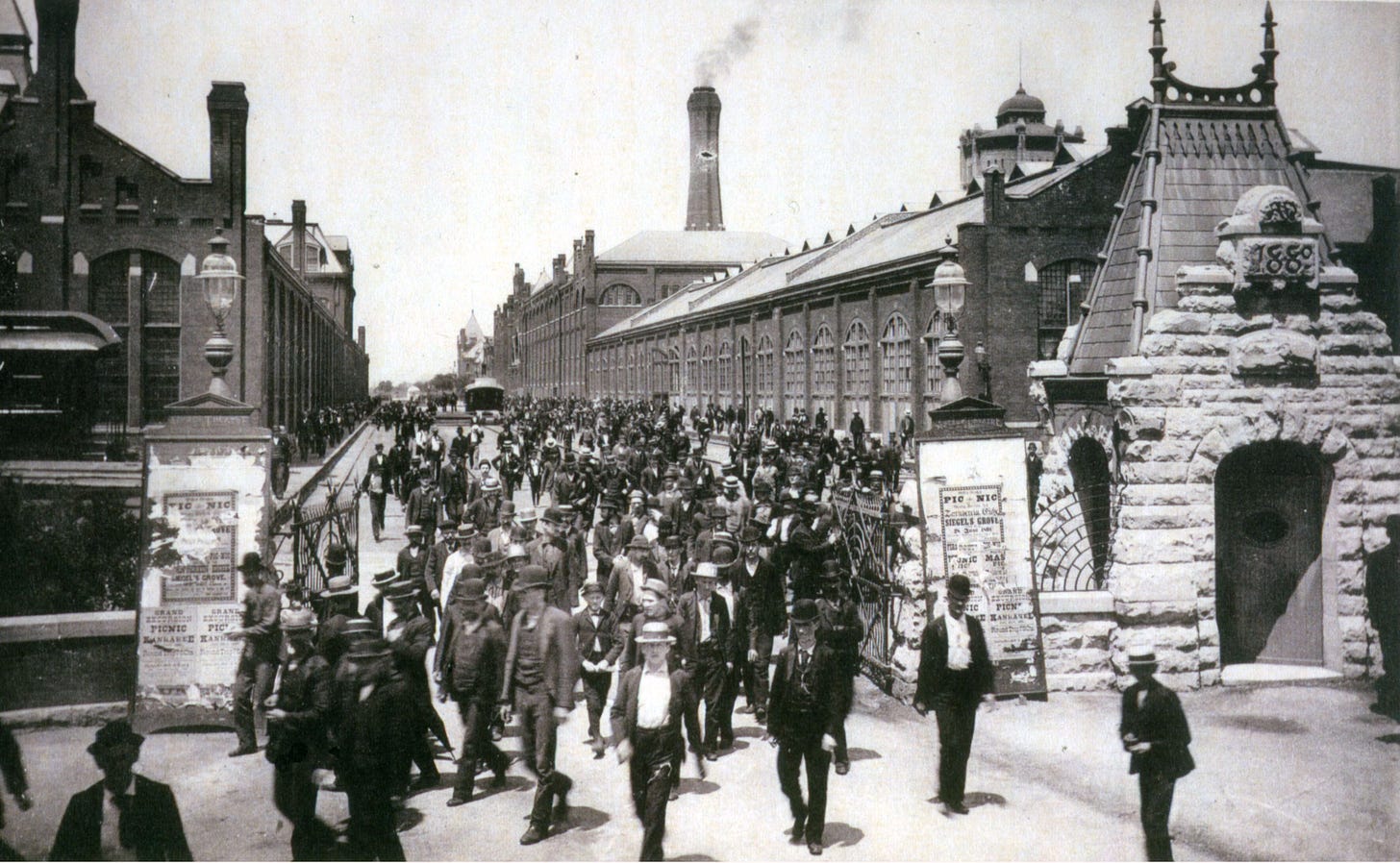
A quarter century ago, economist Price Fishback published “Operations of ‘Unfettered’ Labor Markets: Exit and Voice in American Labor Markets at the Turn of the Century” 1,762 more words
Unfettered: Fishback 25 Years Later
Racial Disparities in Mortality by Sex, Age, and Cause of Death
25 Jun 2025 Leave a comment
in discrimination, econometerics, health economics, politics - USA Tags: cancer survival rates, life expectancies, racial discrimination
Racial differences in mortality are large, persistent and likely caused, at least in part, by racism. While the causal pathways linking racism to mortality are conceptually well defined, empirical evidence to support causal claims related to its effect on health is incomplete. In this study, we provide a unique set of facts about racial disparities […]
Racial Disparities in Mortality by Sex, Age, and Cause of Death
Is ‘by Maori for Maori’ shifting the dial?
21 Jun 2025 Leave a comment
in discrimination, economics of bureaucracy, health economics, politics - New Zealand, Public Choice Tags: racial discrimination
On June 18, 2025, Health New Zealand published extensive data (March 2025 quarter) in a two-page spread contained in The Post. I assume this was replicated in other New Zealand newspapers. Included were childhood immunisation rates. At the bottom of the table for full immunisation at 24 months are Northland and Tairawhiti districts (improving trend) followed…
Is ‘by Maori for Maori’ shifting the dial?
The Supreme Court Delivers a Blow to Transgender Cases
21 Jun 2025 Leave a comment
in discrimination, economics of regulation, gender, health economics, law and economics, politics - USA, property rights Tags: political correctness, regressive left, sex discrimination

Yesterday, the Supreme Court issued its 6-3 ruling upholding a Tennessee ban on transgender medical treatments for adolescents. The ruling has major implications for pending transgender cases, particularly the concurrence of Justice Amy Coney Barrett rejecting the claim that transgender status qualifies as a group entitled to heightened scrutiny under the Constitution. One of those […]
The Supreme Court Delivers a Blow to Transgender Cases
U. S. Supreme Court affirms Tennessee’s ban on medical “gender-affirming care”
20 Jun 2025 Leave a comment
in gender, health economics, politics - USA

In 2023, Tennessee passed a bill to restrict access of minors to “affirmative care”, though only minors who wanted blockers or hormones to assume the identity of his/her non-natal sex or to relieve gender dysphoria. Tennessee is now one of 15 states that has passed laws restricting affirmative care. Note, though, that hormones and blockers […]
U. S. Supreme Court affirms Tennessee’s ban on medical “gender-affirming care”
What Explains Growing Gender and Racial Education Gaps?
16 Jun 2025 Leave a comment
in applied price theory, discrimination, econometerics, economic history, economics of love and marriage, gender, human capital, labour economics, labour supply, law and economics, occupational choice, poverty and inequality Tags: gender wage gap, racial discrimination, sex discrimination
In the 1960 cohort, American men and women graduated from college at similar rates, and this was true for Whites, Blacks and Hispanics. But in more recent cohorts, women graduate at much higher rates than men. Gaps between race/ethnic groups have also widened. To understand these patterns, we develop a model of individual and family […]
What Explains Growing Gender and Racial Education Gaps?
How New Zealand invented inflation targeting
13 Jun 2025 1 Comment
in business cycles, history of economic thought, inflation targeting, labour economics, macroeconomics, monetary economics, politics - New Zealand, unemployment Tags: monetary policy
…the very next day, [Roger] Douglas appeared on TV declaring his intention to reduce inflation to ‘around 0 or 0 to 1 percent’ over the next couple of years, and then went on to make several similar comments in the following days. Douglas would soften his stance on specific timelines but ask the Reserve Bank and […]
How New Zealand invented inflation targeting
Japan facts of the day
12 Jun 2025 1 Comment
in labour economics, labour supply, population economics Tags: ageing society, Japan, population bust
Japan must stop being overly optimistic about how quickly its population is going to shrink, economists have warned, as births plunge at a pace far ahead of core estimates. Japan this month said there were a total of 686,000 Japanese births in 2024, falling below 700,000 for the first time since records began in the […]
Japan facts of the day
Hard Landing: The Return of Kilmar Abrego Garcia
09 Jun 2025 Leave a comment
in economics of crime, labour economics, labour supply, law and economics, politics - USA Tags: economics of immigration

Below is my column at Fox.com on the return of Kilmar Abrego Garcia and what lies ahead in the case. Regardless of the outcome of the criminal prosecution, one thing seems virtually certain: Abrego Garcia will eventually go home . . . to El Salvador. Here is the column:
Hard Landing: The Return of Kilmar Abrego Garcia
No Exit, No Entry
05 Jun 2025 Leave a comment
in applied price theory, development economics, economics of bureaucracy, economics of regulation, growth disasters, growth miracles, industrial organisation, labour economics, labour supply, law and economics, property rights, Public Choice, survivor principle Tags: employment law, India
In our textbook, Modern Principles, Tyler and I contrast basic U.S. labor law, at-will employment—where employers may terminate workers for any reason not explicitly illegal (e.g., racial or sexual discrimination), without notice or severance—with Portugal’s “just cause” regime, which requires employers to prove a valid reason, give advance notice, pay severance, and endure extensive regulatory […]
No Exit, No Entry
Labour’s first and most urgent mission is to knock Te Pāti Māori out of the race
05 Jun 2025 Leave a comment
in discrimination, politics - New Zealand Tags: constitutional law, political correctness, racial discrimination, regressive left
Chris Trotter writes – “Your mission, Mr Hipkins, should you choose to accept it, is to lead Labour to victory in 2026.” Except, as always, the drama of a Mission Impossible movie lies not in the what, but in the how. Of course Chris Hipkins is willing to lead Labour to a win. The real question is […]
Labour’s first and most urgent mission is to knock Te Pāti Māori out of the race
Counting the Cost
01 Jun 2025 Leave a comment
in applied price theory, discrimination, gender, human capital, income redistribution, labour economics, labour supply, occupational choice, politics - New Zealand, poverty and inequality, Public Choice, rentseeking Tags: constitutional law, gender wage gap, sex discrimination
For all the gravitas which Dame Marilyn’s involvement has conferred upon PSCPE, it is important not to lose sight of the fact that it represents a deliberate attempt to morally overpower what is now the law of the land. Chris Trotter writes – The People’s Select Committee on Pay Equity (PSCPE) is looking for evidence. […]
Counting the Cost
Why the U.S. Produces More Unicorns Than China and the EU
01 Jun 2025 1 Comment
in applied price theory, comparative institutional analysis, development economics, economic history, economics of regulation, entrepreneurship, human capital, industrial organisation, labour economics, occupational choice, poverty and inequality, survivor principle Tags: creative destruction
The United States has produced about twice as many unicorns (private startups valued at $1B+) as China and more than four times as many as the European Union. These numbers reflect deep institutional and cultural advantages in the U.S. startup ecosystem. Table: Number of Unicorns Created Since ~1990 Region Cumulative Unicorns United States ~1,950 China…
Why the U.S. Produces More Unicorns Than China and the EU
 Utopia, you are standing in it!
Recent Comments