The Vietnam draft conscripted hundreds of thousands of young Americans into an integrated military. I combine near-random draft lottery variation with administrative voter data to study the long-run racial integration effects of coerced national service. Black and Native American veterans became more likely to marry white spouses, identify as Republicans, and live in more-integrated neighborhoods.…
The Vietnam War and racial integration
The Vietnam War and racial integration
07 Mar 2026 Leave a comment
in defence economics, discrimination, economics of love and marriage, politics - USA, war and peace Tags: marriage and divorce, racial discrimination, Vietnam war
Iranian women: 1970 vs. 2020
03 Mar 2026 Leave a comment
in defence economics, discrimination, economic history, gender, labour economics, liberalism, Marxist economics Tags: Age of Enlightenment, Iran, sex discrimination

I put something like this up years ago, but it’s a good way to see, with just a few clicks, what happened to Iran after the “Revolution”. Let’s taken women’s dress, a touchstone of misogyny and theocratic oppression. Before the Islamic Revolution of 1979, it was a pretty free country in that respect, and everyone…
Iranian women: 1970 vs. 2020
Sports and Supply-Side Economics
03 Mar 2026 Leave a comment
in labour economics, labour supply, sports economics Tags: taxation and labour supply
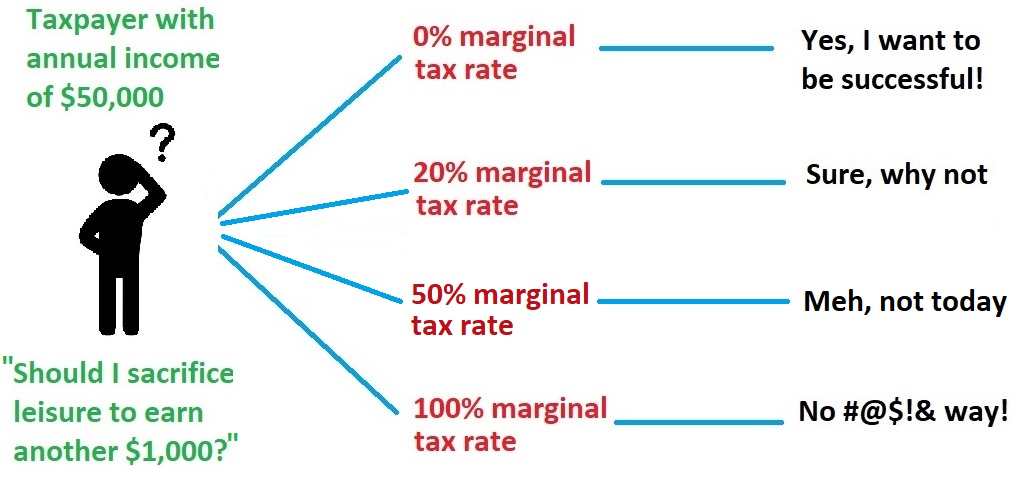
One of the key insights of good tax policy is that people respond to incentives. If tax rates are punitive, people will do what they can to protect themselves from predatory government. Especially if they have any ability to control the timing, level, and composition of their income. Star athletes are definitely in this group. They avoid […]
Sports and Supply-Side Economics
Will Denmark and/or the Netherlands Copy Norway’s Failed Wealth Tax?
02 Mar 2026 1 Comment
in fiscal policy, human capital, income redistribution, labour economics, labour supply, macroeconomics, poverty and inequality, Public Choice, public economics Tags: Denmark, taxation and entrepreneurship

Class-warfare tax policy is always a bad idea. Economists generally don’t like class-warfare policies because it is foolish to impose high marginal tax rates on productive behaviors such as investment and entrepreneurship. Politicians should not like class-warfare policies because of the negative impact on jobs and wages for ordinary people as well as the potential negative […]
Will Denmark and/or the Netherlands Copy Norway’s Failed Wealth Tax?
Laying Off Workers: Cheap vs. Expensive
01 Mar 2026 Leave a comment
in applied price theory, economics of regulation, entrepreneurship, industrial organisation, labour economics, labour supply, survivor principle Tags: creative destruction

When thinking about what makes an economy flourish, many of us tend to focus on the success stories of innovation and growth. After all, success stories involve an element of risk, which means a chance of failure. When it’s more expensive to fail, then avoiding the risk of failure–by avoiding innovative but risky business choices–starts…
Laying Off Workers: Cheap vs. Expensive
LINDSAY MITCHELL: HOW THE SALLIES HAVE EVOLVED TO BECOME PART OF THE PROBLEM
28 Feb 2026 Leave a comment
in discrimination, economics of crime, economics of education, labour economics, law and economics, politics - New Zealand, welfare reform Tags: Maori economic development, racial discrimination
The 2026 Salvation Army State of the Nation Report revealed their official conversion to wokeism by repeatedly finding excuses for Maori over-representation in poor social stats because of victimisation through colonisation. This caused a number of readers to ponder future contributions to the organisation. But it isn’t just this development that should concern donors. The…
LINDSAY MITCHELL: HOW THE SALLIES HAVE EVOLVED TO BECOME PART OF THE PROBLEM
The changing face of Europe
26 Feb 2026 Leave a comment
in labour economics, labour supply Tags: economics of immigration
I’m going to quote from UK’s Matt Goodwin. I do so as someone who is pro-immigration. I think moderate, controlled immigration is good for a country, and specifically has been good for New Zealand. But a good thing can become a bad thing is if it too large, or uncontrolled. If NZ took in 1…
The changing face of Europe
So much for the population bomb
25 Feb 2026 Leave a comment
in labour economics, labour supply, population economics Tags: ageing society, Japan, population bust

Is There a Political Downside to Tax Migration?
24 Feb 2026 Leave a comment
in applied price theory, economic growth, economic history, fiscal policy, labour economics, labour supply, macroeconomics, politics - USA, Public Choice, public economics Tags: taxation and entrepreneurship, taxation and investment, taxation and labour supply

I’m a big fan of tax migration. I cheer when productive people escape high-tax states or high-tax nations. And when the geese with the golden eggs fly away, it thwarts the plans of greedy politicians. The latest example of this is the exodus of billionaires – worried about a wealth tax – from California (the […]
Is There a Political Downside to Tax Migration?
Can fertility return to replacement levels?
23 Feb 2026 Leave a comment
in labour economics, labour supply, population economics
Many countries, including almost all developed countries and many developing countries, are now experiencing below-replacement fertility, with fertility rates having declined substantially over the past decade or more. That means that each generation will be progressively smaller than the last, and almost inevitably that leads to a declining population (in the absence of offsetting migration…
Can fertility return to replacement levels?
Nature, ideologically captured, uses “pregnant people” instead of “pregnant women”
21 Feb 2026 Leave a comment
in discrimination, economics of education, gender, law and economics, politics - USA Tags: sex discrimination

Here’s a new article in Nature (click on the title screenshot below to read it); it’s about the dearth of information about the safety of drugs used by pregnant women. Except, to Nature, they refer not to “women” but to “pregnant people,” for in the article, that is about the only term that refers to…
Nature, ideologically captured, uses “pregnant people” instead of “pregnant women”
A course of indoctrination at the University of Chicago
19 Feb 2026 Leave a comment
in defence economics, discrimination, economic history, economics of crime, International law, law and economics, laws of war, liberalism, Marxist economics, politics - USA, war and peace Tags: economics of colonialism, Gaza Strip, Israel, Middle-East politics, regressive left, war against terror, West Bank

There are many courses in universities that seem not to be exercises in objective teaching and learning, but rather courses designed to foist certain political ideologies or points of view on students. One of them at this university was called to my attention by several in our community; it seems to be a course on…
A course of indoctrination at the University of Chicago
Any Hope for a European Economic Renaissance?
18 Feb 2026 Leave a comment
in applied price theory, budget deficits, economic growth, economic history, economics of education, economics of regulation, fiscal policy, industrial organisation, labour economics, labour supply, macroeconomics Tags: European Union

The good news is that Europe has a lot of economic freedom by world standards. Especially Western Europe. The bad news is that economic freedom has been declining in Western Europe. To make matters worse, Europe has a big demographic problem, with a growing number of older people over time who have been promised benefits […]
Any Hope for a European Economic Renaissance?
Minimum Wages for Gig Workers Can’t Work
17 Feb 2026 Leave a comment
in applied price theory, labour economics, labour supply, occupational choice
In 2017, I analyzed the Uber Tipping Equilibrium: What is the effect of tipping on the take-home pay of Uber drivers? Economic theory offers a clear answer. Tipping has no effect on take home pay. The supply of Uber driver-hours is very elastic. Drivers can easily work more hours when the payment per ride increases…
Minimum Wages for Gig Workers Can’t Work
“You see tech and AI everywhere but in the productivity statistics”
17 Feb 2026 Leave a comment
in applied price theory, econometerics, history of economic thought, industrial organisation, labour economics, labour supply Tags: creative destruction
How many times have I heard versions of that claim? Erik Brynjolfsson picks up the telephone in the FT: While initial reports suggested a year of steady labour expansion in the US, the new figures reveal that total payroll growth was revised downward by approximately 403,000 jobs. Crucially, this downward revision occurred while real GDP…
“You see tech and AI everywhere but in the productivity statistics”


Recent Comments