
Source: Trades Union Congress – The Pregnancy Test: Ending Discrimination at Work for New Mothers (2016).
Celebrating humanity's flourishing through the spread of capitalism and the rule of law
09 Jun 2016 Leave a comment
in discrimination, gender, labour supply, law and economics
Source: Trades Union Congress – The Pregnancy Test: Ending Discrimination at Work for New Mothers (2016).
08 Jun 2016 Leave a comment
in fiscal policy, labour economics, politics - Australia, politics - New Zealand, politics - USA, poverty and inequality, public economics Tags: expressive voting, growth of government, rational rationality, size of government, social insurance, universal basic income

The universal basic income is a rare bird for the left. It is the only time the usual suspects on the left are happy to cut government bureaucracy.

Furthermore, the left makes no inquiries as to how these redundant bureaucrats who administered the welfare state will find jobs. The market is left to work its magic for once. How convenient.

When a tariff cut is proposed, a trade deal signed, or job reduction in a bureaucracy suggested perhaps as the result of a privatisation, left-wing activists chain themselves to factory gates or government offices in solidarity. The social upheaval from the job losses among existing workers and their dim prospects of reemployment are paramount in their minds.

Why in the case of a universal basic income is the left so relaxed about job losses. Indeed, it celebrates as an advantage of a universal basic income that “Most of the bureaucracy of the welfare system [is] swept away” .

The universal basic income is the only time the left welcomes a reduction in bureaucracy and the role in the state. This switch from welfare payments to a universal basic income does not make those on the benefit any better off. Normally they are worse off under a universal basic income.
None of the the less well groups which of the concern of the left gain from a universal basic income. Despite this, they sell the jobs of their comrades in the public sector down the river.

I cannot believe the explanation is job losses are OK as long as they are the result of left-wing policies. Unless the labour market is liberalised, its ability to find new jobs for workers, for example, made redundant in the public sector after the introduction of a universal basic income is not any under greater than under a right-wing policy that costs jobs.
07 Jun 2016 Leave a comment
in economic history, economics, gender, human capital, labour economics, labour supply, occupational choice Tags: gender wage gap
07 Jun 2016 Leave a comment
in economic growth, labour economics, Marxist economics, politics - New Zealand
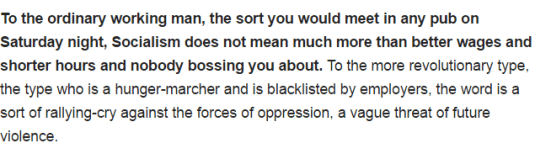
Source: The Road to Wigan Pier – Wikiquote.
07 Jun 2016 Leave a comment
in applied price theory, comparative institutional analysis, labour economics, minimum wage, politics - USA, Public Choice Tags: antimarket bias, expressive voting, living wage, rational rationality
Any decent political movement makes an ambit claim in expectation of being beaten back to its real position. That is basic negotiation tactics in politics.
Such is the volatility of expressive politics that the fight for 15 campaign has taken on a life of its own and is actually delivering on a $15 living wage as the minimum wage in the USA in a growing number of states and cities as well is in Democratic party presidential campaign pledges.
If there is any degree of economic sanity and practicality among living wage advocates, they know that such a high living wage increase will cost jobs.
After all, if a large wage increase for low-paid workers cost no jobs, why not increase everyone’s wage by a similar percentage, which is about 100% in the USA?
06 Jun 2016 Leave a comment
in politics - New Zealand, poverty and inequality, public economics, urban economics Tags: economics of housing, homelessness, social insurance, welfare state
Statistics New Zealand spent 21 pages trying to define the term homeless. How Orwellian.
When I first moved to Canberra and when I moved back, I stayed with friends. Some regard that as being homeless under the Statistics New Zealand definition, much to my own surprise.
I qualify because I shared accommodation . Having shared or short-term accommodation is not homeless. The descriptions shared and short-term accommodation quite adequate to the task.
People living in temporary accommodation including with friends are not homeless. Their situation is unsatisfactory but describing it does not justify butchering the English language by conflating their inconveniences with the few hundred people who live rough each night.
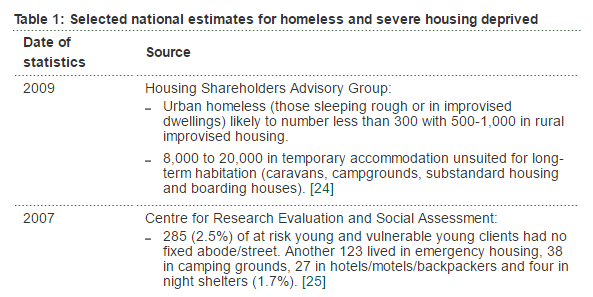
Source: New Zealand Parliament – Homelessness in New Zealand.
Those that conflate having a roof over your head tonight with living rough take advantage of the great sympathy people have for those living rough for people in far less dire situations.
06 Jun 2016 Leave a comment
in comparative institutional analysis, constitutional political economy, development economics, labour economics, liberalism, P.T. Bauer, poverty and inequality, Public Choice Tags: wealth and power
05 Jun 2016 Leave a comment
in development economics, economic history, economics of bureaucracy, poverty and inequality

The World Bank should enquire more as to why particular Latin countries succeeded while others did not and the economic systems employed in each.
05 Jun 2016 Leave a comment
in economics of education, gender
05 Jun 2016 Leave a comment
in applied price theory, applied welfare economics, comparative institutional analysis, constitutional political economy, development economics, economic history, economics, economics of regulation, entrepreneurship, growth disasters, growth miracles, income redistribution, industrial organisation, labour economics, macroeconomics, Milton Friedman, minimum wage, occupational choice, politics - USA, Public Choice, public economics Tags: 2016 presidential election, Leftover Left
05 Jun 2016 Leave a comment
in economics of education, gender, human capital
05 Jun 2016 Leave a comment
in applied price theory, entrepreneurship, F.A. Hayek, human capital, industrial organisation, labour economics, labour supply, occupational choice, poverty and inequality, survivor principle Tags: distributive justice, social justice
05 Jun 2016 Leave a comment
in economic history, energy economics, environmental economics, health and safety, labour economics Tags: coal prices, comic power, hydroelectric power, nuclear energy, risk risk trade-offs, solar power, wind power
04 Jun 2016 Leave a comment
in discrimination, economics of religion, gender, liberalism

HT: John Ansell
04 Jun 2016 Leave a comment
in labour economics, labour supply, politics - New Zealand, poverty and inequality Tags: expressive voting, growth of government, New Zealand Labor Party, rational irrationality, size of government, social insurance, universal basic income, welfare state
A universal basic income in New Zealand will have to be financed by a great big new tax because the existing ones are not enough according to the Economist calculations below.
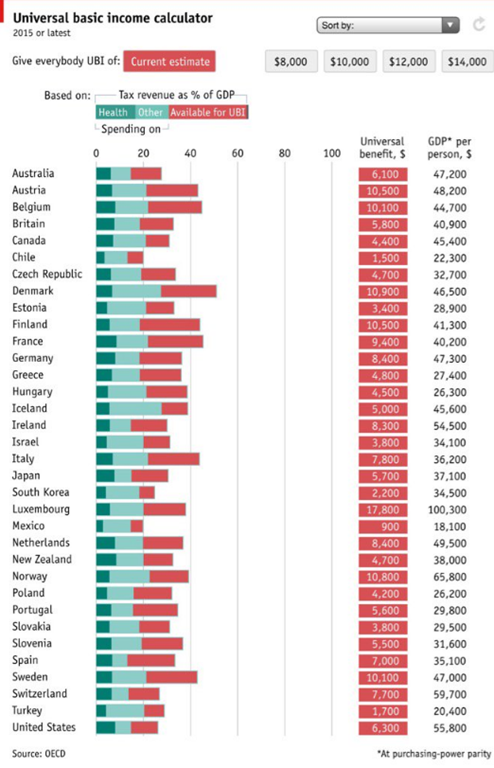
HT: Paul Kerby.
Celebrating humanity's flourishing through the spread of capitalism and the rule of law
Celebrating humanity's flourishing through the spread of capitalism and the rule of law
Celebrating humanity's flourishing through the spread of capitalism and the rule of law
Celebrating humanity's flourishing through the spread of capitalism and the rule of law
Celebrating humanity's flourishing through the spread of capitalism and the rule of law
A History of the Alt-Right
Econ Prof at George Mason University, Economic Historian, Québécois
Celebrating humanity's flourishing through the spread of capitalism and the rule of law
Scholarly commentary on law, economics, and more
Beatrice Cherrier's blog
Celebrating humanity's flourishing through the spread of capitalism and the rule of law
Celebrating humanity's flourishing through the spread of capitalism and the rule of law
Celebrating humanity's flourishing through the spread of capitalism and the rule of law
Why Evolution is True is a blog written by Jerry Coyne, centered on evolution and biology but also dealing with diverse topics like politics, culture, and cats.
Celebrating humanity's flourishing through the spread of capitalism and the rule of law
A rural perspective with a blue tint by Ele Ludemann
DPF's Kiwiblog - Fomenting Happy Mischief since 2003
Celebrating humanity's flourishing through the spread of capitalism and the rule of law
The world's most viewed site on global warming and climate change
Tim Harding's writings on rationality, informal logic and skepticism
A window into Doc Freiberger's library
Let's examine hard decisions!
Commentary on monetary policy in the spirit of R. G. Hawtrey
Thoughts on public policy and the media
Celebrating humanity's flourishing through the spread of capitalism and the rule of law
Politics and the economy
A blog (primarily) on Canadian and Commonwealth political history and institutions
Reading between the lines, and underneath the hype.
Economics, and such stuff as dreams are made on
"The British constitution has always been puzzling, and always will be." --Queen Elizabeth II
Celebrating humanity's flourishing through the spread of capitalism and the rule of law
Celebrating humanity's flourishing through the spread of capitalism and the rule of law
WORLD WAR II, MUSIC, HISTORY, HOLOCAUST
Undisciplined scholar, recovering academic
Celebrating humanity's flourishing through the spread of capitalism and the rule of law
Res ipsa loquitur - The thing itself speaks
In Hume’s spirit, I will attempt to serve as an ambassador from my world of economics, and help in “finding topics of conversation fit for the entertainment of rational creatures.”
Researching the House of Commons, 1832-1868
Articles and research from the History of Parliament Trust
Reflections on books and art
Posts on the History of Law, Crime, and Justice
Celebrating humanity's flourishing through the spread of capitalism and the rule of law
Exploring the Monarchs of Europe
Cutting edge science you can dice with
Small Steps Toward A Much Better World
“We do not believe any group of men adequate enough or wise enough to operate without scrutiny or without criticism. We know that the only way to avoid error is to detect it, that the only way to detect it is to be free to inquire. We know that in secrecy error undetected will flourish and subvert”. - J Robert Oppenheimer.


Recent Comments