Down and out in NZ = social housing with fast broadband

The Dominion Post had a front page story yesterday about an 80-year-old pensioner required to pay for fast broadband in her new social housing. Her new apartment happens to be in my same suburb. I can see the new apartments from my window as I type.

She didn’t have much use for this fast broadband, which cost an extra $20 a month, because she is legally blind. She cannot have a landline-only option because of the way her apartment is wired and the way in which fast broadband works.

The 27 flats have been fitted with fibre-optic cabling, and residents, many of whom are pensioners or have disabilities, cannot opt for a landline-only service.

National building standards require new apartments to be wired with fast broadband. A classic example of the inability of central planning to deal with the diversity of preferences and incomes.

In this case, the victim of central planning it is an old age pensioners obviously in poor circumstances as well as legally blind who is out of pocket. She is one of a number of old age pensioners who are similarly out-of-pocket when they living on a strictly limited budget.

College graduates don’t really notice recessions

What is assortative mating?

The mass kidnapping of Occupy activists has extended to New Zealand

Mass kidnappings is the only reason why the Occupy activists are not dancing seen in the streets to celebrate the steady fall of poverty in New Zealand over the last 20 years but for the hick-up of the GFC.

image

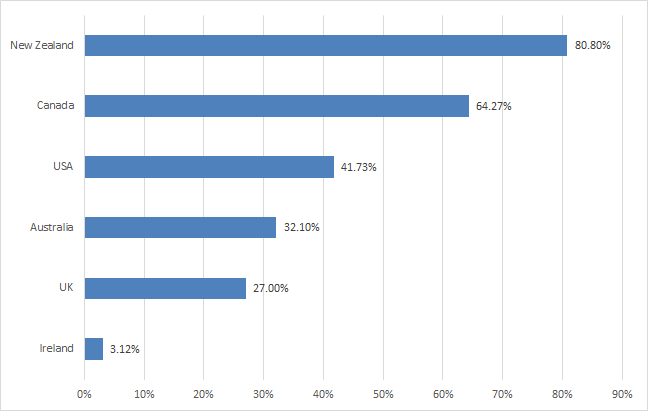
via Population with low incomes.

The pretence to knowledge has a supply and a demand

The wage stagnation that dare not speak its name

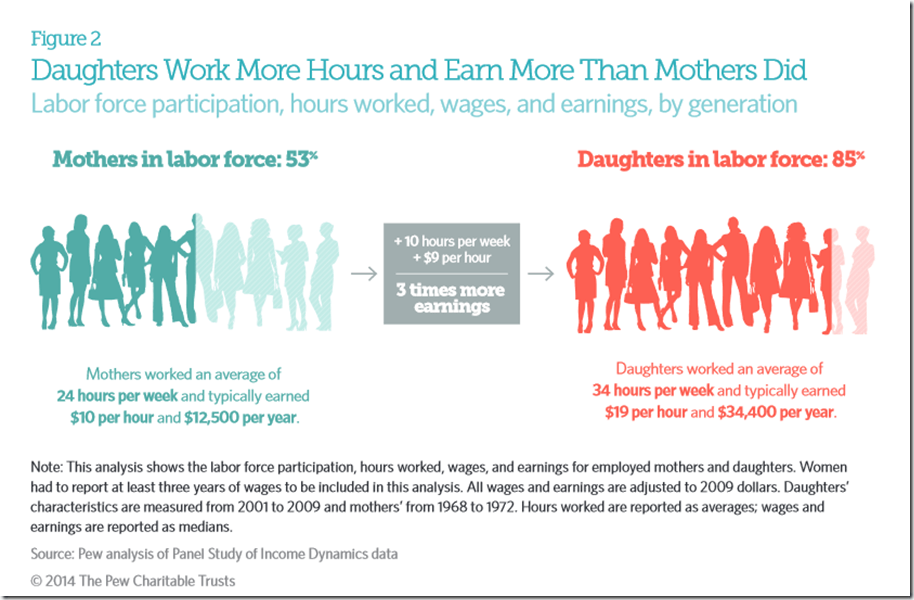
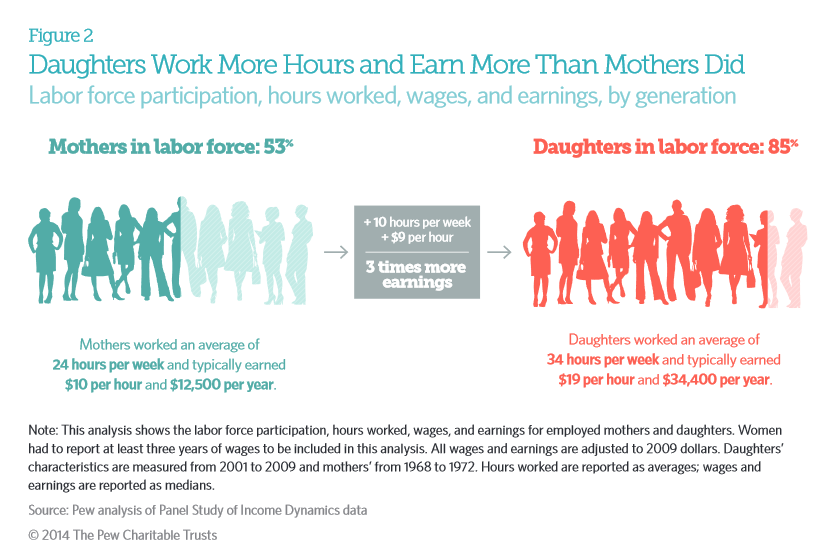
via On Pay Gap, Millennial Women Near Parity – For Now | Pew Research Center’s Social & Demographic Trends Project.

The gender wage gap reverses at below 40 hours a week

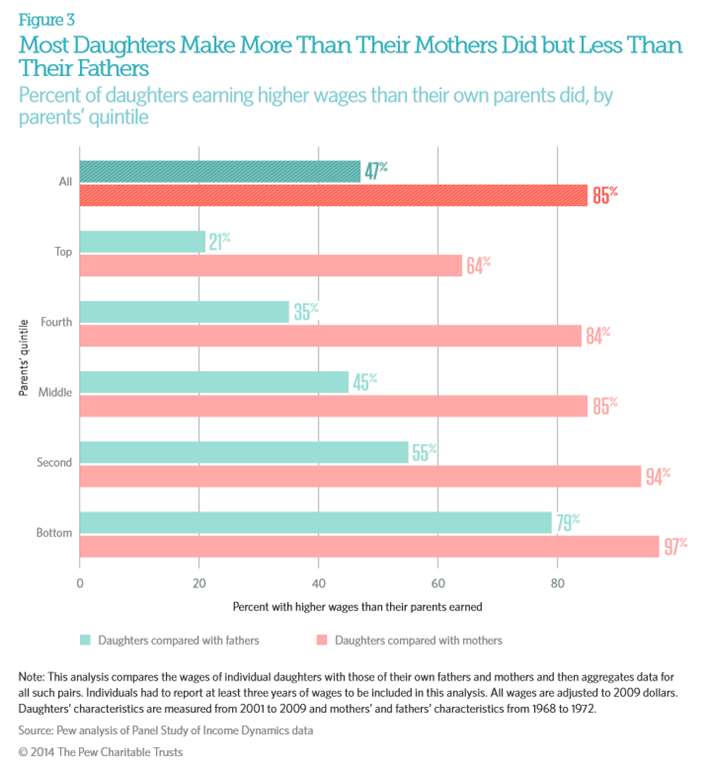
via Political Calculations: U.S. Women Paid More to Work Less.

Richard Nixon’s public choice economics of the Vietnam anti-war movement

The Vietnam anti-war movement were primarily the result of the draft: hell no, we won’t go and the burning of draft cards. Richard Nixon was as cunning a rat who ever occupied the Oval Office. He was elected in 1968 to end the Vietnam war and to end the draft.

Nixon had an intuitive economic understanding that the anti-war movement’s rioting in the streets and campuses was very much motivated by private gain. In particular, the threat of being drafted. The notion that revolutions and political movements are motivated by private gain is not new.

Vietnamisation changed everything. In 1969, Nixon started the process of phasing down the sending of further combat troops to Vietnam and the phasing down of the draft. US troop withdrawal started on July 1st 1969 with completion dates – December 1970, June 1971 and December 1972.

By the beginning of 1972, over 400,000 U.S. military personnel had been withdrawn, virtually all combat troops. The protests were against ending up in the jungle – not up the rear with the gear. There were 24,000 US troops in Vietnam in 1972. This compares to 560,000+ in 1969.

A Vietnam vet told me that when he returned to his U.S. campus in 1971 for graduate studies, it was very quite compared to 1969 because the spectre of the draft had gone in their minds.

The anti-war movement was really motivated by hell no, we won’t go. As soon as the prospect of going to Vietnam faded away, so did the anti-war movement.

The robots are coming, the robots are coming, but is it for my current job?

via Job Automation Threatens Workforce – Bloomberg.

The value of a stay at home mum

Disability benefit applications are counter cyclical and unaffected by improving health standards and rising life expectancy

SSDI-webfig3

via Social Security Disability Insurance | Center for American Progress.

New Zealand does an excellent job in attracting skilled migrants

Working age populations start falling in many countries by 2025

Would a living wage reduce poverty in America?

How to argue for welfare reform when sincerely arguing against the 1996 US Federal welfare reforms

The share of single mothers without a high school degree with earnings rose from 49 percent to 64 percent between 1995 and 2000 but has since fallen or remained constant almost every year since then. At 55 percent, it’s now just slightly above its level in 1997, the first full year of welfare reform (see first graph).

TANF now serves only 25 of every 100 families with children that live below the poverty line, down from AFDC’s 68 of every 100 such families before the welfare law

Over the last 18 years, the national TANF average monthly caseload has fallen by almost two-thirds — from 4.7 million families in 1996 to 1.7 million families in 2013 — even as poverty and deep poverty have worsened.

The number of families with children in poverty hit a low of 5.2 million in 2000, but has since increased to more than 7 million. Similarly, the number of families with children in deep poverty (with incomes below half of the poverty line) hit a low of about 2 million in 2000, but is now above 3 million.

The employment situation for never-married mothers with a high school or less education — the group of mothers most affected by welfare reform — has changed dramatically over the last several decades.

In the early 1990’s, when states first made major changes to their cash welfare programs, only about half of these mothers worked.

Importantly, there was a very large employment gap between the share of these never-married mothers and single women without children with similar levels of education, suggesting that there was substantial room for these never-married mothers to increase their participation in the labour force.

By 2000, the employment gap between these two groups of women closed, and it has remained so. But in the years since, the employment rate for both groups has fallen considerably.

The employment rate for never-married mothers is now about the same as when welfare reform was enacted 18 years ago. This suggests that the economy and low education levels are now the causes of limited employment among never-married mothers — not the availability of public benefits or anything particular to never-married mothers.

The Centre on Budget and Policy Priorities, who hail clearly from the Left of American politics, scrupulously documented the following:

  • Big gains in the employment of single mothers until a setback in the Great Recession but is still much better than in 1996;
  • Welfare dependency dropped by two thirds;
  • Despite this two third drop in welfare dependency, and earnest predictions of acute poverty and deprivation made in 1996, the number of families in deep poverty has not changed, and the number of families in poverty fell significantly and only rose again with the Great Recession; and
  • There was a dramatic increase in the percentage of never married mothers in employment, so much so that there is no difference in the employment rate of single women with no children and never married mothers!

Welfare dependency down by two thirds, employment of never married mothers up to levels no one thought possible, family poverty down, and economic independence is much more widespread and all because of the 1996 US Federal welfare reforms. That sounds like success to me – a great success.

via Chart Book: TANF at 18 | Center on Budget and Policy Priorities.

Previous Older Entries Next Newer Entries
Fardels Bear

A History of the Alt-Right

Vincent Geloso

Econ Prof at George Mason University, Economic Historian, Québécois

Bassett, Brash & Hide

Celebrating humanity's flourishing through the spread of capitalism and the rule of law

Truth on the Market

Scholarly commentary on law, economics, and more

The Undercover Historian

Beatrice Cherrier's blog

Matua Kahurangi

Celebrating humanity's flourishing through the spread of capitalism and the rule of law

Temple of Sociology

Celebrating humanity's flourishing through the spread of capitalism and the rule of law

Velvet Glove, Iron Fist

Celebrating humanity's flourishing through the spread of capitalism and the rule of law

Why Evolution Is True

Why Evolution is True is a blog written by Jerry Coyne, centered on evolution and biology but also dealing with diverse topics like politics, culture, and cats.

Down to Earth Kiwi

Celebrating humanity's flourishing through the spread of capitalism and the rule of law

NoTricksZone

Celebrating humanity's flourishing through the spread of capitalism and the rule of law

Homepaddock

A rural perspective with a blue tint by Ele Ludemann

Kiwiblog

DPF's Kiwiblog - Fomenting Happy Mischief since 2003

The Dangerous Economist

Celebrating humanity's flourishing through the spread of capitalism and the rule of law

Watts Up With That?

The world's most viewed site on global warming and climate change

The Logical Place

Tim Harding's writings on rationality, informal logic and skepticism

Doc's Books

A window into Doc Freiberger's library

The Risk-Monger

Let's examine hard decisions!

Uneasy Money

Commentary on monetary policy in the spirit of R. G. Hawtrey

Barrie Saunders

Thoughts on public policy and the media

Liberty Scott

Celebrating humanity's flourishing through the spread of capitalism and the rule of law

Point of Order

Politics and the economy

James Bowden's Blog

A blog (primarily) on Canadian and Commonwealth political history and institutions

Science Matters

Reading between the lines, and underneath the hype.

Peter Winsley

Economics, and such stuff as dreams are made on

A Venerable Puzzle

"The British constitution has always been puzzling, and always will be." --Queen Elizabeth II

The Antiplanner

Celebrating humanity's flourishing through the spread of capitalism and the rule of law

Bet On It

Celebrating humanity's flourishing through the spread of capitalism and the rule of law

History of Sorts

WORLD WAR II, MUSIC, HISTORY, HOLOCAUST

Roger Pielke Jr.

Undisciplined scholar, recovering academic

Offsetting Behaviour

Celebrating humanity's flourishing through the spread of capitalism and the rule of law

JONATHAN TURLEY

Res ipsa loquitur - The thing itself speaks

Conversable Economist

In Hume’s spirit, I will attempt to serve as an ambassador from my world of economics, and help in “finding topics of conversation fit for the entertainment of rational creatures.”

The Victorian Commons

Researching the House of Commons, 1832-1868

The History of Parliament

Articles and research from the History of Parliament Trust

Books & Boots

Reflections on books and art

Legal History Miscellany

Posts on the History of Law, Crime, and Justice

Sex, Drugs and Economics

Celebrating humanity's flourishing through the spread of capitalism and the rule of law

European Royal History

Exploring the Monarchs of Europe

Tallbloke's Talkshop

Cutting edge science you can dice with

Marginal REVOLUTION

Small Steps Toward A Much Better World

NOT A LOT OF PEOPLE KNOW THAT

“We do not believe any group of men adequate enough or wise enough to operate without scrutiny or without criticism. We know that the only way to avoid error is to detect it, that the only way to detect it is to be free to inquire. We know that in secrecy error undetected will flourish and subvert”. - J Robert Oppenheimer.

STOP THESE THINGS

The truth about the great wind power fraud - we're not here to debate the wind industry, we're here to destroy it.

Lindsay Mitchell

Celebrating humanity's flourishing through the spread of capitalism and the rule of law

Alt-M

Celebrating humanity's flourishing through the spread of capitalism and the rule of law