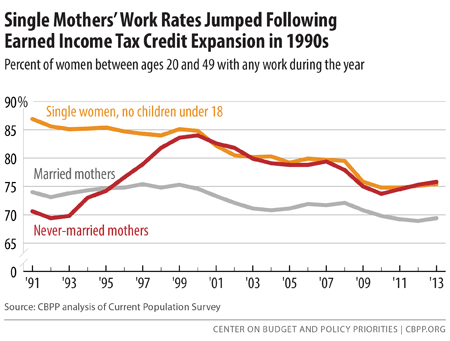
The gender wage gap emerges when women start to become mothers

Source: whitehouse.gov

Annual earnings by undergraduate major in the USA

Image

Bizarro lefties alert: @MaxRashbrooke “Maori and Pasifika children were disproportionately in poverty, highlighting systemic discrimination!”

Lindsay Mitchell wrote a fine reply to the Amnesty International report suggesting that higher rates of child poverty among Māori and Pasifika is evidence of systematic discrimination.

Māori and Pasifika children were disproportionately in poverty, highlighting systemic discrimination

Figure 1: Real equivalised median household income (before housing costs) by ethnicity, 1988 to 2013 ($2013)

Source: Bryan Perry, Household incomes in New Zealand: Trends in indicators of inequality and hardship 1982 to 2013. Ministry of Social Development (July 2014).

The facts are clear, whatever systematic discrimination there might be, it must be falling rapidly because of the rapid increases in household real incomes in Mari and Pacific households in the last 20 years.

As shown in figure 1 below, between 1994 and 2010, real equivalised median New Zealand household income rose by 47%; for Māori, this rise was 68%; for Pasifika, the rise in real equivalised median household income was 77%.

Our friends on the Left cannot argue that an income gap is evidence of discrimination while arguing that a rapid closing of that gap is not evidence of falling discrimination? To do this, to paint pre-1984 New Zealand, pre-neoliberal New Zealand as an egalitarian paradise has to ignore up to two thirds of the population and the inequalities they suffered:

“New Zealand up until the 1980s was fairly egalitarian, apart from Māori and women, our increasing income gap started in the late 1980s and early 1990s,” says Max Rashbrooke.

The large improvements in Māori incomes since 1992 were based on rising Māori employment rates, fewer Māori on benefits or zero incomes, more Māori moving into higher paying jobs, and greater Māori educational attainment (Dixon and Maré 2007). Labour force participation rates of Māori increased from 45% in the late 1980s to about 62% in the last few years. Māori unemployment reached a 20-year low of 8 per cent from 2005 to 2008.

Rapid social improvement among Māori and Pasifika is simply ignored as an inconvenient truth for the Left over Left.

Who has the highest minimum wage in purchasing power parity terms?

How Your Face Shapes Your Economic Chances – The Atlantic

  • Attractive CEOs raise their company’s stock price when they first appear on television, according to a working paper by Joseph T. Halford and Hung-Chia Hsu at the University of Wisconsin.
  • Taller people are richer. In fact, every inch between 5’7” and 6 feet is “worth” about 2 percent more in average annual earnings.
  • Being better looking than at least 67 percent of your peers is worth about $230,000 over your lifetime.
  • Having blond hair is worth as much as a year of school—for women.
  • Being an obese white woman is particularly punishing for your potential lifetime earnings.

via How Your Face Shapes Your Economic Chances – The Atlantic.

Who sets wages? Is it just the employer?

@greencatherine @PPTAWeb Teachers union concedes that NZ charter schools improve student outcomes?

The New Zealand teachers union went into a very curious rant against chartered schools in a letter to the Dominion Post today. Instead of saying that they do not improve student outcomes, the usual propaganda, the author of the letter focused on system-wide outcomes after the introduction of charter schools.

It is usual for the teachers union to say that the schools themselves fail rather than argue that adding five or 10 schools to a system of thousands of public schools in New Zealand will through competition from these few schools to lift the entire system. For example, the teachers union sets a very high standard for the charter schools:

The United States has had charter schools for a more than a decade and there has been no measurable improvement in that country’s overall performance in literacy, maths and science. The United States lags far behind New Zealand on recent performance tests in all those areas.

It is unwise to say there is no evidence because that leaves you open to the cheap shot that will find one piece of evidence and then ask why you making things up. For example, the Maxim Institute found that:

The evidence from the small body of research that exists is mixed: some studies have found the presence of charter schools to have had a small negative impact on pupil achievement in regular state schools, while other studies have found charter schools to have had either a negligible or small positive impact…

There my work is done. All I had to show was that there was some evidence showing that charter schools improved the performance of neighbouring schools.

Why is the teachers union pretending that this evidence is not there when it can be found and so easily on the Internet?

Is the reason that the evidence that charter schools improve the outcomes of students that go to them is so strong that they have to move to new reasons for opposing them? The evidence is some chartered schools do very well and in particular for minority students. Their greatest strength is they are closed if they fail. No similar standard applies to failing public schools.

At a minimum, the teachers unions have conceded that the charter schools seem to work and that they do no harm to the rest of the system? If there was evidence of that, they would be quick to put it forward.

Will comparable worth increase the pay of male prison guards?

Late last year, the New Zealand Court of Appeal held that paying women in predominantly female occupations less than men in other occupations with similar skills and responsibilities may be illegal under the Equal Pay Act of 1972.

The Employment Court found that to assess whether a breach of the 1972 Act had occurred in a female intensive industry, it would be necessary, and within the scope of the Act to use external employers and other industries as comparators in determining what a notional male employee with similar skills and responsibilities would be paid. The comparison would not just be within the same workplace.

The Court of Appeal agreed with the Employment Court’s finding. In particular, the necessity to be able to look outside a female-intensive industry to properly ascertain what a notional male performing that role would be paid based on skills and similarities of duties where there is no appropriate comparator within the industry.

Rather than talk about this New Zealand employment case directly, my first post will be about the experiences in the USA. A later post will discuss New Zealand in more depth.

The US Supreme Court’s first decision on comparable worth was County of Washington v. Guenther. This 1981 case was about female prison guards being paid 70% of the wages of male guards in the same prison. The County of Washington did a study that show they should be paid 95% of male guards.

This particular case has a tremendous irony because it is actually reasonable to argue that male guards, and perhaps female guards in male prisons, should get danger money depending on the level of direct contact with high risk prisoners. Male prisoners are far more violent. I don’t think anyone disputes that.

Quite simply, a lot of people don’t accept that the wage setting processes results from two conditions: wages are limited from above by the workers’ marginal productivity in the job: a limited from below by the alternative job offers of other employers.

Rather than fight that battle for the 10,000th time, a considerable amount of the economic analysis of comparable worth in the 1980s took the principle of comparable worth for granted and simply traces out the unintended consequences of implementing comparable worth.

They then go on to argue, for example, Ed Lazear, that comparable worth is never the correct remedy for wage differentials and job segregation because it makes everything worse. Rather than persuade people that markets function well, he simply points out that comparable worth turns out to be a bizarre intervention and will do many things that its supporters don’t want.

As Richard Posner observed in a 1986 US appeal court opinion, under the principles of comparable worth, a perfectly decent and honest employer who behaves with complete honour towards women and their equality will nonetheless, if they lost comparable worth litigation, would have to pay back-pay despite the fact he paid the going wage and couldn’t afford to pay more.

The practical upshot of comparable worth is to introduce occupation by occupation and job by job minimum wages for women, with the burden of proof on the employer to show that a comparable worth ruling should not apply to them.

If comparable worth were to be applied to the aged care sector, such as is proposed in New Zealand, more women would move into that sector because of the higher wages, leaving to an over qualification problem with aged care workers.

Instead of moving women into better occupations – occupational upgrading – comparable worth based wage increases will keep low skilled women in the old occupations where they were previously supposedly discriminated against.

Furthermore, to the extent that the low pay of women in the aged care work is the product of sex discrimination and occupational segregation, comparable worth does nothing to reduce the barriers to entry into male dominated, better paid occupations.

To the extent that the wage increase because of comparable worth puts women out of work, not only do they not have a job, the purported barriers to entry into the better paid male dominated occupations are not addressed in any way.

Instead of reducing occupational segregation, comparable worth would increase it. More women would enter the low paid occupations to get the comparable worth wage increase, rather than try and move up the occupational ladder.

By increasing wages in the female dominated occupation, comparable worth causes more women and men to enter these occupations, not less, and at the same time shrinks the number of jobs available by driving down demand because of higher costs of labour.

One of the responses of employers to comparable worth is to change the composition of the recruitment poor from which they hire. They will hire better qualified workers and put out of work their existing workers. This is common with the teenage minimum wage: 17 and 18-year-olds tend to lose their jobs to more mature and responsible 18 to 19-year-olds after a minimum wage increase.

The better explanation of why so many women are in a particular occupation is job sorting: that particular job has flexible hours and the skills do not depreciate as fast for workers who take time off, working part-time or returning from time out of the workforce.

  • Low job turnover workers will be employed by firms that invest more in training and job specific human capital.
  • Higher job turnover workers, such as women with children, will tend to move into jobs that have less investment in specialised human capital, and where their human capital depreciates at a slower pace.

Women, including low paid women, select careers in jobs that match best in terms of work life balance and allows them to enter and leave the workforce with minimum penalty and loss of skills through depreciation and obsolescence.

This is the choice hypothesis of the gender wage gap. Women choose to train and be educated in occupations where human capital depreciates at a slower pace.

Comparable worth is a very 20th century concept:

  • The wage gap in the late 20th century was driven by the education gap; and
  • In the 21st century, it is driven by work flexibility.

Claudia Goldin has described pharmacy is the most family friendly occupation. She compares it to law. In law, if you work long hours, you are on partnership track and win the top clients. In pharmacy, the only advantage of working longer hours as you earn more money that week. Also, pharmacists are completely interchangeable. Do you care which pharmacist fills out your prescription at your local pharmacy or even know which one fills it out? Lawyers are not interchangeable: they cannot just handover a case. Detailed briefings would be required. You expect your lawyer to show up in court or at meetings on time anywhere without fail.

Claudia Goldin did a great study of Harvard MBA is using online surveys of their careers. She found that three proximate factors accounted for the large and rising gender gap in earnings:

  • differences in training prior to MBA graduation,
  • differences in career interruptions, and
  • differences in weekly hours.

The greater career discontinuity and shorter work hours for female MBAs are largely associated with motherhood. There are some jobs that are severely penalise any time out of the workforce.

Goldin found one counterfactual that cancels out the gender wage gap amongst MBA professionals: hubby earns less! Female MBAs who’ve have a partner who earn less than them earn as much as the average MBA professional on an hourly basis but work a few less hours per week.

When comparable worth was introduced by legislation in Ontario, any comparable worth wage increase was limited to 1% of the previous year’s payroll and then these payments could continue until pay equity is achieved. The pay equity legislation for the private sector in Ontario applied to any private sector employer with 10 or more employees.

A study found that the Ontario pay equity law had no effect on aggregate wages in female jobs or on the gender wage gap. Also, a lot of small firms completely ignored the law or didn’t even know about it.

The key point to make is if the New Zealand employment courts introduce comparable worth, it will be in one foul swoop with the possibility of substantial back-pay owing. If Parliament decided to act, it can introduce social reforms at a measured pace.

France, here the New Zealand labour market comes – part 2! How the Employment Court is re-regulating

As discussed yesterday, if the Employment Court had its way, New Zealand case law under the Employment Relations Act regarding redundancies and layoffs would be as job destroying as those in France.

The Employment Court’s war against jobs goes back more than 20 years. To 1991 and G N Hale & Son Ltd v Wellington etc Caretakers etc IUW where the Court held that a redundancy to be justifiable under law it must be ‘unavoidable’, as in redundancies could only arise where the employer’s capacity for business survival was threatened.

The Court of Appeal slapped that down and affirm the right of the employer to manage his business in no uncertain terms:

…this Court must now make it clear that an employer is entitled to make his business more efficient, as for example by automation, abandonment of unprofitable activities, re-organisation or other cost-saving steps, no matter whether or not the business would otherwise go to the wall…

The personal grievance provisions … should not be treated as derogating from the rights of employers to make management decisions genuinely on such grounds. Nor could it be right for the Labour Court to substitute its own opinion as to the wisdom or the expediency of the employer’s decision.

When a dismissal is based on redundancy, it is the good faith of that basis and the fairness of the procedure followed that may fall to be examined on a complaint of unjustifiable dismissal

… the Court and the grievance committees cannot properly be concerned with an examination of the employer’s accounts except in so far as it bears on the true reason for dismissal.

The Employment Court could only inquire as to the genuineness of the employer’s decision and the procedures adopted. The Court could not substitute their views on management decisions. No second-guessing.

In Brake v Grace Team Accounting Ltd, the Employment Court found its way back into second-guessing employer’s decisions about how to manage their business. The figures used by the employer to decide that a redundancy was required were in error. The employer miscalculated.

The Employment Court had previously held in Rittson-Thomas T/A Totara Hills Farm v Hamish Davidson that the statutory test of what a fair and reasonable employer could have done in all the circumstances applies to the substantive reasoning for redundancies. Some enquiry into the employer’s substantive decision is required to establish that a hypothetical fair and reasonable employer could also make the same decision in all of the circumstances.

Subsequently in Brake v Grace Team Accounting Ltd, the Employment Court found that the actions by the employer were “not what a fair and reasonable employer would have done in all the circumstances” and “failed to discharge the burden of showing that the plaintiff’s dismissal for redundancy was justified”.

The Court found that the redundancy was “a genuine, but mistaken, dismissal”, but it still found that the dismissal was substantively unjustified. That is a major new development. Mistaken dismissals that are genuine are unlawful and grounds for compensation under the employment law.

The case was appealed where the issues were whether the correct test had been applied. The Court of Appeal, in a sad day for employers, job creation and the unemployed, found that the Employment Court was within its rights to do what it did and applied the statutory tests correctly:

 GTA acted precipitously and did not exercise proper care in its evaluation of its business situation and it made its decision about Ms Brake’s redundancy on a false premise.

So it never turned its mind to what its proper business needs were but rather proceeded to evaluate its options based on incorrect information. We can see no error in the finding by the Employment Court that a fair and reasonable employer would not do this.

The test is now that fair and reasonable employers in New Zealand do not make mistakes. A much greater burden is now laid upon employers to show that not only that redundancies are justified, but they have made careful calculations and no mistakes.

No more seat of your pants entrepreneurship in New Zealand. No more entrepreneurial hunches – the essence of entrepreneurship is acting on hunches and other judgements that are incapable of being articulated to others and about which there is mighty disagreement in many cases. As Lavoie (1991) states:

…most acts of entrepreneurship are not like an isolated individual finding things on beaches; they require efforts of the creative imagination, skillful judgments of future costs and revenue possibilities, and an ability to read the significance of complex social situations.

The essence of entrepreneurship is your hunches are better than the next guy’s and you survive in competition by backing that hunch often to the consternation of the crowd. As Mises explains:

[Economics] also calls entrepreneurs those who are especially eager to profit from adjusting production to the expected changes in conditions, those who have more initiative, more venturesomeness, and a quicker eye than the crowd, the pushing and promoting pioneers of economic improvement…

The entrepreneurial idea that carries on and brings profits is precisely that idea which did not occur to the majority… The prize goes only to those dissenters who do not let themselves be misled by the errors accepted by the multitude

In many cases, those entrepreneurial hunches are sorted, sifted and selected on the basis of trial and error in the marketplace. Central to Hayek’s conception of the meaning of competition is it is a process of trial and error with many errors:

Although the result would, of course, within fairly wide margins be indeterminate, the market would still bring about a set of prices at which each commodity sold just cheap enough to outbid its potential close substitutes — and this in itself is no small thing when we consider the insurmountable difficulties of discovering even such a system of prices by any other method except that of trial and error in the market, with the individual participants gradually learning the relevant circumstances.

Remember Hayek’s conception of competition as a discovery procedure where prices and production emerge through the clash of entrepreneurial judgements and competitive rivalry:

…competition is important only because and insofar as its outcomes are unpredictable and on the whole different from those that anyone would have been able to consciously strive for; and that its salutary effects must manifest themselves by frustrating certain intentions and disappointing certain expectations

Errors are no longer permitted in the New Zealand labour market by the Employment Court. The Court has outlawed error in redundancy decisions.

This is despite the fact that the conception by Kirzner of the market process is that it is an error correction procedure without rival and a central role of entrepreneurial alertness is to correct errors in pricing and production:

It is important to notice the role played in this process of market discovery by pure entrepreneurial profit. Pure profit opportunities emerge continually as errors are made by market participants in a changing world. The inevitably fleeting character of these opportunities arises from the powerful market tendency for entrepreneurs to notice, exploit, and then eliminate these pure price differentials.

The paradox of pure profit opportunities is precisely that they are at the same time both continually emerging and yet continually disappearing. It is this incessant process of the creation and the destruction of opportunities for pure profit that makes up the discovery procedure of the market. It is this process that keeps entrepreneurs reasonably abreast of changes in consumer preferences, in available technologies, and in resource availabilities.

Rothbard made similar arguments about the centrality of discrepancies and error in entrepreneurship:

The capitalist-entrepreneur buys factors or factor services in the present; his product must be sold in the future. He is always on the alert, then, for discrepancies, for areas where he can earn more than the going rate of interest.

In Frank Knight’s conception of profit, there were temporary profits that arise from the correction of error:

In the theory of competition, all adjustments “tend” to be made correctly, through the correction of errors on the basis of experience, and pure profit accordingly tends to be temporary.

The Employment Court misunderstands the market process as a process of error correction. Those errors are identified through entrepreneurial alertness and trial and error. These errors are both of over-optimism and over-pessimism as Kirzner explains:

Errors of over-pessimism are those in which superior opportunities have been overlooked. They manifest themselves in the emergence of more than one price for a product which these resources can create. They generate pure profit opportunities which attract entrepreneurs who, by grasping them, correct these over-pessimistic errors.

The other kind of error, error due to over-optimism, has a different source and plays a different role in the entrepreneurial discovery process. Over-optimistic error occurs when a market participant expects to be able to complete a plan which cannot, in fact, be completed.

A considerable part of entrepreneurial alertness arises from the business opportunities created by sheer ignorance and pure error as Kirzner explains:

What distinguishes discovery (relevant to hitherto unknown profit opportunities) from successful search (relevant to the deliberate production of information which one knew one had lacked) is that the former (unlike the latter) involves that surprise which accompanies the realization that one had overlooked something in fact readily available. (“It was under my very nose!”)

The market process is a selection procedure where the more efficient survive for reasons that may be unknown to the entrepreneurs directly concerned as well as to observers and officious judges. Alchian pointed out the evolutionary struggle for survival in the face of market competition ensured that only the profit maximising firms survived:

  • Realised profits, not maximum profits, are the marks of success and viability in any market. It does not matter through what process of reasoning or motivation that business success is achieved.
  • Realised profit is the criterion by which the market process selects survivors.
  • Positive profits accrue to those who are better than their competitors, even if the participants are ignorant, intelligent, skilful, etc. These lesser rivals will exhaust their retained earnings and fail to attract further investor support.
  • As in a race, the prize goes to the relatively fastest ‘even if all the competitors loaf.’
  • The firms which quickly imitate more successful firms increase their chances of survival. The firms that fail to adapt, or do so slowly, risk a greater likelihood of failure.
  • The relatively fastest in this evolutionary process of learning, adaptation and imitation will, in fact, be the profit maximisers and market selection will lead to the survival only of these profit maximising firms.

The surviving firms may not know why they are successful, but they have survived and will keep surviving until overtaken by a better rival. All business needs to know is a practice is successful.

One method of organising production and supplying to the market will supplant another when it can supply at a lower price (Marshall 1920, Stigler 1958). Gary Becker (1962) argued that firms cannot survive for long in the market with inferior product and production methods regardless of what their motives are. They will not cover their costs.

The more efficient sized firms are the firm sizes that are currently expanding their market shares in the face of competition; the less efficient sized are those firms that are currently losing market share (Stigler 1958; Alchian 1950; Demsetz 1973, 1976). Business vitality and capacity for growth and innovation are only weakly related to cost conditions and often depends on many factors that are subtle and difficult to observe (Stigler 1958, 1987). The Employment Court pretends to know better than the outcome of the competitive struggle in the market for survival.

The Employment Court also believes employers have something akin to academic tenure. In 2010, the Court found that an employee’s redundancy was unjustified because the employer did not offer redeployment and there is no requirement that the right of the redeployment be written into the employment agreement (Wang v Hamilton Multicultural Services Trust). The particulars of this case were quite interesting:

  • A new management role was created with significantly more responsibility for training, supervision and decision making than the redundant finance administrator role, with a 50% salary increase to recognise the increased responsibilities and duties.
  • The vacancy was advertised externally but the existing finance administrator was encouraged to apply.
  • His experience and qualifications meant that he could fulfil the new role, albeit with some up-skilling.
  • He decided not to apply for it to avoid jeopardising a personal grievance claim that his redundancy was not genuine and therefore unjustified.

In the case at hand, the Employment Court held that the employer was obliged to look for alternatives to making the employee redundant. Given that he would be able to perform the new finance manager position with some up-skilling, the employer should have offered him the position rather than simply inviting him to apply for it.

The notion that an employee through training can quickly increase their marginal productivity by 50% to fill a more senior role contradicts the modern labour economics of human capital. A 50% salary increase through a bit of training would imply extraordinary annual returns on other forms of on-the-job training and formal education as well as the training at hand in the Employment Court case.

I would very much like to be in the position where I can get a 50% salary increase after a bit of training. As I recall, I required about 5-10 years of on-the-job human capital acquisition before my starting salary as a graduate was 50% higher through promotion and transfers.

In summary, the Employment Court stands apart from the modern labour economics of human capital and job search and matching as well as the modern theory of entrepreneurial alertness, and the market as a discovery procedure and an error correction mechanism. The Employment Court has fallen for both the pretence to knowledge and the fatal conceit.

France, here the New Zealand labour market comes! The Employment Court’s long march to re-regulate

If the Employment Court had its way, New Zealand case law under the Employment Relations Act regarding redundancies and layoffs would be as strict as those in France. As top employment lawyer Peter Cullen explained in the Dominion Post today:

Former Employment Court chief justice Tom Goddard said employees could not be made redundant unless the company would otherwise go to the wall.

The employer appealed.

The Court of Appeal said something quite different. Its view was that if a business could be run more efficiently without a particular position, then it was entitled to disestablish it.

The Court of Appeal made it plain that it would not critically examine the logic behind the employer disestablishing a role. If the reason behind the redundancy was genuine, that was all that really mattered. Of course a fair process and consultation ought to precede any decision, but the outcome nevertheless was that the position could go.

The Employment Court wanted the position to be the same as at that in France where layoffs are permissible only to avoid bankruptcy:

…firms still cannot lay off workers to improve competitiveness when the business is healthy; they can only make economic dismissals to preserve competitiveness when already in financial straits. In France, it ought to be legal to fix small problems before they become big.

This French standard of regulation of layoffs and redundancies, if it had survived on appeal, would have come as a surprise to many, including the OECD who rates New Zealanders having no regulation of layoffs in its Index of Employment Protection.

Source: OECD employment protection index.

But you can’t keep an activist Employment Court down. It’s next tactic was salami tactics. Chipping away at the right of the employer to run its business and decide how large its labour force is. Peter Cullen again with the Employment Court pretending it can second-guess entrepreneurial judgements and arithmetic:

In the case between Grace Team Accounting and employee Judith Brake, the Employment Court found that the decision to make Brake’s position redundant was based upon mistaken arithmetic. The Court of Appeal held that Brake’s redundancy amounted to an unjustified dismissal.

Next cab off the rank was requiring employers to give preference to redundant employees pretty much no matter what. Peter Cullen again:

In the case of Neil Wang and his employer the Hamilton Multicultural Services Trust, the trust encouraged Wang to apply for another role within the organisation.

However, the Employment Court said the trust should have considered whether they should have simply offered Wang the position without having to go through an application process.

The court found that even though the other role was not the same, it required the same skills and minimal retraining and so the trust should have simply given Wang the role.

It is standard in the redundancies and restructurings I’ve been involved with for non-managerial employees to go through internal reassignment panels. Some didn’t make it and were laid off.

It’s common for the managerial vacancies to be advertised externally so that redundant managers must compete with external applicants so that the workplace can renew itself. Quite a few managers don’t make it through this process because of the external competition.

This clear preference for existing employees is a major reregulation of the labour market. Now, every redundant employee can engage in vexatious litigation and squeeze a few thousand dollars extra out of the employer by threatening to go to the Employment Court for a second opinion on the entrepreneurial judgements of the employer. To save managerial time as well is legal fees, it’s cheaper for most employers to pay the redundant employee off with a small settlement.

Anything that makes it more expensive to fire an employee makes it more expensive to hire an employee. This will reduce job creation in New Zealand now that the French standard applies:

…businesses remain obligated to assist laid-off employees in finding other jobs and in retraining them for their new positions – a distinctly French phenomenon. For businesses with more than 1,000 employees, this limbo period before dismissal can last from four to nine months.

Bryan Caplan on the economics of Star Trek replicators (that is, artificial intelligence)

replicator

Bryan Caplan wrote a blog a few years ago, explaining the labour economics of artificial intelligence, using an exam question he poses to his graduate students:

Suppose artificial intelligence researchers produce and patent a perfect substitute for human labour at zero MC.

Use general equilibrium theory to predict the overall economic effects on human welfare before AND after the Artificial Intelligence software patent expires.

He then gave the answer about a week later:

While the patent lasts, the patent-holder will produce a monopoly quantity of AIs. As a result, the effective labour supply increases, and wages for human beings fall – but not to 0 because the patent-holder keeps P>MC.

The overall effect on human welfare, however, is still positive! Since the AIs produce more stuff, and only humans get to consume, GDP per human goes up. How is this possible if wages fall?

Simple: Earnings for NON-labour assets (land, capital, patents, etc.) must go up. Humans who only own labour are worse off, but anyone who owns a home, stocks, etc. experiences offsetting gains.

When the patent expires, this effect becomes even more extreme. With 0 fixed costs, wages fall to MC=0, but total output – and GDP per human – skyrockets.

Human owners of land, capital, and other non-labour assets capture 100% of all output. Humans who only have labour to sell, however, will starve without charity or tax-funded redistribution.

His logic is quite good. Caplan drew attention in the responses to his blog of Capt J Parker and Alex Godofsky in the comments section of his blog.

James T. Kirk clear

My comments at the time were as follows:

  • An artificially intelligent  robot that was a perfect substitute for human labour sounds like the replicators on star trek?
  • Who operates the machines? who tells them what to do? what not to do?
  • After the patent expired, would anyone care if the poor stole/copied the AI machines and made them for for themselves. who cares if a free good is stolen?
  • Is it a crime to steal a replicator on star trek?

The US teaching workforce is disproportionately unionized

Union_rate

HT: Vox

Are women just too smart to be computer scientists?

Women started drifting away from computer science in the mid-1980s. The interpretation put forward by the professional grievance industry, that is, by National Public Radio in the USA is:

The share of women in computer science started falling at roughly the same moment when personal computers started showing up in U.S. homes in significant numbers.

These early personal computers weren’t much more than toys. You could play pong or simple shooting games, maybe do some word processing.

And these toys were marketed almost entirely to men and boys. This idea that computers are for boys became a narrative. It became the story we told ourselves about the computing revolution. It helped define who geeks were, and it created techie culture.

Source: NPR

Another interpretation is there are systematic differences between teenage boys and teenage girls in verbal and written skills. Young women moved away from enrolling in computer science because they could make better use of their superior written and verbal skills in medicine and law. Computer science is for those with inferior social skills, on average.

As for computers in the early days been marketed to men and boys, people with inferior verbal and reading skills would be attracted to sitting in front of the computer playing games because of their inferior social skills. Computers were expensive back in the 80s so marketing them to people with fewer social skills is sensible as they were more willing to spend money to fill the extra time they spend on their own.

The difference in reading and verbal skills between girls and boys at the age of 15 is equal to 6-months extra schooling. Six months schooling explains a lot of the wage gaps on ethnic, racial and gender lines. Not surprisingly, fewer women do computer science because their superior reading and verbal skills qualify them for medicine and law where they can take greater advantage of their mix of talents.

It is all about being the best you can be. As many women as men ending up in STEM occupations does not necessarily mean people are making the choices that help them be the best they can be because some women may not be taking advantage of their superior reading skills.

How Mothers and Fathers Spend Their Time

SDT-2013-03-Modern-Parenthood-27

SDT-2013-03-Modern-Parenthood-29

SDT-2013-03-Modern-Parenthood-30

SDT-2013-03-Modern-Parenthood-47

The timing of major economic reform programmes

There are plenty of critics of deregulation, albeit enough for them are smart enough to realise they cannot restore the lost monopolies and high marginal tax rates on the middle-class. They admit in their hearts that deregulation and other economic reforms worked as did inflation targeting.

The common force behind economic reform from 1980 onwards was the growing deadweight welfare losses of the pre-1980s status quo.The pressure for reform came from the rising burden that increases in taxes and regulation placed on economic growth as evidenced by the 1970s productivity slowdown and stagflation.

George Stigler argued that ideas about economic reform need to wait for a market. As Stigler noted, when their day comes, economists seem to be the leaders of public opinion. But when the views of economists are not so congenial to the current requirements of special interest groups, these economists are left to be the writers of letters to the editor in provincial newspapers and run angry blogs.

Post-1980 trends in taxes, spending, and regulation in New Zealand and abroad reflect demographic shifts, more efficient taxes, more efficient spending, a shift in the political influence from the taxed to the subsidised, shifts in political influence among taxed groups, and shifts in political influence among the subsidised groups (Becker and Mulligan 1998, 2003).

The common forces behind economic reform across the OECD area have subtle implications for the size of the reform dividend for New Zealand

  • The deadweight losses of taxes, income transfers and regulation are a constraint on inefficient policies (Becker 1983, 1985; Peltzman 1989).
  • This deadweight loss is the difference between winner’s gains less the loser’s losses from a tax or regulation-induced change in output. Changes in behaviour due to taxes and regulation reduce output and investment.
  • Policies that significantly cut the total wealth available for distribution by governments are avoided because they reduce the payoff from taxes and regulation relative to the germane counter-factual, which are other even costlier modes of income redistribution (Becker 1983, 1985).

Certainly, in New Zealand, the post-1984 economic reforms followed a good 10 years of economic stagnation and regular economic crises.

In the early 1980s, New Zealand’s economy was in trouble. The country had lost its guaranteed export market when Britain joined the European Economic Union in 1973. The oil crisis that year had also taken a toll.

The Labour Party Minister of Finance, Sir Roger Douglas, prior coming to office in 1984, wrote a book called There’s Gotta Be A Better Way.

The rising deadweight cost of taxes and regulation due to technological change, and the dissipation of wealth through rising cost structures progressively enfeebled the subsidised groups, allowing others to win the initiative after the 1970s in many countries including New Zealand.

The Labour Government radically reduced the size and role of the state. It corporatised and restructured government departments, often in preparation for privatisation, and sold some state assets to private investors. It abolished many economic controls and removed farming subsidies.

The additional political pressure that the winners had to exert to keep the same dollar gain from income redistribution had to overcome rising pressure from the losers to escape their escalating losses.

Eventually, the fight was no longer worthwhile relative to the alternatives. Taxed, regulated and subsidised groups can find common ground in wealth enhancing policies and an encompassing interest in mitigating any reduction in wealth from income redistribution policies.

One barrier to reform is the transitional gains trap. The capitalisation of rents from taxi licenses is a classic example of the transitional gains trap.

Those who purchase the medallions from the owners at the time of initial regulation will pay the market rate for them and therefore will not receive any special rents.  Yet, they will fight to prevent the taxi medallion system from being eliminated, since these owners will be harmed by such elimination.  Thus, the city will be stuck with an inefficient medallion system that will be difficult to eliminate.

Eliminating the medallion program will harm existing taxis, many of whom did not lobby for the system in the first place and do not receive super competitive profits. The resources used in establishing the regulation or other programmes are lost forever.

Termination of a particular regulation or subsidies will nonetheless cause large capital losses for the incumbents. This will motivate incumbents to oppose reforms that jeopardise the income stream that has been previously capitalised (Tullock 1975; McCormick et al. 1984; Tollison and Wagner 1991). Any resources wasted in fighting economic reform must be deducted from the net gains from economic reform.

The literature on the transitional gains trap suggested that economic reform does not necessarily make society better off (Tullock 1975; McCormick et al. 1984; Tollison and Wagner 1991). The rent-seeking costs of the original privileges are capitalised and are lost forever. They are not regained by reform. The transitional gains trap is just a subset of a more general phenomenon indicating that deregulation can never replicate the status quo ante.

Too often it is assumed that deregulation can replicate the status quo ante. The prevailing model of deregulation is essentially a nirvana model, in that the gains from deregulation can essentially be had without cost. Further rent-seeking costs are incurred in lobbying for and against proposed reforms and these too are lost to forever.

The standard analysis of deregulation too easily treats reform as a return to the status quo ante. Fred McChesney observed

The airline industry of 1999 is not the airline industry of 1978 minus the Civil Aeronautics Board.

The wealth lost in rent seeking is not recovered, or even recoverable by deregulation. Production possibilities have been irretrievably diminished (McCormick et al. 1984; Tollison and Wagner 1991).

Reform is not a free lunch. To the extent that specialised resources were involved in the rent seeking–resources that could have been devoted to amassing specific capital in producing the regulated good–the deregulated relative price must be higher than the pre-regulation or competitive price. The abstract of the relevant article by Tollison and Wagner is as follows:

This paper applies the theory of rent seeking to argue that economic reform, in the sense of correcting past deformities in the economy, does not pay from a social point of view. Economic reform, at best, should focus on the prevention of future deformities.

The analysis is developed in terms of the example of monopoly, but its applicability extends to any example of economic reform. The general principle underlying the analysis is that reform is not a free lunch, all the more so when the costs of the reformer and the resistance of the object of reform are taken into account.

Despite this, new institutions arise when social groups notice opportunities for new gains which are impossible to realise under the prevailing institutional arrangements (Diana Thomas 2009). The chances that new institutional frameworks may develop increase when these alternative technological opportunities and export markets become available.

Reform is more likely when the net benefits of reform become large because there is plenty left over for credible compensation of the losers who could block change (Acemoglu and Robinson 2005; Acemoglu 2008). An example is if taxes or regulation causes cost padding or delay new technologies. Shedding these inefficiencies are potential benefits for all.

The political secret of the East Asian economic miracles was the focus on export led industrialisation. Because the new industries were exporting rather than entering and competing with domestic suppliers to home markets, these domestic special interest groups had no reason to lobby against the establishment of these export industries and otherwise blocked both their entry and the adoption of new technologies. The social change is much more subtle. The local industry is simply had to pay more for contract as the export industries grew and bid away their labour force with higher pay.

Successful subsidised groups are often coalitions of sub-sets of producers, consumers, employees and input suppliers and deregulation is always a possibility if some members can benefit from joining another coalition (Peltzman 1976, 1989). A surprising number of incumbents of regulated and state-owned industries were unprofitable – some close to bankruptcy – because of rising cost structures, the growing losses from mandated services and erosion of rents through non-price competition with existing firms. They would have closed anyway but for bailouts.

The economic reforms that picked up pace around 1980 were a success as Andrei Shleifer’s paper
The Age of Milton Freedom begins

The last quarter century has witnessed remarkable progress of mankind. The world’s per capita inflation-adjusted income rose from $5400 in 1980 to $8500 in 2005.Schooling and life expectancy grew rapidly, while infant mortality and poverty fell just as fast.

Compared to 1980, many more countries in the world are democratic today. The last quarter century also saw wide acceptance of free market policies in both rich and poor countries: from private ownership, to free trade, to responsible budgets, to lower taxes.

Previous Older Entries Next Newer Entries

Fardels Bear

A History of the Alt-Right

Vincent Geloso

Econ Prof at George Mason University, Economic Historian, Québécois

Bassett, Brash & Hide

Celebrating humanity's flourishing through the spread of capitalism and the rule of law

Truth on the Market

Scholarly commentary on law, economics, and more

The Undercover Historian

Beatrice Cherrier's blog

Matua Kahurangi

Celebrating humanity's flourishing through the spread of capitalism and the rule of law

Temple of Sociology

Celebrating humanity's flourishing through the spread of capitalism and the rule of law

Velvet Glove, Iron Fist

Celebrating humanity's flourishing through the spread of capitalism and the rule of law

Why Evolution Is True

Why Evolution is True is a blog written by Jerry Coyne, centered on evolution and biology but also dealing with diverse topics like politics, culture, and cats.

Down to Earth Kiwi

Celebrating humanity's flourishing through the spread of capitalism and the rule of law

NoTricksZone

Celebrating humanity's flourishing through the spread of capitalism and the rule of law

Homepaddock

A rural perspective with a blue tint by Ele Ludemann

Kiwiblog

DPF's Kiwiblog - Fomenting Happy Mischief since 2003

The Dangerous Economist

Celebrating humanity's flourishing through the spread of capitalism and the rule of law

Watts Up With That?

The world's most viewed site on global warming and climate change

The Logical Place

Tim Harding's writings on rationality, informal logic and skepticism

Doc's Books

A window into Doc Freiberger's library

The Risk-Monger

Let's examine hard decisions!

Uneasy Money

Commentary on monetary policy in the spirit of R. G. Hawtrey

Barrie Saunders

Thoughts on public policy and the media

Liberty Scott

Celebrating humanity's flourishing through the spread of capitalism and the rule of law

Point of Order

Politics and the economy

James Bowden's Blog

A blog (primarily) on Canadian and Commonwealth political history and institutions

Science Matters

Reading between the lines, and underneath the hype.

Peter Winsley

Economics, and such stuff as dreams are made on

A Venerable Puzzle

"The British constitution has always been puzzling, and always will be." --Queen Elizabeth II

The Antiplanner

Celebrating humanity's flourishing through the spread of capitalism and the rule of law

Bet On It

Celebrating humanity's flourishing through the spread of capitalism and the rule of law

History of Sorts

WORLD WAR II, MUSIC, HISTORY, HOLOCAUST

Roger Pielke Jr.

Undisciplined scholar, recovering academic

Offsetting Behaviour

Celebrating humanity's flourishing through the spread of capitalism and the rule of law

JONATHAN TURLEY

Res ipsa loquitur - The thing itself speaks

Conversable Economist

In Hume’s spirit, I will attempt to serve as an ambassador from my world of economics, and help in “finding topics of conversation fit for the entertainment of rational creatures.”

The Victorian Commons

Researching the House of Commons, 1832-1868

The History of Parliament

Articles and research from the History of Parliament Trust

Books & Boots

Reflections on books and art

Legal History Miscellany

Posts on the History of Law, Crime, and Justice

Sex, Drugs and Economics

Celebrating humanity's flourishing through the spread of capitalism and the rule of law

European Royal History

Exploring the Monarchs of Europe

Tallbloke's Talkshop

Cutting edge science you can dice with

Marginal REVOLUTION

Small Steps Toward A Much Better World

NOT A LOT OF PEOPLE KNOW THAT

“We do not believe any group of men adequate enough or wise enough to operate without scrutiny or without criticism. We know that the only way to avoid error is to detect it, that the only way to detect it is to be free to inquire. We know that in secrecy error undetected will flourish and subvert”. - J Robert Oppenheimer.

STOP THESE THINGS

The truth about the great wind power fraud - we're not here to debate the wind industry, we're here to destroy it.

Lindsay Mitchell

Celebrating humanity's flourishing through the spread of capitalism and the rule of law

Alt-M

Celebrating humanity's flourishing through the spread of capitalism and the rule of law