Doug Allen on same-sex divorce

Doug Allen argues that marriage is an institution designed and evolved to regulate incentive problems that arise between a man and a woman over the life cycle of procreation.

The real problem with same-sex marriage is same-sex divorce according to Allen. Marriage includes a set of exit provisions in terms of the possible grounds for divorce, rules for splitting property, alimony and child support rules, and custody rules. Allen also argues that:

  1. Many institutional rules within marriage are designed to restrict males from exploiting the specific investments women must make upfront in child bearing;
  2. Since same-sex marriages are not based as often on procreation, these restrictions are likely to be objected to and challenged in courts and legislatures;
  3. To the extent divorce laws are changed, they may hurt heterosexual marriages, and women in particular; and
  4. Given that same-sex relationships are often made up of two financially independent individuals, there will be litigation and political pressures for even easier divorce laws since the problem of financial dependency will be reduced.

Alterations in divorce laws to deal with issues of same-sex divorce necessarily apply to heterosexuals, and these new laws may not be optimal for heterosexuals, making marriage a more fragile institution for them. The actual outcomes of no-fault divorce laws, as an example, could hardly have been more different than what was expected and intended. The most obvious outcome was large increases in divorce rates.

No fault divorce laws influenced the rate at which women entered the workforce, the amount of hours worked in a week, the incidence of spousal abuse, the feminisation of poverty, and the age at which people married. No-fault divorce influenced a series of other laws related to spousal and child support, child custody, joint parenting, and the definition of marital property.

Marriage may provide a poor match for the incentive problems that arise in the relationships of gay and lesbian couples. Doug Allen is also of the view that putting all three relationships under the same law could lead to a sub-optimal law for all three types of marriages.

Allen in summary argues that marriage is an economically efficient institution moulded around the long-term interdependencies of child-rearing heterosexuals. He argues that homosexuals wishing to marry would be better served by a separate, gay-specific form of marriage.

I forgot to mention the second wives clubs which lobby for limits the length of time of alimony to the first wife. The British 2nd Wives club in their legal advice page starts with these points:

  • Do you need to disclose your income or assets to an ex-wife?
  • Should your income be taken into account when assessing child maintenance?
  • Should child maintenance change when you and your husband have children of your own?

2nd wives clubs are natural allies for higher income gay divorcees wanting to pay less alimony. Nothing I have sent here is an argument against same-sex marriage willing as long as you are willing to live with the fact that it may have a few unintended consequences.

The gender commuting gap between mothers and fathers

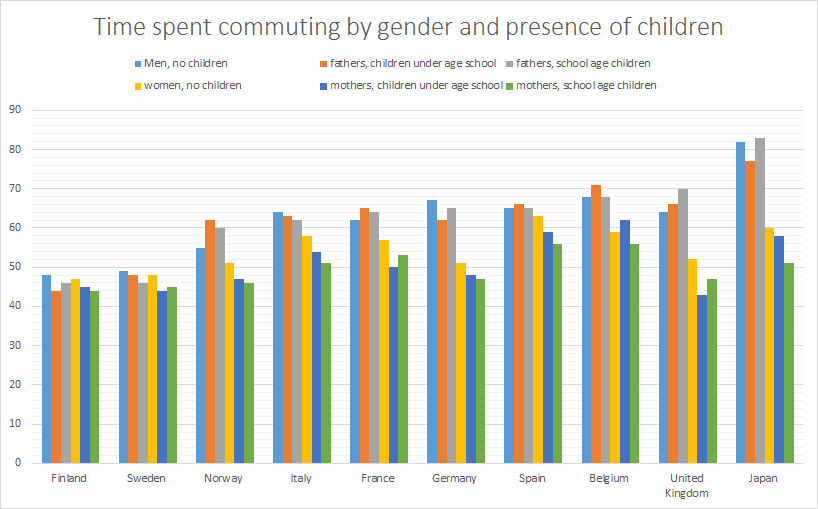
The first three bars in each cluster of bars are for men. in almost all countries mothers with dependent children spend less time commuting than childless women. This might suggest that working mothers have found workplaces closer to home than women without children. The gender gap in commuting where it is present in the country is larger than the gap between mothers and other women in their commuting time.
image

Source: OECD Family Database – OECD, Table LMF2.6.A.

Late switchers alert – when did Obama start supporting gay marriage

Are employers to blame for the gender wage gap?

Image

The rise of power couples in the USA

image

Image

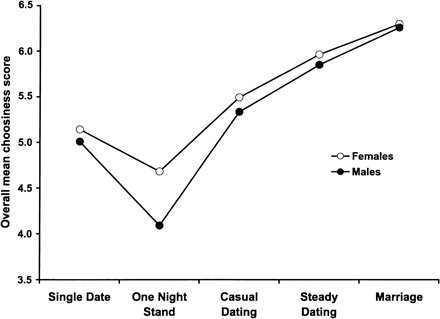
I’d do anything for love (but I won’t do that)

Image

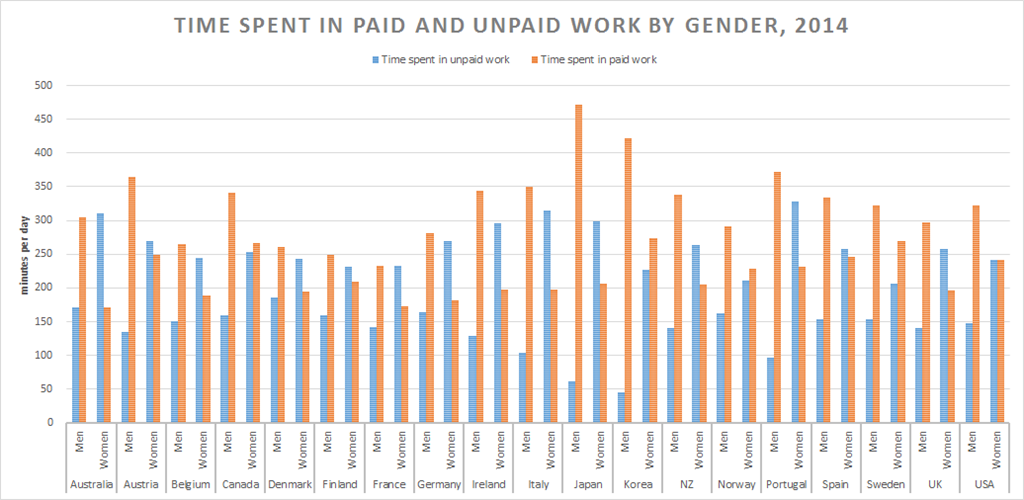
Time spent in paid and unpaid work across the OECD by gender

image

Data extracted on 28 Jul 2016 05:17 UTC (GMT) from OECD.Stat via OECD Employment Outlook 2016.

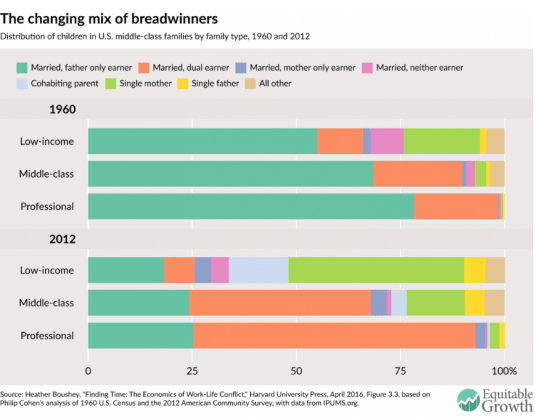
The changing face of breadwinners in the USA, 1960 and 2012

Image

Trailer for ‘Loving’ — true story of an interracial marriage that caused them to be sentenced to prison in Virginia in 1958

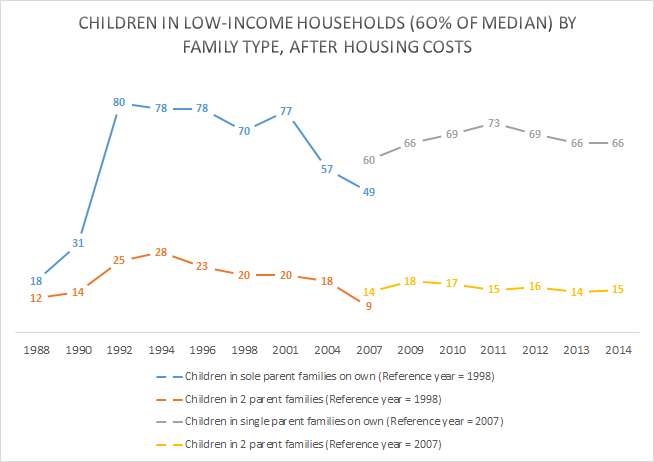
Child poverty in single parent and two-parent households in New Zealand

Looks like the greed of the top 1% was targeted exclusively as single parents since the 1980s. Child poverty in two-parent families has not risen much at all. These households often have jobs and will presumably be under the jackboot of neoliberalism stripping away their bargaining power through the decimation of unions and the introduction of the Employment Contracts Act. Despite these horrors, family poverty did not increase much if there are two parents in the house.
image

Source: Bryan Perry, Household Incomes in New Zealand: trends in indicators of inequality and hardship 1982 to 2014 – Ministry of Social Development, Wellington (August 2015), Table H.4.

Bryan Caplan argues that there is an undeserving poor if they fail to follow the following reasonable steps to avoid poverty and hardship:

  1. Work full-time, even if the best job you can find isn’t fun;
  2. Spend your money on food and shelter before cigarettes and cable TV; and
  3. Use contraception if you can’t afford a child.
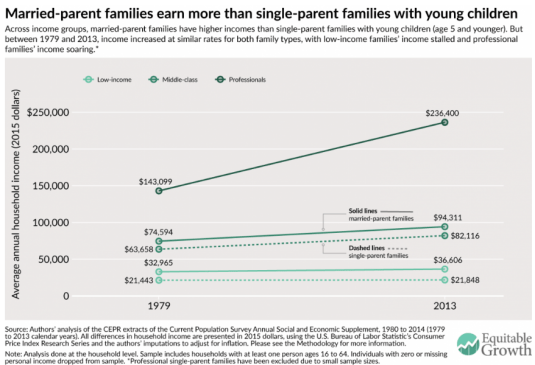
The rise and rise of power couples in the USA

.@nzteu is right, student loans entrench inequality

Those of European ethnicity had a median net worth of $114,000, compared with $23,000 for Māori , $12,000 for Pasifika and $33,000 for Asians according to the latest Statistics New Zealand data just released.

The Tertiary Education Union made great play about how much of the low net worth of young people and others is due to student loans

Young people (aged 15–24) had the lowest individual median net worth of any age group – just $1,000. The most common debt for young people is education loans.

The union then goes on to say that

Median education loan liabilities are only one-tenth of Pākehā people’s median assets, but they are a quarter of Māori people’s assets and over a third of Pacific people’s assets (table 7.01).

The data shows that the households with the smallest median net worth have the largest median education loans (table 2.02). These loans make up nearly a quarter of their total debt (table 2.03).

Over a third of households within the poorest quintile of net worth have education loans, whereas less than a tenth of households in the wealthiest quintile have education debt (table 2.04).

In a nutshell, not enough people are going to university because of the prospect of repaying student loans and more would go if it were cheaper and that would reducing inequality. The explosion in tertiary educational attendance over the last generation, an increase of about 150% for the adult population aged 25 to 64 was not good enough to reduce inequality.

Free tuition at University is a hand-out to those already had a good start in life. It will be paid for by those who will never go because they do not have an above average IQ.

Low-cost student loans were supposed to be away to reduce inequality. Instead, they give a flying start to those of already above-average talents. If social justice is to mean anything, it does not involve giving freebies to those who already have a head start in life.

image

The average student loan debt is about $14,000 while the lifetime earnings premium from university education is about $1/2 million in New Zealand.

image

Source: Statistics New Zealand, Household net worth statistics: Year ended 30 June 2015.

Lowering university tuition fees and easing the terms of student loans simply means that those who do well at university will not have to pay back as much to the government. People who succeed at university already have above average IQs so they already had a good head start in life.

Charles Murray points out that succeeded at college requires an IQ of at least 115 but 84% of the population don’t have this:

Historically, an IQ of 115 or higher was deemed to make someone “prime college material.” That range comprises about 16 per cent of the population. Since 28 per cent of all adults have BAs, the IQ required to get a degree these days is obviously a lot lower than 115.

Cheaper higher education does not help the not so smart secure a qualification they lack the innate talent to earn with decent marks and increases the chance of smart men and women marrying. This increases the inequality between power couples and the rest.

Generation Unbound – The drift into parenthood without marriage

Over half of all births to young adults in the United States now occur outside of marriage, and many are unplanned. The result is increased poverty and inequality for children. The left argues for more social support for unmarried parents; the right argues for a return to traditional marriage. In Generation Unbound, Isabel V. Sawhill offers a third approach: change “drifters” into “planners.”

Source: Generation Unbound | Brookings Institution

Dara Ó Briain – A Catholic & Protestant Mixed Marriage

HT: Donal McChaffery 

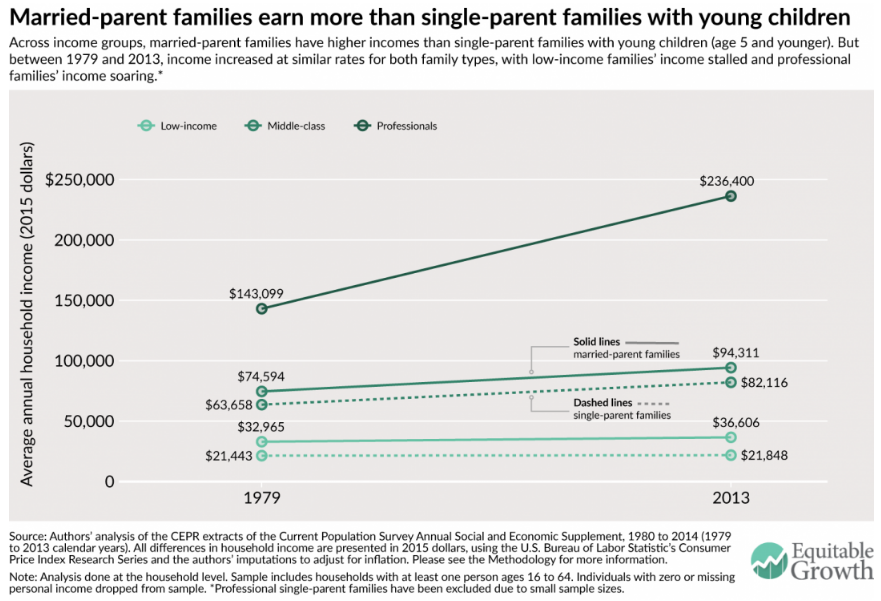
There is no longer one dominant family form

image

Previous Older Entries Next Newer Entries

Thoughts from the North

Celebrating humanity's flourishing through the spread of capitalism and the rule of law

Fardels Bear

A History of the Alt-Right

Vincent Geloso

Econ Prof at George Mason University, Economic Historian, Québécois

Bassett, Brash & Hide

Celebrating humanity's flourishing through the spread of capitalism and the rule of law

Truth on the Market

Scholarly commentary on law, economics, and more

The Undercover Historian

Beatrice Cherrier's blog

Matua Kahurangi

Celebrating humanity's flourishing through the spread of capitalism and the rule of law

Temple of Sociology

Celebrating humanity's flourishing through the spread of capitalism and the rule of law

Velvet Glove, Iron Fist

Celebrating humanity's flourishing through the spread of capitalism and the rule of law

Why Evolution Is True

Why Evolution is True is a blog written by Jerry Coyne, centered on evolution and biology but also dealing with diverse topics like politics, culture, and cats.

NoTricksZone

Celebrating humanity's flourishing through the spread of capitalism and the rule of law

Homepaddock

A rural perspective with a blue tint by Ele Ludemann

Kiwiblog

DPF's Kiwiblog - Fomenting Happy Mischief since 2003

The Dangerous Economist

Celebrating humanity's flourishing through the spread of capitalism and the rule of law

Watts Up With That?

The world's most viewed site on global warming and climate change

The Logical Place

Tim Harding's writings on rationality, informal logic and skepticism

Doc's Books

A window into Doc Freiberger's library

The Risk-Monger

Let's examine hard decisions!

Uneasy Money

Commentary on monetary policy in the spirit of R. G. Hawtrey

Barrie Saunders

Thoughts on public policy and the media

Liberty Scott

Celebrating humanity's flourishing through the spread of capitalism and the rule of law

Point of Order

Politics and the economy

James Bowden's Blog

A blog (primarily) on Canadian and Commonwealth political history and institutions

Science Matters

Reading between the lines, and underneath the hype.

Peter Winsley

Economics, and such stuff as dreams are made on

A Venerable Puzzle

"The British constitution has always been puzzling, and always will be." --Queen Elizabeth II

The Antiplanner

Celebrating humanity's flourishing through the spread of capitalism and the rule of law

Bet On It

Celebrating humanity's flourishing through the spread of capitalism and the rule of law

History of Sorts

WORLD WAR II, MUSIC, HISTORY, HOLOCAUST

Roger Pielke Jr.

Undisciplined scholar, recovering academic

Offsetting Behaviour

Celebrating humanity's flourishing through the spread of capitalism and the rule of law

JONATHAN TURLEY

Res ipsa loquitur - The thing itself speaks

Conversable Economist

In Hume’s spirit, I will attempt to serve as an ambassador from my world of economics, and help in “finding topics of conversation fit for the entertainment of rational creatures.”

The Victorian Commons

Researching the House of Commons, 1832-1868

The History of Parliament

Articles and research from the History of Parliament Trust

Books & Boots

Reflections on books and art

Legal History Miscellany

Posts on the History of Law, Crime, and Justice

Sex, Drugs and Economics

Celebrating humanity's flourishing through the spread of capitalism and the rule of law

European Royal History

Exploring the Monarchs of Europe

Tallbloke's Talkshop

Cutting edge science you can dice with

Marginal REVOLUTION

Small Steps Toward A Much Better World

NOT A LOT OF PEOPLE KNOW THAT

“We do not believe any group of men adequate enough or wise enough to operate without scrutiny or without criticism. We know that the only way to avoid error is to detect it, that the only way to detect it is to be free to inquire. We know that in secrecy error undetected will flourish and subvert”. - J Robert Oppenheimer.

STOP THESE THINGS

The truth about the great wind power fraud - we're not here to debate the wind industry, we're here to destroy it.

Lindsay Mitchell

Celebrating humanity's flourishing through the spread of capitalism and the rule of law

Alt-M

Celebrating humanity's flourishing through the spread of capitalism and the rule of law