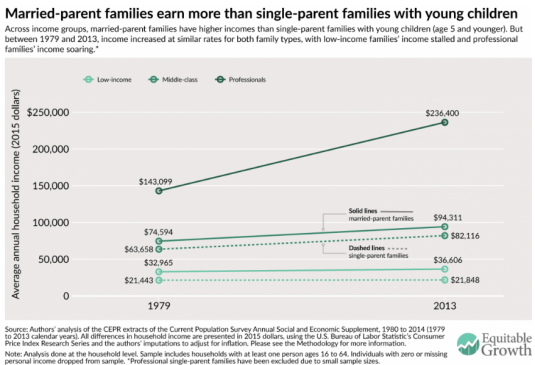
Check out the new issue brief from @HBoushey & @kavyavaghul on family economic security https://t.co/tmiRQtKIdQ pic.twitter.com/cqV687OSsP
— Equitable Growth (@equitablegrowth) June 29, 2016
Celebrating humanity's flourishing through the spread of capitalism and the rule of law
30 Jun 2016 Leave a comment
in economic history, economics of love and marriage, labour economics
29 Jun 2016 Leave a comment
in economics of education, economics of love and marriage, human capital, labour economics, occupational choice, poverty and inequality Tags: power couples, student loans
Those of European ethnicity had a median net worth of $114,000, compared with $23,000 for Māori , $12,000 for Pasifika and $33,000 for Asians according to the latest Statistics New Zealand data just released.
The Tertiary Education Union made great play about how much of the low net worth of young people and others is due to student loans
Young people (aged 15–24) had the lowest individual median net worth of any age group – just $1,000. The most common debt for young people is education loans.
The union then goes on to say that
Median education loan liabilities are only one-tenth of Pākehā people’s median assets, but they are a quarter of Māori people’s assets and over a third of Pacific people’s assets (table 7.01).
The data shows that the households with the smallest median net worth have the largest median education loans (table 2.02). These loans make up nearly a quarter of their total debt (table 2.03).
Over a third of households within the poorest quintile of net worth have education loans, whereas less than a tenth of households in the wealthiest quintile have education debt (table 2.04).
In a nutshell, not enough people are going to university because of the prospect of repaying student loans and more would go if it were cheaper and that would reducing inequality. The explosion in tertiary educational attendance over the last generation, an increase of about 150% for the adult population aged 25 to 64 was not good enough to reduce inequality.
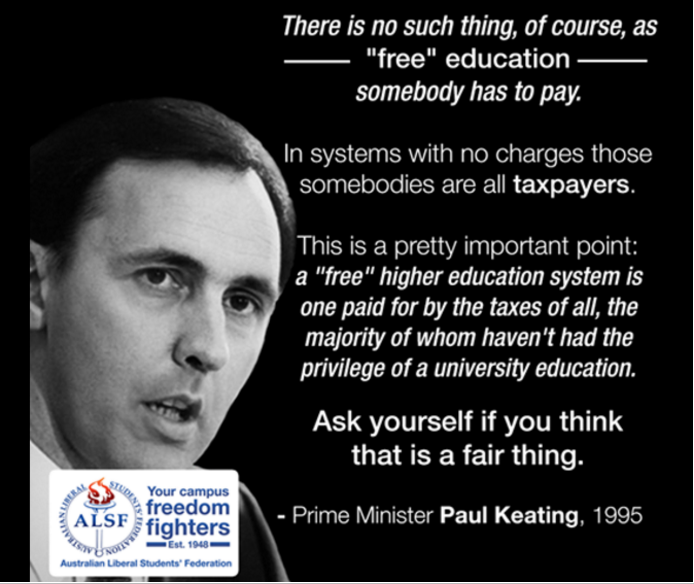
Free tuition at University is a hand-out to those already had a good start in life. It will be paid for by those who will never go because they do not have an above average IQ.
How much more will you earn by going to university? It depends hugely on which country you're from http://t.co/7RMnUTM8nj—
paulkirby (@paul1kirby) September 11, 2015
Low-cost student loans were supposed to be away to reduce inequality. Instead, they give a flying start to those of already above-average talents. If social justice is to mean anything, it does not involve giving freebies to those who already have a head start in life.
The average student loan debt is about $14,000 while the lifetime earnings premium from university education is about $1/2 million in New Zealand.
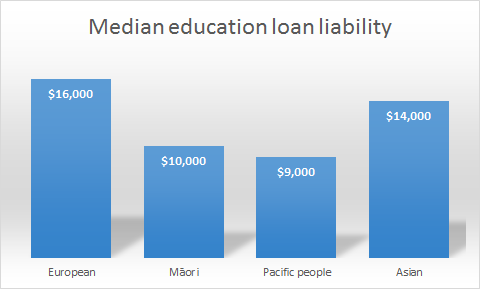
Source: Statistics New Zealand, Household net worth statistics: Year ended 30 June 2015.
Lowering university tuition fees and easing the terms of student loans simply means that those who do well at university will not have to pay back as much to the government. People who succeed at university already have above average IQs so they already had a good head start in life.
Charles Murray points out that succeeded at college requires an IQ of at least 115 but 84% of the population don’t have this:
Historically, an IQ of 115 or higher was deemed to make someone “prime college material.” That range comprises about 16 per cent of the population. Since 28 per cent of all adults have BAs, the IQ required to get a degree these days is obviously a lot lower than 115.
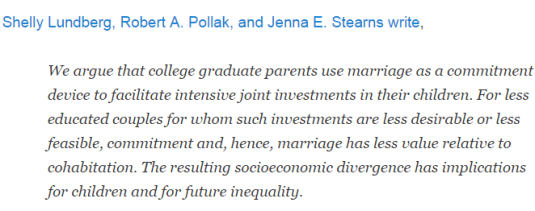
Cheaper higher education does not help the not so smart secure a qualification they lack the innate talent to earn with decent marks and increases the chance of smart men and women marrying. This increases the inequality between power couples and the rest.
26 Jun 2016 Leave a comment
in economics of love and marriage, gender Tags: economics of fertility, marriage and divorce, single parents
Over half of all births to young adults in the United States now occur outside of marriage, and many are unplanned. The result is increased poverty and inequality for children. The left argues for more social support for unmarried parents; the right argues for a return to traditional marriage. In Generation Unbound, Isabel V. Sawhill offers a third approach: change “drifters” into “planners.”
20 Jun 2016 Leave a comment
in economics, economics of love and marriage, economics of religion, property rights Tags: Ireland
HT: Donal McChaffery
19 May 2016 Leave a comment
in economic history, economics of love and marriage Tags: blended families, dating market, marriage and divorce, single mothers, single parents
18 May 2016 Leave a comment
in economic history, economics of love and marriage Tags: dating market, economics of fertility, France, marriage and divorce, World War I
09 May 2016 Leave a comment
in economics of love and marriage, economics of media and culture, law and economics Tags: battle of the sexes
Men hate to shop. It’s a truism that Bud Light ads have hammered into us for decades. Ikea has absorbed it, too, and come up with a novel solution in its Australian stores.
Source: Ikea Debuts Mänland, a Daycare for Men While Women Shop | Adweek
06 May 2016 Leave a comment
03 May 2016 Leave a comment
in economics of love and marriage, economics of media and culture, health economics Tags: dating market
21 Apr 2016 Leave a comment
in economics of love and marriage Tags: dating markets, marriage and divorce, search and matching
10 Apr 2016 Leave a comment
in discrimination, economics of love and marriage, economics of media and culture, gender, labour economics, law and economics, politics - Australia, politics - New Zealand, politics - USA, television Tags: feminism
23 Mar 2016 Leave a comment
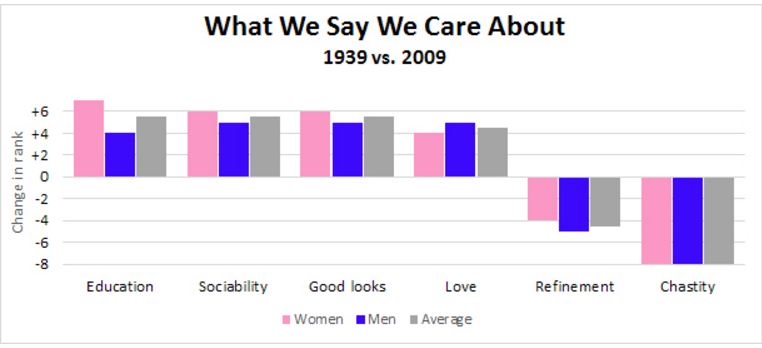
in economic history, economics of love and marriage, labour economics Tags: asymmetric marriage premium, middle class stagnation, pessimism bias, wage stagnation
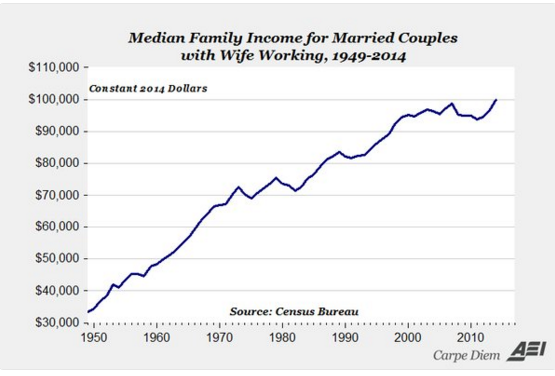
Source: Mark Perry.
Celebrating humanity's flourishing through the spread of capitalism and the rule of law
Celebrating humanity's flourishing through the spread of capitalism and the rule of law
Celebrating humanity's flourishing through the spread of capitalism and the rule of law
Celebrating humanity's flourishing through the spread of capitalism and the rule of law
Celebrating humanity's flourishing through the spread of capitalism and the rule of law
Celebrating humanity's flourishing through the spread of capitalism and the rule of law
Celebrating humanity's flourishing through the spread of capitalism and the rule of law
Celebrating humanity's flourishing through the spread of capitalism and the rule of law
Celebrating humanity's flourishing through the spread of capitalism and the rule of law
Celebrating humanity's flourishing through the spread of capitalism and the rule of law
Celebrating humanity's flourishing through the spread of capitalism and the rule of law
Celebrating humanity's flourishing through the spread of capitalism and the rule of law
A History of the Alt-Right
Econ Prof at George Mason University, Economic Historian, Québécois
Celebrating humanity's flourishing through the spread of capitalism and the rule of law
Scholarly commentary on law, economics, and more
Beatrice Cherrier's blog
Celebrating humanity's flourishing through the spread of capitalism and the rule of law
Celebrating humanity's flourishing through the spread of capitalism and the rule of law
Celebrating humanity's flourishing through the spread of capitalism and the rule of law
Why Evolution is True is a blog written by Jerry Coyne, centered on evolution and biology but also dealing with diverse topics like politics, culture, and cats.
Celebrating humanity's flourishing through the spread of capitalism and the rule of law
A rural perspective with a blue tint by Ele Ludemann
DPF's Kiwiblog - Fomenting Happy Mischief since 2003
Celebrating humanity's flourishing through the spread of capitalism and the rule of law
The world's most viewed site on global warming and climate change
Tim Harding's writings on rationality, informal logic and skepticism
A window into Doc Freiberger's library
Let's examine hard decisions!
Commentary on monetary policy in the spirit of R. G. Hawtrey
Thoughts on public policy and the media
Celebrating humanity's flourishing through the spread of capitalism and the rule of law
Politics and the economy
A blog (primarily) on Canadian and Commonwealth political history and institutions
Reading between the lines, and underneath the hype.
Economics, and such stuff as dreams are made on
"The British constitution has always been puzzling, and always will be." --Queen Elizabeth II
Celebrating humanity's flourishing through the spread of capitalism and the rule of law
Celebrating humanity's flourishing through the spread of capitalism and the rule of law
WORLD WAR II, MUSIC, HISTORY, HOLOCAUST
Undisciplined scholar, recovering academic
Celebrating humanity's flourishing through the spread of capitalism and the rule of law
Res ipsa loquitur - The thing itself speaks
In Hume’s spirit, I will attempt to serve as an ambassador from my world of economics, and help in “finding topics of conversation fit for the entertainment of rational creatures.”
Researching the House of Commons, 1832-1868
Reflections on books and art


Recent Comments