New #FactualFeminist on gender gap in criminal sentencing has >4,000 views — and only 1 thumb down–so far. https://t.co/gVr9KIKagg
— Christina Hoff Sommers (@CHSommers) March 17, 2015
Harvard students take the 1964 Louisiana Literacy Test that black voters had to pass to qualify to vote
16 Mar 2015 1 Comment
An International Look at the Single-Parent Family–where is New Zealand?
16 Mar 2015 1 Comment
in discrimination, economics of love and marriage, gender, labour economics, labour supply, law and economics, occupational choice, welfare reform Tags: economics of fertility, family demographics, labour demographics, single parents

Educational disadvantage and single parenthood
15 Mar 2015 Leave a comment
in economics of education, economics of love and marriage, gender, poverty and inequality, welfare reform Tags: family demographics, single parents


Deirdre McCloskey on corruption and economic development
13 Mar 2015 Leave a comment
in applied price theory, applied welfare economics, comparative institutional analysis, development economics, economic history, economics of crime, growth disasters, growth miracles, law and economics, Public Choice, rentseeking Tags: corruption, Deirdre McCloskey, The Industrial Revolution

Who gains and who loses from employment protection laws over the business cycle?
13 Mar 2015 Leave a comment
in business cycles, economics of regulation, Euro crisis, job search and matching, labour economics, law and economics, macroeconomics, unemployment Tags: employment protection laws, Euroland, Eurosclerosis, labour market regulation

77% more long-term unemployed people than before the crisis – We need them back in work! bit.ly/1JTTzYm #Jobs http://t.co/EFRGclFVms—
OECD Social (@OECD_Social) July 10, 2015

HT: IMF
Police car chase just went by my sleepy street
11 Mar 2015 Leave a comment
in economics of crime, law and economics Tags: police car chases

I don’t fancy his chances of getting away as he was when chased by a motorbike. No other cars were in pursuit. The street past our house is particularly narrow and winding.
A police motorbike will have no trouble keeping up with the fleeing car safely for as long as it takes. The real risk is if the fleeing driver crashes into another car or runs over a pedestrian.
The car that was attempting to escape was a pretty dumpy old car, so I have no idea what he was trying to escape from. Who steals a dumpy old car either of itself or as a getaway car?
The UN Special rapporteur on torture dropped the ball on impartiality
11 Mar 2015 2 Comments
in economics of crime, law and economics, politics - USA Tags: boat people, border protection, illegal immigration, media bias, UN
The leniency of the courts on owners of dogs responsible for vicious attacks on young children
11 Mar 2015 Leave a comment
in economics of crime, politics - New Zealand
The owner of four Staffordshire bull terrier-cross dogs that attacked 7-year-old Sakurako Uehara in the Bay of Plenty in early 2014 has been ordered to pay a $7500 emotional-harm payment. He had earlier avoided a conviction in the Rotorua District Court.

Sakurako chan suffered critical injuries from more than 100 bites to her face and all her limbs.
Her plastic surgeon said that she would probably need reconstruction treatment until she reached adulthood. A fundraiser organised by the Middlemore Foundation to support the family throughout her treatment amassed more than $200,000.
New Zealand law allows criminals to be discharged without conviction if they plead and beg enough to the court. This is just plain wrong. I don’t know of any similar system in other countries.
If you break the law, one of the penalties and it’s a very cheap penalty for society to impose, is the stigma of a criminal conviction. Yes, it means the convicted criminal will have trouble travelling internationally and passing police checks were jobs, but that’s the point. New Zealand already has a spent convictions law that allows convictions to be expunged from the record in most cases after seven years of good behaviour.
If the criminal concerned that showed more regard for his fellow humanity and didn’t break the law in the first place, he wouldn’t have these misfortunes which he visited on himself through his offending. Do the crime, do the time and at a minimum, be convicted.

The New Zealand Parliament increase the penalties for owning a dog that causes serious injury from three months to 3 years in 2003 in response to public outrage over a series of savage maulings of children.
Some years later, a dog mauled a 51-year-old woman to death. The owner, who was her nephew, pleaded guilty and received 18 months in prison.
The court said that the starting point for his sentence was 27 months, but this was reduced by the judge to 18 months because he went on television and offered to plead guilty on the day the offence. He regarded his aunt is his second mother. This sentence was one of the few cases I know where the remorse of the offender was truly genuine and he deserved a significant discount on his sentence.
If you own four big strong dogs, and they savage a small child with life scarring injuries, you should expect to go to prison and for a considerable period of time. Strong penalties align incentives properly to make sure that dogs are well trained and any sign of bad behaviour is dealt with early and, if necessary by an early rehousing to doggie heaven.
Nothing like the prospect of a spell in prison to focus the mind of dog owners otherwise blinded by love for their pet.
Tracy Watkins doesn’t know what a terrorist act is
11 Mar 2015 Leave a comment
in economics of crime, law and economics, politics - New Zealand
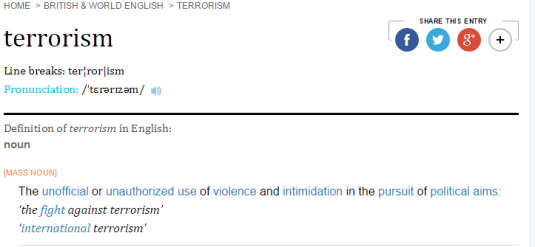
Tracy Watkins really dropped the ball today in the Dominion Post when she prevaricated on whether a threat to contaminate infant formula with 1080 poison unless the Government stops using the poison for pest eradication by March this year was a terrorist act:
There will also be questions over its rush to label it a terrorist act. Police were more circumspect, labelling it a criminal act.
Tracy Watkins is normally an astute observer, but this time she really dropped the ball. It is obvious that a threat of mass poisoning unless the government bends to your will is terrorism. If it isn’t, what is?
Are Moms Less Likely Than Dads To Pay Child Support? | FiveThirtyEight
10 Mar 2015 Leave a comment
in economics of love and marriage, law and economics, poverty and inequality

In 2011, 32 percent of custodial fathers didn’t receive any of the child support that had been awarded to them, compared with 25.1 percent of custodial mothers. That’s a relatively small difference. And when you look at the other extreme (i.e., the percentage of parents who receive the full amount), the difference isn’t statistically significant at all: 43.6 percent of custodial mothers compared with 41.4 percent of fathers.
Then there’s the gray area in between paying nothing and paying everything. The most common amount of child support due to custodial mothers is $4,800 annually, of which $2,500 is typically received (52 percent). For custodial fathers, median annual child support is less — it’s $4,160 — and fathers receive 40 percent of the amount they’re due.
via Are Moms Less Likely Than Dads To Pay Child Support? | FiveThirtyEight.
Security cameras in prison showers and the case for private prisons
06 Mar 2015 Leave a comment
in economics of crime, entrepreneurship, law and economics, organisational economics, politics - New Zealand, politics - USA Tags: do gooders, law and order, prisons
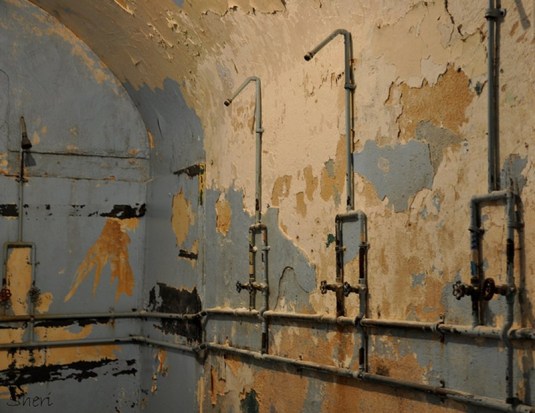
I was listening to a radio show the other day on the introduction of close circuit television into New Zealand prisons that were to be monitored by both male and female guards. This is regarded as an indignity by some because these new close circuit cameras would be in showers and toilets.

The initial commentators on the radio programme immediately said they had watched plenty of TV programs where people were shanked in the showers.
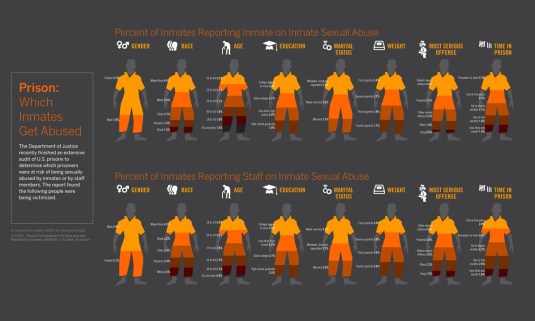
The close circuit television was for the safety of prisoners. Close circuit cameras in all parts of prisons made prisons a safer place and that was that. It was the price of safety, especially for prisoners vulnerable to intimidation and sexual assault.
Greg Newbold, a New Zealand criminologist and an ex-prisoner in itself, then came on air to criticise the introduction of close circuit televisions in showers and other intimate areas such as toilets as an indignity on prisoners. Prisoners have a right to intimate privacy in his view. He said only 12 prisoners had been murdered in the New Zealand prisons since 1979.
Only 12 murders is 12 murders too many. Every one of those murders would have been subject of outrage about the failure of the prison administration from the bleeding hearts brigade.
The most interesting thing that Greg Newbold said on the radio was about how these close circuit television systems first emerged in prisons, initially in the USA.
Close circuit television systems will put throughout prisons initially in private prisons to avoid being sued for wrongful death and injury. The private prisons introduced this rather obvious security measure to reduce liability in the civil courts.
Public prisons are supposedly a safer place for prisoners to be if you listen to the bleeding hearts brigade and the Left over Left. Pubic prisons but never got around introducing what seems to me to be a rather basic security measure in confined areas of prisons. Close circuit television systems would protect both inmates and guards.
The different incentives facing public and hybrid prisons, in this case, exposure to litigation, is an illustration of the superior efficiency of private prisons.

Private prisons did something because it affects the bottom line. One way to reduce liability for deaths and injuries is prison security measures that reduce the number of deaths and injuries in prisons.
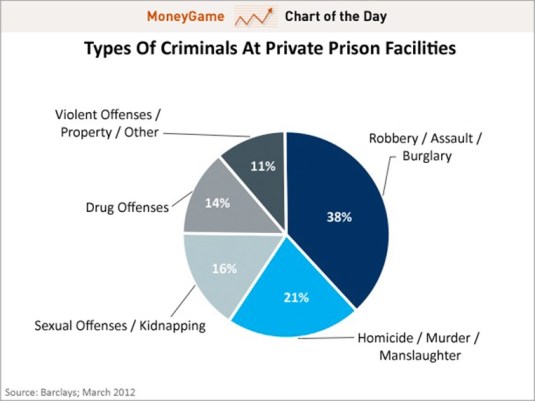
More importantly, private prisons have unforgiving critics in the form of the bleeding hearts brigade and Left over Left. No one on the Left will defend or protect a prison that is private from closure out of a knee-jerk defence of the public sector, and in particular, public-sector unions.
Oddly enough the only prison that the Left over Left want to close in New Zealand is the highest performing prison, Mt Eden, which happens to be privately run.

The main problem with private prisons is contracting over quality where it is difficult to define quality and measure performance against quality standards specified in a contract as Andrew Shleifer explains:
…critics of privatization often argue that private contractors would cut quality in the process of cutting costs because contracts do not adequately guard against this possibility
Privatisation for many government services is simply an extension of the make-or-buy decision. Every firm faces a make-or-buy decision – should the firm buy a production input from outside suppliers or should it make what it needs itself with existing or additional internal resources?
As any industry grows, there is more room for more specialised producers to supply to firms of all sizes at a lower cost than in-house production (Stigler 1951, 1987; Levy 1984). As an example, all with the largest firms intermittently hire legal, accounting and many other professional skills from specialists.
By contracting-out to these more specialised and niche suppliers, firms can enjoy all available economies of scale in production unless its needs are unique or the firm has some special competency in producing the input in-house (Lindsay and Maloney 1996; Shughart 1997; Roberts 2004). Firms in most industries capture all available economies of scale at relatively small sizes after which they have a long region of production where their marginal cost of further increases in production are constant (Stigler 1958; Lucas 1978; Barzel and Kochin 1992; Shughart 1997).
Put simply, an entrepreneur makes what he or she cannot buy at the quality preferred through contracting in market:
The case for in-house provision is generally stronger when non-contractible cost reductions have large deleterious effects on quality, when quality innovations are unimportant, and when corruption in government procurement is a severe problem. In contrast, the case for privatization is stronger when quality reducing cost reductions can be controlled through contract or competition, when quality innovations are important, and when patronage and powerful unions are a severe problem inside the government.
The way in which the market process dealt with chiselling on quality where quality reducing cost reductions where costly to control through contract or competition was the emergence of non-profit institutions. The competitive edge of these non-profit institutions was they had fewer incentives to dilute hard to measure qualities of the product transacted.

Any additional profits from this dilution of quality were not distributed to the owners because the non-profit organisation was either run by a charity or was owned mutually by the customers. The proceeds from cutting corners on quality could not be paid out to the owners in dividends because there were none.
Examples of non-profits competing successfully in the market are obvious, such as life insurance. Until recent decades, most life insurance companies were mutually owned by the policyholders. Life insurance companies were mutually owned as an assurance that no one could run off with the money by paying high dividends to the owners before policyholders died many years after they have paid their premiums.
Most private universities are run as non-profit institutions even when they are set up by private developers with profits in mind. The private university itself is owned by a charity with esteemed persons on the board to assure quality and probity. The active involvement of alumni is encouraged as a further guard of the future quality of the University from which they graduated. The private developers make their profit on the surrounding land as the university grows and prospers. Land grant universities in the USA may have operated this way.
Other examples of the emergence of non-profit institutions to assure quality in a competitive market are private schools, private hospitals, and private day care centres where concerns about the private provision of a quality service arise, with or without justification. Andrew Shleifer again:
…entrepreneurial not-for-profit firms can be more efficient than either the government or the for-profit private suppliers precisely … where soft incentives are desirable, and competitive and reputational mechanisms do not soften the incentives of private suppliers [to dilute quality].
Of course, any proper analysis must compare like with like and compare the dismal record of public prisons date in terms of prisoner and prison guard safety and preventing escapes with any scandals in the private prison systems. Few do that.
 Utopia, you are standing in it!
Recent Comments