Before the 2023 presidential election in Argentina, 108 left-leaning economists released a letter warning that Javier Milei’s “economic proposals…are fraught with risks that make them potentially very harmful for the Argentine economy.” Voters ignored those warnings and elected Milei. And the 108 lefty economists – including class-warfare ideologues such as Thomas Piketty and Gabriel Zucman – wound up with […]
I began this series by reviewing the terrible shape of the Argentinian economy when Javier Milei took over at the end of 2023. I then wrote four columns (here, here, here, and here) on the steps that Milei has taken to restore prosperity. The good news is that his reforms have produced very good results. […]
I’ve been participating in a conference in Argentina this week on “Understanding Argentina’s Transformations Under Milei.” Part I reviewed the horrible economic conditions that plagued Argentina when Javier Milei took office. Part II looked at Milei’s spending restraint and some of the subsequent improvements in fiscal outcomes. Part III examined Milei’s remarkable progress with regards to […]
Part I of this series focused on the horrible economic conditions that led to Javier Milei’s election in late 2023. For Part II, let’s start with this segment from an interview I did last week while in Slovenia. In less than two minutes, I tried to summarize Milei’s achievements. Let’s take a more detailed look, […]
Given my enthusiasm for Javier Milei and his libertarian reforms, I’m excited to be in Buenos Aires for a week-long program on “Understanding Argentina’s Transformations Under Milei.” This means a heavy does of Milei-ism this week. For today’s column, I’m going to share some slides from a presentation by Alejandro Rodriguez on the “Inheritance” Milei […]
When recessions hit, the US Federal Reserve lowers its target interest rate–the “federal funds interest rate.” This interest rate applies to extremely safe borrowing: essentially, to overnight borrowing by large and safe financial institutions. The idea is that by altering this ultra-safe interest rate, other riskier interest rates will also be under pressure to adjust,…
By ChatGPT-5.2 If Iran’s oil exports alone stopped, the world would feel it, but it would probably be a serious price shock rather than an immediate global supply collapse. Iran has recently been exporting roughly 1.1–1.5 million barrels a day, close to its 2025 average of about 1.69 million barrels a day, with China buying more than 80% of those shipped […]
Since I’m currently in Europe as part of the Free Market Road Show, I’m going to share some more data (for other examples, see here, here, here, and here) on why the United States should not become more like Europe. As I noted a few years ago, people in the United States enjoy much higher levels […]
When Milton Friedman pondered what would happen if a helicopter dropped $1,000 from the sky, he likely never imagined that one day a military cargo plane would scatter millions of dollars into one of Bolivia’s largest cities. But while the Nobel Prize-winning economist worried about the inflation that an influx of cash could generate, the impact in…
Is it time to pack our belongings and head to Argentina, where Javier Milei is dramatically improving economic policy and cultural attitudes? I’m joking, but also not joking. The reason I’m not joking is that there’s a very depressing scenario for America’s near-term economic outlook. It involves these six potential developments. Thanks in part to […]
Class-warfare tax policy is always a bad idea. Economists generally don’t like class-warfare policies because it is foolish to impose high marginal tax rates on productive behaviors such as investment and entrepreneurship. Politicians should not like class-warfare policies because of the negative impact on jobs and wages for ordinary people as well as the potential negative […]
I’m a big fan of tax migration. I cheer when productive people escape high-tax states or high-tax nations. And when the geese with the golden eggs fly away, it thwarts the plans of greedy politicians. The latest example of this is the exodus of billionaires – worried about a wealth tax – from California (the […]
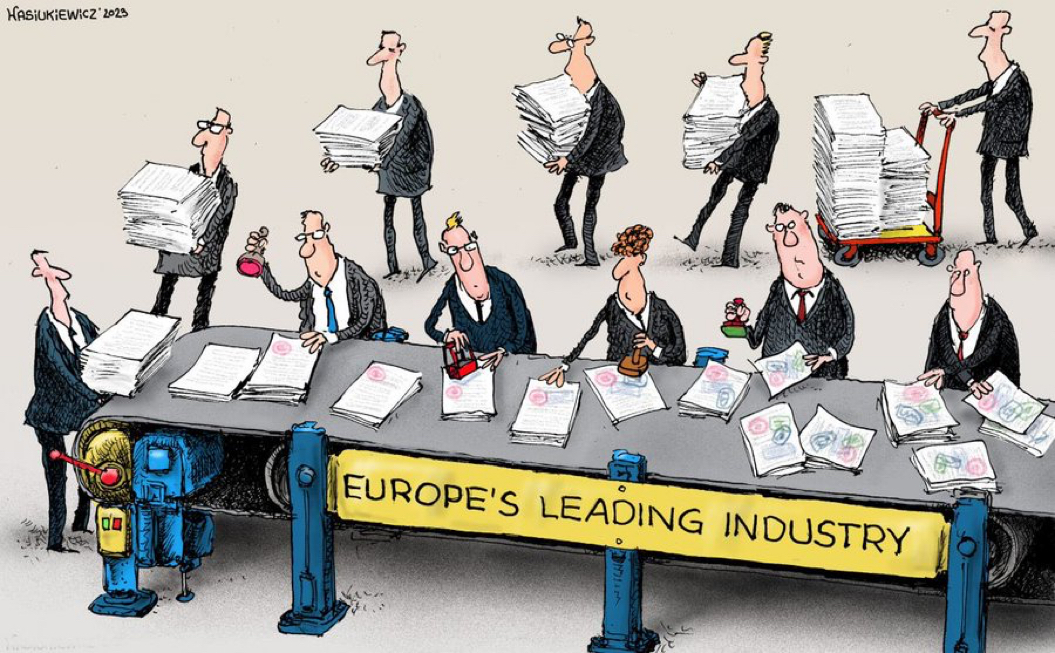
The good news is that Europe has a lot of economic freedom by world standards. Especially Western Europe. The bad news is that economic freedom has been declining in Western Europe. To make matters worse, Europe has a big demographic problem, with a growing number of older people over time who have been promised benefits […]
Below is my column in the California Post and New York Post on the exodus of wealthy taxpayers from the state as Democrats seek to trap them with a retroactive wealth tax. They are engineering a type of reverse Gold Rush as up to a trillion dollars leave the state with a line of U-Hauls […]
Why Evolution is True is a blog written by Jerry Coyne, centered on evolution and biology but also dealing with diverse topics like politics, culture, and cats.
“We do not believe any group of men adequate enough or wise enough to operate without scrutiny or without criticism. We know that the only way to avoid error is to detect it, that the only way to detect it is to be free to inquire. We know that in secrecy error undetected will flourish and subvert”. - J Robert Oppenheimer.



 Utopia, you are standing in it!
Recent Comments