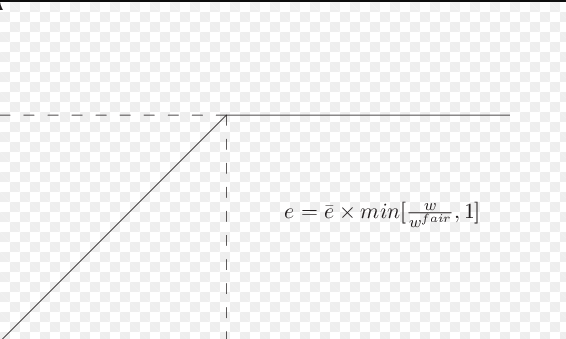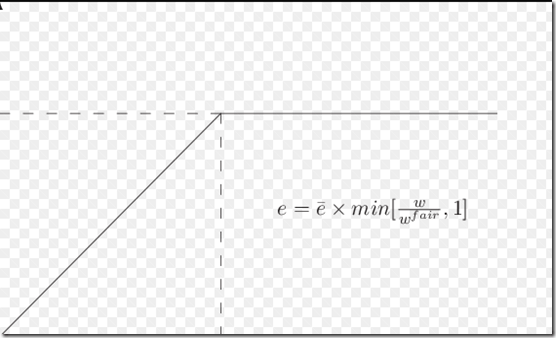
My favourite @FairnessNZ graphic
05 Mar 2017 Leave a comment
in applied price theory, applied welfare economics, economic growth, economic history, economics of regulation, macroeconomics, politics - New Zealand Tags: alternative facts, Employment Contracts Act, labour market reform, neoliberalism, Rogernomics
Source: Low Wage Economy | New Zealand Council of Trade Unions – Te Kauae Kaimahi, with extra annotations by this blogger.
To paint pre-1984 New Zealand, pre-neoliberal New Zealand as a fairly egalitarian paradise, Max Rashbrooke is an example, is to ignore two thirds of the population and the inequalities they suffered:
“New Zealand up until the 1980s was fairly egalitarian, apart from Maori and women, our increasing income gap started in the late 1980s and early 1990s,” says Rashbrooke. “These young club members are the first generation to grow up in a New Zealand really starkly divided by income.”
Racism and patriarchy can sit comfortably with a fairly egalitarian society if you are to believe the vision of the Twitter Left as to their good old days.
John Quiggin refers to the period in Australia known as the Menzies Era as part of his golden age of the mixed economy. The Menzies Era was most of the 23 years of uninterrupted conservative party rule between 1949 and 1972. The actual Menzies Era was the period up to 1966 when Liberal Party Prime Minister Sir Robert Menzies retired
Sectoral shifts in labour demand and the business cycle
01 Mar 2017 Leave a comment
in business cycles, labour economics, macroeconomics Tags: real business cycles, sectoral shifts
Random sector-specific technology shocks
New technologies unfold daily, and consumer tastes change with rising incomes and the arrival of new products. Jobs will open in the expanding industries and disappear in the shrinking sectors. This chapter is about how these sectoral reallocations of labour can cause a recession or prolong existing recessions.
A quarter or more of unemployment rate fluctuations over the business cycle could be due to variations in the rate that labour demand shifts across sectors. These sectoral reallocations in labour demand do not arise from mismatches between entrepreneurial forecasts and actual consumer demand. The higher unemployment rate is not due to a bunching of technological upgrades in a recession. The above average number of sectoral shifts in labour demand is an independent cause of a temporarily higher natural rate of unemployment.
To a significant extent, observed fluctuations in the unemployment rate can be fluctuations in the natural rate of unemployment rather than deviations from that natural rate due, for example, to aggregate demand shocks. There will always be some unemployment. There will be new labour force entrants looking for jobs and workers who are between jobs.
The natural rate of unemployment is a long-run level of unemployment that cannot be altered by monetary policy. The natural rate of unemployment depends on the flexibility of wage contracts and labour market institutions, variations in labour demand and supply in individual markets, demographic change, the mobility of workers, unemployment benefits, the cost of gathering information about vacancies and available labour, labour market regulation and random variations in the rate of reallocation of jobs across industries and regions as technology advances and consumer tastes change.
Sectoral shifts and delayed recoveries in employment
Some years can see relatively uniform growth in labour demand across sectors. Other times can see more dramatic sectoral shifts in labour demand arise out of technological progress and changes in consumer demand.
Instead of significant but steady amounts of unemployment because of labour reallocations across sectors, these job reallocations can vary significantly from one year to the next. The natural rate of unemployment can be higher in these intervals because more job seekers are undertaking the more time-consuming process of searching for jobs in new industries and/or occupations, are relocating or are undertaking retraining.
Sectoral shifts in labour demand has a randomness about them because the size, pace and diffusion of technological advances across firms and industries is uneven (Andolfatto and MacDonald 1998, 2004). The implications of technological progress for jobs has a further randomness because new technologies can displace existing jobs and create new jobs or renovate and update current equipment and employee skills (Mortensen and Pissarides 1998).
As a new technology diffuses, productivity will grow faster in the sectors that are adopting the new technology. During this implementation phase, which is slow, costly and may require considerable learning, there will be reorganisations to capitalise on the impending productivity gains.
New technologies differ in the size of the improvement over existing methods and designs and in the difficulty of adopting the new methods. There will be lower growth in years where new technologies offer comparatively minor or less broadly applicable improvements on existing methods.
Learning consumes resources, and attempts to learn a new technology through innovation or imitation diverts the resources of firms and workers away from production (Andolfatto and MacDonald 1998, 2004). This unevenness in the pace and sectoral diffusion of technological progress will introduce unevenness in the rate of labour reallocation across sectors.
With both growing and shrinking sectors, employment may stagnate or fall for a time because the unemployed are searching for new jobs in different industries and perhaps in new occupations or are retraining. A revival in growth in output and productivity in conjunction with initially poor employment growth is possible and has the attributes of a delayed recovery in employment (Andolfatto and MacDonald 2004). Cross-sector job searches and the redirection of careers is a longer process than job search in the same industries and occupations. Job migration is more time consuming than the more traditional process of layoffs and rehiring by the same employer or in the same industry and occupation.
Labour reallocation and mismatch unemployment
During periods of more intensive or above-average sectoral reallocation of labour demand, a mismatch can arise between the skills and experience of the workers who have exited the shrinking sectors and the immediate requirements of the expanding sectors. More workers than average can be moving into new sectors. Some of these job seekers may not be immediately viable candidates for the available jobs and may exert little downward pressure on wages.
There can be mismatch unemployment because the skills and locations of job seekers can be poorly matched with the locations of vacancies. Some local labour markets will have more workers than jobs. Others will have shortages. Job finding can depend on the rate at which the unemployed can retrain or move to locations with unfilled jobs, the rate at which jobs open in different locations and the rate at which workers vacate jobs in places with ready replacements (Shimer 2007).
A New Zealand candidate for frequent sectoral shifts in labour demand is terms of trade shocks. Grimes (2006) found that half the variance in GDP growth rate over a 45-year period is explained by the level and volatility of the terms of trade. He found that the terms of trade have been high and remarkably stable since the early 1990s, and since the early 1990s, New Zealand has also experienced an unusually long period with high GDP growth and low GDP volatility.
Responding to aggregate versus sectoral shocks
Recessions mix cyclical and structural changes in labour demand. The aggregate demand and sectoral shift explanations have different implications for the role of monetary and fiscal policy in moderating cyclical unemployment fluctuations.
Cyclical unemployment is a reversible response to lulls in aggregate demand. At the start of a recession, there is a general decline in demand, with few industries creating jobs to replace those that are lost. As a recession ends, the unemployed are recalled by old employers or find new jobs in those industries as demand renews. Monetary and fiscal policy can aim to smooth these temporary job losses.
Job losses from structural changes in employment and technology are permanent. The sectoral location of jobs has changed. Workers must switch to new industries, sectors and locations or learn new skills. A role for public policy is to facilitate this process of reallocation to new jobs and retraining.
Much of the higher unemployment during the 1970s stagflation could have been due to a burst in sectoral shifts in labour demand. The 1973 and 1979 oil price shocks are common examples of real shocks that required lasting changes in the sectoral distribution of consumer demand, production and employment. The more energy-intensive industries had to adapt to the suddenly much higher oil prices.
Adding to this 1970s global restructuring in labour demand was the widespread introduction and adaptation of computer technologies. Bessen (2003) and Samaniego (2006) link the 1970s productivity slowdown to the widespread adoption of information technology.
Major economy-wide reorganisations were required because of the incompatibility of substantial accumulations of plant level expertise with many existing technologies with the incoming technologies. A major new technology can initially reduce measured productivity because of plant-level learning costs, the obsolescence of old technologies and skills, the time and resources diverted to develop and introduce the many complimentary innovations that implement a major new technology and the reallocation of labour to new industries.
These technological upheavals of a grand scale can cause a temporary spike in the natural rate of unemployment. Bessen (2003) estimated that, from 1974 to 1983, annual technology adoption costs spiked from 3% to 7% of output, explaining most of the 1970s productivity slowdown. It was decades later before the initially contractionary effects of major new technologies were well understood.
Summary
There is no reason to believe that the distribution of employment across sectors and industries will change at an even pace through time. If there are an above average number of sectoral shifts in labour demand, such as in the 1970s, there can be a significant increase in the natural unemployment rate while workers find new jobs, retrain and relocate. An above average number of sectoral shifts in labour demand during the current recession could delay the recovery. These sectoral shifts are difficult to forecast.
Honest broker The Opportunities Party forgets its own history
23 Feb 2017 Leave a comment
in applied price theory, fiscal policy, politics - New Zealand, Public Choice, public economics

Robert E. Lucas, JR on the industrial revolution
22 Feb 2017 Leave a comment
in applied price theory, development economics, economic growth, economic history, macroeconomics, Robert E. Lucas Tags: industrial revolution, The Great Enrichment
How much will Morgan’s capital tax cost you?
19 Feb 2017 3 Comments
in fiscal policy, politics - New Zealand, public economics
| Average house value January 2017 | Morgan capital tax 6% return |
Morgan capital tax 3.5% return |
|
|
New Zealand |
$631,302 |
$11,363 |
$6,629 |
|
Main Urban Areas |
$754,572 |
$13,582 |
$7,923 |
|
Auckland Area |
$1,047,699 |
$18,859 |
$11,001 |
|
Wellington Area |
$582,322 |
$10,482 |
$6,114 |
|
Far North District |
$389,811 |
$7,017 |
$4,093 |
|
Whangarei District |
$463,319 |
$8,340 |
$4,865 |
|
Kaipara District |
$463,896 |
$8,350 |
$4,871 |
|
Rodney District |
$933,456 |
$16,802 |
$9,801 |
|
Rodney – Hibiscus Coast |
$908,966 |
$16,361 |
$9,544 |
|
Rodney – North |
$961,450 |
$17,306 |
$10,095 |
|
North Shore City |
$1,214,291 |
$21,857 |
$12,750 |
|
North Shore – Coastal |
$1,387,368 |
$24,973 |
$14,567 |
|
North Shore – Onewa |
$971,364 |
$17,485 |
$10,199 |
|
North Shore – North Harbour |
$1,189,924 |
$21,419 |
$12,494 |
|
Waitakere City |
$836,574 |
$15,058 |
$8,784 |
|
Auckland City |
$1,225,096 |
$22,052 |
$12,864 |
|
Auckland City – Central |
$1,065,420 |
$19,178 |
$11,187 |
|
Auckland_City – East |
$1,532,815 |
$27,591 |
$16,095 |
|
Auckland City – South |
$1,107,912 |
$19,942 |
$11,633 |
|
Auckland City – Islands |
$1,036,288 |
$18,653 |
$10,881 |
|
Manukau City |
$901,422 |
$16,226 |
$9,465 |
|
Manukau – East |
$1,158,197 |
$20,848 |
$12,161 |
|
Manukau – Central |
$686,567 |
$12,358 |
$7,209 |
|
Manukau – North West |
$781,110 |
$14,060 |
$8,202 |
|
Papakura District |
$684,172 |
$12,315 |
$7,184 |
|
Franklin District |
$660,557 |
$11,890 |
$6,936 |
|
Thames-Coromandel District |
$645,780 |
$11,624 |
$6,781 |
|
Hauraki District |
$359,520 |
$6,471 |
$3,775 |
|
Waikato District |
$441,525 |
$7,947 |
$4,636 |
|
Matamata-Piako District |
$398,682 |
$7,176 |
$4,186 |
|
Hamilton City |
$531,337 |
$9,564 |
$5,579 |
|
Hamilton – North East |
$678,886 |
$12,220 |
$7,128 |
|
Hamilton – Central & North West |
$489,611 |
$8,813 |
$5,141 |
|
Hamilton – South East |
$482,333 |
$8,682 |
$5,064 |
|
Hamilton – South West |
$466,235 |
$8,392 |
$4,895 |
|
Waipa District |
$490,723 |
$8,833 |
$5,153 |
|
Otorohanga District |
$243,964 |
$4,391 |
$2,562 |
|
South Waikato District |
$188,852 |
$3,399 |
$1,983 |
|
Waitomo District |
$172,405 |
$3,103 |
$1,810 |
|
Taupo District |
$418,130 |
$7,526 |
$4,390 |
|
Western Bay of Plenty District |
$575,089 |
$10,352 |
$6,038 |
|
Tauranga City |
$672,752 |
$12,110 |
$7,064 |
|
Rotorua District |
$379,865 |
$6,838 |
$3,989 |
|
Whakatane District |
$380,691 |
$6,852 |
$3,997 |
|
Kawerau District |
$177,183 |
$3,189 |
$1,860 |
|
Opotiki District |
$248,261 |
$4,469 |
$2,607 |
|
Gisborne District |
$271,632 |
$4,889 |
$2,852 |
|
Wairoa District |
$161,966 |
$2,915 |
$1,701 |
|
Hastings District |
$392,182 |
$7,059 |
$4,118 |
|
Napier City |
$419,099 |
$7,544 |
$4,401 |
|
Central Hawkes Bay District |
$253,787 |
$4,568 |
$2,665 |
|
New Plymouth District |
$415,761 |
$7,484 |
$4,365 |
|
Stratford District |
$234,372 |
$4,219 |
$2,461 |
|
South Taranaki District |
$198,934 |
$3,581 |
$2,089 |
|
Ruapehu District |
$156,971 |
$2,825 |
$1,648 |
|
Whanganui District |
$207,752 |
$3,740 |
$2,181 |
|
Rangitikei District |
$163,111 |
$2,936 |
$1,713 |
|
Manawatu District |
$289,350 |
$5,208 |
$3,038 |
|
Palmerston North City |
$348,581 |
$6,274 |
$3,660 |
|
Tararua District |
$163,877 |
$2,950 |
$1,721 |
|
Horowhenua District |
$258,047 |
$4,645 |
$2,709 |
|
Kapiti Coast District |
$482,723 |
$8,689 |
$5,069 |
|
Porirua City |
$484,164 |
$8,715 |
$5,084 |
|
Upper Hutt City |
$433,538 |
$7,804 |
$4,552 |
|
Lower Hutt City |
$482,632 |
$8,687 |
$5,068 |
|
Wellington City |
$702,081 |
$12,637 |
$7,372 |
|
Wellington – Central & South |
$703,433 |
$12,662 |
$7,386 |
|
Wellington – East |
$753,259 |
$13,559 |
$7,909 |
|
Wellington – North |
$627,791 |
$11,300 |
$6,592 |
|
Wellington – West |
$808,685 |
$14,556 |
$8,491 |
|
Masterton District |
$276,020 |
$4,968 |
$2,898 |
|
Carterton District |
$321,476 |
$5,787 |
$3,375 |
|
South Wairarapa District |
$370,839 |
$6,675 |
$3,894 |
|
Tasman District |
$498,111 |
$8,966 |
$5,230 |
|
Nelson City |
$508,343 |
$9,150 |
$5,338 |
|
Marlborough District |
$423,753 |
$7,628 |
$4,449 |
|
Kaikoura District |
$398,058 |
$7,165 |
$4,180 |
|
Buller District |
$183,573 |
$3,304 |
$1,928 |
|
Grey District |
$211,780 |
$3,812 |
$2,224 |
|
Westland District |
$234,405 |
$4,219 |
$2,461 |
|
Hurunui District |
$378,276 |
$6,809 |
$3,972 |
|
Waimakariri District |
$434,854 |
$7,827 |
$4,566 |
|
Christchurch City |
$497,539 |
$8,956 |
$5,224 |
|
Christchurch – East |
$371,157 |
$6,681 |
$3,897 |
|
Christchurch – Hills |
$667,077 |
$12,007 |
$7,004 |
|
Christchurch – Central & North |
$588,632 |
$10,595 |
$6,181 |
|
Christchurch – Southwest |
$477,247 |
$8,590 |
$5,011 |
|
Christchurch – Banks Peninsula |
$514,403 |
$9,259 |
$5,401 |
|
Selwyn District |
$547,094 |
$9,848 |
$5,744 |
|
Ashburton District |
$348,788 |
$6,278 |
$3,662 |
|
Timaru District |
$335,449 |
$6,038 |
$3,522 |
|
MacKenzie District |
$420,915 |
$7,576 |
$4,420 |
|
Waimate District |
$229,085 |
$4,124 |
$2,405 |
|
Waitaki District |
$260,433 |
$4,688 |
$2,735 |
|
Central Otago District |
$411,111 |
$7,400 |
$4,317 |
|
Queenstown-Lakes District |
$1,032,560 |
$18,586 |
$10,842 |
|
Dunedin City |
$359,055 |
$6,463 |
$3,770 |
|
Dunedin – Central & North |
$372,295 |
$6,701 |
$3,909 |
|
Dunedin – Peninsular & Coastal |
$320,180 |
$5,763 |
$3,362 |
|
Dunedin – South |
$342,080 |
$6,157 |
$3,592 |
|
Dunedin – Taieri |
$375,669 |
$6,762 |
$3,945 |
|
Clutha District |
$190,208 |
$3,424 |
$1,997 |
|
Southland District |
$236,549 |
$4,258 |
$2,484 |
|
Gore District |
$200,826 |
$3,615 |
$2,109 |
|
Invercargill City |
$239,252 |
$4,307 |
$2,512 |
Liability is 6 percent of your capital equity which is then taxed at 30%. The return is assumed to be equal to the long-term bond rate for the last 10 years. That was 6% when Morgan wrote his book in 2011; that average long-term rate is about 3% now. I used his 2011 assumptions.
Just how big is Gareth Morgan’s great big new tax?
19 Feb 2017 Leave a comment
in fiscal policy, politics - New Zealand
Morgan wants to raise an additional $13 billion in taxes, $8 billion from a capital tax and $5 billion from a 30% flat rate tax for a universal basic income of $11,000 per adult. $13 billion is 6.5% of the GDP of $197 billion in 2011. That is his latest numbers. A huge tax increase just after a global financial crisis is not the wisest fiscal policy.


Recent Comments