US economic growth can be divided into two parts: more hours worked, or more productivity per hour worked. In the past, the US labor force has been rising over time: the US labor force totaled 107 million people in 1980, 142 million in 2000, and was up to 171 million this year. However, after several…
As explained in my four-part series (here, here, here, and here) and in this clip from a recent interview, Javier Milei’s first two years have been amazingly successful. There are two points in the interview that deserve emphasis. First, Javier Milei’s libertarian policies already have been extremely beneficial for the Argentine economy. Inflation has dramatically […]
How we connect economically with the world is critical. Brian Easton writes – The British Labour Government is struggling. Partly it is because they were badly prepared in opposition: the Conservative Government was making such a charlie of itself that Labour expected that it would do better and gave little thought as to how it […]
If you want to know why I’m pessimistic about Europe (particularly compared to the U.S.), this chart is a good example. It shows that many European nations have enormous long-run liabilities for their Social Security systems. It’s an understatement to observe that Spain, Austria, and Italy have very grim fiscal futures. Keep in mind that […]
I have a five-part series (here, here, here, here, and here) explaining that demographic decline will lead to fiscal crisis. The main takeaway is that entitlement programs are a ticking time bomb, and I castigate politicians who want to kick the can down the road (or make a bad situation even worse). This is a global problem, not merely an American problem, as […]
Media have reported that there may be a debate between Nicola Willis and Ruth Richardson over fiscal policy. I thought it would be useful to lay out what I see as the key fiscal problem, and put context around it. Now I’m not unbiased here. Nicola I regard as a long standing friend. We were…
Eric Crampton writes – StatsNZ has put up its year-end accounts for the government, split out across functional areas. Their data goes back to 2009 in the main table; I’m sure earlier data’s available somewhere in Infoshare. But sticking with the Excel sheet they’ve provided, we can lob in June-year population statistics and June quarter […]
In a post last week I included this chart of the latest annual OECD data on labour productivity, expressed in PPP terms. It was grim, in a familiar sort of way. New Zealand’s overall economic performance has long been poor (the halcyon days when New Zealand was in the top 3 in the world relegated […]
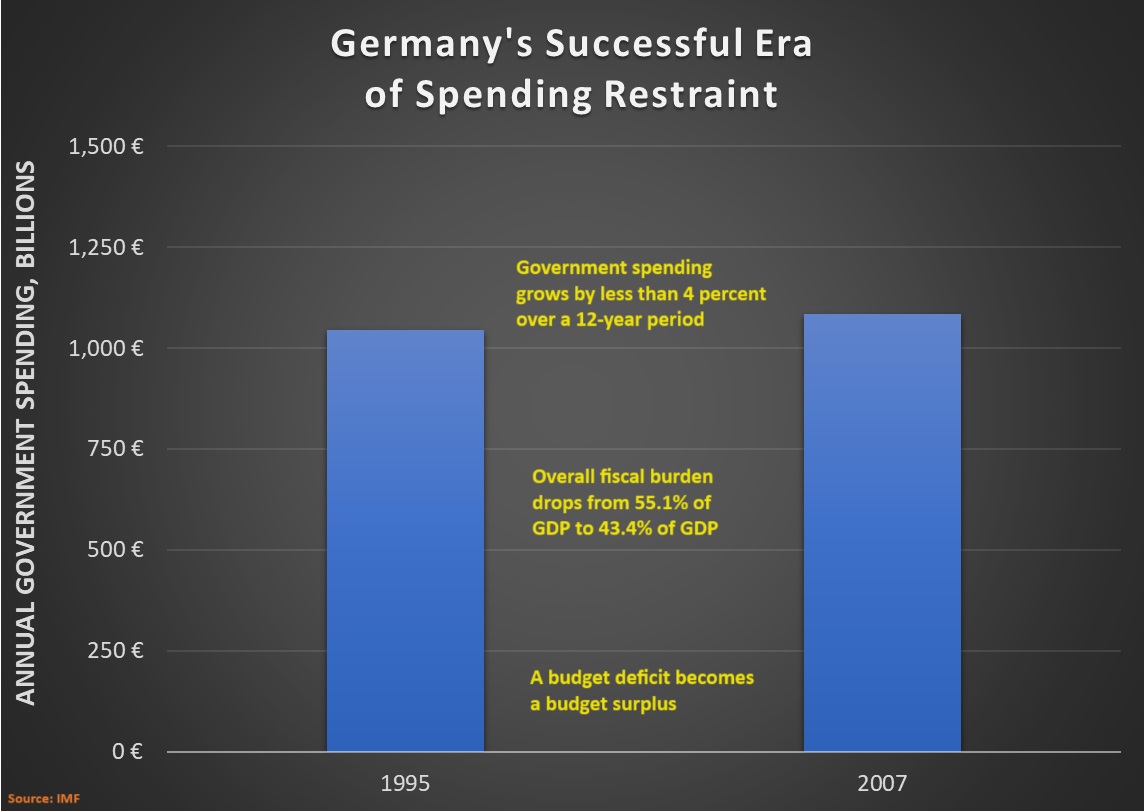
A lot has happened if you look at the past 100 years of German economic policy. Hyperinflation leading to Hitler’s National Socialists taking power. An impressive free-market revival after World War II. A growing welfare state after the imposition of a value-added tax in the 1960s. Some semi-impressive spending restraint starting in the mid-1990s. Very […]
From a forthcoming paper by Thomas Drechsel: This paper combines new data and a narrative approach to identify variation in political pressure on the Federal Reserve. From archival records, I build a data set of personal interactions between U.S. Presidents and Fed officials between 1933 and 2016. Since personal interactions do not necessarily reflect political…
Eric Crampton writes – Damien Grant isn’t normally the one making the case that the government needs to take more in tax. The liquidator and libertarian-minded columnist at the Sunday Star Times more typically wants what libertarians generally want – a government that spends less and that can let each of us keep more of […]
What happened to the US labor market after the Emergency Unemployment Compensation Act expired after the Great Recession?By Tyler Smith of The AEA. “In December 2013, when Congress failed to reauthorize the Emergency Unemployment Compensation Act, many prominent economists predicted a substantial decline in employment and labor force participation. In a paper in the American Economic Journal:…
Congratulations to Switzerland, the “improbable success” that is home to the world’s most sensible voters. The left put a referendum on the ballot to impose a national death tax and the people of Switzerland overwhelmingly voted against the class warfare initiative. Every single canton in every single region voted no. More than 90 percent of […]
Why Evolution is True is a blog written by Jerry Coyne, centered on evolution and biology but also dealing with diverse topics like politics, culture, and cats.
“We do not believe any group of men adequate enough or wise enough to operate without scrutiny or without criticism. We know that the only way to avoid error is to detect it, that the only way to detect it is to be free to inquire. We know that in secrecy error undetected will flourish and subvert”. - J Robert Oppenheimer.




 Utopia, you are standing in it!
Recent Comments