The world’s poor deserve better than another utopia designed for them by the globalist intelligentsia. They deserve cheap energy, open markets, secure property rights, and the freedom to industrialise on terms they choose for themselves. That is what worked in East Asia. It is what will work in South Asia, Africa and Latin America. And…
Piketty’s Eco-Marxist Utopia: Why Degrowth and Global Redistribution Will Trap the Poor in Poverty
Piketty’s Eco-Marxist Utopia: Why Degrowth and Global Redistribution Will Trap the Poor in Poverty
13 Jun 2026 Leave a comment
in applied price theory, development economics, econometerics, economic growth, economic history, economics of climate change, economics of regulation, energy economics, environmental economics, environmentalism, fiscal policy, global warming, human capital, income redistribution, industrial organisation, international economics, labour economics, labour supply, macroeconomics, Public Choice, public economics Tags: climate activists, climate alarmism, regressive left
Why Everything Feels More Expensive (hedonic adaptation)
12 Jun 2026 Leave a comment
in applied price theory, economic growth, economic history, economics of media and culture, macroeconomics
Middle-class Americans have more income than they did 50 years ago, but the squeeze is realBy Roland Fryer. He is a professor of economics at Harvard. Excerpts: “Before indicting the economy, consider what 50 years of growth actually delivered. The car in your driveway is far less likely to kill you than its 1975 counterpart—traffic fatalities…
Why Everything Feels More Expensive (hedonic adaptation)
Superannuation affordability options
09 Jun 2026 Leave a comment
in economic growth, fiscal policy, income redistribution, labour economics, labour supply, macroeconomics, politics - New Zealand, Public Choice, public economics Tags: ageing society, economics of immigration, population bust
Lyric Waiwiri-Smith at The Spinoff asked me what I thought the options might be for dealing with rising superannuation costs. Her story’s here, along with comment from Max Rashbrooke and Shamubeel Eaqub. My most-preferred option is ongoing increases in immigration rates, coupled with shifting to CPI-indexation of super benefits and indexing the age of eligibility to healthy…
Superannuation affordability options
Absurdity Alert: Writing About Germany’s Economic Decline Without Mentioning Green Energy Policies
02 Jun 2026 Leave a comment
in applied price theory, development economics, economic growth, economic history, economics of climate change, energy economics, environmental economics, environmentalism, global warming, income redistribution, industrial organisation, labour economics, macroeconomics, Public Choice, rentseeking Tags: Argentina, Germany

I was astounded in 2020 when I read an article in the New York Times about the economic catastrophe in Venezuela and there was not a single mention of socialism. And I was even more astounded in 2024 when the NYT published another article about Venezuela’s economic misery and once again didn’t mention socialism. Today’s […]
Absurdity Alert: Writing About Germany’s Economic Decline Without Mentioning Green Energy Policies
SEZs as policy trial areas
29 May 2026 1 Comment
in applied price theory, comparative institutional analysis, constitutional political economy, economic growth, economics of regulation, industrial organisation, law and economics, macroeconomics, property rights
A decade ago, I coauthored a report looking at how greater localism and subsidiarity could be achieved in a very centralised country where local councils have variable capabilities. We settled on policy trial areas. The basic gist was as follows. First, a community would pitch a policy trial area – a special economic zone – with different policy…
SEZs as policy trial areas
Europe’s War on Wealth
29 May 2026 Leave a comment
in applied price theory, economic growth, economic history, fiscal policy, income redistribution, industrial organisation, labour economics, labour supply, macroeconomics, occupational choice, P.T. Bauer, poverty and inequality, Public Choice, public economics Tags: European Union

Given the relative economic weakness that plagues most European nations (documented here, here, here, here, and here), a top priority for policy makers should be to improve incentives for wealth creation. But that assumes politicians care about the prosperity of citizens. Based on a new report from the European Commission, the answer is no. Instead of […]
Europe’s War on Wealth
On Private Money
28 May 2026 Leave a comment
in applied price theory, economic history, financial economics, history of economic thought, macroeconomics, monetary economics
TweetHere’s a letter to the Wall Street Journal. Editor: Greg Ip’s argument that cryptocurrencies, being privately issued, will fail as money relies heavily on his historical claim that privately issued bank notes in the 19th-century United States failed as money (“Stablecoins Are Private Money. That’s Why They’re a Risk to the Economy.” May 25). Mr.…
On Private Money
Trade Deficit Illiteracy, Part III
28 May 2026 Leave a comment
in applied price theory, budget deficits, economic growth, fiscal policy, history of economic thought, international economics, macroeconomics, politics - USA
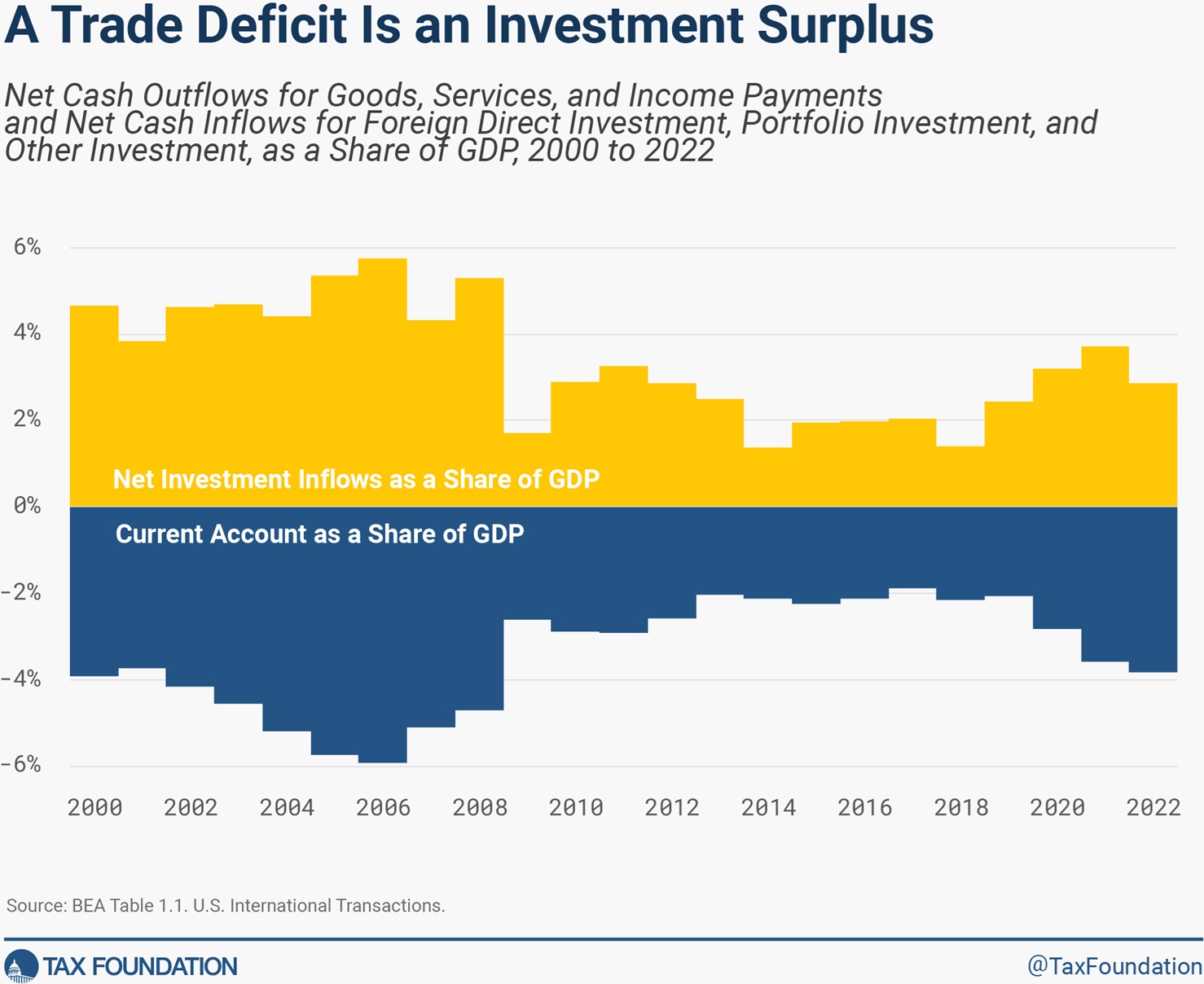
Looking at Part I and Part II, and considering the focus of today’s column, this series should actually be entitled “Trade Deficit Literacy.” That’s because the material I cite explains that a trade deficit is merely the flip side of an investment surplus. And it is good that the United States is a magnet for […]
Trade Deficit Illiteracy, Part III
Edmund Phelps, 1933-2026
28 May 2026 Leave a comment
in business cycles, history of economic thought, labour economics, macroeconomics, monetary economics, unemployment
Economics has recently lost another of the greats, Nobel Prize-winning economist Edmund Phelps, who passed away last week. Phelps was a macroeconomist, and among his many contributions he helped to formalise the concept of the natural rate of unemployment. Phelps won the Nobel Prize in 2006 for “his analysis of intertemporal tradeoffs in macroeconomic policy”.Surprisingly,…
Edmund Phelps, 1933-2026
Blame Washington for the Great Depression, Part III
27 May 2026 Leave a comment
in budget deficits, business cycles, economic growth, economic history, fiscal policy, great depression, history of economic thought, macroeconomics
To follow up on Part I and Part II in this series, let’s start with this Stossel video featuring Professor Don Boudreaux of George Mason University. The message is simple and accurate. Starting nearly 100 years ago, we got terrible statist policy from Herbert Hoover, followed by terrible statist policy from Franklin Roosevelt. No wonder […]
Blame Washington for the Great Depression, Part III
Schumpeter comes to Wellington
27 May 2026 Leave a comment
in economic growth, economic history, economics of bureaucracy, macroeconomics, politics - New Zealand, Public Choice

(And what we can learn from the Luddites) In 1987 Telecom New Zealand employed about 25,000 people. By 1997 it employed under 8,000. A single corporation shed 17,000 jobs in a decade, in a country of 3.3 million. The cost of Telecom’s long-distance calls fell by 60 per cent between 1987 and 1992. The decade that followed […]
Schumpeter comes to Wellington
The corporate tax rate really matters
26 May 2026 Leave a comment
in applied price theory, econometerics, economic growth, economic history, entrepreneurship, fiscal policy, macroeconomics Tags: taxation and entrepreneurship, taxation and investment
Three findings emerge. First, improvements in aggregate tax competitiveness are positively and significantly associated with real GDP per capita growth, robust to a wide range of controls. Second, this aggregate effect is driven entirely by the corporate tax pillar; no other component displays a significant growth effect. Third, the corporate tax effect materializes contemporaneously and…
The corporate tax rate really matters
Are Living Standards Higher in France or Mississippi?
25 May 2026 Leave a comment
in applied price theory, economic growth, economic history, income redistribution, labour economics, macroeconomics, poverty and inequality, Public Choice Tags: France

Earlier this month, in Part V of my series on the U.S. vs. Europe (previous versions available here, here, here, and here), I shared a chart showing the OECD calculations of “Actual Individual Consumption.” The AIC numbers are designed to give people an apples-to-apples comparison of living standards. I’m re-sharing the chart today, and I’ve […]
Are Living Standards Higher in France or Mississippi?
Liberal Economists Score an Own Goal Against Bezos
25 May 2026 Leave a comment
in applied price theory, fiscal policy, James Buchanan, labour economics, labour supply, macroeconomics, Public Choice, public economics
Jeff Bezos tweeted: Yes, the United States has the most progressive tax system in the world. The top 1% pay 40% of taxes, the bottom 50% pay 3% of taxes. We can make it even more progressive by zeroing out taxes on the bottom half. It’s a small amount of the total tax revenue but…
Liberal Economists Score an Own Goal Against Bezos
The (Amusingly) Destructive Economics of Wealth Taxation
24 May 2026 Leave a comment
in applied price theory, economic growth, entrepreneurship, fiscal policy, human capital, income redistribution, labour economics, labour supply, macroeconomics, poverty and inequality, Public Choice, public economics Tags: taxation and entrepreneurship, taxation and investment, taxation and labour supply
I’ve shared several columns (here, here, here, here, and here) reviewing scholarly research on the harmful economic impact of wealth taxation. From now on, however, I think I’ll simply share this clever video from the folks at Reason. The video uses humor to make very important points about how a wealth tax would diminish incentives […]
The (Amusingly) Destructive Economics of Wealth Taxation


Recent Comments