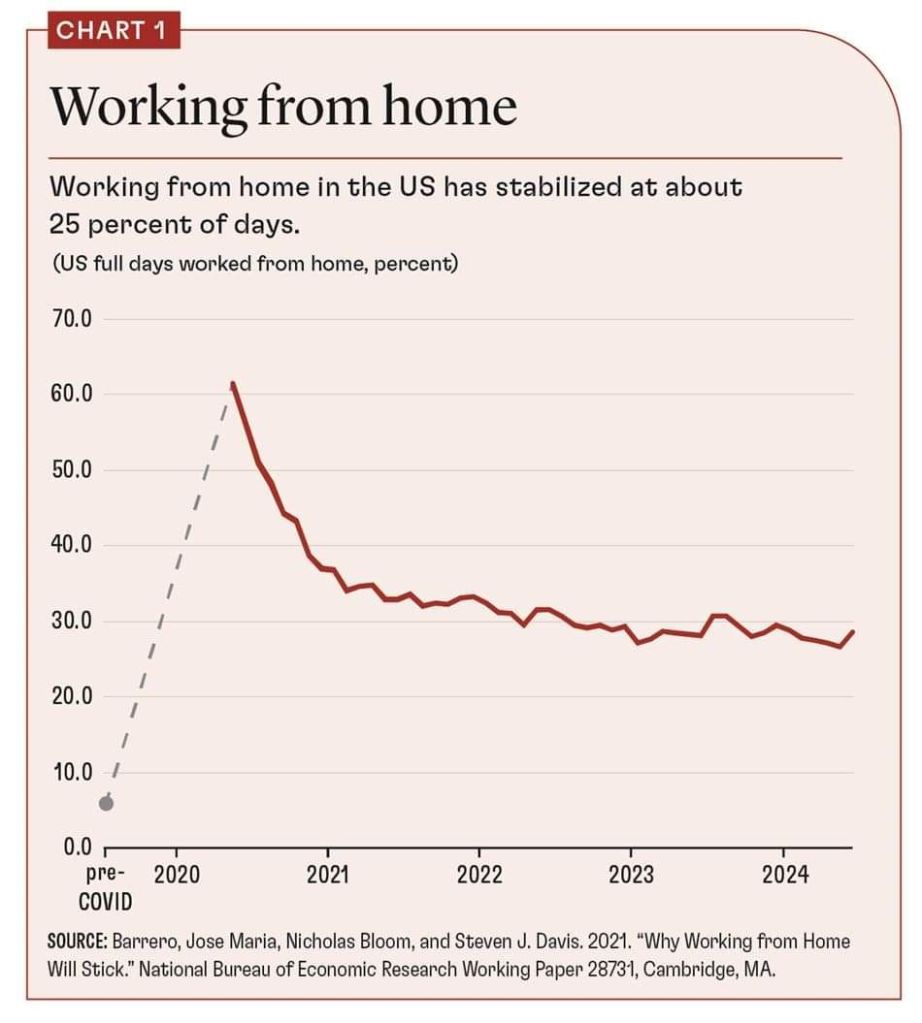
https://www.facebook.com/share/sBU4jrUEAUnL2CYs/?mibextid=xfxF2i
Celebrating humanity's flourishing through the spread of capitalism and the rule of law
28 Sep 2024 Leave a comment
in applied price theory, industrial organisation, labour economics, labour supply, managerial economics, occupational choice, organisational economics, personnel economics Tags: creative destruction, economics of pandemics
09 Sep 2024 Leave a comment
in applied price theory, labour economics, labour supply, managerial economics, organisational economics, personnel economics

https://www.facebook.com/groups/774813624767808/permalink/829599789289191/?ref=share&mibextid=NSMWBT
22 Aug 2024 Leave a comment
in applied price theory, economic history, economics of education, entrepreneurship, human capital, industrial organisation, labour economics, labour supply, liberalism, managerial economics, market efficiency, occupational choice, organisational economics, personnel economics, politics - USA, poverty and inequality, survivor principle Tags: CEO pay, superstar wages

CEO compensation at large firms is high, especially in comparison to average worker wages, sparking debates over income inequality. Critics argue that such pay packages are unfair and disproportionate to actual company performance. Proponents contend that high pay reflects productivity and is necessary to attract scarce top talent to large firms. Let’s go to the […]
Why Top CEOs Earn Big Paychecks
27 Jun 2024 Leave a comment
in managerial economics, organisational economics, personnel economics
30 May 2024 Leave a comment
in economics of bureaucracy, economics of education, managerial economics, organisational economics, politics - New Zealand, Public Choice
Alwyn Poole writes – In New Zealand we have approximately 460 high schools. The gaps between the schools that produce the best results for students and those at the other end of the spectrum are enormous. In terms of the data for their leavers, the top 30 schools have an average of 87% of their […]
The Huge Potential Benefits of Charter Schools
30 May 2024 Leave a comment
in applied welfare economics, comparative institutional analysis, economics of information, managerial economics, organisational economics, personnel economics
23 May 2024 Leave a comment
in economics of education, economics of information, human capital, labour economics, labour supply, managerial economics, market efficiency, occupational choice, organisational economics, personnel economics
22 May 2024 Leave a comment
in economics of bureaucracy, economics of education, managerial economics, organisational economics, personnel economics, politics - New Zealand, Public Choice
We know the old saying, “Never trust a politician”, and the Charter School debate is a good example of it. Charter Schools receive public funding, yet “are exempt from most statutory requirements of traditional public schools, including mandates around .. human capital management .. curriculum & instructional practices, and governance & management structures”. That’s a…
Charter Schools are a worthwhile addition to our school system – but ACT is mis-selling why they are Good and Labour is mis-selling why they are Bad.
21 May 2024 Leave a comment
in applied price theory, comparative institutional analysis, development economics, economics of regulation, entrepreneurship, growth miracles, industrial organisation, managerial economics, organisational economics, public economics, survivor principle Tags: taxation and entrepreneurship, taxation and investment
QUESTION TO CLAUDE 3: The EU and China lag behind the US in economic dynamism, measured by start-up activity, number of unicorns, age of unicorns (younger indicates more rapid innovation), and in productivity growth. Can you document this and tell me why?ANSWER: Here is the data to document the economic dynamism gap between the US,…
Claude 3 on why the US leads China and the EU in economic dynamism
17 May 2024 Leave a comment
in applied price theory, economics of bureaucracy, industrial organisation, law and economics, managerial economics, politics - New Zealand, privatisation, property rights, Public Choice, survivor principle, theory of the firm, transport economics
The Herald reports: KiwiRail’s seemingly endless requests for more money is damning. At one point, KiwiRail assured Robertson when he was the Finance Minister that the worst-case scenario would be an extra $300 million before requesting $1.2 billion a few months later. Not what most people regard as worst case. It’s no wonder Ministry of Transport officials […]
Is it time to take the Interislander away from Kiwirail?
26 Apr 2024 Leave a comment
in applied price theory, entrepreneurship, industrial organisation, law and economics, managerial economics, organisational economics, politics - USA Tags: competition law, creative destruction
From former DOJ Economist Greg Werden: The governments case suggests that its exclusive deals with Apple and Mozilla to be the default search engine on their browsers “allowed Google to maintain its monopoly power [in “general search”] in violation of Section 2 of the Sherman Act.” However, the government’s brief also suggests that Google’s scale is very important,…
US v. Google: do complaints have to be internally consistent?
23 Apr 2024 Leave a comment
in applied price theory, discrimination, econometerics, economics of education, economics of information, human capital, labour economics, labour supply, law and economics, managerial economics, organisational economics, personnel economics, politics - USA, poverty and inequality Tags: gender wage gap, implicit bias, racial discrimination, sex discrimination
Several common measures — like employing a chief diversity officer, offering diversity training or having a diverse board — were not correlated with decreased discrimination in entry-level hiring, the researchers found. But one thing strongly predicted less discrimination: a centralized H.R. operation. The researchers recorded the voice mail messages that the fake applicants received. When a company’s […]
Hiring discrimination sentences to ponder
18 Apr 2024 Leave a comment
in economics of crime, economics of information, economics of media and culture, labour economics, labour supply, law and economics, managerial economics, organisational economics, personnel economics Tags: agency costs, asymmetric information, moral hazard, screening
15 Apr 2024 Leave a comment
in economics of bureaucracy, economics of media and culture, industrial organisation, managerial economics, market efficiency, organisational economics, personnel economics, politics - New Zealand, privatisation, Public Choice, public economics, survivor principle Tags: media bias
Hosking went after Radio New Zealand this morning and it was bad.The Mike Hosking Breakfast, 0600 till 0900 has three producer/support staff, Radio NZ Morning report has 16 production staff to cover the same five day time slot, yet the state run highly subsidised show falls way behind in ratings.. That 16 figure for production […]
No Knife But A Bloodletting Nevertheless.
12 Apr 2024 Leave a comment
in managerial economics, organisational economics, politics - New Zealand, transport economics, urban economics
This is so scathing. The Auckland Light Rail fiasco: What a gigantic waste of money it all was.
A scathing report on Auckland Light Rail
Celebrating humanity's flourishing through the spread of capitalism and the rule of law
Scholarly commentary on law, economics, and more
Beatrice Cherrier's blog
Celebrating humanity's flourishing through the spread of capitalism and the rule of law
Celebrating humanity's flourishing through the spread of capitalism and the rule of law
Celebrating humanity's flourishing through the spread of capitalism and the rule of law
Why Evolution is True is a blog written by Jerry Coyne, centered on evolution and biology but also dealing with diverse topics like politics, culture, and cats.
Celebrating humanity's flourishing through the spread of capitalism and the rule of law
Celebrating humanity's flourishing through the spread of capitalism and the rule of law
A rural perspective with a blue tint by Ele Ludemann
DPF's Kiwiblog - Fomenting Happy Mischief since 2003
Celebrating humanity's flourishing through the spread of capitalism and the rule of law
The world's most viewed site on global warming and climate change
Tim Harding's writings on rationality, informal logic and skepticism
A window into Doc Freiberger's library
Let's examine hard decisions!
Commentary on monetary policy in the spirit of R. G. Hawtrey
Thoughts on public policy and the media
Celebrating humanity's flourishing through the spread of capitalism and the rule of law
Politics and the economy
A blog (primarily) on Canadian and Commonwealth political history and institutions
Reading between the lines, and underneath the hype.
Economics, and such stuff as dreams are made on
"The British constitution has always been puzzling, and always will be." --Queen Elizabeth II
Celebrating humanity's flourishing through the spread of capitalism and the rule of law
Celebrating humanity's flourishing through the spread of capitalism and the rule of law
WORLD WAR II, MUSIC, HISTORY, HOLOCAUST
Undisciplined scholar, recovering academic
Celebrating humanity's flourishing through the spread of capitalism and the rule of law
Res ipsa loquitur - The thing itself speaks
Celebrating humanity's flourishing through the spread of capitalism and the rule of law
Researching the House of Commons, 1832-1868
Articles and research from the History of Parliament Trust
Reflections on books and art
Posts on the History of Law, Crime, and Justice
Celebrating humanity's flourishing through the spread of capitalism and the rule of law
Exploring the Monarchs of Europe
Cutting edge science you can dice with
Small Steps Toward A Much Better World
“We do not believe any group of men adequate enough or wise enough to operate without scrutiny or without criticism. We know that the only way to avoid error is to detect it, that the only way to detect it is to be free to inquire. We know that in secrecy error undetected will flourish and subvert”. - J Robert Oppenheimer.
The truth about the great wind power fraud - we're not here to debate the wind industry, we're here to destroy it.
Celebrating humanity's flourishing through the spread of capitalism and the rule of law
Celebrating humanity's flourishing through the spread of capitalism and the rule of law
Economics, public policy, monetary policy, financial regulation, with a New Zealand perspective
Celebrating humanity's flourishing through the spread of capitalism and the rule of law
Restraining Government in America and Around the World



 Utopia, you are standing in it!
Recent Comments