Why Amazon Is Gobbling Up Failed Malls
18 May 2019 Leave a comment
in entrepreneurship, industrial organisation, survivor principle, transport economics, urban economics
Thomas Sargent Emergency Economic Summit for Greece: Part 2
18 May 2019 Leave a comment
in applied price theory, budget deficits, business cycles, comparative institutional analysis, constitutional political economy, currency unions, economic growth, economic history, Euro crisis, fiscal policy, global financial crisis (GFC), great recession, income redistribution, law and economics, macroeconomics, monetary economics, politics - USA, property rights, Public Choice, public economics, rentseeking Tags: sovereign defaults, Thomas Sargent
North Korea’s Counterfeiting Operation Funded Its Nuclear Program
18 May 2019 Leave a comment
in development economics, economics of crime, growth disasters, international economic law, International law, law and economics, monetary economics, politics - USA, Public Choice, war and peace Tags: North Korea
Religions should never be prevented by antidiscrimination and hate speech laws from showing their true colors
18 May 2019 Leave a comment

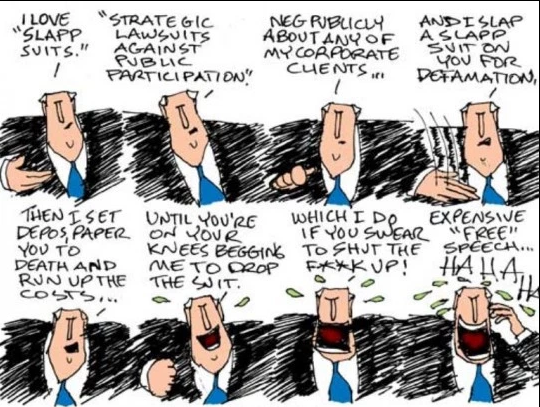
Biggest Threat to the Resistance You’ve Never Heard of: SLAPP and free speech
18 May 2019 Leave a comment
in economics of crime, economics of information, economics of media and culture, economics of regulation, environmental economics, law and economics, politics - USA, property rights, Public Choice, rentseeking Tags: defamation, free speech
Balancing competition and innovation in the drug industry: An evaluation of current proposals.
18 May 2019 Leave a comment
On World Toilet Day, the focus is on gender equality, dignity and greater access to education and jobs
18 May 2019 Leave a comment
in development economics, growth disasters, growth miracles, health economics Tags: The Great Escape
Pink taxis hit India’s streets to keep women safe
18 May 2019 Leave a comment
in development economics, economics of crime, entrepreneurship, law and economics, transport economics, urban economics
The Wrong Kind of AI? Artificial Intelligence and the Future of Labor Demand
18 May 2019 Leave a comment

| By: | Acemoglu, Daron (MIT); Restrepo, Pascual (Boston University) |
| Abstract: | Artificial Intelligence is set to influence every aspect of our lives, not least the way production is organized. AI, as a technology platform, can automate tasks previously performed by labor or create new tasks and activities in which humans can be productively employed. Recent technological change has been biased towards automation, with insufficient focus on creating new tasks where labor can be productively employed. The consequences of this choice have been stagnating labor demand, declining labor share in national income, rising inequality and lower productivity growth. The current tendency is to develop AI in the direction of further automation, but this might mean missing out on the promise of the “right” kind of AI with better economic and social outcomes. |
| Keywords: | automation, artificial intelligence, jobs, inequality, innovation, labor demand, productivity, tasks, technology, wages |
| JEL: | J23 J24 |
| URL: | http://d.repec.org/n?u=RePEc:iza:izadps:dp12292&r=ltv |
A roadblock to a green economy
17 May 2019 Leave a comment
in energy economics, environmental economics
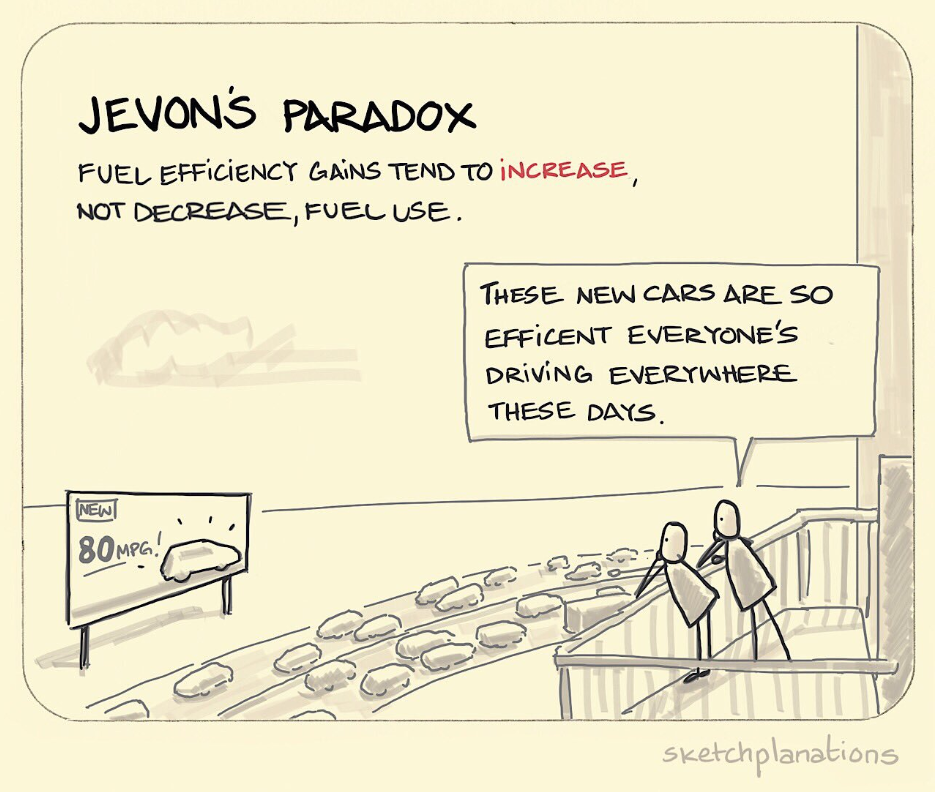
Back in 1865 a chap called William Stanley Jevons noted that while there had been a number of improvements in coal… twitter.com/i/web/status/1…—
Sketchplanations (@sketchplanator) December 02, 2018
How is SLAPP any different from the hate speech laws championed by the @NZGreens?
17 May 2019 Leave a comment
in economics of crime, law and economics, liberalism, politics - New Zealand
.@Greens Senator Kerry Nettle was wrong to apologize for causing offence for wearing this t-shirt in 2006
17 May 2019 Leave a comment
in law and economics, politics - Australia, politics - New Zealand Tags: abortion law reform, free speech



Recent Comments