G. Warren Nutter: Freedom in a revolutionary economy (1974)
11 Feb 2019 Leave a comment
in applied price theory, comparative institutional analysis, constitutional political economy, development economics, economic history, Public Choice
How much equity do banks voluntarily choose?
11 Feb 2019 Leave a comment

The Reserve Bank Governor is proposing that banks should have to fund a much larger share of their balance sheet with equity rather than debt. So weak is our system that one unelected person – on this occasion, one without much specialist expertise – can, more less on a whim, compel bank shareholders to either put billions of dollars more into their businesses, or to markedly downsize those businesses (most probably some combination of the two). So long as the Governor jumps through the right procedural hoops, there are no appeals, and there is little formal public accountability. Perhaps political pressure will mount on the Bank? In these circumstances, one can only hope so.
Today I wanted to focus on a couple of strands in the arguments often used by academics and regulators to support the case for higher minimum capital requirements. (Upfront I should say…
View original post 2,432 more words
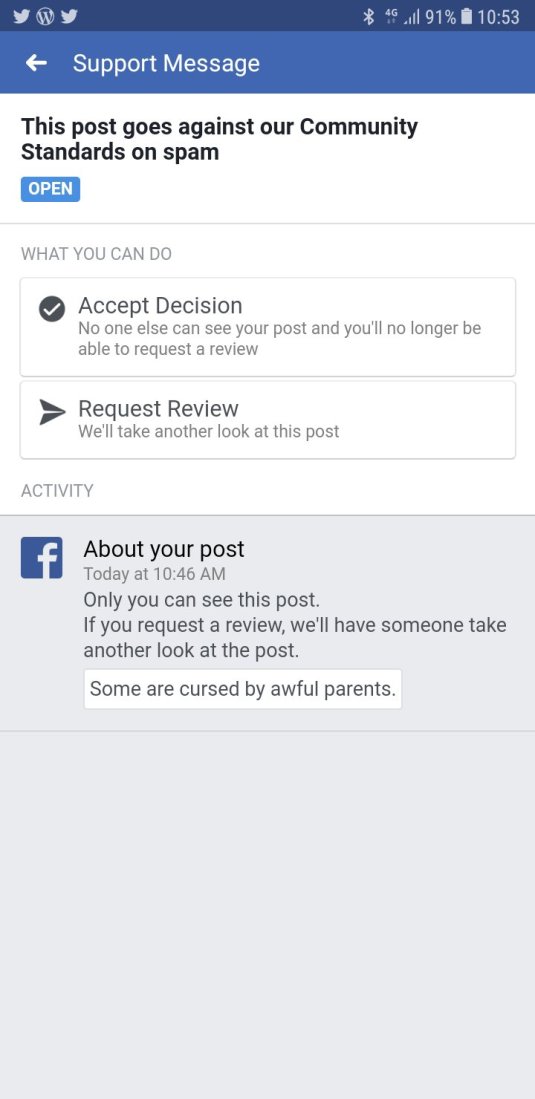
Naughty me for sharing @NZHerald’s ‘Please stop lying’: Meghan’s letter to father revealed on @Facebook with an obvious observation
11 Feb 2019 Leave a comment
in economics of media and culture
Check out this story from the NZ Herald Android App
http://nzh.tw/12202544
Bret Weinstein and Heather Heying on sex, lies, and ideology
11 Feb 2019 Leave a comment

Here we have Bret Weinstein and Heather Heying, a couple who were both biology professors at The Evergreen State College (TESC) but were driven out of that place by Authoritarian Leftists whose actions, among the students, bordered on thuggery. Since then they’ve been academic nomads, but have made several videos and podcasts about their experiences and about biology.
Here both Bret and Heather discuss a number of topics, most prominent the touchy issue of sex and gender. The discussion is good and well worth 26 minutes of your time, as it shows how you can be a progressive without having to distort biology or truckle to Blank Slateist ideologues.
The YouTube notes:
In this conversation with Rebel Wisdom’s David Fuller they explain how their experience at Evergreen has influenced their discussions of sex and gender. Heather and Bret will be appearing at the first ‘Rebel Wisdom Summit’ on May 12…
View original post 885 more words
What Knocked Over Uranus? And Two Other Mysteries
11 Feb 2019 Leave a comment
in economics of media and culture Tags: space
Stalemate in China, Bombs over Finland – WW2 – 024 – February 9 1940
11 Feb 2019 Leave a comment
in defence economics, war and peace Tags: World War II
Caplan/Boettke Debate Austrian Economics 4/13
10 Feb 2019 Leave a comment
in applied price theory, Austrian economics, development economics, economic history, economics of information, economics of regulation, entrepreneurship, F.A. Hayek, growth disasters, history of economic thought, industrial organisation, labour economics, law and economics, Marxist economics, property rights, survivor principle
Caplan-Boettke Debate 3/13
10 Feb 2019 Leave a comment
in Austrian economics, economics of information, industrial organisation, international economics, Public Choice, survivor principle Tags: anti-foreign bias, anti-market bias, free trade
Caplan and Boettke Debate Austrian Economics 2/13
10 Feb 2019 Leave a comment
in Austrian economics, economics of information, entrepreneurship, job search and matching
Caplan and Boettke debate Austrian Economics 1/13
10 Feb 2019 Leave a comment
in applied price theory, Austrian economics, economics of information
Wind Power – More Wind Power, Higher Prices, More Blackouts
10 Feb 2019 1 Comment
in energy economics, environmental economics, global warming, politics - Australia Tags: solar power, wind power

OPERATION PAPERCLIP by Annie Jacobsen
10 Feb 2019 Leave a comment

At the conclusion of her new book, OPERATION PAPERCLIP: THE SECRET INTELLIGENCE PROGRAM THAT NAZI SCIENTISTS BROUGHT TO AMERICA, Annie Jacobsen discusses her battles with American military and intelligence authorities in trying to obtain documents relating to the employ of Nazi scientists by the United States Army and other government agencies following World War II. In her discussion a common theme reaches fruition in 2012 as the Department of Defense finally declassified a 1945 list of Nazi doctors who were sought for “mercy killings and medical murder cases.” On that list were seven Nazi doctors who were employed by the U.S. government even though “U.S. Army intelligence knew all along that these doctors were implicated in murder yet chose to classify the list and hire the doctors.” (437) These doctors were hired as part of Operation Paperclip a postwar program designed to use the technological and medical knowledge of Nazi…
View original post 1,865 more words
A COVERT ACTION: REAGAN, THE CIA, AND THE COLD WAR STRUGGLE IN POLAND by Seth G. Jones
10 Feb 2019 Leave a comment

Today the Polish government is ruled by the Law and Justice Party (abbreviated to PiS). It is a national-conservative, and Christian democratic party, currently the largest in the Polish parliament. In the last two years the party which is extremely nationalistic, has created controversies on several fronts. It is a country where hateful language is pervasive leading to the murder of the mayor of Gdansk, Pawel Adamowicz on January 13 of this year. Last February the government passed a new amendment to the Law of Remembrance making it a crime to refer to Nazi concentration camps as “Polish,” further it threatens legal punishment for anyone who publicly implies Poles’ involvement in Nazi crimes against the Jews. Further, a few days ago on January 27th, Polish far right nationalists gathered at the Auschwitz concentration camp to protest, at the same time as officials and survivors marking the 74th anniversary of the camp’s liberation in…
View original post 1,869 more words


Recent Comments