For all the talk of finally relitigating the underlying climate science, the EPA’s final rule does almost none of that. It does not argue that greenhouse gases fail to qualify as pollutants. It does not litigate model sensitivities, the surface temperature record, attribution methodology, or any of the empirical questions that WUWT contributors and others…
Three Months In: EPA’s Endangerment Finding Repeal Has Quietly Become a Legal Fight, not a Scientific One
Three Months In: EPA’s Endangerment Finding Repeal Has Quietly Become a Legal Fight, not a Scientific One
12 May 2026 Leave a comment
in economics of bureaucracy, economics of climate change, economics of regulation, energy economics, environmental economics, environmentalism, global warming, law and economics, politics - USA, Public Choice
The Great Enrichment
12 May 2026 Leave a comment
in development economics, economic history, growth disasters, growth miracles Tags: The Great Enrichment

Jon Hartley Talks With Phil Gramm…
12 May 2026 Leave a comment
in applied price theory, history of economic thought
Tweet… about economic history and freedom. The post Jon Hartley Talks With Phil Gramm… appeared first on Cafe Hayek.
Jon Hartley Talks With Phil Gramm…
Net Zero Parties Annihilated By Trump Aligned Candidates in British and Australian Elections
11 May 2026 Leave a comment
in economics of climate change, energy economics, environmental economics, environmentalism, global warming, politics - Australia, Public Choice Tags: British politics, net zero
Turns out the public has higher priorities than ensuring their great grandkids enjoy 0.01ºC lower temperatures in 100 years. The post Net Zero Parties Annihilated By Trump Aligned Candidates in British and Australian Elections appeared first on Watts Up With That?.
Net Zero Parties Annihilated By Trump Aligned Candidates in British and Australian Elections
Review of “Mark Twain” by Ron Chernow
11 May 2026 Leave a comment
in economics of education, economics of media and culture
Mark Twain by Ron Chernow 1,174 pages Penguin Press Published: May 13, 2025 Ron Chernow’s latest, and widely-anticipated, biography of “Mark Twain” has just been released. Among his seven previous books are biographies of Alexander Hamilton, Ulysses S. Grant, John D. Rockefeller, Sr., and the Pulitzer Prize-winning biography “Washington: A Life.” Until now, readers enchanted […]
Review of “Mark Twain” by Ron Chernow
Volkswagen Face $1.7 Billion Fine For Missing Emissions Targets
11 May 2026 Leave a comment
in economics of climate change, economics of regulation, energy economics, environmental economics, environmentalism, global warming, transport economics Tags: electric cars, Germany

By Paul Homewood AOL also cover the story:
Volkswagen Face $1.7 Billion Fine For Missing Emissions Targets
Quotation of the Day…
10 May 2026 Leave a comment
in economic history, Thomas Sowell
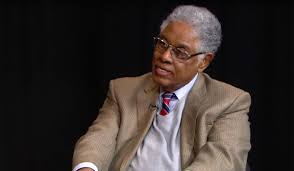
Tweet… is from page 407 of the 2016 second edition of Thomas Sowell’s excellent volume Wealth, Poverty and Politics: Monstrously appalling things done by some peoples to others darken the history of every region on the planet, but descendants of peoples guilty of the worst or most extensive villainies of the past are by no…
Quotation of the Day…
The economics of castles
10 May 2026 Leave a comment
in applied price theory, comparative institutional analysis, defence economics, economic history
When I’m in Britain or Ireland, one of my favourite sightseeing trips is to visit medieval castles. Even the ruined ones are fun to visit. Actually, maybe the ruined ones are more fun to visit, because you get to imagine what they would have looked like in their heyday. Britain and Ireland are full of castles,…
The economics of castles
Bet On It Book Club: For a New Liberty, Chapter 11
10 May 2026 Leave a comment
in applied price theory, history of economic thought, libertarianism, Murray Rothbard, transport economics, urban economics
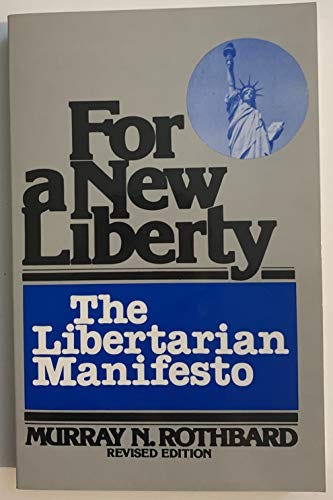
SummaryIn this chapter, Rothbard advocates the abolition of publicly-owned streets and roads:Abolition of the public sector means, of course, that all pieces of land, all land areas, including streets and roads, would be owned privately, by individuals, corporations, cooperatives, or any other voluntary group ings of individuals and capital.He begins by explaining that in a…
Bet On It Book Club: For a New Liberty, Chapter 11
German Instrument of Surrender
08 May 2026 Leave a comment
in defence economics, war and peace Tags: Nazi Germany, World War II

The “German Instrument of Surrender” actually refers to two documents. The first was signed in Reims, France, on May 7, 1945, and the second—a more formal “definitive” version—was signed in Berlin on May 8, 1945, to satisfy the Soviet Union’s demand for a ceremony in the captured German capital. Below is the text of the […]
German Instrument of Surrender
Grow the Pie, Skip the Sermon
08 May 2026 Leave a comment
in Adam Smith, applied price theory, comparative institutional analysis, economic history, health economics, history of economic thought, liberalism, Marxist economics

In a recent Substack essay, “The progress movement needs a better theory of progress,” Brink Lindsey argues that the progress movement has settled for too thin a vision. It focuses on wealth creation and technological advance, he says, when it should adopt a “fuller conception of progress”—one that promotes “spiritual welfare” and thicker accounts of…
Grow the Pie, Skip the Sermon
A Hiccup in a Price War
08 May 2026 Leave a comment
in applied price theory, entrepreneurship, industrial organisation, transport economics
Many antitrust economists are wary of the efficacy of predatory pricing, the strategy of pricing below costs to drive a competitor out of a market. The usual counter-argument is that, for it to work, the inevitable losses this will entail must be recouped after the rival has exited. Recoupment requires higher prices … that can…
A Hiccup in a Price War
The supply-side story behind falling meth prices in New Zealand
08 May 2026 Leave a comment
in applied price theory, economics of crime, health economics, law and economics
Chris Wilkins, Marta Rychert, and Robin van der Sanden (all Massey University) wrote an article in The Conversation last month about the price of methamphetamine:Methamphetamine has become dramatically cheaper over the past seven years, even as authorities report record seizures, according to the latest New Zealand Drug Trends Survey.The annual online survey of over 8,800…
The supply-side story behind falling meth prices in New Zealand
Do Market Reforms Cause Growth?
08 May 2026 Leave a comment
in applied price theory, development economics, econometerics, economic growth, economic history, history of economic thought, labour economics, macroeconomics, unemployment
Do market-oriented reforms cause economic growth? This paper revisits this question using a cross-country panel of reform episodes identified from various changes in well-known economic freedom and structural reform indices. We exploit the timing of reforms using distributed-lag and event-study frameworks that trace the dynamic response of per-capita GDP. We find little evidence of immediate…
Do Market Reforms Cause Growth?



Recent Comments