The Arctic Ocean began warming decades earlier than previously thought, new research shows
28 Nov 2021 Leave a comment
A Peace Treaty That Sparked A Civil War – The Anglo-Irish Treaty I THE GREAT WAR 1921
28 Nov 2021 Leave a comment
in comparative institutional analysis, constitutional political economy, defence economics, economic history, economics of crime, international economics, law and economics, laws of war, Public Choice, war and peace Tags: Ireland, World War I
Look Very So Sweet Big King Mak Monkey Got Best grooming From Young Girl Monkey” on YouTube
28 Nov 2021 Leave a comment
in economics of media and culture

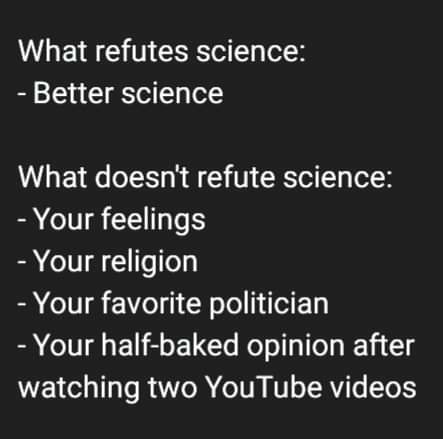
Enlightenment values
28 Nov 2021 Leave a comment
in economics of education, liberalism, Marxist economics Tags: Age of Enlightenment, conjecture and refutation, philosophy of science, political correctness, regressive left
Interesting Maps of India That Teach You About The Country
28 Nov 2021 Leave a comment
in economic history Tags: India, maps
Economic Growth in the Long Run: Artificial Intelligence Explosion or an Empty Planet? Ben Jones & Chad Jones
27 Nov 2021 Leave a comment
in applied price theory, applied welfare economics, behavioural economics, comparative institutional analysis, development economics, discrimination, economic growth, economic history, economics of education, economics of regulation, entrepreneurship, gender, growth disasters, growth miracles, history of economic thought, human capital, industrial organisation, labour economics, labour supply, law and economics, macroeconomics, occupational choice, population economics, poverty and inequality, property rights, public economics, survivor principle Tags: creative destruction, economics of fertility, endogenous growth theory
‘Battery arms race’: how China has monopolised the electric vehicle industry
27 Nov 2021 Leave a comment
French Resistance: Couple Collect €100,000 In Damages For Wind Turbine Noise Nuisance
27 Nov 2021 Leave a comment


The grinding, thumping cacophony generated by giant industrial wind turbines delivers wholly unnecessary misery worldwide. Sleep deprivation is first among the list of adverse health effects caused by these things and the pulsing low-frequency noise they generate.
The wind industry has fought tooth and nail to avoid the consequences of the harm it dishes out, mostly with impunity.
However, increasingly its victims are fighting back and winning.
One French couple, driven mad and eventually driven out of their home by wind turbine noise have had just such a victory.
French couple win legal fight
The Guardian
Kim Willsher
8 November 2021
A French court has recognised “wind turbine syndrome” after a couple established that their health was damaged by noise from a nearby wind farm.
In what is believed to be the first judgment of its kind in France, Belgians Christel and Luc Fockaert were awarded more than €100,000 in…
View original post 322 more words
A Liberal View on Trade and Development
27 Nov 2021 Leave a comment

This is the pre-edited text of an article that will shortly be published in World Commerce Review (https://www.worldcommercereview.com)
The liberal tradition in political thought is by no means unified. The original ideas developed in the (Scottish) Enlightenment, most importantly by David Hume and Adam Smith, have been modified extensively. This has led to different definitions and practical applications of individual freedom, the core idea of liberalism, but also of most other ideas associated with the liberal tradition.[i] Regardless this proliferation, the wide liberal support for free trade and globalization as a means to alleviate poverty and foster human development more broadly has been rather constant, although the ideal of trade free from all government interference has never been within reach. With the World Trade Organization at shambles, the increase of bilateral and regional trade treaties which often hamper free trade more than fostering it, and a general anti-liberal sentiment…
View original post 1,852 more words
Why Was the Fed Created?” with George Selgin — Ron Paul Fed Lecture Series, Pt 1/3
27 Nov 2021 Leave a comment
in applied price theory, applied welfare economics, Austrian economics, business cycles, economic history, economics of bureaucracy, great depression, industrial organisation, macroeconomics, monetarism, monetary economics, Public Choice Tags: monetary policy
The Calendar Act of 1750 and eleven lost days
27 Nov 2021 Leave a comment
in economics of media and culture
Nobody Messes with Godfrey Giffard, Bishop of Worcester: Punishing the Violators of Sanctuary
27 Nov 2021 Leave a comment

Posted by Sara M. Butler, 26 November 2021.

A felon’s right to claim sanctuary upon sacred ground for a period of forty days is hardly a new subject for this blog (see previous blogs by McSheffrey, Butler, Kesselring, and McSheffrey). Nor is the tension that sometimes existed between sheriffs keen to catch a criminal and the church’s dogged persistence that sanctuary must be respected. When violations of sanctuary by royal officials did occur, we usually hear about the consequences from the secular side of things. The close rolls offer up numerous instances of felons restored to sanctuary at the request of the king, presumably after complaints issued from the church in question. For example, royal correspondence to the sheriffs of London in September of 1337 ordered them to restore Andrew of Sutton immediately to the church of All Hallows, Haywharf in London…
View original post 2,668 more words
The Battleship Bismarck: Challenging British Naval Supremacy with a Super-Armoured Ship
27 Nov 2021 Leave a comment
in defence economics, war and peace Tags: World War II
12th Annual Feldstein Lecture – 2020 Claudia Goldin
27 Nov 2021 Leave a comment
in applied price theory, comparative institutional analysis, discrimination, economic history, economics of education, gender, history of economic thought, human capital, industrial organisation, labour economics, labour supply, occupational choice, occupational regulation, poverty and inequality


Recent Comments